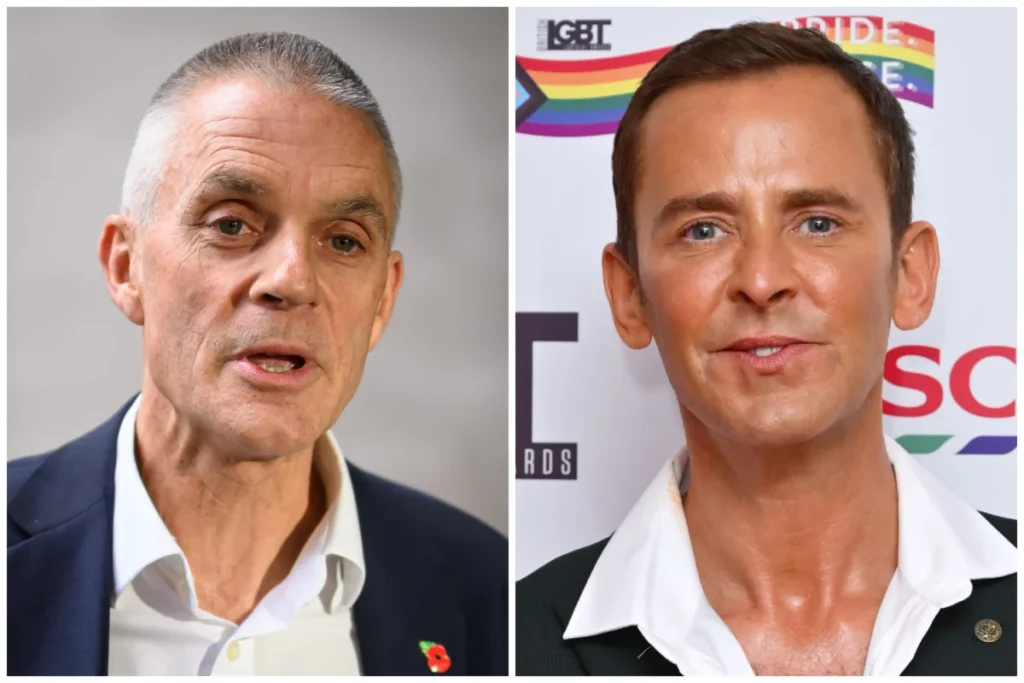

The sudden departure of veteran BBC Radio 2 presenter Scott Mills has sent ripples of "real shock" through the organisation, as Director-General Tim Davie addressed staff on his final day in the role. Davie underscored that the decision stemmed from "new information" recently received, prompting the BBC’s leadership to act with what he described as "fairness" and "kindness" amidst a situation marked by "grief and shock." This development has cast a spotlight on the BBC’s evolving standards of conduct for its talent and its internal processes for addressing serious allegations, even those from the past.
The Unfolding Narrative: Director-General Davie’s Remarks
Speaking to staff on Monday, a pivotal day that marked his last in office, Tim Davie communicated the gravity of the situation. He acknowledged the profound impact of the decision, stating, "It was new information quite recently that we received that made it very clear about the decision we had to make." Davie refrained from elaborating on the specifics of this new information, instead pointing to the BBC’s official statement and citing the need for sensitivity when personal information is involved. His emphasis on acting with "kindness" in a period of "grief and shock" suggested the internal turmoil and emotional complexity surrounding Mills’ abrupt exit.
Davie further contextualised the decision by highlighting a significant shift in standards across the corporation. He asserted that behaviours once tolerated in certain sectors of the media industry "20 years ago… just would not be acceptable" in the present climate. This statement underscores a broader institutional commitment within the BBC to uphold rigorous ethical and professional standards, reflecting a societal and internal demand for greater accountability from public figures, particularly those associated with a public service broadcaster. The remarks signal a decisive move away from past tolerances, indicating a proactive stance on maintaining a culture aligned with contemporary values and expectations.
BBC’s Official Stance and Underlying Allegations
The BBC’s formal statement provided further, albeit limited, clarity on the reasons behind Mills’ departure. It confirmed that "In recent weeks, we obtained new information relating to Scott and we spoke directly with him. As a result, the BBC acted decisively in line with our culture and values." This declaration firmly established that the decision was not arbitrary but a direct consequence of recent findings and a dialogue with Mills himself, aligning with the corporation’s stated commitment to its foundational principles.
Crucially, the BBC’s statement also acknowledged its long-standing awareness of a police investigation concerning Mills. It revealed that the corporation had been informed since 2017 about an ongoing police inquiry, which ultimately concluded in 2019 without any arrests or charges being made. This historical context is vital, as it differentiates the "new information" that led to Mills’ sacking from the previously closed police case. The BBC has committed to "reviewing what was known internally at the time" of the initial investigation, suggesting a self-assessment of its past handling and oversight mechanisms. This internal review highlights the BBC’s ongoing efforts to scrutinise its own historical conduct and ensure that internal knowledge and actions are always consistent with its stated values and safeguarding responsibilities.
A Detailed Chronology of the Investigation
Reports from various media outlets have since shed more light on the nature of the historical allegations. It is understood that Mills was questioned in 2018 regarding historical allegations of serious sexual offences. The Metropolitan Police investigation into these claims commenced in 2016. This inquiry was later referred to the Crown Prosecution Service (CPS), the principal public prosecuting authority in England and Wales. After a thorough review, the CPS determined in 2019 that there was "insufficient evidence" to bring charges against Mills, leading to the closure of the investigation without any legal proceedings.

The allegations reportedly pertain to events that occurred between 1997 and 2000 and involved a teenage boy under the age of 16 at the time. This timeline indicates that the alleged incidents predate Mills’ most prominent national broadcasting roles but fall within a period when he was establishing his career in radio. The legal conclusion of "insufficient evidence" from the CPS is a standard outcome in complex cases, meaning that while allegations were made and investigated, the high evidential threshold required for criminal prosecution could not be met. It’s crucial to distinguish this legal outcome from any internal employment decisions, which operate under different criteria and standards of conduct.
Scott Mills Breaks Silence
In the wake of the news, Scott Mills issued his first public statement through his legal representatives, addressing the situation directly. He confirmed the existence of the 2016 allegation of a "historic sexual offence" against him. Mills asserted his full cooperation with the investigation, stating, "I fully cooperated" with the authorities throughout the process. He reiterated that the Crown Prosecution Service had concluded that the evidential threshold for charges had not been met, thereby closing the case without prosecution.
Mills conveyed his decision not to offer any further public comment on the matter, appealing for privacy during this challenging time. "I hope that the public and the media will understand and respect my wish not to make any further public comment," he stated. His message also included thanks to his supporters and former colleagues for their "messages of kindness," indicating the personal toll of the events and the solidarity he has received. This measured response reflects the sensitivity and personal nature of the allegations, while also aiming to draw a line under public discourse from his perspective.
Shifting Standards and Corporate Accountability at the BBC
Director-General Tim Davie’s remarks on the BBC’s evolving standards resonate with a broader institutional transformation within the corporation, particularly in the wake of high-profile safeguarding failures and scandals that have plagued the organisation in previous decades. The most significant catalyst for change was arguably the revelations surrounding Jimmy Savile, which exposed profound systemic failings in safeguarding, reporting, and accountability. This catastrophic event forced the BBC to undertake a comprehensive overhaul of its internal policies, reporting mechanisms, and "culture and values."
Since then, successive BBC managements have striven to cultivate a more transparent and accountable environment, where allegations of misconduct, particularly those involving historical sexual offences, are treated with the utmost seriousness. The BBC’s "culture and values" are now explicitly designed to prevent a recurrence of past failures, emphasising a duty of care towards staff, contributors, and the public. This includes a zero-tolerance approach to certain behaviours and a commitment to investigating all credible allegations, regardless of the individual’s seniority or public profile. Davie’s assertion that behaviour once tolerated "20 years ago… just would not be acceptable" today is a direct reflection of these post-Savile reforms and the continuous efforts to embed a robust safeguarding culture. The decision regarding Mills, therefore, can be seen as an application of these heightened standards, demonstrating the BBC’s resolve to act decisively when new information surfaces, even if it relates to a previously investigated and closed matter. The ongoing internal review of "what was known internally at the time" of the original investigation further reinforces this commitment to continuous learning and improvement in corporate accountability.
The Broader Context of BBC Talent and Conduct
Scott Mills has been a staple of BBC Radio for decades, known for his affable on-air personality and significant listenership. His career trajectory, particularly his long and successful tenure on BBC Radio 1 before moving to Radio 2, positioned him as one of the BBC’s most recognisable and popular presenters. Such a high-profile departure under these circumstances inevitably draws comparisons to other instances where BBC talent has faced scrutiny or exited the corporation amidst allegations.
The BBC, as a publicly funded broadcaster, operates under intense public and governmental scrutiny. Its reputation for integrity and trustworthiness is paramount. When allegations of serious misconduct emerge, particularly those involving historical sexual offences, the institution faces immense pressure to respond transparently and decisively. The balance between protecting an individual’s privacy, adhering to legal processes, and upholding the BBC’s public service values is a constant challenge.

The "new information" that prompted the BBC’s "decisive" action, while undisclosed, highlights the complex nature of managing talent in an era of heightened awareness and scrutiny of historical allegations. It underscores that even when criminal investigations conclude without charges, other factors—such as internal conduct policies, ethical guidelines, or additional evidence that doesn’t meet the criminal threshold but impacts employment suitability—can lead to significant employment consequences. The BBC’s decision in this case reinforces the message that the organisation expects its employees, particularly those in prominent public-facing roles, to adhere to the highest standards of conduct, both within and outside the workplace, and to act in a manner consistent with the BBC’s values.
Implications for Scott Mills’ Career and Public Perception
Scott Mills’ abrupt departure from the BBC marks a significant turning point in his career. For decades, he has been synonymous with BBC Radio, cultivating a loyal fanbase through his engaging style and long-running shows. This development will undoubtedly have profound implications for his professional trajectory and public image. While the legal process concluded without charges, the public revelation of historical allegations and the BBC’s subsequent action will likely cast a long shadow.
The immediate challenge for Mills will be to navigate the intense media scrutiny and public discussion surrounding his exit. His statement, appealing for privacy and reiterating his cooperation with the police, represents an attempt to manage the narrative. However, in the highly scrutinised world of public figures, such events often lead to lasting questions about an individual’s suitability for public-facing roles, regardless of legal outcomes. His future career prospects, particularly within mainstream broadcasting, may be significantly impacted as organisations become increasingly risk-averse in light of such revelations. The outpouring of "kindness" from supporters and former colleagues, as mentioned by Mills, suggests that he retains personal goodwill within the industry, but the commercial realities of broadcasting may present new hurdles.
Implications for the BBC: Trust, Transparency, and Internal Processes
For the BBC, this incident presents another test of its commitment to transparency, accountability, and its "culture and values." Director-General Tim Davie’s handling of the announcement, including his direct address to staff, aims to project an image of decisive leadership and adherence to ethical principles. However, the lack of specific detail regarding the "new information" will inevitably fuel speculation and could lead to questions about the extent of the BBC’s transparency.
The ongoing internal review of "what was known internally at the time" of the initial police investigation is particularly critical. This review will examine the BBC’s institutional memory, communication channels, and decision-making processes from 2017 to 2019. Its findings will be crucial in demonstrating whether the BBC’s internal mechanisms were robust enough to identify and address potential risks adequately, or if there were any gaps in its safeguarding protocols. The outcome of this review will directly impact public trust in the BBC’s ability to protect vulnerable individuals and hold its talent accountable.
Ultimately, this episode underscores the complex and often difficult decisions facing major media organisations in an era where past conduct is increasingly scrutinised and where the expectations for ethical behaviour from public figures are constantly evolving. The BBC’s actions in this case send a clear message about its current standards and its determination to uphold them, even when it involves the departure of a long-serving and popular presenter. The coming months will reveal the full extent of the fallout for both Scott Mills and the BBC, as the public and internal stakeholders continue to process these significant developments.