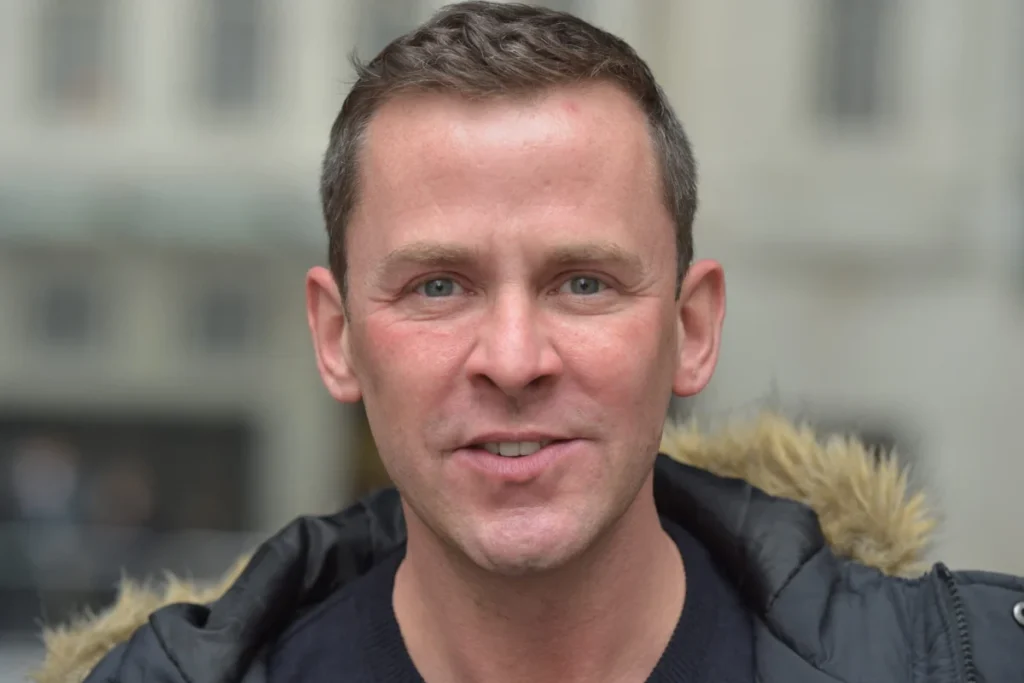

Veteran broadcaster Scott Mills has officially broken his silence following his abrupt departure from the BBC, specifically his popular afternoon show on Radio 2. In a comprehensive statement released through his legal representatives, Mills addressed mounting speculation surrounding his unexpected exit, confirming that his sacking was linked to a historic sexual offence allegation that had been the subject of a police investigation, which concluded without charges being brought. The revelations have ignited further debate regarding the BBC’s internal conduct policies, its duty of care towards talent, and the complex interplay between past allegations and current employment decisions, particularly in light of recent high-profile controversies involving other BBC presenters.
Mills’ Statement: Addressing Rumour and Speculation
The statement from Scott Mills, a familiar voice on BBC radio for over two decades, marks his first public commentary since news of his contract termination emerged. "The recent announcement that I am no longer contracted to the BBC has led to the publication of rumour and speculation," Mills stated, acknowledging the intense public and media interest in his situation. He proceeded to confirm the core of the speculation: "In response to this the Metropolitan Police has made a statement, which I confirm relates to me."
Mills elaborated on the nature of the allegation and the subsequent legal process. He confirmed that "An allegation was made against me in 2016 of a historic sexual offence which was the subject of a police investigation in which I fully cooperated and responded to in 2018." Crucially, he highlighted the outcome of that investigation: "As the police have stated, a file of evidence was submitted to the Crown Prosecution Service, which determined that the evidential threshold had not been met to bring charges." This decision by the CPS signifies that there was insufficient evidence to proceed with a prosecution under criminal law.
The former Radio 1 and Radio 2 presenter further indicated the age of the alleged incident, stating, "Since the investigation related to an an allegation that dates back nearly 30 years and the police investigation was closed 7 years ago, I hope that the public and the media will understand and respect my wish not to make any further public comment on this matter." Mills concluded his statement by expressing profound gratitude: "I wish to thank from the bottom of my heart all those who have reached out to me with kindness, my former colleagues, and my beloved listeners, who I greatly miss." His words reflect a deeply personal toll from the unfolding events, balancing a need for transparency with a plea for privacy.

A Detailed Timeline of the Allegation and Investigation
Understanding the sequence of events is crucial to grasping the complexities of Mills’ situation and the BBC’s actions. The timeline, as confirmed by Mills’ statement and police reports, stretches back decades and involves multiple law enforcement agencies.
- Pre-1996: The period to which the historic sexual offence allegation is said to date back, as indicated by Mills’ statement of "nearly 30 years" prior to 2026.
- 1997-2000: The Metropolitan Police confirmed their investigation focused on allegations relating to offences said to have taken place during this specific timeframe. This period is slightly narrower than Mills’ broader "nearly 30 years" but falls within it.
- 2016: The allegation was first reported to Hampshire Police by a third party. Hampshire Police subsequently logged the details and passed the information to the Metropolitan Police, who then launched a formal investigation.
- 2017: The BBC states it was made aware of the existence of an "ongoing police investigation" concerning Scott Mills. At this time, Mills was a prominent presenter on BBC Radio 1. The newspaper report notes that BBC bosses reportedly decided not to take him off air during this period.
- 2018: Scott Mills fully cooperated with the ongoing Metropolitan Police investigation, providing his responses and assistance.
- May 2019: The Metropolitan Police officially closed its investigation. This decision followed advice from the Crown Prosecution Service (CPS), which determined that "the evidential threshold had not been met to bring charges." This means that while an investigation took place, the legal standard for prosecution was not met.
- Recent Weeks (prior to March 27, 2026): The BBC states it "obtained new information relating to Scott" and engaged directly with him regarding these details.
- Friday, March 27, 2026: Following its receipt of new information and subsequent discussions, the BBC "acted decisively in line with our culture and values, and terminated his contracts."
- Early April 2026: Scott Mills releases his comprehensive statement through his lawyer, breaking his silence on the matter.
The BBC’s Stance: New Information and Evolving Standards
The BBC’s official response to Mills’ sacking and the subsequent revelations has been carefully worded, aiming to balance transparency with legal and ethical obligations regarding privacy. A BBC spokesperson acknowledged the widespread impact of the news: "Scott Mills had a long career across the BBC, he was hugely popular and we know the news this week has come as a shock and surprise to many." They also recognised the public speculation, stating, "We also recognise there’s been much speculation in the media and online since Monday. We hope people understand that there is a limit to what we can say because we have to be mindful of the rights of those involved."
Crucially, the BBC confirmed the immediate cause of Mills’ termination, pointing to recent developments: "What we can confirm is that in recent weeks, we obtained new information relating to Scott and we spoke directly with him. As a result, the BBC acted decisively in line with our culture and values, and terminated his contracts on Friday March 27." This statement implies that the "new information," rather than the historic police investigation itself (which concluded years ago without charges), was the direct catalyst for the BBC’s decision.
The corporation also addressed its prior knowledge of the police investigation, stating, "Separately, we can confirm the BBC was made aware in 2017 of the existence of an ongoing police investigation, which was subsequently closed in 2019 with no arrest or charge being made. We are doing more work to understand the detail of what was known by the BBC at this time." This admission suggests an internal review is underway to ascertain the full extent of institutional knowledge at the time and whether appropriate actions were taken, or policies adhered to, given the circumstances. This commitment to "doing more work" reflects a broader institutional effort to learn from past errors and adapt its internal processes.

Broader Context: The Shadow of Past Scandals and Policy Shifts
Scott Mills’ departure and the surrounding controversy unfold against a backdrop of heightened scrutiny on the BBC’s handling of allegations against its talent. The corporation has faced immense pressure in recent years to reform its internal processes and uphold stringent ethical standards, largely driven by the seismic impact of the Jimmy Savile scandal and, more recently, the controversy surrounding veteran news anchor Huw Edwards.
The independent culture review, initiated after previous failings, led to the BBC making "a significant commitment to improve its culture, processes and standards." This included setting out "behavioural expectations for everyone who works with or for the BBC" and a clear declaration that "action would be taken" if these were not met. This institutional shift is pivotal in understanding the BBC’s swift response in Mills’ case.
Jeremy Vine, a fellow BBC presenter, articulated a common sentiment within the industry, suggesting that the BBC’s decisive action against Mills might be influenced by a desire to demonstrate a firmer stance compared to its handling of the Huw Edwards situation. Vine remarked on Tuesday that there was a suggestion BBC bosses had acted swiftly against Mills because they "decided to treat Scott as they wish they treated Huw, which would be a bit unfair, would it not?"
The comparison to the Huw Edwards case is pertinent. Edwards was arrested in November 2023 but continued to be employed by the BBC until April 2024, when he resigned on medical advice. The timeline and the BBC’s initial actions in that instance drew significant criticism, with many perceiving the corporation as slow to react or insufficiently transparent. The immediate termination of Mills’ contract, therefore, could be interpreted as the BBC seeking to project an image of decisiveness and zero tolerance, potentially overcompensating for past perceived missteps. This dynamic places the BBC in a precarious position, navigating public expectation, legal constraints, and internal policy application.
Scott Mills’ Distinguished Career at the BBC

Scott Mills has been a fixture on BBC radio for over two decades, cultivating a loyal following and becoming one of the corporation’s most recognisable voices. His career at the BBC began in 1998, joining Radio 1 where he would host various shows, most notably the popular afternoon drivetime slot which he helmed for many years. His engaging personality, quick wit, and ability to connect with a diverse audience made his show a consistent ratings success. Mills was known for his lighthearted segments, celebrity interviews, and a genuine rapport with his co-presenters and listeners.
In August 2022, after 24 years at Radio 1, Mills made a highly publicised move to BBC Radio 2, taking over the weekday afternoon show from the legendary Steve Wright. This transition was a significant moment for both Mills and the BBC, marking his shift to a more mature audience demographic while retaining his signature style. His arrival on Radio 2 was met with enthusiasm by many, and he quickly established his show as a popular feature of the station’s schedule, continuing to entertain millions of listeners daily. His long tenure and consistent popularity underscore the shock and sadness felt by many at the news of his sudden departure, highlighting the deep connection he forged with his audience over two generations of radio broadcasting.
Impact and Implications
The Scott Mills affair carries significant implications for various stakeholders, from the individual presenter to the broader broadcasting institution.
- For Scott Mills: Beyond the immediate loss of his employment, Mills faces the profound personal and professional challenge of rebuilding his career and reputation amidst the shadow of historic allegations. Despite the police investigation concluding without charges, the public disclosure and the BBC’s subsequent actions have undoubtedly caused immense distress and professional uncertainty. His plea for privacy underscores the personal toll of public scrutiny.
- For the BBC: The corporation finds itself once again in the spotlight, grappling with questions about its internal processes, consistency in applying policies, and its approach to managing talent. The "new information" that led to Mills’ termination, while vaguely described, suggests that even when criminal proceedings conclude, an employer’s own standards and findings can lead to separate, equally impactful, employment decisions. The ongoing internal review into what was known in 2017 will be critical for the BBC to demonstrate its commitment to transparency and accountability. The perception of an "overcorrection" in comparison to the Huw Edwards case could also lead to accusations of inconsistency or unfairness, further complicating its reputation management efforts.
- For Public Trust: Incidents involving prominent broadcasters and allegations of misconduct inevitably erode public trust in the institutions that employ them. The BBC, as a publicly funded body, has a heightened responsibility to maintain the highest standards of conduct and integrity. The clarity and perceived fairness of its actions in such cases are vital for sustaining public confidence.
- For the Broadcasting Industry: The case sets a precedent for how historic allegations, even those not leading to criminal charges, can impact the careers of public figures. It highlights the increasingly complex landscape where an individual’s past, and the perception of it, can be scrutinised decades later, leading to professional repercussions based on an employer’s internal ethical standards, which may differ from criminal legal thresholds. This could lead to a more cautious approach by broadcasters when assessing the background of their talent and the potential risks involved.
Conclusion
The abrupt sacking of Scott Mills from the BBC, followed by his statement confirming a historic sexual offence allegation and a police investigation that concluded without charges, represents a deeply complex and sensitive situation. It underscores the challenges faced by major institutions like the BBC in navigating the delicate balance between due process, their duty of care towards employees, and their overriding commitment to safeguarding and public accountability. As the BBC continues its internal work to understand the full context of its prior knowledge, and as the public reflects on the implications of these revelations, the case of Scott Mills serves as a potent reminder of the enduring impact of historic events and the continuous evolution of ethical standards in public life. The full implications for Mills, the BBC, and the broader broadcasting landscape are still unfolding, promising continued debate and scrutiny.