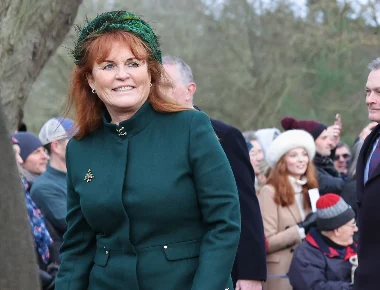

The public perception of Sarah Ferguson, Duchess of York, has been subjected to further scrutiny following reports that she allegedly discussed a reality television concept involving the cloning of Queen Elizabeth II’s beloved corgis. The extraordinary proposal, detailed in an exclusive report by The Mail on Sunday, has ignited a fresh wave of discussion surrounding the Duchess’s public image and her evolving relationship with the Royal Family’s legacy. While Ms. Ferguson’s spokesperson has strongly denied any progression of these discussions, the mere suggestion has cast a spotlight on the ethical considerations of animal cloning, the enduring public fascination with the Royal Family’s pets, and the Duchess’s own recent challenges.
The Alleged Proposal and Its Genesis
According to The Mail on Sunday, the concept of cloning Queen Elizabeth II’s final corgis, Sandy and Muick, was presented to Sarah Ferguson by a television production company in the aftermath of the late monarch’s death in September 2022. The proposed reality show would have reportedly involved Ms. Ferguson attempting to clone these iconic royal pets, with the implication that the resulting genetic replicas could then be offered for sale. This idea surfaced amidst a series of discussions between the Duchess and Halcyon Studios regarding potential television projects centered around the late Queen’s dogs.
The timing of this alleged proposal is significant. Queen Elizabeth II, a lifelong devotee of the Pembroke Welsh Corgi breed, passed away on September 8, 2022. Her corgis, Sandy and Muick, were a constant presence in her later years and were even present at her funeral, a poignant symbol of her deep affection for the animals. Following the Queen’s death, the care of Sandy and Muick was entrusted to Sarah Ferguson, a move that underscored her enduring connection to the Royal Family and her personal bond with the late Queen.
Legal and Ethical Dimensions of Animal Cloning
The proposed cloning of the corgis raises immediate questions regarding the legality and ethical implications of such a venture. In the United Kingdom, the cloning of animals for commercial purposes is generally prohibited under the Animals (Scientific Procedures) Act 1986, which regulates the use of animals in scientific research. However, the law does permit the taking of animal tissue samples for export to countries where cloning is legally permissible. This distinction suggests that while direct cloning within the UK might be restricted, the process could potentially be undertaken elsewhere, a loophole that may have factored into the alleged discussions.
Animal cloning, a complex scientific process, involves extracting cells from an animal and using them to create an embryo. This embryo is then implanted into a surrogate mother, with the hope of producing a genetically identical offspring. The success rates of animal cloning, particularly in dogs, can be variable, often requiring multiple attempts and potentially leading to health concerns in the cloned offspring. Ethical debates surrounding animal cloning often center on animal welfare, the potential for genetic abnormalities, and the commodification of living beings. The idea of cloning beloved pets, especially those with such a significant public profile, invariably sparks strong opinions about the sanctity of life and the nature of our relationship with animals.
Sarah Ferguson’s Spokesperson Responds
In the wake of the report, a spokesperson for Sarah Ferguson issued a firm denial of any substantive engagement with the cloning proposal. The statement asserted that Ms. Ferguson had "never progressed any discussions" and had "withdrawn from them of her own accord." The spokesperson further elaborated that while the Duchess "listens to TV proposals all the time," this does not equate to a commitment to proceed. The statement attributed any perceived enthusiasm to Ms. Ferguson’s naturally effervescent personality, emphasizing that "she listens to TV proposals all the time but that doesn’t mean she is going to go through with them. If she had briefly seemed enthusiastic, that is just who Sarah is." Crucially, the spokesperson explicitly stated that "Sarah never had any intention of monetising the corgis."
This denial aims to distance Ms. Ferguson from the more sensational aspects of the reported proposal, particularly the suggestion of selling cloned pets. It portrays the discussions as preliminary explorations of potential media projects, a common practice for public figures, rather than a concrete plan for a controversial undertaking.
Broader Context: Sarah Ferguson’s Public Profile
The revelations about the alleged corgi cloning proposal emerge at a time when Sarah Ferguson’s public image has been subject to considerable scrutiny. In recent months, renewed attention has been paid to her past associations with the convicted sex offender Jeffrey Epstein. Declassified documents have brought to light the extent of their friendship, with Ms. Ferguson having described him as "the brother she never had." Reports have also emerged detailing her visits with her daughters, Princess Beatrice and Princess Eugenie, to Epstein’s properties after his release from prison, though both princesses were adults at the time of these visits.
This renewed focus on her past has led to calls for Ms. Ferguson to appear before a congressional committee investigating Epstein. Congressman Suhas Subramanyam has formally requested her testimony before the House Oversight Committee, indicating a desire to understand her knowledge of Epstein’s activities.
Furthermore, Ms. Ferguson’s connection to the Royal Family has undergone significant shifts. She lost her courtesy title of Duchess of York in October 2025 when King Charles requested its removal from the Roll of Peerage. She had held this title since her divorce from Prince Andrew in 1996, at which time she also ceased to be referred to as Her Royal Highness (HRH).
The Enduring Appeal of Royal Corgis
Queen Elizabeth II’s corgis are more than just pets; they are an integral part of her enduring public image and a symbol of her reign. For over seven decades, these spirited dogs accompanied her, becoming almost as recognizable as the monarch herself. Their presence at royal events, their appearances in official photographs, and their depiction in popular culture have cemented their status as a beloved and iconic aspect of the British monarchy.
The late Queen’s devotion to her corgis was well-documented. She received her first corgi, Susan, as an 18th birthday gift, and for generations, her royal kennels were a sanctuary for the breed. During her Platinum Jubilee in 2022, a special corgi emoji was even created to celebrate the occasion, highlighting their cultural significance.
The decision for Sarah Ferguson to assume care of Sandy and Muick after the Queen’s passing was seen as a natural continuation of their lineage and a testament to her ongoing relationship with the late monarch and her family. Her social media posts featuring the corgis, particularly on the first anniversary of Queen Elizabeth II’s death, underscore her affection for the animals and her role as their custodian.
Potential Implications and Public Reaction
The reported discussions about cloning the Queen’s corgis, regardless of Ms. Ferguson’s denial of intent, inevitably stir public reaction. For some, the idea might be seen as a misguided attempt to capitalize on a sentimental connection to the Royal Family’s history. For others, it represents a potential exploitation of beloved animals and a disregard for ethical boundaries.
The incident also highlights the complex intersection of celebrity, media, and royalty. Public figures, especially those with royal connections, often find themselves subject to intense media scrutiny, with even preliminary discussions about potential projects being amplified and analyzed. The pursuit of reality television content can sometimes lead to proposals that push the boundaries of conventional taste and ethical considerations.
The controversy serves as a reminder of the enduring public fascination with the Royal Family and its traditions, as well as the complex legacy of Queen Elizabeth II. The corgis, in this context, are not just pets but symbols of a cherished era. Any discussions involving their future, particularly those with commercial or sensational undertones, are bound to attract significant attention and debate.
While Sarah Ferguson’s spokesperson has sought to clarify her position, the story has undoubtedly added another layer to the ongoing narrative surrounding the Duchess. It underscores the challenges she faces in managing her public persona, particularly in light of past associations and evolving public expectations. The future of the corgis, and any potential media ventures involving them, will continue to be a subject of public interest, reflecting the unique and often dramatic place the Royal Family occupies in the global consciousness. The ethical considerations of animal cloning, combined with the high-profile nature of the animals involved, ensure that this story will likely continue to resonate.