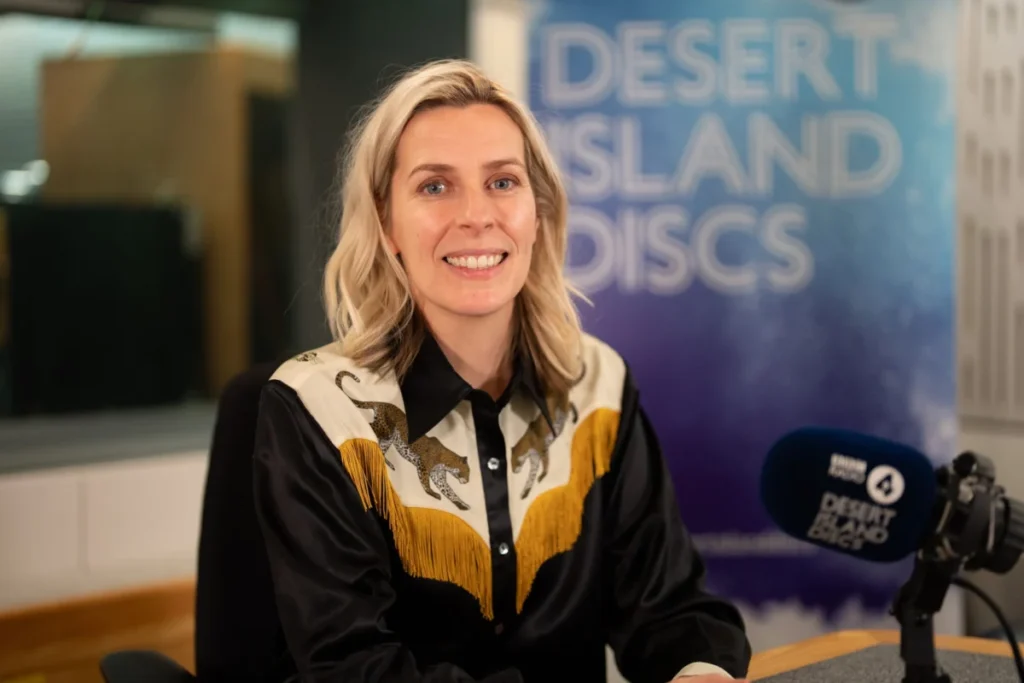

Comedian Sara Pascoe has articulated her conscious effort to embrace pride in her experiences with In Vitro Fertilisation (IVF) when integrating them into her stand-up routines, a testament to her belief in the positive impact of sharing deeply personal narratives. The London-born performer, aged 44, recently elaborated on her fertility struggles and the subsequent conception of her two sons, born in 2022 and 2023 through IVF, during an appearance on BBC Radio 4’s venerable programme, Desert Island Discs, hosted by Lauren Laverne. Pascoe’s candid discussion underscores a growing trend among public figures to destigmatize the often-private and emotionally arduous journey of assisted reproduction, transforming personal hardship into a source of connection and solidarity for her audience.
Pascoe expressed no regret about her decision to incorporate such a sensitive topic into her comedic repertoire, perceiving it as "a positive way to talk about something that people feel very isolated in." Her approach highlights the unique capacity of comedy to address profound human experiences, offering both levity and recognition to those navigating similar challenges. This commitment to vulnerability is not new for Pascoe, whose career has been marked by a willingness to explore her personal life, body, and societal observations with a distinctive blend of intellectual rigor and relatable humor.
The Evolution of Vulnerability: From Raw Experience to Reflective Humor
The journey from private struggle to public performance was not immediate for Pascoe. She revealed that during the initial phases of trying to conceive through IVF, the experience was "far too raw" to be material for her stand-up. This sentiment resonates with many who undergo significant personal trials, where the immediate impact often precludes the emotional distance necessary for comedic interpretation. Pascoe explained, "I only really spoke about infertility once I had children and it was reflexing. I also think that’s because I couldn’t be funny about it until I knew the ending." This critical insight speaks to the psychological process of transforming lived experience into art, particularly within the demanding and often unforgiving context of live comedy, where audience reception is paramount.
The comedian detailed that she felt truly ready to discuss her IVF journey on stage only after her eldest son, Theo, was approximately eight months old. This period marked a crucial shift, providing her with the certainty and emotional security to share her story. "It was really like, ‘I definitely have a son. He survived. He’s alive, he’s here’," she recounted. This assurance allowed her to engage with the topic from a place of resolution rather than ongoing uncertainty, making it palatable for both herself and her audience. Her desire to share stemmed from a profound understanding that individuals in her audience would likely be at various stages of their own fertility journeys, and her narrative could offer solace or validation.

A fundamental principle of comedic performance, as Pascoe articulated, is the audience’s need to perceive the comedian as "okay" before they can truly laugh at sensitive subjects. "The other thing with comedy is that people won’t laugh unless they know you’re OK. You can’t tell them the stuff you’re not OK about," she observed. This highlights the delicate balance comedians must strike when delving into personal pain, requiring a careful crafting of narrative that assures the audience of the storyteller’s resilience and ultimate well-being. When Pascoe began integrating her IVF story, she "loved" the palpable connection it forged with audience members, many of whom were navigating similar paths. The shared experience, she noted, felt like a profoundly "positive way to talk about something that people feel very isolated in."
IVF: A Journey of Bravery and Isolation – Statistical Context
Infertility affects a significant portion of the global population, with estimates suggesting that one in six couples worldwide experience some form of fertility issue. In the UK, approximately 3.5 million people struggle with infertility. IVF, a complex series of procedures used to help with fertility or prevent genetic problems and assist with the conception of a child, has become a beacon of hope for many. However, the process is physically demanding, emotionally draining, and often financially burdensome.
According to the Human Fertilisation and Embryology Authority (HFEA), the UK’s independent regulator of fertility treatment and research, the average success rate for IVF treatment using a woman’s own eggs varies significantly with age. For women under 35, the percentage of IVF cycles resulting in a live birth is around 32%. This figure decreases steadily with age, dropping to 4% for women over 44. These statistics underscore the inherent uncertainties and challenges faced by individuals and couples embarking on IVF, making Pascoe’s eventual success and her decision to speak about it even more impactful.
Pascoe herself lauded those who undertake IVF as "so brave." She emphasized, "It’s such a big thing to put your body through. Anyone who does it should be so proud of themselves – and that’s what I tried to do when I was talking about it more on stage." This statement serves not only as a personal affirmation but also as a powerful message of empowerment to the wider community navigating similar paths. The physical toll includes daily injections, hormonal fluctuations, surgical procedures for egg retrieval, and the constant cycle of hope and disappointment. The emotional burden often manifests as anxiety, depression, and a sense of isolation, further exacerbated by societal pressures and the often-private nature of fertility struggles. By openly discussing her journey, Pascoe contributes to dismantling the wall of silence that frequently surrounds infertility, encouraging a more empathetic and understanding public discourse.
A Career Defined by Candor: The Power of "Oversharing"
Sara Pascoe’s willingness to "overshare," as she humorously puts it, is a defining characteristic of her artistic output. Her work consistently blurs the lines between personal memoir, scientific inquiry, and social commentary. This is exemplified in her critically acclaimed autobiography, Animal: The Autobiography Of A Female Body, where she candidly detailed having an abortion at the age of 17. This revelation, which her agent initially advised against including, is a testament to Pascoe’s unwavering commitment to authenticity.

During her Desert Island Discs interview, Pascoe reiterated her philosophy: "I think the thing about me in the oversharing is that the sharing always feels like so much more important than any privacy." She elaborated, "And actually, I’m not embarrassed. I’ve never really felt uncomfortable talking about a biographical detail." This conviction underpins her entire artistic ethos, suggesting that the societal benefits of open dialogue, particularly on topics often shrouded in shame or silence, outweigh any personal discomfort. Her choice to discuss abortion at a time when reproductive rights remain a contentious global issue further solidifies her role as a comedian who uses her platform for broader social good.
Pascoe’s career spans almost two decades, during which she has established herself as a formidable presence in the British comedy scene. Her appearances on popular panel shows such as QI, Mock The Week, and Would I Lie To You? have showcased her sharp wit and intellectual curiosity. Beyond television, she is a prolific writer, having authored three books. Her debut novel, Weirdo, published in 2024, received critical acclaim and won the prestigious Jilly Cooper Prize for fiction last year, further cementing her reputation as a versatile and insightful storyteller across different mediums.
Broader Implications: Destigmatizing Infertility and Empowering Voices
Pascoe’s public discourse on IVF carries significant implications for destigmatizing infertility and fostering a more supportive environment for those undergoing assisted reproductive technologies. When a public figure, particularly one known for their intelligence and humor, shares such a vulnerable experience, it normalizes conversations that were once relegated to hushed tones and private forums.
Breaking the Silence: Infertility often comes with a profound sense of isolation and shame. Individuals might feel like failures, or that they are somehow "less than" because they cannot conceive naturally. Pascoe’s willingness to speak openly counters these feelings, showing that these experiences are common and that those who go through them are not alone. Her story provides a crucial point of identification for countless individuals who have faced or are currently facing similar struggles.
Challenging Societal Expectations: Society often places immense pressure on individuals, particularly women, to have children and conform to traditional family structures. When conception doesn’t happen naturally, it can lead to feelings of inadequacy and intense grief. Pascoe’s narrative, which culminates in a joyful outcome achieved through medical intervention, challenges the narrow definition of family-building and highlights the diverse paths to parenthood.

Promoting Empathy and Understanding: By detailing the emotional and physical realities of IVF, Pascoe educates her audience and the wider public. This increased understanding can foster greater empathy from friends, family, and employers, potentially leading to more compassionate support systems for those undergoing treatment. It also empowers individuals to advocate for themselves and seek the support they need without fear of judgment.
The Therapeutic Role of Comedy: Pascoe’s ability to infuse humor into her IVF narrative demonstrates the therapeutic power of comedy. Humor can be a coping mechanism, a way to process pain, and a means of connecting with others over shared human frailties. By making people laugh about a difficult subject, she creates a space for collective catharsis and reduces the emotional weight associated with it. This aligns with the long tradition of comedians using their art to tackle serious societal issues, from mental health to political commentary.
Influence on Public Discourse: High-profile discussions like Pascoe’s on Desert Island Discs contribute to a broader public discourse on reproductive health, medical ethics, and the evolving nature of family. They can influence policy discussions, encourage greater investment in fertility research and support services, and potentially shift cultural norms towards greater acceptance and celebration of diverse paths to parenthood.
In essence, Sara Pascoe’s decision to share her IVF journey in her stand-up comedy is more than just a personal anecdote; it is a significant cultural contribution. It champions authenticity, challenges stigma, and harnesses the unique power of humor to connect, educate, and empower. Her ongoing commitment to "oversharing" underscores a belief that true connection and societal progress often emerge from the courage to speak openly about our most vulnerable experiences.
Listeners can hear the full Desert Island Discs episode featuring Sara Pascoe on BBC Sounds and BBC Radio 4 from Sunday at 10 am, offering further insight into her compelling life and perspectives.