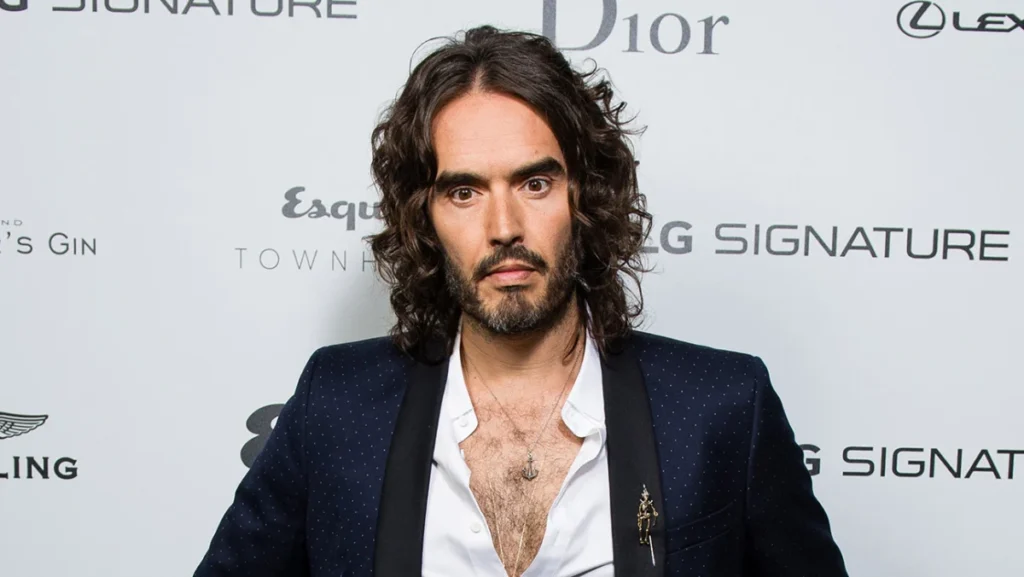

The much-anticipated London trial involving disgraced comedian and actor Russell Brand, facing a series of serious allegations including rape and sexual assault, has been officially postponed from its original mid-June start date to October 12. The significant delay, announced during a recent hearing at Southwark Crown Court, signals the increasing complexity and scale of the legal proceedings against the 50-year-old former television personality. Brand is accused of three counts of rape, three charges of sexual assault, and one allegation of indecent assault, with the alleged crimes spanning a decade from 1999 to 2009, brought forward by six different women. Brand has vehemently denied all charges since they first emerged.
The Judicial Process Unfolds: A Delayed Start
Justice Joel Bennathan presided over Monday’s hearing at Southwark Crown Court, where the decision to push back the trial was made public. Brand himself was not present in court for this procedural update, instead being represented by his legal counsel. The postponement is not merely a shift in dates; it reflects a significant restructuring of the case. During the hearing, Justice Bennathan formally consolidated all charges against Brand into a single, comprehensive trial. This consolidation is a critical development, as it means the court will hear all allegations from the various complainants within one unified proceeding, rather than separate trials for different sets of charges.
Furthermore, the expected duration of the trial has been substantially extended. Initially projected to last up to five weeks, the court now anticipates the proceedings will span approximately two months. This extended timeline underscores the gravity and intricate nature of the allegations, suggesting a comprehensive presentation of evidence and testimony will be required from both the prosecution and defence. Such extended durations are common in complex criminal cases involving multiple complainants, intricate timelines, and extensive evidence, requiring meticulous planning and execution by all parties involved.
Comprehensive Charges and Brand’s Defence
The accusations against Brand are severe and far-reaching. The counts include three charges of rape, a crime that carries a maximum sentence of life imprisonment in the UK, reflecting its profound impact on victims. Additionally, three charges of sexual assault and one count of indecent assault further highlight the breadth of the alleged misconduct. These charges collectively represent allegations from six women, detailing incidents that are said to have occurred between 1999 and 2009. The consolidation of these charges into a single trial aims to streamline the judicial process, presenting a holistic view of the alleged pattern of behaviour to the jury.
Just last month, Brand appeared at Southwark Crown Court to enter not-guilty pleas to two additional alleged incidents involving two separate women in the British capital in 2009. These new charges were integrated with the previously existing ones, culminating in the current consolidated case. The initial charges against Brand were brought in April 2024, following a period of intense public scrutiny and a police investigation. Throughout this process, Brand has maintained his innocence, issuing public statements denying any wrongdoing and often framing the allegations as part of a wider conspiracy or attack on his character. His consistent denials set the stage for a contentious trial where the credibility of both the complainants and the accused will be rigorously examined.
Genesis of the Investigation: Media Exposé
The judicial proceedings against Russell Brand did not emerge in a vacuum but were catalyzed by a series of explosive investigative reports published in September 2023. The Metropolitan Police launched their formal investigation, codenamed Operation Kilo, after receiving a significant number of allegations in the wake of joint reporting by Channel 4’s Dispatches and The Sunday Times. These highly anticipated journalistic pieces brought to light multiple claims of sexual assault, rape, and emotional abuse against Brand, sending shockwaves through the entertainment industry and the wider public.
Among the specific allegations highlighted by these reports were deeply disturbing accounts. One woman detailed a relationship with Brand that began when she was 16 and he was 31. She described their three-month relationship as "emotionally abusive and controlling," providing a stark glimpse into the alleged power dynamics at play. Another particularly grave claim, reported by The Sunday Times, involved an allegation of rape in Brand’s Los Angeles home in 2012. These initial reports provided the impetus for numerous other individuals to come forward, leading to the extensive police investigation that eventually resulted in the current charges. The role of investigative journalism in bringing these allegations to light underscores the critical function of media in holding powerful individuals accountable, especially in cases where victims might otherwise feel unable to report their experiences to authorities.
A Detailed Chronology of Events
Understanding the sequence of events is crucial to grasping the full scope of this high-profile case:
- Late 1990s – Early 2010s: Russell Brand rises to international prominence as a comedian, actor, radio host, and television presenter. His career flourishes with roles in major films, stand-up specials, and successful media ventures, establishing him as a charismatic but often controversial public figure.
- 1999 – 2009 (and 2012): This period marks the timeframe during which the alleged offences against the six complainants are said to have occurred. The geographical scope includes London and potentially Los Angeles, reflecting Brand’s international career.
- September 2023: Channel 4’s Dispatches and The Sunday Times publish their groundbreaking joint investigation, detailing multiple allegations of sexual assault, rape, and abuse against Brand. The reports spark immediate public outcry and calls for official action.
- September 2023: Following the media exposé, the Metropolitan Police officially launch Operation Kilo, a dedicated investigation into the allegations against Brand. Police urge anyone with relevant information to come forward.
- April 2024: The Crown Prosecution Service (CPS) authorizes the first set of charges against Russell Brand. These initial charges pertain to alleged offences against four women. Brand is formally charged and appears in court.
- May 2024: Brand appears in court to enter not-guilty pleas to the initial charges. He continues to publicly deny all accusations.
- June 2024 (earlier in the month): Brand appears in court again to face additional charges, including two more alleged incidents with two separate women from 2009. He again pleads not guilty to these new accusations.
- June 2024 (recent hearing): Justice Joel Bennathan announces the consolidation of all charges into a single trial and postpones the trial start date from mid-June to October 12, extending its estimated duration to two months.
Understanding the Legal Framework
The UK legal system, particularly in cases heard at Crown Courts like Southwark, operates on the principle of due process and the presumption of innocence until proven guilty. Russell Brand will face a jury trial, where a panel of ordinary citizens will hear the evidence and determine his guilt or innocence beyond a reasonable doubt.
- Rape: Under the Sexual Offences Act 2003, rape is defined as intentionally penetrating another person’s vagina, anus, or mouth with a penis without their consent. It is one of the most serious sexual offences, carrying a maximum sentence of life imprisonment.
- Sexual Assault: This involves intentionally touching another person sexually without their consent. The severity of the offence can vary, with maximum sentences ranging up to 10 years imprisonment.
- Indecent Assault: While largely superseded by the Sexual Offences Act 2003, some historical charges may fall under previous legislation. It generally refers to an assault accompanied by circumstances of indecency.
Southwark Crown Court is one of the busiest criminal courts in England and Wales, handling a wide range of serious cases. The decision to consolidate the charges into one trial is a common practice in multi-complainant cases, as it allows the court to manage the proceedings more efficiently and ensures consistency in the presentation of evidence. However, it also means a longer, more arduous trial for all parties, including the jury, who will be tasked with considering numerous complex allegations over an extended period. The legal teams for both the prosecution and the defence will face significant challenges in presenting their cases clearly and compellingly over two months.
Reactions and Public Discourse
Russell Brand’s legal troubles have ignited a fervent public debate, touching upon issues of celebrity accountability, the #MeToo movement, and the complexities of prosecuting historical sexual offences. Since the initial media reports, Brand has utilized his extensive online platform, particularly on video-sharing sites, to address the allegations. He has consistently denied any non-consensual sexual activity, often framing the accusations as a coordinated attack designed to silence him or discredit his work as a commentator critical of mainstream narratives. These statements have garnered significant support from his followers, while simultaneously drawing criticism from those who view them as attempts to deflect from the seriousness of the charges.
From an official standpoint, the Metropolitan Police have reiterated the diligent and thorough nature of their investigation. Detective Chief Superintendent Andy Furphy, who leads the Central Specialist Crime Command, previously stated that the investigation was "complex and lengthy," reflecting the challenges inherent in gathering evidence and witness testimony for historical allegations. Advocates for victims of sexual assault have consistently emphasized the courage required for individuals to come forward with their experiences, particularly against high-profile figures. Organizations supporting survivors have highlighted the importance of a fair judicial process that prioritizes victim welfare while ensuring due process for the accused. The consolidation of charges and the extended trial duration are often seen by such advocates as necessary steps to ensure that all allegations are thoroughly heard and considered by the court.
The Broader Implications for High-Profile Accused
The Russell Brand case stands as another significant example of the evolving landscape of accountability for public figures in the post-#MeToo era. The allegations and subsequent legal proceedings have had a profound impact on Brand’s career and public image. Once a ubiquitous presence in entertainment, his professional engagements have largely ceased, and many of his past collaborators and employers have distanced themselves. This phenomenon is not unique to Brand, as numerous other prominent figures have faced similar career repercussions following allegations of misconduct, regardless of the ultimate legal outcome.
The case also brings to the forefront the challenges and intricacies of prosecuting historical sexual offences. Memories can fade, evidence can be harder to obtain, and the passage of time can complicate witness testimony. However, the willingness of multiple complainants to come forward, often decades after the alleged incidents, underscores a growing confidence in the justice system and the power of collective testimony. The trial will inevitably be a closely watched event, not only for its specific outcome but also for its broader implications concerning the balance between media scrutiny, police investigation, legal due process, and public perception in high-profile cases of alleged sexual misconduct. It will be a test of how the UK legal system navigates such complex, emotionally charged, and publicly scrutinized proceedings.
As the trial date of October 12 approaches, all eyes will be on Southwark Crown Court. The extended timeline and consolidated charges underscore the seriousness and breadth of the allegations against Russell Brand. The judicial process will now unfold over an anticipated two months, aiming to deliver justice and clarity on the grave accusations that have dramatically reshaped the public perception and career of a once-celebrated figure.