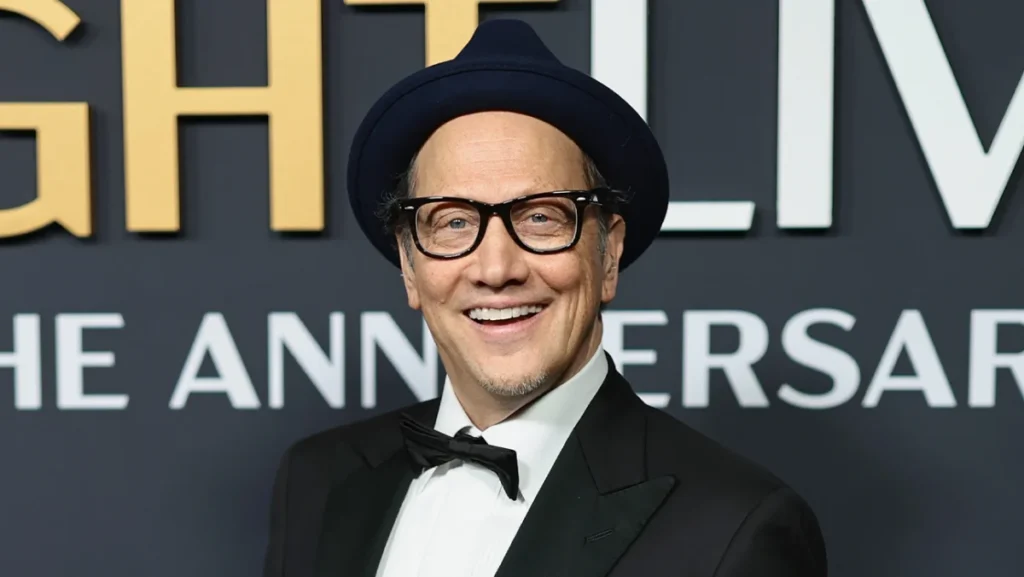

Actor and comedian Rob Schneider has publicly advocated for the restoration of a compulsory military draft for young Americans, a proposal made amidst heightened tensions between the United States and Iran. Schneider, who has no prior military service, articulated his vision for a renewed national commitment via a series of posts on the social media platform X, arguing that such a measure would foster national unity, instill discipline, and ensure a robust defense capability. His call has reignited a perennial debate in American society regarding civic duty, individual liberty, and the structure of the nation’s armed forces.
Schneider’s detailed proposal suggests that every American, upon reaching 18 years of age, should undertake two years of military service. He further elaborated that individuals could opt to fulfill part of this service overseas or contribute domestically in a volunteer capacity. The rationale underpinning his argument is multifaceted. He believes that the unparalleled freedoms and opportunities afforded to U.S. citizens come with a inherent cost, and that protecting these liberties necessitates collective sacrifice. According to Schneider, mandatory service would unite young people "regardless of race, creed or religion" in shared service to their country and to one another.
Beyond national defense, Schneider posited that reinstating a military draft would serve several societal purposes. He highlighted the benefit of a rigorous physical training course that participants could leverage throughout their lives, fostering a healthier and more disciplined populace. Furthermore, he argued that a conscripted force would ensure a perpetually ready standing army, capable of responding not only to external threats but also to domestic exigencies such as natural disasters. Schneider also contended that military service would provide young Americans with a profound appreciation for their country’s greatness and the unique freedoms it bestows, contrasting this experience with what he perceives as a lacking educational environment in contemporary universities. He emphasized that service would serve as a solemn reminder of those who have historically "paid the last full measure of devotion" to secure these freedoms.
Crucially, Schneider suggested that a draft representing "every segment of our society" would compel elected officials to be more circumspect and less "cavalier" about committing U.S. forces to faraway conflicts, as their own sons and daughters would also be subject to deployment. He concluded his appeal by stressing the urgency of this discussion and implementation, framing it as a vital step in safeguarding the nation’s future for successive generations. This celebrity endorsement of conscription injects a prominent voice into a discussion typically dominated by political and military strategists, inviting broader public discourse on a historically contentious issue.
Escalating Tensions Between the U.S. and Iran: The Geopolitical Backdrop
Schneider’s call for a draft comes against a backdrop of ongoing geopolitical friction between the United States and Iran, which has seen periods of significant escalation. While Schneider’s use of "ongoing war" may be an overstatement given the nature of current engagements, the U.S. military has indeed conducted strikes against Iranian-backed groups and assets in the region, particularly in Iraq and Syria. These actions often occur in response to attacks on U.S. personnel or interests. The original article references a period of coordinated military strikes by the Trump administration and Israel targeting Iranian military infrastructure, nuclear facilities, and leadership at the end of February. Such operations underscore the volatile nature of the relationship and the potential for wider conflict.
The historical trajectory of U.S.-Iran relations is marked by decades of mistrust and antagonism, punctuated by periods of direct and proxy confrontation. Following the 1979 Iranian Revolution, which saw the overthrow of the U.S.-backed Shah and the establishment of an Islamic Republic, relations rapidly deteriorated. Key flashpoints include the Iran hostage crisis, U.S. support for Iraq during the Iran-Iraq War in the 1980s, and ongoing disputes over Iran’s nuclear program and its regional influence.
A significant recent development was the 2015 Joint Comprehensive Plan of Action (JCPOA), an international agreement that aimed to limit Iran’s nuclear capabilities in exchange for sanctions relief. However, the U.S. withdrawal from the JCPOA in 2018 under the Trump administration, followed by the re-imposition of stringent sanctions, dramatically heightened tensions. This move led to Iran gradually reducing its compliance with the agreement and accelerating its nuclear enrichment activities.
The current environment is characterized by a "shadow war" involving cyberattacks, maritime incidents, and proxy conflicts across the Middle East. Both sides have repeatedly engaged in actions perceived as provocative, leading to a precarious balance where miscalculation could quickly escalate into direct military confrontation. The U.S. maintains a significant military presence in the region, aimed at deterring Iranian aggression and protecting its allies. This persistent state of tension, therefore, serves as the immediate context for Schneider’s advocacy for a stronger, more readily available national defense force.
A Look Back: The History of Conscription in the United States
The concept of mandatory military service is not new to the United States. Conscription has been a feature of American warfare since the nation’s inception, albeit one that has frequently generated significant social and political contention.
The earliest forms of conscription in America date back to the colonial militias, where able-bodied men were expected to serve. During the Revolutionary War, individual states occasionally resorted to drafts to fill their quotas for the Continental Army. The first federal conscription act was passed during the Civil War in 1863, leading to widespread riots and protests, notably in New York City. Opposition often stemmed from economic disparities, as wealthier individuals could pay a commutation fee or hire substitutes, effectively making it "a rich man’s war and a poor man’s fight."
Conscription was reintroduced for World War I with the Selective Service Act of 1917, registering nearly 24 million men and drafting 2.8 million. It was again utilized for World War II, beginning even before the U.S. officially entered the conflict, with the Selective Training and Service Act of 1940. This draft proved immensely successful, mobilizing over 10 million men and becoming a widely accepted part of the national effort.
The draft continued through the Korean War (1950-1953) and most controversially, the Vietnam War (1964-1973). The Vietnam-era draft sparked unprecedented levels of protest, civil disobedience, and evasion, driven by widespread opposition to the war itself and perceived inequities in the system. Exemptions for college students, for example, disproportionately affected lower-income and minority communities. The last U.S. military draft call was held on December 7, 1972.
In 1973, in the wake of the Vietnam War and under President Richard Nixon, the United States transitioned to an all-volunteer military force (AVF). This decision was based on several factors, including the desire to avoid the social unrest associated with conscription, the belief that a professional, volunteer force would be more effective, and a recognition that the demographic shifts in the military necessitated a new approach to recruitment. Since then, the U.S. military has relied entirely on volunteers, drawing individuals who choose military service as a career or a pathway to education and training.
Despite the absence of an active draft, the Selective Service System remains in place. Most male U.S. citizens and male immigrants residing in the U.S. are required to register with the Selective Service within 30 days of their 18th birthday, up until they turn 26. This registration ensures that a system is available should Congress and the President decide to reinstate conscription in a national emergency. Failure to register can result in significant penalties, including fines, imprisonment, and denial of federal benefits. The existence of the Selective Service System itself underscores the latent possibility of a draft, even as the nation has operated with an AVF for over five decades.
Arguments For and Against the Reinstatement of Conscription
Rob Schneider’s proposal for a renewed military draft opens up a complex debate with significant arguments both for and against its implementation.
Arguments for Conscription:
- National Unity and Shared Sacrifice: Proponents, echoing Schneider, argue that mandatory service could foster a stronger sense of national identity and shared civic responsibility. By bringing together young people from diverse backgrounds, a draft could bridge societal divides and cultivate a collective understanding of national purpose and sacrifice.
- Civic Education and Patriotism: A period of mandatory service, whether military or national, could educate young citizens about their country’s history, values, and the responsibilities that accompany citizenship, potentially boosting patriotism and civic engagement.
- Physical Fitness and Discipline: The rigorous physical training and structured environment of military service could instill discipline, teamwork, and improve the overall physical health of the youth, benefits that could extend throughout their lives.
- Larger, Readily Available Reserve Force: A conscripted force would significantly expand the pool of trained personnel, providing a robust reserve for national defense, humanitarian aid, and disaster response, as Schneider noted. This would reduce the strain on the smaller, professional AVF during multiple or prolonged crises.
- Increased Accountability of Politicians: As Schneider argued, if politicians knew their own children and the children of all constituents were subject to military service, they might exercise greater caution and deliberation before committing the nation to conflict, making war a more solemn decision.
- Social Cohesion: By mandating service across all socioeconomic strata, a draft could expose individuals to peers they might not otherwise encounter, fostering mutual understanding and breaking down social silos.
Arguments Against Conscription:
- Infringement on Individual Liberty: Critics argue that forced military service is a fundamental violation of individual freedom and autonomy, compelling individuals to undertake activities against their will, potentially risking their lives.
- Economic Inefficiency and Opportunity Cost: A draft diverts young people from education, career development, and the civilian workforce, imposing significant economic costs on individuals and the national economy. It forces individuals into roles they may not be suited for or excel in, potentially leading to lower productivity compared to a volunteer force.
- Lower Morale and Effectiveness: An all-volunteer force is generally considered more motivated, professional, and effective because its members choose to serve. Conscripts, particularly those unwilling to serve, may exhibit lower morale, higher rates of absenteeism, and reduced effectiveness, potentially degrading overall military capability.
- Social Unrest and Political Divisiveness: The historical record, particularly the Vietnam era, demonstrates that a draft can lead to widespread social unrest, protests, and deep political polarization, especially if a war is unpopular or perceived as unjust.
- Modern Warfare’s Specialization: Contemporary military operations increasingly rely on highly specialized skills, advanced technology, and professional expertise. Training conscripts for complex modern warfare can be costly, time-consuming, and potentially less effective than cultivating a long-term professional force.
- Cost Implications: Maintaining and equipping a much larger conscript army would entail enormous financial costs for training, pay, benefits, housing, and healthcare, potentially diverting resources from other critical national priorities.
- Ethical Concerns: The ethical implications of compelling individuals to kill or be killed, particularly those with moral or religious objections, raise significant concerns about conscientious objection and human rights.
Official Responses and Political Feasibility
Following the recent escalation with Iran, and indeed at various points of geopolitical tension, questions about a potential U.S. military draft frequently surface. However, the official stance from the White House, as reiterated in the original article, has consistently been that there are "no immediate plans for a draft." This position aligns with the long-standing commitment to the all-volunteer force model that has served the U.S. military for over five decades.
Reinstating a military draft in the United States would be an immensely complex undertaking, requiring significant political will and overcoming substantial hurdles. Legally, it would necessitate an act of Congress and the President’s approval, a process that would undoubtedly face intense scrutiny and debate from both sides of the political spectrum. Public sentiment, heavily influenced by the negative memories of the Vietnam-era draft, would likely be overwhelmingly against such a measure unless the nation faced an existential threat of unprecedented scale.
From a military perspective, the Department of Defense has consistently lauded the effectiveness and professionalism of the all-volunteer force. Senior military leaders often express that volunteers are more committed, adaptable, and easier to train for the highly technical and specialized demands of modern warfare. Transitioning back to a conscript system would require a fundamental rethinking of recruitment, training, logistics, and personnel management, a shift that many military strategists believe would be detrimental to current operational capabilities.
While a celebrity’s call for a draft, like Schneider’s, can ignite public discussion, it typically holds limited sway over official policy decisions. The political climate in the U.S. is highly polarized, and any move towards mandatory service would likely be viewed through a partisan lens, making bipartisan consensus exceedingly difficult to achieve. Furthermore, the economic implications, including the cost of expanding military infrastructure and personnel support for millions of new conscripts, would be staggering and require immense federal budgetary allocations.
Broader Impact and Implications
Should a draft be reinstated, the broader societal and economic implications would be profound. For the nation’s youth, it would fundamentally alter educational and career pathways. The prospect of mandatory service could lead to changes in college enrollment patterns, delayed entry into the workforce, and a re-evaluation of personal life plans. Industries reliant on young labor might face shortages, and the overall economic productivity could see shifts as a significant portion of the youth demographic is diverted to military service.
Culturally, a draft could reignite the debate over the fairness of exemptions, particularly for those pursuing higher education or with specific skill sets. It could also force a re-examination of the role of women in combat and military service, as current Selective Service registration applies only to males. While Schneider mentioned unity, the practical implementation of a draft could expose and exacerbate existing social inequalities if not carefully managed.
Alternatives to a purely military draft are often discussed in conjunction with national service. Concepts like universal national service, where young people could choose between military, civilian, or community-based service (e.g., AmeriCorps, Peace Corps, environmental conservation), offer a less coercive model that could still foster civic engagement and address societal needs without solely focusing on military readiness. Such models aim to capture the benefits of shared experience and national commitment without the contentious aspects of mandatory military conscription.
Ultimately, Rob Schneider’s impassioned plea for a return to mandatory military service underscores a sentiment shared by some that a more unified and disciplined national ethos is needed, especially in times of perceived external threat. However, the reintroduction of a military draft in the United States is a policy decision fraught with immense historical, social, economic, and political complexities. It challenges deeply held beliefs about individual liberty, the efficacy of an all-volunteer force, and the appropriate role of government in shaping the lives of its citizens. While the current official stance remains firmly against it, the ongoing geopolitical landscape and public discourse continue to ensure that the question of national service, in all its forms, remains a pertinent topic in the American public consciousness.