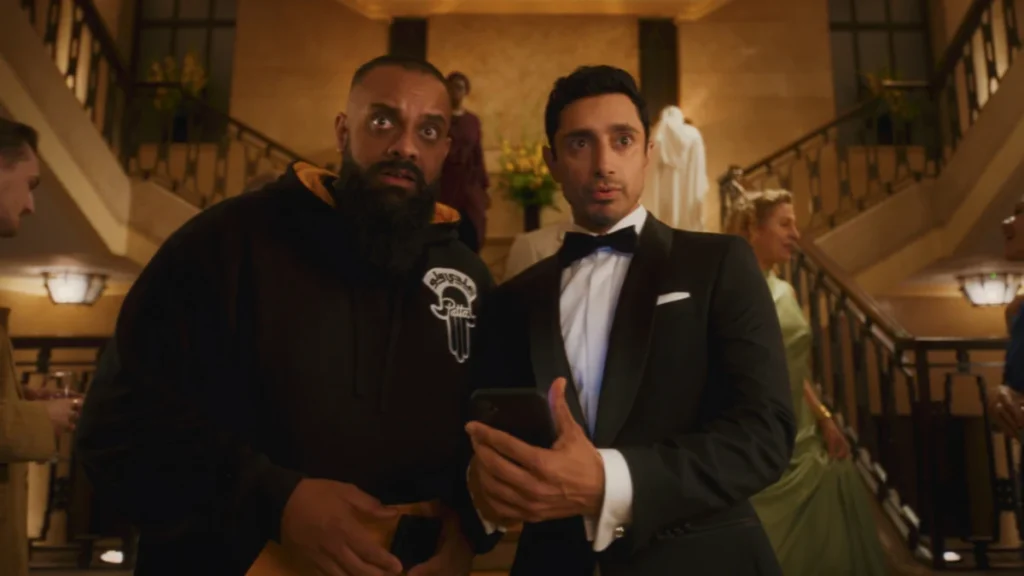

Riz Ahmed’s latest six-part comedy series, Bait, delves into the complex interplay of national identity, cultural representation, and the enduring mystique of the James Bond franchise. Released on Amazon, the series uses the arbitrary yet deeply resonant debate over who should portray the iconic British spy as a potent lens through which to explore what it means to be British in the 21st century, particularly for communities often marginalized or overlooked. While presenting initially as another satire of the entertainment industry, Bait quickly pivots to a profound examination of unresolved trauma, the desperate need for belonging, and the psychological toll of navigating a world that actively seeks to exclude.
The enduring fascination with James Bond, a character created by Ian Fleming, has long transcended mere cinematic casting. It has become a periodic national referendum on British identity itself. Pundits and fans typically fall into two distinct camps: the "strict constructionists" and the "loose constructionists." The former argue for an unwavering adherence to Fleming’s original descriptions, often overlooking the fact that Fleming died in 1964 and the geopolitical, social, and technological landscape has dramatically shifted since then. This perspective often insists on a very specific, traditionalist interpretation of Bond, rooted in a bygone era.
Conversely, "loose constructionists" contend that Fleming’s narratives, steeped in Cold War spycraft and a pre-digital world, allow for greater adaptability. They suggest that given the evolution of society – from the invention of cell phones and the widespread popularity of dishes like chicken tikka masala to the common acceptance of scientific theories like the Big Bang – the character of James Bond can and should evolve beyond a direct resemblance to figures like Hoagy Carmichael, whom Fleming reportedly envisioned. This debate invariably broadens beyond a simple casting choice, morphing into a series of deeper, more existential questions: "Who will play James Bond?" evolves into "Who gets to be considered to play James Bond?", then "Who gets to be considered sufficiently British to play James Bond?", and ultimately, "Who is British?" It is precisely this progression of inquiry that forms the thematic core of Ahmed’s Bait.
A Fictional Casting Call Ignites a National Debate
The series introduces Shah Latif, a Pakistani-British actor portrayed by Riz Ahmed, whose career has been characterized by a series of near-misses and unfulfilled potential. The narrative begins with Shah’s disastrous early audition for the role of James Bond, during which he freezes when confronted with an existential question from his audition co-star: "Tell me, when it’s just you all alone, how do you live with yourself? Do you even know who you are?" This profound query, a central driver for the entire series, paralyzes Shah, leading him to botch the reading.
In a moment of opportunistic inspiration, Shah deliberately exits through the studio’s front door, bypassing a production assistant who was guiding him to a discrete back exit to avoid paparazzi. This calculated move, caught by a waiting photographer, ignites a media firestorm. By the time Shah arrives for dinner with his family, his phone is inundated with rumors that he is the frontrunner for the coveted 007 role.
This incident sets the stage for a concentrated four-day narrative, meticulously crafted by Ahmed and co-showrunner Ben Karlin, with episodes directed by Bassam Tariq and Tom George. This period, strategically coinciding with Eid al-Fitr, the conclusion of Ramadan, forces Shah into a period of intense personal and professional inventory. He is compelled to confront not only what it would mean to embody James Bond but also, more critically, what it signifies to be a Pakistani-British man in contemporary London.
Family Dynamics and Societal Echoes
Shah’s family serves as a microcosm of broader societal reactions. His parents, Tahira (Sheeba Chaddha) and Parvez (Sajid Hasan), express a cautious optimism tempered with skepticism, reflecting the guarded hopes and historical disappointments of immigrant communities. His brother-cousin, Zulfi (Guz Khan), sees Shah’s newfound fame as a potential boon for his "Uber-for-Muslims" rideshare business, highlighting the intersection of familial ambition and entrepreneurial opportunism within a specific cultural context. His sister-cousin, Q (Aasiya Shah), is simply excited, with a subtle irony in her sharing a name with a beloved 007 character that goes unremarked upon within the series, perhaps symbolizing a generation less burdened by overt historical connections.
Shah’s agent, Felicia (Weruche Opia), views this unexpected media frenzy as the potential zenith of a career that has frequently flirted with success but rarely consummated it. Meanwhile, the internet, true to its nature, quickly becomes a cesspool of escalating threats and disapproving media coverage. This includes a thought-provoking column penned by Shah’s ex-partner, Yasmin (Ritu Arya), who critically argues that a Pakistani-British man playing James Bond would not fundamentally dismantle the character’s "neo-colonial stench," questioning the efficacy of superficial diversity without deeper systemic change.
For Shah himself, the sudden spotlight intensifies a lifetime of internalized self-hatred and easily triggered memories. Growing up in a London marked by decades of anti-immigrant and specifically anti-Pakistani sentiment, he carries the scars of bullying and abuse. The recurring confusion with fellow British-Asian actor Dev Patel underscores a persistent struggle with individual identity within a dominant culture that often conflates minority groups. This internal conflict is a powerful undercurrent, exposing the psychological burden of being an "other" even when ostensibly on the brink of mainstream acceptance.
Artistic Aspirations and Narrative Challenges
Bait distinguishes itself from typical entertainment industry satires like HBO’s Hacks, Apple TV+’s The Studio, or HBO’s The Franchise. Instead, it aligns more closely with Disney+’s Wonder Man, mixed with elements of Netflix’s Baby Reindeer, in its ambitious exploration of how a dream role in a blockbuster franchise can become a proxy for unresolved trauma and a desperate, deeply personal quest for belonging in a world designed to exclude.
The series is described as being "constantly on the verge of a breakthrough," perpetually "on the edge of finding a next gear either satirically or emotionally." While it may not fully achieve "greatness," it is lauded as "interesting and worthy of admiration," with glimpses of its potential shining through. This assessment mirrors critical reception for Wonder Man, suggesting the inherent difficulty in perfecting this particular genre that blends industry critique with profound personal drama. Bait‘s deeper aspirations, however, are seen as more compelling than the more limited, albeit fulfilled, ambitions of some of its contemporaries.
The four days of Shah’s ordeal are structured around several pivotal events, designed to inject both comedic zaniness and dramatic tension. These include a podcast taping that introduces an unexpected figure, multiple family gatherings that highlight cultural traditions and intergenerational dynamics, a museum gala unveiling a controversial exhibit, and a semi-romantic evening spent on East London’s vibrant Brick Lane, one of several distinctive neighborhoods given a vivid showcase. These set pieces provide opportunities for recognizable guest stars, such as Himesh Patel (Station Eleven) and Nabhaan Rizwan (Kaos), who portray Shah’s professional and familial rivals, exuding a Bond-ian confidence that Shah conspicuously lacks. Rafe Spall delivers an unexpectedly humorous performance as a security expert, seemingly drawn by the prestige of assisting the potential next 007.
However, the rapid succession of these events and the show’s six half-hour episode format sometimes hinder its ability to fully engage with the dramatic and psychological complexities it introduces. The audacious nature of some of Shah’s psychological struggles and the family’s history of mental illness are presented but often quickly sidestepped. The series tends to "say the things it wants to say quickly," particularly in a finale that, while conclusive, ties together thematic elements perhaps "a little too neatly," leaving some deeper emotional arcs feeling underdeveloped. Shah’s tenuous grip on reality, exacerbated by fasting during Ramadan, adds a critical layer to his identity crisis, underscoring the mental and emotional strain of his situation.
Performances and Cultural Resonance
Riz Ahmed, who also co-wrote the pilot, delivers a challenging performance in a role that clearly contains autobiographical echoes, even if the larger narrative is fictional. Known for his powerful dramatic work in projects like The Night Of and Sound of Metal, Ahmed skillfully showcases the comic chops previously seen in Four Lions. His scenes with Guz Khan, who imbues Zulfi’s entrepreneurial desperation with an underlying current of anger, are particularly effective.
The fourth episode, a two-hander featuring Ahmed and Ritu Arya, stands out as a series highlight. It depicts an East London odyssey stemming from Shah’s frustration with Yasmin’s critical column, allowing both characters to air grievances about their past relationship. Arya, previously praised for her roles in The Umbrella Academy and Polite Society, brings a thoroughly appealing dimension to this smaller but significant part, demonstrating the show’s capacity for focused, character-driven drama.
Broader Implications: Identity, Representation, and the Future of Icons
Bait arrives at a time of intense global discussion about identity, representation, and the evolution of cultural icons. The debate over who can portray James Bond is not merely about an actor’s talent but about what an iconic character symbolizes in a rapidly changing world. For decades, Bond has been a bastion of a particular, often colonial, vision of British masculinity. Challenging that image with a Pakistani-British actor directly confronts ingrained perceptions of Britishness.
The series implicitly taps into statistics regarding diversity in media, where actors from minority backgrounds have historically been underrepresented in leading roles, particularly in major franchises. Public opinion polls on Bond casting have often revealed a generational and cultural divide, with younger and more diverse audiences generally being more open to progressive casting choices, while a segment of older, traditionalist viewers expresses resistance. This mirrors the fictional internet backlash Shah Latif faces.
The timing of Bait during Eid al-Fitr adds another layer of cultural authenticity and significance. It grounds Shah’s personal crisis within a specific cultural and religious context, highlighting the intersectional nature of identity for many British Muslims. The show subtly references the historical anti-immigrant sentiment that has plagued parts of London and the UK, providing crucial background context for Shah’s internalized struggles and the societal pressures he faces. The term "Pakistani-British" itself signifies a hyphenated identity that is often scrutinized for its "British" component.
By exploring a "brown face" Bond, Bait forces viewers to consider whether such a casting would truly be a step towards decolonizing popular culture or merely a superficial gesture. Yasmin’s character articulates this skepticism, reflecting a critical perspective that questions whether representation alone, without a deeper interrogation of the character’s inherent politics and history, is sufficient for meaningful change. This analysis touches upon ongoing academic and public discourse regarding cultural appropriation versus authentic representation.
While Amazon has not officially labeled Bait as a limited series, and its finale provides a sense of narrative closure, the show’s palpable proximity to something truly extraordinary leaves room for further exploration. The critical consensus suggests that Ahmed’s creation is rich enough in its thematic ambition and character development that a second season, particularly one timed to a real-world announcement of the next James Bond (who is, statistically speaking, unlikely to be an actor quite like Shah Latif), could reopen its narrative and spiritual wounds for even deeper revelations. Such a continuation could further unpack the complex questions Bait so bravely poses about identity, belonging, and the transformative power of cultural symbols in a world grappling with its past and striving to redefine its future.