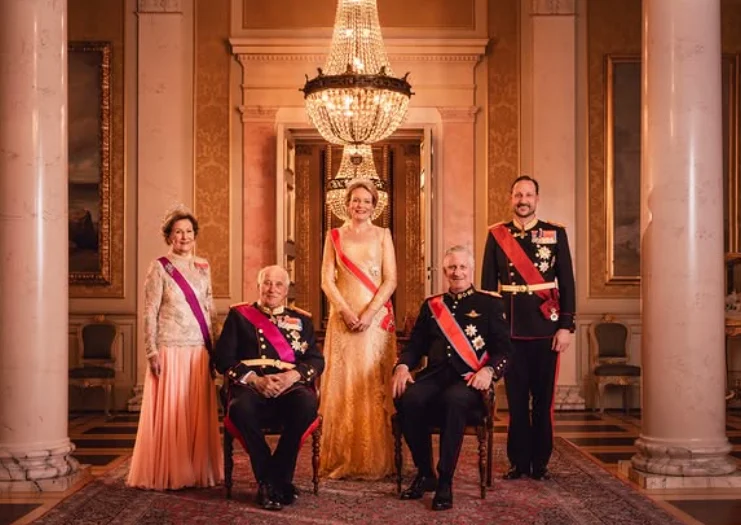

Queen Mathilde of the Belgians has made a resplendent sartorial statement, choosing to wear one of the most significant jewels in the Belgian Crown’s collection, the "Nine Provinces" tiara, during a recent State Visit to Norway. The selection of this iconic diadem, a dazzling cascade of diamonds, carries an especially poignant significance in 2026, as it marks the centenary of its arrival in Belgium. This historic occasion imbues Queen Mathilde’s choice with layers of symbolism, connecting the present royal family to its past and underscoring enduring dynastic ties.
The "Nine Provinces" tiara, a piece renowned for its strikingly modern design that belies its vintage, was originally crafted in 1926. Its creation coincided with a pivotal moment in European history, following the tumultuous aftermath of World War I. Many royal houses had crumbled, ushering in a new era for monarchies, one that demanded a visual representation of resilience and forward-thinking leadership. This tiara, commissioned for Princess Astrid of Sweden upon her marriage to Leopold, the then heir to the Belgian throne, stands as a testament to this evolving royal aesthetic. It is widely considered the first major tiara creation of the Roaring Twenties and the first significant diadem designed for a queen since the seismic shifts of the early 20th century. Its design clearly reflects the burgeoning influence of the Art Deco movement, a style that permeated all facets of design and culture, imbuing the tiara with a distinctively contemporary flair for its time.
A Tiara of Modernity and Evolution
The architectural brilliance of the "Nine Provinces" tiara lies in its innovative construction. Composed of two distinct, yet seamlessly integrated, diamond-encrusted elements, it culminates in a magnificent, towering piece. The foundation of the diadem is a discreet bandeau, adorned with a meander motif, a popular and enduring design element in early 20th-century royal jewelry. The original iteration of the tiara was further distinguished by a series of impressive diamond "toppers"—large, individual stones designed to be mounted on spikes atop the base, creating a dramatic and commanding silhouette.
The tiara was a wedding gift to Princess Astrid, presented on behalf of the Belgian people, though its creation and meticulous craftsmanship were the work of the esteemed Belgian jeweler, Van Bever. The original design perfectly suited the fashion-forward Princess Astrid, who was celebrated for her contemporary style. However, as she embraced her role as Duchess of Brabant, Astrid demonstrated her evolving personal taste and adaptability by commissioning additional diamond arches. These were ingeniously designed to surmount the existing "toppers," lending the tiara an even more unusual and avant-garde shape. Princess Astrid was known to wear the tiara with the base positioned across her forehead, a bold styling choice that amplified its striking presence and further cemented its reputation as a symbol of modern elegance.
Upon her husband’s ascension to the throne as King of the Belgians in 1934, the tiara transitioned from a ducal jewel to that of a queen, a status it has retained ever since.
A Legacy of Queens and a Royal Connection
Queen Astrid’s reign, though tragically brief, left an indelible mark on Belgian royalty. She tragically died in a car accident in 1935, just over a year after her husband became King. Her untimely death was a moment of profound national mourning. Following her passing, the "Nine Provinces" tiara became exclusively reserved for queens, a symbol of the enduring legacy of its first royal wearer. This tradition continued when her son, King Baudouin, married Fabiola in 1960; the tiara was then passed to his bride. Subsequent Belgian queens, including Queen Paola and, from 2013, Queen Mathilde, have continued to wear this significant piece, each adding their own chapter to its storied history. Queen Mathilde became eligible to wear the tiara upon her husband King Philippe’s accession to the throne in 2013.
The recent appearance of the "Nine Provinces" tiara at the State Banquet hosted by King Harald V and Queen Sonja of Norway in Oslo, in honor of King Philippe and Queen Mathilde, carried an additional layer of personal and dynastic significance. This particular event highlighted a less commonly known but deeply resonant familial connection: Queen Astrid was the maternal aunt of the current King Harald V of Norway. Although they never met, with King Harald born in 1937, two years after Queen Astrid’s death, her influence extended to the Norwegian royal family. Queen Astrid’s sister, Princess Märtha of Sweden, and her husband, Crown Prince Olav (later King Olav V), named their second daughter after her, Princess Astrid of Norway, born in 1932. Significantly, Queen Astrid herself was among the godparents of her Norwegian namesake. This familial thread, woven through generations, adds a profound personal dimension to Queen Mathilde’s choice, subtly acknowledging shared heritage and historical bonds between the two royal houses.
Supporting Data and Chronological Context
- 1926: The "Nine Provinces" tiara is created for Princess Astrid of Sweden by Belgian jeweler Van Bever. It is a significant commission, marking a new era in tiara design influenced by Art Deco.
- 1926: Princess Astrid marries Leopold, heir to the Belgian throne, and the tiara becomes part of the Belgian royal collection.
- Circa 1930s: Princess Astrid commissions diamond arches to modify the tiara, creating a more avant-garde silhouette.
- 1934: Leopold becomes King of the Belgians, and Astrid becomes Queen. The tiara is now officially a Queen’s tiara.
- 1935: Queen Astrid tragically dies in a car accident.
- 1960: Queen Fabiola, bride of King Baudouin, wears the "Nine Provinces" tiara, establishing its role as a tiara for queens.
- 2000s: Queen Paola continues the tradition of wearing the tiara.
- 2013: Upon King Philippe’s accession, Queen Mathilde becomes eligible to wear the tiara.
- 2026: Queen Mathilde wears the "Nine Provinces" tiara during a State Visit to Norway, marking the tiara’s centenary in Belgium and acknowledging a familial link to the Norwegian royal family.
The "Nine Provinces" tiara’s journey through the 20th century mirrors the shifting tides of European royalty. Emerging from the ashes of World War I, its Art Deco design represented a departure from earlier, more ornate styles, embracing a clean, geometric aesthetic that symbolized modernity and progress. The fact that it was commissioned for a foreign princess marrying into the Belgian royal family underscores the strategic importance of royal marriages in forging alliances and strengthening national identity during that era. The subsequent modifications by Queen Astrid herself speak to a growing personal agency and a desire for individual expression within the confines of royal protocol.
Broader Implications and Royal Diplomacy
Queen Mathilde’s deliberate choice to wear the "Nine Provinces" tiara during the Norwegian State Visit is far more than a mere fashion statement; it is a sophisticated exercise in royal diplomacy and historical continuity. By selecting a jewel with such a rich and multifaceted past, she subtly communicates the enduring strength and stability of the Belgian monarchy. The tiara’s centenary serves as a powerful reminder of the long lineage of Belgian queens, reinforcing the legitimacy and historical depth of the current reign.
Furthermore, the personal connection to the Norwegian royal family, through Queen Astrid’s shared ancestry with King Harald V, adds a unique and touching dimension to the diplomatic overtures. This acknowledgment of shared heritage can foster a sense of warmth and deeper understanding between the two nations, transcending purely political discourse. In an era where public perception of monarchies can be varied, such gestures of historical remembrance and personal connection can resonate deeply with the public, reinforcing the romantic and symbolic aspects of royal life.
The selection of such a significant piece also highlights the careful consideration that goes into royal engagements. Each element, from the choice of attire to the jewels worn, is imbued with meaning and contributes to the overall narrative of the royal family. Queen Mathilde’s choice of the "Nine Provinces" tiara, at this specific juncture, speaks volumes about her understanding of royal symbolism and her commitment to honoring the rich tapestry of Belgian royal history while simultaneously engaging in contemporary diplomatic relations. It is a testament to the enduring power of tradition and its ability to adapt and thrive in the modern world. The tiara, a century after its creation, continues to shine, a brilliant emblem of a continuous royal legacy.