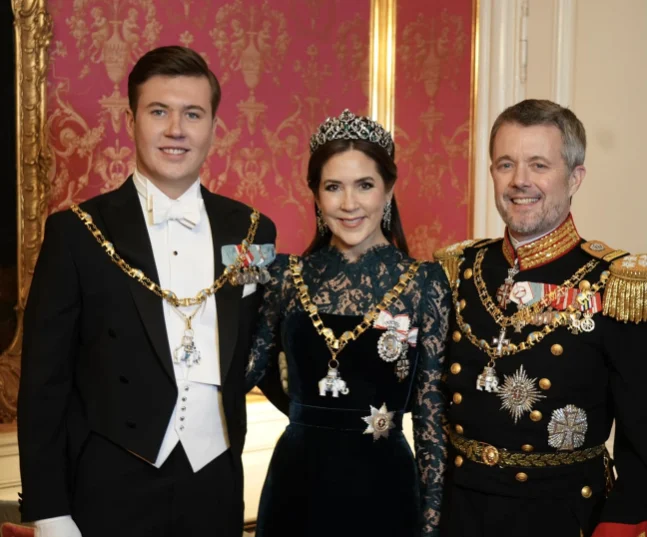

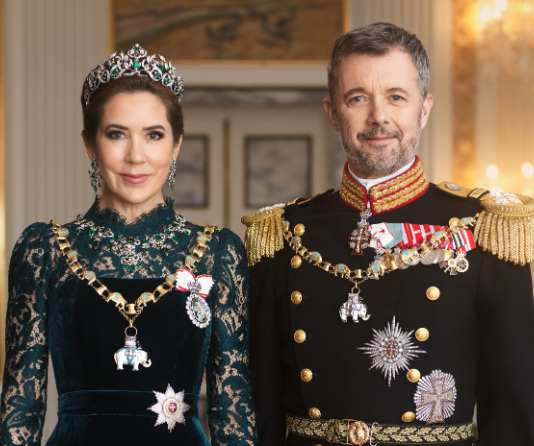
Queen Mary of Denmark has made a striking debut in her first official gala portrait since her husband, King Frederik X, ascended to the Danish throne in January 2024. The newly released portrait showcases Queen Mary adorned with the Danish Emerald Parure Tiara, a piece steeped in royal history and significance. This momentous occasion not only highlights a pivotal moment in Queen Mary’s reign but also underscores the enduring legacy of Danish royal jewelry and the traditions it represents. The tiara, a singular emerald masterpiece within the Danish Royal Family’s collection, is distinguished by its impressive 67 emeralds and over 2,600 diamonds, making it a breathtaking symbol of regal elegance and historical continuity.
A Royal Legacy Unveiled: The Danish Emerald Parure Tiara
The origins of the Danish Emerald Parure Tiara are deeply intertwined with the history of the Danish monarchy, tracing back to the 18th century. The magnificent tiara, a cornerstone of the Danish Crown Jewels, was commissioned by King Christian VIII for his wife, Queen Caroline Amalie, to commemorate their silver wedding anniversary. This act of royal patronage established a tradition of significant jewelry pieces being created to mark important dynastic milestones.
The emeralds themselves possess a lineage that predates their incorporation into the tiara. A significant portion of these vibrant green gemstones originates from a collection acquired by King Christian VI in 1723 for his queen, Sophie Magdalene. Further enriching the tiara’s historical tapestry, some of the emeralds were once part of the personal collection of Princess Charlotte. This meticulous assembly of precious stones from various royal inheritances speaks to the enduring value placed on these jewels by successive generations of Danish royalty.
The renowned jeweler C.M. Weisshaupt was entrusted with the creation of the Danish Emerald Parure Tiara, completing the exquisite piece for Queen Caroline Amalie to wear at her silver wedding celebrations in 1840. The parure, a coordinated set of jewelry, also includes a matching necklace, a pair of earrings, and a versatile brooch. This brooch is ingeniously designed to be divisible into three smaller brooches or to function as a pendant for the necklace, showcasing the craftsmanship and adaptability of the era. The parure, as a whole, represents a significant investment in artistry and a testament to the wealth and standing of the Danish Crown during the 19th century.

The Evolution of Crown Jewels and Dynastic Succession
The concept of formalizing royal jewels as "crown jewels" – a collection intended to be passed down through generations – can be attributed to Queen Sophie Magdalene. Through her will, she established a precedent for a set of jewels designated for the reigning queen, ensuring a continuity of royal regalia. This foresight laid the groundwork for the Danish Crown Jewels as we understand them today.
The public display of these invaluable treasures further solidified their place in national heritage. By 1914, Queen Alexandrine decreed that the Crown Jewels, when not in ceremonial use, would be publicly exhibited at Rosenborg Castle. This decision not only democratized access to a tangible piece of Danish history but also reinforced the idea that these jewels are not merely personal possessions but symbols of the nation and its monarchy. The decision to make them publicly accessible, while still under strict control for use, reflects a growing awareness of public engagement with royal institutions.
Queen Mary’s Reign and the Emerald Tiara
The Danish Emerald Parure Tiara is subject to a strict rule of succession: it can only be worn by the reigning Queen of Denmark. This bespoke regulation ensures that the tiara remains a potent symbol of the female head of the Danish monarchy. Since King Frederik X’s accession in January 2024, Queen Mary has had the distinct honor of wearing this historically significant piece on several occasions.
Her most recent appearance in the tiara for her official gala portrait marks a significant milestone. It signifies her full embrace of her role as Queen Consort and her readiness to embody the traditions and responsibilities associated with the Danish Crown. This portrait, released shortly after the first New Year’s galas of King Frederik’s reign, underscores the seamless transition of royal power and the enduring presence of Queen Mary at the heart of the Danish monarchy.
A Symbol of the Monarchy: Historical Significance and National Identity
Queen Margrethe II, Queen Mary’s predecessor, frequently wore the Danish Emerald Parure Tiara at significant ceremonial events, including her own birthday celebrations. During her long and celebrated reign, the tiara became inextricably linked with her image and, by extension, with the stability and continuity of the Danish Monarchy itself. Its appearances at key national events served to reinforce its status as a symbol of the country’s heritage and its enduring royal institution.

The tiara’s presence at such high-profile events also served to connect the present with the past, reminding Danes of the long lineage of monarchs who have reigned over their nation. Each time the tiara is worn, it carries with it the echoes of its previous wearers and the historical moments they represent. This intergenerational connection is a vital aspect of monarchical tradition, fostering a sense of shared history and national pride.
The Strict Protocols of Crown Jewels: Ensuring National Sovereignty
Beyond its dynastic succession, the Danish Emerald Parure Tiara is subject to another stringent protocol: the Crown Jewels cannot be taken out of the country. This rule is not merely a logistical constraint; it is a powerful statement of national sovereignty and the intrinsic connection between the royal regalia and the Danish realm. It ensures that these irreplaceable artifacts remain within Denmark, serving as a constant reminder of the nation’s heritage and its sovereign status.
This restriction means that Queen Mary can only wear the tiara within Denmark’s borders. This limitation, while significant, does not diminish its importance. Instead, it heightens the significance of its appearances within the country, making each instance a noteworthy event for both the royal family and the Danish public. The tiara’s presence at official events within Denmark reinforces its role as a symbol of national identity and royal authority.
The Official Portrait: A New Chapter in Royal Representation
The unveiling of Queen Mary’s official gala portrait is more than just a visual representation; it is a carefully curated statement about the monarchy’s direction and its future. The choice of the Emerald Parure Tiara is deliberate, signaling a respect for tradition while simultaneously marking Queen Mary’s personal ascendance within the royal hierarchy. The portrait captures a moment of regal poise and quiet strength, reflecting the image Queen Mary has cultivated throughout her years as Crown Princess and now as Queen.
This portrait will undoubtedly be reproduced and displayed in various official capacities, serving as the primary visual representation of Queen Mary for years to come. Its impact extends beyond mere aesthetics, contributing to the public perception of the monarchy and its key figures. The inclusion of such a historically rich and visually striking piece of jewelry elevates the portrait beyond a standard royal photograph, imbuing it with layers of meaning and historical resonance.
Broader Implications for the Danish Monarchy
The significance of this portrait and the choice of the Emerald Parure Tiara can be analyzed through several lenses. Firstly, it underscores the Danish Royal Family’s commitment to preserving and showcasing its rich heritage. By selecting a piece with such a deep historical lineage, Queen Mary and the Royal Household are emphasizing the continuity and longevity of the monarchy.
Secondly, it signifies Queen Mary’s established role and confidence as Queen. Her ability to carry such a historically significant and visually impactful piece of jewelry with grace and authority reinforces her position as a capable and respected consort. This is crucial for public perception, especially during the initial phase of a new reign.
Thirdly, the strict protocols surrounding the Crown Jewels highlight the unique nature of monarchical collections. Unlike private art or jewelry collections, crown jewels are intrinsically linked to the state and its sovereignty. The rules governing their use and display are designed to protect this connection and ensure their preservation for future generations.
The Danish Emerald Parure Tiara, with its 67 emeralds and over 2,600 diamonds, is not merely a collection of precious stones. It is a repository of history, a symbol of dynastic succession, and a tangible link to the past. Queen Mary’s decision to feature it in her first official gala portrait as Queen is a powerful affirmation of her commitment to these enduring traditions, while simultaneously marking her own significant place in the ongoing narrative of the Danish Monarchy. As Denmark embarks on this new royal chapter, this portrait serves as a compelling visual testament to the strength, continuity, and enduring legacy of its royal heritage. The careful curation of such moments, from the selection of jewelry to the composition of official portraits, plays a vital role in shaping the public’s understanding and appreciation of the monarchy in the 21st century.