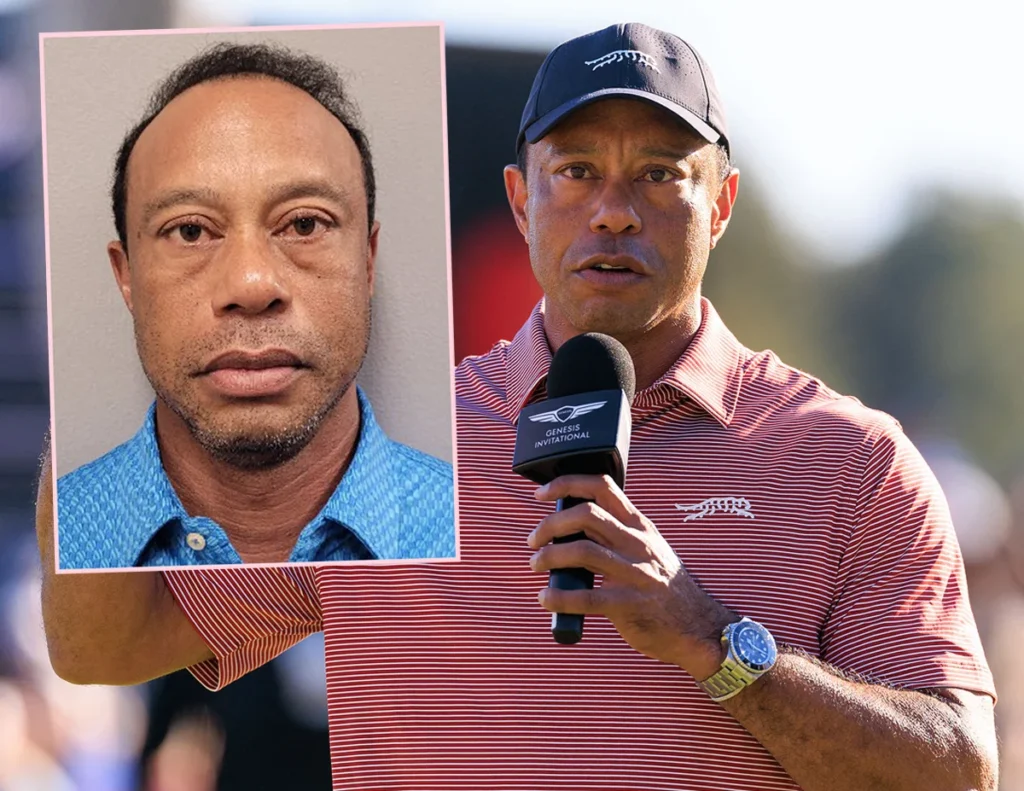

Golfing legend Tiger Woods was arrested on charges of driving under the influence (DUI) in Jupiter, Florida, on Friday afternoon, following a single-vehicle rollover crash that garnered immediate national attention. The incident, which thankfully resulted in no injuries, has reopened discussions about the athlete’s personal struggles and driving history, with an anonymous former employee providing insights into Woods’ alleged long-standing habit of fast driving. In addition to the DUI charge, Woods also faces allegations of causing property damage and refusing to submit to a urinalysis test, further complicating the legal landscape of the incident.
Chronology of the Incident
The events unfolded on Friday afternoon when Woods was involved in a car crash near his Jupiter Island home. According to initial police reports, Woods was driving at a high rate of speed when his vehicle clipped the rear end of a pickup truck attempting to turn into a driveway. The impact caused Woods’ car to flip over onto its driver’s side. Despite the severity of the collision, local law enforcement confirmed that no other individuals were injured in the accident, a fortunate outcome given the nature of a rollover crash.
Upon the arrival of Martin County Sheriff’s deputies at the scene, Woods reportedly appeared "lethargic" and exhibited signs consistent with impairment. Authorities administered a breathalyzer test, which surprisingly registered a 0.00% blood alcohol content, indicating that alcohol was not a factor in the impairment. However, experts evaluating Woods at the scene concluded that his impaired state was likely due to "some type of medication or drug." No illicit drugs or alcohol were discovered within his vehicle at the crash site. Subsequently, at the police station, Woods reportedly refused to submit to a urinalysis test, a decision that carries its own set of legal ramifications under Florida law. He was formally arrested and later released from custody. As of this report, Woods has not issued a public statement addressing the incident.
Background Context and Driving History
This recent incident is not an isolated event in Tiger Woods’ life concerning vehicular mishaps. The athlete has a documented history of involvement in car accidents, some of which have been highly publicized and severe. Perhaps most notably, in February 2021, Woods sustained catastrophic leg injuries in a single-vehicle crash in Los Angeles County, California. That accident, which required extensive surgery and a prolonged rehabilitation period, nearly cost him his leg and sidelined him from professional golf for over a year. Prior to that, in November 2009, Woods was involved in another single-vehicle crash outside his then-home in Florida, an incident that became a catalyst for widespread scrutiny into his personal life.
The pattern of incidents has prompted questions and commentary, particularly from those who have observed Woods’ driving habits firsthand. An anonymous former longtime employee, speaking to Dailymail.com on Friday night, stated unequivocally, "The guy is a terrible driver." This individual, who requested anonymity due to the sensitive nature of their past employment, elaborated on Woods’ alleged penchant for speed: "He drives like a bat out of hell very often on a road where lawn services are parked with heavy equipment. I’ve been with him in the car going 55 or 60 mph, driving past cops who don’t seem to care." These anecdotal accounts suggest a long-standing disregard for speed limits and road safety, which, if accurate, provides a troubling context for the recent rollover crash.
Medical Context and Prescription Medication
The initial police assessment indicating impairment by "medication or drug" rather than alcohol aligns with a theory put forth by the former employee and also resonates with Woods’ well-documented medical history. The insider suggested that Woods’ refusal to provide a urine sample stemmed from his alleged reliance on heavy doses of prescription opioids, a consequence of his extensive and well-publicized health struggles. "He has been on tons of pain medication for years," the source claimed.
Tiger Woods has undergone numerous significant surgeries throughout his illustrious but physically demanding career. These include multiple back surgeries, knee operations, and the recent, severe leg reconstruction following the 2021 crash. Such extensive medical interventions often necessitate prolonged pain management, frequently involving powerful prescription painkillers. Opioids, while effective for severe pain, are known to cause a range of side effects that can significantly impair cognitive function and motor skills, including drowsiness, dizziness, confusion, and slowed reaction times. These symptoms could easily manifest as the "lethargic" and impaired behavior observed by law enforcement at the scene of the crash.
Martin County Sheriff John Budensiek confirmed that Woods himself informed police about his various surgeries during the assessment process, information which officers reportedly took into consideration. However, despite this context, Woods ultimately failed several field sobriety tests administered by the officers, further solidifying the police’s determination of impairment. The connection between his ongoing recovery, potential pain medication use, and the observed impairment forms a critical aspect of understanding the circumstances surrounding his arrest.
Legal Framework and Implications
The charges against Tiger Woods fall under Florida’s robust DUI statutes. In Florida, a person can be charged with DUI not only for impairment by alcohol but also by any controlled substance or chemical substance to the extent that their normal faculties are impaired. This includes legally prescribed medications if they affect a person’s ability to drive safely. The fact that Woods’ breathalyzer test registered 0.00% shifts the focus of the prosecution from alcohol intoxication to drug-induced impairment.
A significant legal hurdle for Woods will be his refusal to submit to a urinalysis test. Under Florida’s implied consent law, by driving on public roads, individuals implicitly consent to chemical tests (blood, breath, or urine) if arrested for DUI. Refusal to submit to such a test can lead to an automatic suspension of driving privileges for at least one year for a first refusal, and for longer periods for subsequent refusals. Furthermore, in a court of law, a driver’s refusal to take a chemical test can often be used by the prosecution as evidence of guilt, implying that the driver had something to hide. While the former employee expressed belief that Woods was not on "illegal drugs," stating, "I know the guy, that’s just not what he does," the legal distinction between illegal and prescribed drugs becomes blurred when impairment is the core issue.
For a first-time DUI offense in Florida, penalties can include fines ranging from $500 to $1,000, imprisonment for up to six months, probation, mandatory DUI school, community service, and vehicle impoundment. The refusal to provide a urine sample could also exacerbate these penalties. Woods’ legal team will undoubtedly face the challenge of navigating these complexities, potentially arguing that his condition was a direct result of prescribed medication for legitimate medical reasons, and that his refusal was not an admission of guilt but perhaps influenced by his impaired state or a misunderstanding of the legal implications.
Broader Impact and Public Perception
The arrest of Tiger Woods carries significant implications, extending beyond the immediate legal ramifications. For a global icon who has spent years meticulously rebuilding his public image after past scandals and injuries, this incident presents another formidable challenge.
Career Implications: Woods had only recently made a highly anticipated return to professional golf after his severe 2021 crash. His participation in the Masters Tournament earlier this year, defying expectations, symbolized a monumental comeback. This DUI arrest, regardless of its ultimate legal outcome, casts a shadow over his athletic endeavors. Sponsors, who are often sensitive to the public conduct of their endorsees, will be closely watching the developments. While Woods’ brand is undeniably resilient, repeated controversies could test the patience of even his most loyal corporate partners. The mental and physical toll of legal proceedings and renewed public scrutiny could also impact his training and performance, potentially derailing his efforts to return to competitive form.
Personal Implications: Beyond the professional realm, the incident highlights the ongoing personal struggles of a man who has lived much of his adult life under an intense spotlight. The chronic pain associated with his extensive surgical history is a profound challenge, and the alleged reliance on pain medication underscores the delicate balance athletes often face between managing physical ailments and maintaining sobriety and clear judgment. This event could prompt a deeper look into his health and wellness strategies, potentially necessitating more comprehensive approaches to pain management that minimize impairment risks.
Public Perception: The public’s reaction to Tiger Woods has historically been complex, oscillating between admiration for his unparalleled talent and disappointment over his personal missteps. This latest incident, particularly if linked to prescription drug impairment, could elicit a mix of sympathy for his health battles and concern over his judgment. The narrative will likely evolve as more details emerge, but it undeniably adds another layer to the intricate public persona of one of sports’ most compelling figures.
As the legal process unfolds, the world will be watching to see how Tiger Woods addresses these new challenges. His silence since his release suggests a strategic approach, likely guided by legal counsel. The Jupiter community, the golfing world, and the broader public await further statements and resolutions regarding this latest chapter in the tumultuous life of a sporting legend.