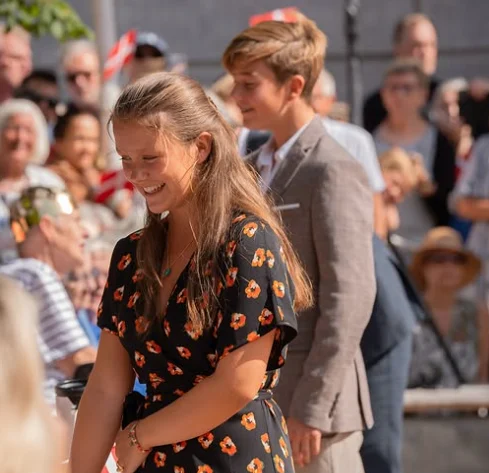

Princess Isabella of Denmark, a prominent figure second in line to the Danish throne, is set to commence a significant period of military training, marking a pivotal moment in her royal journey and reflecting a broader shift in national service obligations. The princess, who will celebrate her 19th birthday in the coming weeks, is scheduled to dedicate 11 months to military service, beginning this summer. This commitment follows directly on the heels of her completion of secondary education, which concludes this summer.
The rigorous training will see Princess Isabella integrated with the esteemed Guard Hussars Regiment, a unit with a distinguished history and one that has previously served as the training ground for her elder brother, Crown Prince Christian. This choice of regiment underscores a familial legacy of military service within the Danish Royal Family and aligns with the princess’s own path toward fulfilling her future constitutional role.
A New Mandate: Compulsory Service for All Young Danes
Princess Isabella’s impending military service places her among the vanguard of young individuals in Denmark who will be subject to newly implemented compulsory national service. Introduced earlier in 2026, these updated regulations mandate that all physically fit 18-year-olds undertake an 11-month period of service. The primary objective behind this legislative reform is to bolster Denmark’s defence capabilities, with a strategic aim to expand the nation’s battle-ready forces to an estimated 7,500 personnel. This initiative represents a significant recalibration of Denmark’s defence strategy in response to evolving geopolitical landscapes and security concerns.
Historically, military service in Denmark has been optional for women, though a considerable number have voluntarily enlisted, demonstrating a strong sense of civic duty and a desire to contribute to national security. The new legislation ensures a more equitable distribution of responsibility and a broader pool of trained individuals available for national defence.
The Rigors of Service: A Comprehensive Training Program
In accordance with the new national service framework, Princess Isabella, like all her peers entering military service, will undergo a comprehensive program comprising two distinct phases: five months of intensive foundational training, followed by six months of operational service. This structured approach is designed to equip all conscripts with essential military skills, discipline, and operational readiness. The foundational training will likely encompass a broad spectrum of military disciplines, including physical conditioning, weapons handling, tactical manoeuvres, and military law. The subsequent operational service phase will see the conscripts integrated into active units, contributing to the daily functions and readiness of the Danish Armed Forces.
Crown Prince Christian, who previously completed his military formation with the same regiment, has continued his service, remaining an active member of the military. This demonstrates a long-term commitment to national defence and positions him as a future leader within Denmark’s armed forces, a role that will undoubtedly be integral to his responsibilities as the future King. His experience provides a valuable precedent and potential mentorship for Princess Isabella as she embarks on her own military journey.
Royal Family Engagements and Future Milestones
Beyond Princess Isabella’s significant undertaking, the Danish Royal Family is anticipating several other noteworthy events in the coming weeks. Her twin siblings, Prince Vincent and Princess Josephine, are scheduled to undergo their confirmation in April. This religious milestone is a significant rite of passage in many Christian traditions and will be a moment of personal and familial importance. Their grandmother, Queen Margrethe, has been actively involved in guiding them through their preparations for this important ceremony, offering her wisdom and experience to her grandchildren.
Meanwhile, King Frederik and Queen Mary have recently concluded a highly successful official tour of Australia. This tour, a significant diplomatic and cultural engagement, aimed to strengthen bilateral ties between Denmark and Australia, exploring avenues for increased cooperation in areas such as trade, innovation, and cultural exchange. The positive reception and outcomes of this tour highlight the ongoing active role of the Danish monarchy in international relations and promoting Danish interests on the global stage.
Implications of Royal Military Service
Princess Isabella’s decision to undertake military service, especially under the new compulsory framework, carries several significant implications. Firstly, it sets a powerful precedent for future generations of Danish royals, reinforcing the concept of shared responsibility and duty to the nation, irrespective of royal status. This move aligns with a modern interpretation of royal service, emphasizing active participation and contribution to the well-being of the country.
Secondly, her involvement in the compulsory service program democratizes the experience of national defence. By participating alongside her fellow citizens, Princess Isabella bridges the gap between the monarchy and the general populace, fostering a sense of unity and shared purpose. This can enhance public perception of the monarchy as being grounded in the realities of Danish life and responsive to national needs.
Furthermore, the military training will undoubtedly equip Princess Isabella with a unique set of skills, experiences, and a deeper understanding of the operational aspects of national security. This knowledge will be invaluable as she progresses in her royal duties and prepares to assume greater responsibilities in the future, potentially including a role in defence-related policy or advisory capacities.
The expansion of the compulsory military service to include all physically fit 18-year-olds, with the goal of increasing the operational capacity of Denmark’s armed forces, is a strategic response to a dynamic global security environment. The inclusion of women in this mandatory service broadens the talent pool and ensures a more representative and robust defence force. This policy shift reflects a broader trend in several European nations that are re-evaluating their defence postures and the role of conscription in modern warfare and national resilience.
The Guard Hussars Regiment, where Princess Isabella will train, boasts a rich heritage dating back to the 17th century. Historically, the regiment has played a significant role in Danish military history, participating in various conflicts and serving as a symbol of national defence and pride. Its continued role in training new recruits, including members of the royal family, underscores its enduring importance within the Danish Armed Forces. The regiment is known for its rigorous training standards and its commitment to upholding the highest levels of military discipline and professionalism.
The timing of Princess Isabella’s service is particularly noteworthy. Completing her secondary education and immediately transitioning into military training signifies a deliberate choice to prioritize civic duty and national service at a formative stage of her adult life. This demonstrates a maturity and commitment that will likely be recognized and appreciated by the Danish public.
The comprehensive nature of the 11-month service – five months of training and six months of operational duty – ensures that conscripts are not only educated in military fundamentals but also gain practical, hands-on experience in real-world military environments. This dual focus is critical for developing a well-rounded and capable defence force.
The confirmation of Prince Vincent and Princess Josephine, while a religious and familial event, also serves as a public occasion for the royal family, allowing them to connect with the populace during significant life events of the younger royals. Queen Margrethe’s involvement in their preparation highlights the continuity of tradition and the passing down of knowledge and values within the royal lineage.
King Frederik and Queen Mary’s Australian tour underscores the diplomatic role of the monarchy. Such tours are crucial for maintaining and strengthening international relationships, fostering economic partnerships, and promoting Denmark’s image abroad. The success of these engagements is vital for a small nation like Denmark, enabling it to navigate complex global challenges and opportunities effectively.
In conclusion, Princess Isabella’s forthcoming military service is a multifaceted event. It signifies a personal commitment to duty, a reflection of evolving national service policies, and a powerful symbol of royal engagement with the broader Danish society. Her journey within the Guard Hussars Regiment will undoubtedly shape her future role as a senior member of the Danish Royal Family, further solidifying her connection with the nation she is destined to serve. The integration of compulsory military service for all young Danes, including royalty, marks a significant step towards a more inclusive and robust national defence framework, reinforcing Denmark’s commitment to security and shared responsibility in an increasingly complex world.