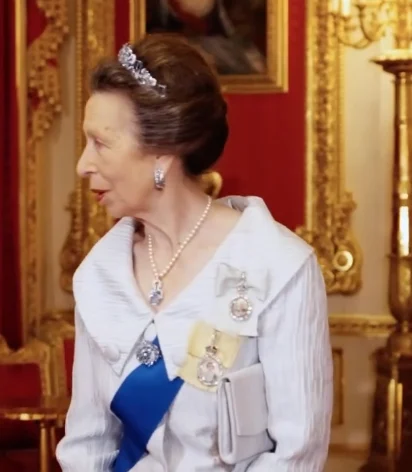

The Princess Royal is set to play a prominent role in the significant commemorations planned by the Royal Family to honour the 100th anniversary of the birth of the late Queen Elizabeth II. On April 21st, 2026, the precise centenary of Her Majesty’s birth, Princess Anne will officially open the newly established Queen Elizabeth II Garden in Regent’s Park, London. This distinguished engagement underscores the Princess’s deep connection to her mother and her dedication to public service, as she inaugurates a space designed to be a lasting tribute to the former monarch’s remarkable life and reign.
The Queen Elizabeth II Garden, a meticulously designed tranquil haven situated in the heart of the bustling capital, has been brought to fruition by HTA Design. The garden’s creation serves as a poignant commemoration of Queen Elizabeth II’s enduring legacy, offering a serene environment for reflection and remembrance. Its opening marks one of several significant royal events scheduled to take place on and around the momentous date of April 21st, 2026, a date that holds profound historical and personal significance for the nation and the Royal Family.
The centenary celebrations are not confined to a single event, but rather represent a series of carefully curated engagements that will involve various members of the Royal Family, each reflecting a different facet of Queen Elizabeth II’s life and impact. These planned events aim to engage the public, offer opportunities for national reflection, and provide insights into the late Queen’s enduring influence on British society and culture.
A Day of Royal Tributes and Reflections
On April 21st, 2026, the nation will collectively turn its attention to honouring Queen Elizabeth II, whose reign spanned an unprecedented seven decades. The day’s events are designed to be both grand and intimate, reflecting the multifaceted nature of Her Majesty’s public and private life.
King Charles III and Queen Camilla are scheduled to attend a brand-new exhibition at The King’s Gallery in London. This exhibition promises a unique exploration of Queen Elizabeth II’s personal style, presenting her life story through the lens of her fashion and public image. With thousands of items on display, the exhibition will offer an intimate glimpse into the sartorial choices that defined her era, from practical headscarves and ballet shoes to, most notably, the exquisite aquamarine and diamond tiara she personally commissioned and which remained a singular piece in her personal collection. This exhibition aims to illuminate not just her fashion sense, but the thought and symbolism behind her public presentation.
Furthermore, King Charles and Queen Camilla will be joined by other senior members of the Royal Family to review the designs for the national memorial dedicated to Queen Elizabeth II. This significant undertaking, envisioned as a lasting tribute to Her Majesty’s service, will be designed by the internationally acclaimed architect Lord Norman Foster. The project will involve a collaborative effort by a number of distinguished artists, who will present their concepts to the royals during a dedicated meeting. This gathering signifies the importance placed on creating a memorial that is both artistically significant and deeply resonant with the Queen’s spirit and her impact on the nation.
Later in the day, a special reception will be held at Buckingham Palace, hosted by King Charles and Queen Camilla, bringing together members of the Royal Family. A particularly poignant element of this reception will be the presence of other centenarians, individuals who have also lived through a century of immense change and historical milestones. This gathering serves as a powerful symbol of shared experience and longevity, drawing a parallel between the lives of these individuals and the extraordinary reign of Queen Elizabeth II. It is understood that in past centennial celebrations, a telegram from the reigning monarch would have been sent to individuals reaching this remarkable age, a tradition that highlights the personal touch and recognition the monarchy offers.
The Life and Legacy of Queen Elizabeth II: A Historical Perspective
Queen Elizabeth II was born on April 21, 1926, at 17 Bruton Street in Mayfair, London, the London residence of her maternal grandparents, the Earl and Countess of Strathmore. At the time of her birth, she was third in line to the throne. However, the course of her life, and indeed the history of the British monarchy, was irrevocably altered by the abdication of her uncle, Edward VIII, in 1936. This event propelled her father, Prince Albert, to become King George VI, placing Princess Elizabeth as the direct heir presumptive.
She ascended to the throne upon the death of her father on February 6, 1952. Her reign, which began at the young age of 25, became the longest in British history, spanning an unparalleled 70 years and 214 days. During her tenure, Queen Elizabeth II navigated immense social, political, and technological transformations, from the post-war era to the digital age. She became a symbol of continuity, stability, and unwavering duty for the United Kingdom and the Commonwealth. Her death on September 8, 2022, at the age of 96, marked the end of an era and ushered in a new chapter for the monarchy with the accession of her eldest son, King Charles III.
The Queen Elizabeth II Garden: A Space for Reflection
The creation of the Queen Elizabeth II Garden in Regent’s Park is a significant addition to London’s green spaces and a fitting tribute to the late monarch. Regent’s Park, a Grade I-listed royal park, already boasts a rich history and is a cherished destination for Londoners and tourists alike. The addition of a garden specifically dedicated to Queen Elizabeth II is expected to enhance its appeal as a place for quiet contemplation and remembrance.
HTA Design, the landscape architecture firm responsible for the garden’s development, is known for its sensitive approach to urban design and its commitment to creating spaces that enhance well-being. While specific details of the garden’s design have not been fully released, it is anticipated that it will incorporate elements that reflect the Queen’s personal interests and her lifelong connection to nature and the Commonwealth. This could include a diverse range of flora, perhaps drawing inspiration from the gardens of Balmoral or Sandringham, or incorporating elements from across the Commonwealth nations. The garden is designed to be accessible to the public, ensuring that it can be enjoyed by all who wish to pay their respects and find a moment of peace. The intention is for the garden to be a living legacy, evolving and flourishing over time, much like the enduring impact of Queen Elizabeth II herself.
Commemorative Exhibitions and Artistic Endeavours
The exhibition at The King’s Gallery promises to be a highlight of the centenary events. The Royal Collection Trust, responsible for managing the Royal Art Collection, has a proven track record of curating world-class exhibitions that offer unique insights into royal history. The focus on Queen Elizabeth II’s style is particularly noteworthy. Her wardrobe was not merely a collection of garments; it was a carefully considered element of her public persona, designed to convey messages of diplomacy, tradition, and modernity. Items such as her diplomatic attire for state visits, her practical country wear, and her formal ceremonial outfits all played a role in shaping public perception and projecting the image of the British monarchy.
The inclusion of the aquamarine and diamond tiara is a particularly personal touch. Commissioned in 1957, this stunning piece, featuring a central aquamarine surrounded by diamonds, was a favourite of the Queen and was often worn for formal occasions. Its inclusion in the exhibition signifies a deeper dive into her personal tastes and the significance of jewellery within the royal context. The exhibition will likely explore the provenance of these items, the designers who created them, and the occasions for which they were worn, providing a rich tapestry of the Queen’s life through her personal adornments.
The national memorial project, led by Lord Norman Foster, represents a significant investment in a permanent tribute. Foster + Partners, Lord Foster’s firm, has been responsible for some of the world’s most iconic architectural achievements, including the Reichstag dome in Berlin and the Millennium Bridge in London. His involvement suggests a commitment to creating a memorial that is both architecturally significant and enduring. The collaborative approach with artists indicates a desire to create a multi-faceted tribute that goes beyond a singular monument, potentially incorporating various artistic expressions that reflect the Queen’s multifaceted life and her impact on diverse communities. The engagement with artists from various disciplines will ensure a rich and varied artistic interpretation of her legacy.
Broader Implications and National Significance
The centenary of Queen Elizabeth II’s birth is more than just a date on the calendar; it is an opportunity for national reflection on a period of profound change and continuity. The extensive program of events planned by the Royal Family underscores the enduring significance of her reign and her impact on British identity. These commemorations provide a platform for people across the United Kingdom and the Commonwealth to connect with their shared history and to acknowledge the role of the monarchy in national life.
The events also offer a moment to consider the future of the monarchy. With King Charles III now on the throne, these centenary celebrations serve as a bridge between the past and the future, honouring the legacy of the longest-reigning monarch while looking ahead to the reign of his successor. The Princess Royal’s prominent role in opening the Queen Elizabeth II Garden highlights the continuation of royal duty and service across generations. Her involvement signifies the importance of maintaining strong connections with the public and honouring the memory of her mother through tangible, accessible tributes.
The engagement of King Charles and Queen Camilla with the exhibition and the memorial designs demonstrates their commitment to upholding the traditions of the monarchy while forging their own path. The inclusion of other centenarians at the Buckingham Palace reception is a thoughtful gesture that recognizes the collective experience of a generation that has witnessed immense historical shifts, mirroring the extraordinary span of Queen Elizabeth II’s own life.
In essence, the planned commemorations for the 100th anniversary of Queen Elizabeth II’s birth are a carefully orchestrated series of events designed to celebrate her remarkable life, acknowledge her profound impact, and reflect on the enduring legacy of her reign. Through the opening of a new garden, the unveiling of a significant exhibition, and the review of a national memorial, the Royal Family aims to provide the nation with meaningful opportunities to remember and honour a monarch who defined an era.