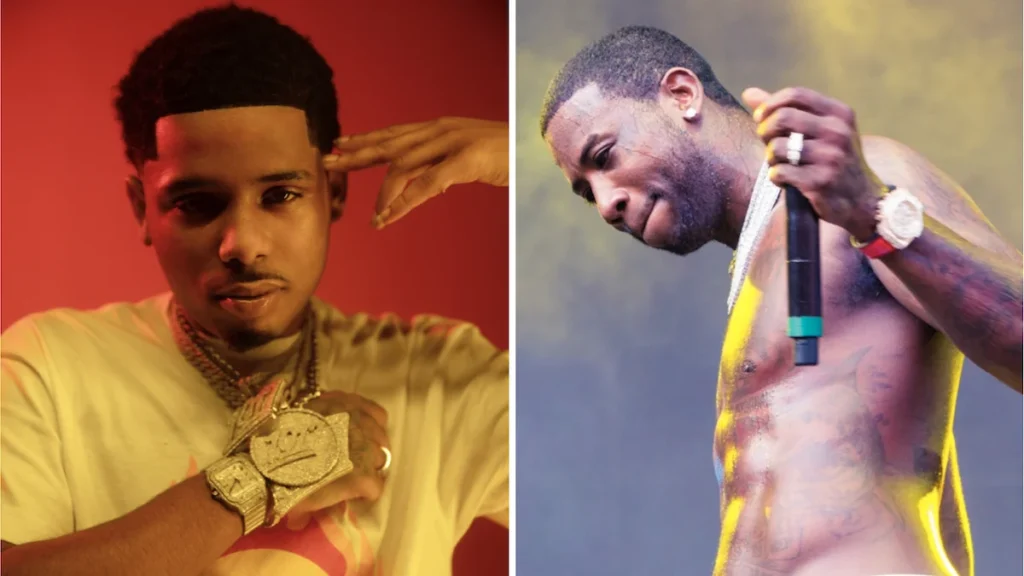

Memphis rapper Pooh Shiesty, whose real name is Lontrell Williams Jr., has once again become the focal point of a major legal controversy, facing severe charges that could dramatically alter the trajectory of his burgeoning career. The U.S. Department of Justice confirmed on Thursday, April 2nd, 2026, that Williams was arrested and subsequently charged with robbery and kidnapping, with the alleged victim identified as his former mentor and record label boss, Radric Davis, famously known as Gucci Mane. The stunning allegations, first reported by TMZ, have sent shockwaves through the hip-hop community, casting a shadow over one of the genre’s most prominent emerging talents.
The Alarming Allegations: An Armed Contract Dispute
According to federal prosecutors, the charges stem from an incident on January 10th of this year in Dallas, Texas. Williams, 26, along with several associates, is accused of orchestrating an "armed takeover" during a scheduled meeting with Gucci Mane and two other music industry executives. The purpose of the gathering, as stated by the Department of Justice, was to discuss Pooh Shiesty’s contract status, specifically concerning his desire for a release from his current agreement with Gucci Mane’s 1017 Records, an imprint under Atlantic Records.
The federal indictment details a coercive and violent encounter. Prosecutors allege that once Gucci Mane and the two executives arrived at the Dallas studio for the purported negotiation, Williams and his crew brandished firearms, effectively trapping the men. They were reportedly refused permission to leave the premises until Gucci Mane signed a contract release form under duress. Beyond the alleged forced contractual dissolution, the indictment further asserts that valuables including jewelry, high-end watches, and a significant amount of cash were stolen during the robbery component of the incident. This alleged act of armed coercion to resolve a business dispute represents a grave escalation of typical industry disagreements, crossing firmly into criminal territory.
The Arrest and Co-Defendants
Lontrell Williams Jr. was taken into custody on Wednesday, April 1st, 2026, without incident. His arrest was part of a broader federal operation that resulted in the apprehension of eight additional suspects implicated in the January 10th incident. Among those arrested was fellow Memphis rapper Big30 (DeMario Minter), a close associate and frequent collaborator of Pooh Shiesty, whose real name is DeMario Minter. Williams’ father was also reportedly among those taken into custody, underscoring the alleged involvement of a wider network in the alleged criminal enterprise. The coordinated arrests suggest a comprehensive investigation by federal authorities, culminating in a swift and decisive action against the alleged perpetrators. Each of the nine individuals faces multiple federal charges, including kidnapping, robbery, and firearms offenses, which carry substantial penalties under federal law.
A Troubled Trajectory: Pooh Shiesty’s Past Legal Encounters
This latest arrest marks another significant legal hurdle for Pooh Shiesty, whose career has been repeatedly punctuated by brushes with the law. His professional ascent, characterized by a raw, aggressive lyrical style and undeniable street credibility, has been consistently shadowed by a string of high-profile legal battles.
Just six months prior to this alleged kidnapping, Williams had been released from federal prison. His previous incarceration stemmed from a 2020 incident in South Florida, where he was involved in a botched robbery and shooting. In that case, Williams pleaded guilty to conspiracy to possess a firearm in furtherance of a violent crime and was sentenced to 63 months (five years and three months) in federal prison. The incident involved Williams shooting a man in the buttocks during an alleged drug deal gone awry in Bay Harbor Islands. He ultimately served approximately two years of that sentence, benefiting from credit for time served and good behavior, before being released on supervised probation in late 2025.
Prior to that, in June 2021, Williams was also involved in a separate shooting incident at a strip club in Miami-Dade County. He was initially charged with aggravated battery with a firearm for allegedly shooting a security guard in the ankle. While those charges were eventually dropped due to conflicting witness statements and insufficient evidence, the pattern of violent encounters underscored a growing concern about his judgment and lifestyle choices. These prior incidents, particularly the federal firearms conviction, are highly likely to be considered by prosecutors and the courts as aggravating factors in the current kidnapping and robbery case, potentially impacting bail decisions and future sentencing. The recurring nature of his legal troubles, particularly those involving firearms and alleged violence, paints a concerning picture for a public figure who had only recently regained his freedom.
The Mentor-Protégé Dynamic: Gucci Mane and 1017 Records
The alleged kidnapping of Gucci Mane by Pooh Shiesty adds a layer of betrayal to an already serious criminal accusation. Gucci Mane, a pioneering figure in trap music, founded 1017 Records in 2007, building it into a significant platform for emerging talent. Known for his keen eye for street-level artists, Gucci Mane signed Pooh Shiesty in 2020, seeing immense potential in the Memphis native. Under Gucci Mane’s mentorship and the 1017 banner, Pooh Shiesty quickly rose to prominence, achieving mainstream success with hits like "Back in Blood" featuring Lil Durk, and his debut mixtape "Shiesty Season."
Gucci Mane had often spoken highly of Pooh Shiesty, touting him as one of the brightest stars on his roster. The relationship was portrayed publicly as a success story of an established artist elevating new talent. This history makes the current allegations particularly jarring. Contract disputes are common in the music industry, but rarely do they escalate to armed robbery and kidnapping, especially between a label boss and an artist he personally signed and championed. The alleged motive—forcing a contract release—suggests a deep-seated grievance or desperation on Pooh Shiesty’s part, moving beyond typical legal or arbitration channels.
The incident raises questions about the internal dynamics of 1017 Records and the pressures faced by artists navigating complex recording agreements. While specific details of Pooh Shiesty’s contract are not public, disputes often arise over royalty splits, creative control, and the duration of agreements. However, even the most contentious of these rarely spill over into alleged criminal acts of this magnitude.
Industry Reactions and Legal Perspectives
The news of Pooh Shiesty’s arrest has elicited a mix of shock and concern across the music industry. While official statements from Gucci Mane’s camp have been limited, sources close to the situation suggest a profound sense of dismay and a firm commitment to cooperating fully with federal authorities. Representatives for 1017 Records have issued a brief statement affirming their support for law enforcement in their investigation and expressing concern for all parties involved, while refraining from commenting on the specifics of the alleged contract dispute.
Legal experts have weighed in on the gravity of the charges. "Kidnapping and armed robbery, especially at the federal level, are incredibly serious offenses," stated Sarah Jenkins, a former federal prosecutor and now a prominent entertainment lawyer. "If convicted, Mr. Williams faces decades in prison. The involvement of firearms, the element of coercion to force a business agreement, and the alleged involvement of multiple co-defendants create a very challenging legal battle ahead. His prior federal conviction will undoubtedly be used by the prosecution to demonstrate a pattern of behavior and will weigh heavily during any sentencing phase."
Defense attorneys for Pooh Shiesty have not yet issued a detailed public statement, but it is expected they will mount a vigorous defense, likely challenging the prosecution’s narrative, the credibility of witnesses, and potentially arguing misidentification or that the events transpired differently than alleged. The defense will undoubtedly seek to secure bail for Williams, though the federal nature of the charges, the alleged violence, and his prior criminal record make it an uphill battle.
The Broader Implications for Hip-Hop and Artist Contracts
This incident could have significant implications for the music industry, particularly in the hip-hop genre where artist-label relations can sometimes be fraught with tension. While contractual disputes are a common part of the business, the alleged use of violence and coercion to resolve them sets a dangerous precedent. It underscores the ongoing debate about artist empowerment versus label control, and the often-uneven power dynamics at play.
This case may prompt labels to re-evaluate security protocols for meetings involving sensitive contract negotiations and could lead to increased scrutiny of artist conduct clauses in recording agreements. For artists, it serves as a stark reminder of the severe legal consequences of resorting to illegal means to address business grievances, regardless of perceived injustices. The incident could also contribute to a broader public perception, albeit unfairly, of instability within certain segments of the hip-hop community.
Furthermore, the legal fallout for Pooh Shiesty himself is immense. Even if acquitted of some charges, the mere accusation and the prolonged legal process will undoubtedly impact his career. Touring, recording, and endorsement opportunities would be severely hampered, if not entirely halted. For an artist who was just beginning to regain momentum after a previous prison stint, this latest development represents a potentially insurmountable obstacle to his artistic future.
The Path Forward: Legal Proceedings and Potential Outcomes
The initial phase of the legal process will involve preliminary hearings, potential bail applications, and grand jury indictments if not already obtained. Federal cases are often complex and can take many months, if not years, to reach a resolution. The prosecution will be building its case, gathering evidence, and preparing for trial. The defense, conversely, will be working to challenge the evidence, explore plea options, and prepare for litigation.
Given the severity of the charges—kidnapping, robbery, and federal firearms violations—a conviction could result in a lengthy prison sentence, potentially measured in decades. Federal sentencing guidelines are stringent, especially with a prior federal conviction on Williams’ record. A plea agreement might be offered, but its terms would likely still involve significant incarceration.
For the hip-hop community, this case is a somber reminder of the fine line between street authenticity and real-world legal consequences. As the legal proceedings unfold, the focus will remain on the facts presented in court and the due process afforded to Lontrell Williams Jr. and his co-defendants, as the industry grapples with the fallout of this shocking alleged crime.