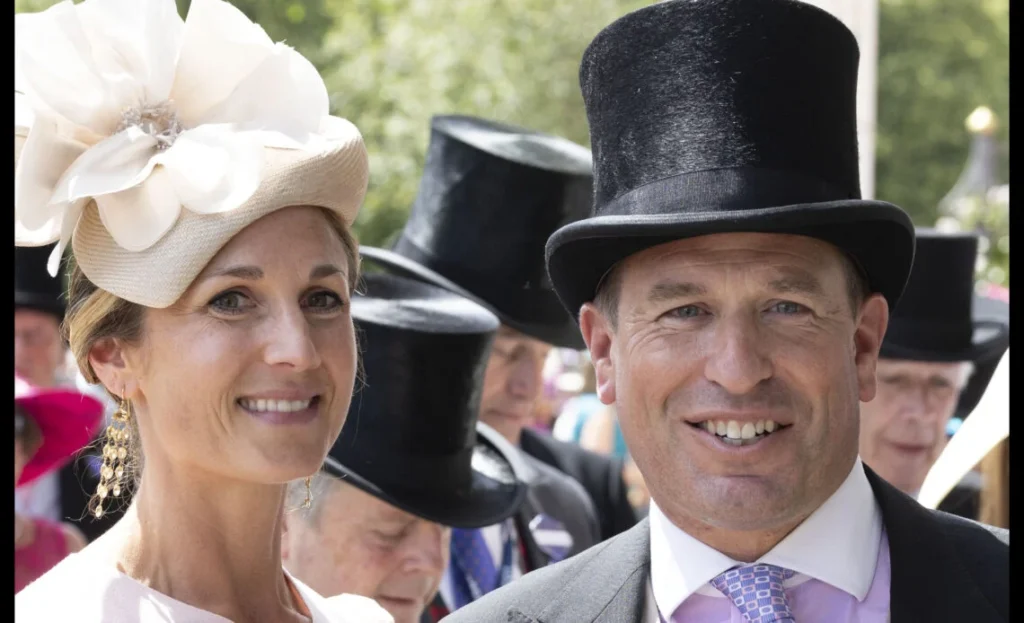

The highly anticipated summer wedding of Peter Phillips, the eldest grandchild of the late Queen Elizabeth II and Prince Philip, Duke of Edinburgh, to his fiancée Harriet Sperling has officially been confirmed, with a slight, swiftly rectified, hiccup in the initial public announcement. The couple is set to exchange vows on June 6th, a date now firmly established after an initial, brief period of ambiguity. This union promises to be a significant society event, drawing attention to a prominent member of the extended Royal Family.
A Tale of Two Dates: The Wedding Announcement’s Minor Quirk
The initial announcement of the wedding date, issued on April 1st, 2026, mistakenly stated July 6th as the intended ceremony date. However, this was swiftly corrected within minutes by a subsequent communication that clarified the accurate date as June 6th. While seemingly a minor administrative oversight, such moments in royal announcements often attract heightened scrutiny due to the public’s enduring fascination with the minutiae of royal affairs. This rapid correction suggests efficient communication channels within the Phillips’ or the wider royal support network, ensuring clarity was quickly restored. The couple had publicly announced their engagement in August of the preceding year, signalling their intention to marry after a period of courtship.
A Picturesque Setting for a Royal Union
The chosen venue for the wedding ceremony is a church in Kemble, a charming village located near Cirencester in Gloucestershire. This location holds particular significance as it is in close proximity to the ancestral home of Peter Phillips’ mother, Princess Anne, the Princess Royal. The church itself is steeped in history, with its origins dating back to the 12th century. While it has undergone significant restoration, notably in the late 19th century, it retains its historic character. Its distinctive spire is a recognisable landmark, visible from a considerable distance, and the church also boasts a notable artistic feature in the form of the Millennium Window, a striking example of stained glass artistry. The choice of a village church, rather than a grander, more public cathedral, suggests a desire for a more intimate and traditional ceremony, reflecting the couple’s personal preferences.
The Couple: A Glimpse into Their Lives
Peter Phillips, born on November 15th, 1977, is the son of Princess Anne and her first husband, Captain Mark Phillips. He holds a prominent, albeit non-working, position within the Royal Family as the eldest grandchild of Queen Elizabeth II. Phillips has pursued a career in sports management, notably working for Jaguar and the Royal Bank of Scotland. He was previously married to Canadian-born Autumn Kelly, with whom he shares two daughters: Savannah Anne Kathleen Phillips, born in 2010, and Isla Elizabeth Anne Phillips, born in 2012. The couple’s divorce was announced in 2020.
Harriet Sperling, the bride-to-be, has maintained a lower public profile prior to her engagement. She is reported to have worked as a nurse within the National Health Service (NHS), a profession widely respected for its dedication and service. Ms Sperling also has a daughter from a previous relationship, indicating that this will be a blended family union. The couple’s relationship has reportedly spanned several years, with their engagement finally announced in August 2025, culminating in this upcoming June wedding.
Royal Family Informed: A Nod to Tradition
Both iterations of the wedding announcement, including the initial one with the erroneous date, explicitly stated that "The King and Queen and the Prince and Princess of Wales had been informed." This customary inclusion signifies that the most senior members of the Royal Family have been apprised of the wedding plans, adhering to long-standing protocols and demonstrating familial awareness. This information also serves to manage public expectations regarding attendance at the event, which is widely anticipated to be a significant social gathering.
Broader Context and Royal Family Dynamics
The wedding of Peter Phillips and Harriet Sperling takes place within a broader context of evolving royal family dynamics. While Peter Phillips and his sister Zara Tindall are not working royals, they remain significant figures within the extended family and are often present at key royal events. Their children, the Queen’s great-grandchildren, also hold a special place. The marriage of Phillips, a divorcee, to Ms Sperling, who also has a child from a previous relationship, reflects the modern realities of family structures and is in line with the general acceptance of such circumstances within society and increasingly within the Royal Family itself.
The timing of the wedding, amidst ongoing public interest in the health of King Charles III and Catherine, Princess of Wales, also places it within a period of considerable attention on the monarchy. While this wedding is a personal event for the couple and their families, its occurrence within the wider royal sphere ensures it will be a subject of public discourse. The presence, or absence, of senior royals at the ceremony will be noted and analysed, offering insights into current familial relationships and public engagements.
Analysis of Implications: A Society Wedding
The wedding of Peter Phillips and Harriet Sperling is poised to be a "society wedding of the year," a designation that speaks to the social standing of the individuals involved and the broader public interest they command. The event will undoubtedly attract significant media attention, with particular focus on the guest list. The attendance of King Charles III and Queen Camilla, as well as Prince William and Catherine, Princess of Wales, would underscore the continued integration of Peter Phillips and his family within the core of royal life. Conversely, their absence might signal a more private affair or reflect current royal commitments and priorities.
Furthermore, the wedding offers an opportunity to observe the contemporary presentation of royal unions. While traditional elements will undoubtedly be present, the couple’s choices in venue, ceremony, and any subsequent celebrations will offer a glimpse into how modern royal weddings are shaped by personal preferences and evolving societal norms. The event will also highlight the continued importance of familial bonds within the monarchy, even for those members who do not undertake official duties. The public’s fascination with royal weddings, rooted in tradition and romantic idealism, ensures that this occasion will be closely watched, offering a moment of celebratory focus on a branch of the Royal Family. The swift correction of the announcement date, though minor, serves as a reminder of the meticulous planning and public relations management that underpins all royal events, ensuring a polished and clear message reaches the public. The coming weeks will reveal the full extent of the guest list and the unfolding details of what promises to be a memorable occasion.