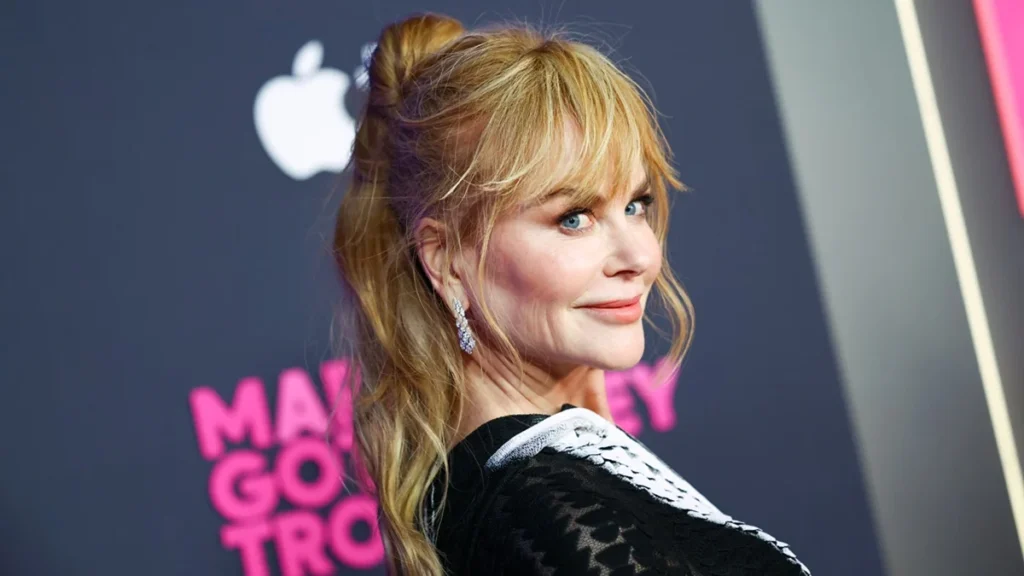

Academy Award-winning actor Nicole Kidman has announced a significant shift in her personal and professional focus, revealing her intention to train as a death doula. The announcement was made during an intimate speaking engagement at the University of San Francisco’s War Memorial Gym on April 11, where Kidman discussed the profound impact of her mother’s death on her worldview. Speaking to a capacity crowd of students, faculty, and fans, Kidman detailed how the challenges of providing end-of-life care for her mother, Janelle Ann Kidman, inspired her to seek a formal role in supporting others through the final stages of life.
The decision marks a departure from the Hollywood spotlight for the "Babygirl" star, though she clarified that the move is born out of a desire for service rather than a complete retirement from the arts. Kidman explained that her journey toward this new path began in September 2024, following the passing of her mother. The experience of navigating the complexities of terminal care while balancing a high-profile career and family responsibilities led her to recognize a significant void in the support systems available to the dying and their loved ones.
The Personal Catalyst: Janelle Ann Kidman’s Final Days
The primary motivation for Kidman’s career pivot is deeply rooted in her family history. Janelle Ann Kidman, a nursing instructor and a prominent figure in Nicole’s life, passed away in September 2024. During her talk in San Francisco, Kidman reflected on the emotional and logistical toll that the period of decline took on her and her sister, Antonia Kidman. Despite their resources and commitment, Kidman noted a sense of "loneliness" that pervaded her mother’s final days, a feeling she attributed to the inherent difficulties of family-led caregiving.
Kidman shared that she and her sister found themselves struggling to reconcile the demands of their professional lives and their roles as mothers with the intensive needs of their dying parent. The absence of their father, Dr. Antony Kidman, who passed away in 2014, added to the emotional weight of the situation. Kidman described a realization that family members, while motivated by love, often carry emotional baggage and exhaustion that can hinder the peace of the dying individual.
"Between my sister and I, we have so many children and our careers and our work, and wanting to take care of her because my father wasn’t in the world anymore, and that’s when I went, ‘I wish there was these people in the world that were there to sit impartially and just provide solace and care,’" Kidman told the audience. This realization served as the foundation for her interest in the death doula profession, which prioritizes the presence of a neutral, trained professional to facilitate a "good death."
Understanding the Role of a Death Doula
A death doula, also known as an end-of-life doula, is a non-medical professional trained to provide holistic support—encompassing emotional, physical, and spiritual needs—to individuals nearing the end of their lives. While the role is distinct from that of a hospice nurse or a palliative care physician, doulas often work alongside medical teams to ensure the patient’s final wishes are respected and that their environment remains tranquil.
The responsibilities of a death doula are varied and can include:
- Assisting with advanced care planning and legacy projects.
- Providing companionship to the dying to alleviate loneliness.
- Offering respite care for family members.
- Facilitating difficult conversations regarding death and dying.
- Guiding the family through the immediate aftermath of a loss.
Kidman’s interest in the field aligns with a growing global movement toward "death positivity," which seeks to de-stigmatize the conversation surrounding mortality. By pursuing formal training, Kidman joins a rising number of individuals seeking to professionalize the "impartial solace" she felt was missing during her mother’s final weeks.
Chronology of Events and Public Tributes
The timeline of Kidman’s transition reflects a period of mourning followed by a public commitment to advocacy. Since the loss of her mother in 2024, Kidman has used her social media platforms to honor her parents’ memories, often sharing archival photos and messages of grief.
- September 2024: Janelle Ann Kidman passes away. Nicole Kidman withdraws from several public appearances, including the Venice Film Festival, to be with her family in Australia.
- Late 2024 – Early 2025: Kidman returns to work on projects like "Babygirl" but remains vocal about the ongoing grieving process in interviews.
- March 14, 2026: On what would have been her mother’s birthday, Kidman posts a tribute on Instagram, stating, "Remembering my Mumma on her birthday. Always in my heart Mumma."
- April 11, 2026: During a lecture at the University of San Francisco, Kidman officially reveals her plan to train as a death doula, citing the specific gaps she observed in end-of-life care.
This progression suggests that the decision was not an impulsive one but rather the result of nearly two years of reflection on the limitations of modern caregiving structures.
Supporting Data: The Rise of the End-of-Life Industry
Kidman’s entry into the field comes at a time when the demand for end-of-life doulas is surging. According to data from the National End-of-Life Doula Alliance (NEDA), the number of certified doulas has increased significantly over the last decade as the "Baby Boomer" generation ages.
Statistics indicate that while the majority of people express a desire to die at home, many end up passing away in hospitals or long-term care facilities due to the lack of adequate home-based support. The "sandwich generation"—adults who are simultaneously raising children and caring for aging parents—faces unprecedented levels of burnout. Kidman’s description of her struggle to balance her "many children" and "career" with her mother’s care is a sentiment echoed by millions of women worldwide.
Market research suggests that the end-of-life care market is evolving to include more personalized, non-clinical services. The emergence of death doulas fills a gap between the clinical focus of hospitals and the emotional needs of the family unit. Kidman’s advocacy is expected to further validate this profession in the eyes of the general public.
Industry Reactions and Societal Implications
While official statements from major medical associations regarding Kidman’s announcement have been sparse, the palliative care community has generally welcomed the visibility she brings to the sector. Experts in the field of thanatology (the study of death and dying) suggest that celebrity involvement can help dismantle the "death-denying" culture prevalent in Western societies.
"When a figure of Nicole Kidman’s stature speaks openly about the ‘loneliness’ of the deathbed and the need for impartial care, it shifts the cultural needle," says Dr. Elena Rossi, a specialist in geriatric care (inferred reaction based on industry trends). "It moves the conversation from one of fear and avoidance to one of preparation and compassion."
The implications of Kidman’s new career path extend beyond her personal life. Her involvement could potentially lead to:
- Increased Funding and Accreditation: Greater public interest may drive the push for standardized certification and insurance coverage for doula services.
- Normalization of Grief: Kidman’s public tributes and her admission of the "not enough" feeling she experienced while caregiving provide a relatable framework for others dealing with guilt and loss.
- Educational Shifts: Her announcement at a university highlights the academic and professional nature of the role, encouraging younger generations to consider careers in end-of-life support.
Analysis: The Intersection of Celebrity and Service
Nicole Kidman’s decision to become a death doula is an example of a "second act" career focused on altruism. In recent years, several high-profile figures have leveraged their platforms to address niche or underserved areas of healthcare and social work. For Kidman, whose career has often explored themes of domesticity, grief, and the human condition (notably in films like "The Hours" and "Rabbit Hole"), this transition appears to be a natural extension of her artistic interests into a practical, real-world application.
The choice of the term "impartial" is particularly significant in her explanation. In the context of end-of-life care, family members are often too emotionally involved to provide the objective presence that some dying individuals require to find peace. By seeking to become that impartial presence for others, Kidman is transforming her personal regret into a professional mission.
Conclusion and Future Outlook
As Nicole Kidman begins her training, the entertainment industry and the healthcare sector alike will be watching how she balances her two worlds. While she remains a sought-after talent in Hollywood, her commitment to becoming a death doula suggests a long-term shift toward advocacy and direct service.
Her story serves as a poignant reminder of the universal nature of loss and the growing need for specialized support in an aging world. By honoring Janelle Ann Kidman through this pursuit, Nicole Kidman is not only seeking to heal her own experience of grief but is also positioning herself as a leader in a movement that seeks to bring dignity, solace, and professional care to the final chapter of human life. The "solace and care" she once wished for her mother may soon become the very gift she offers to others.