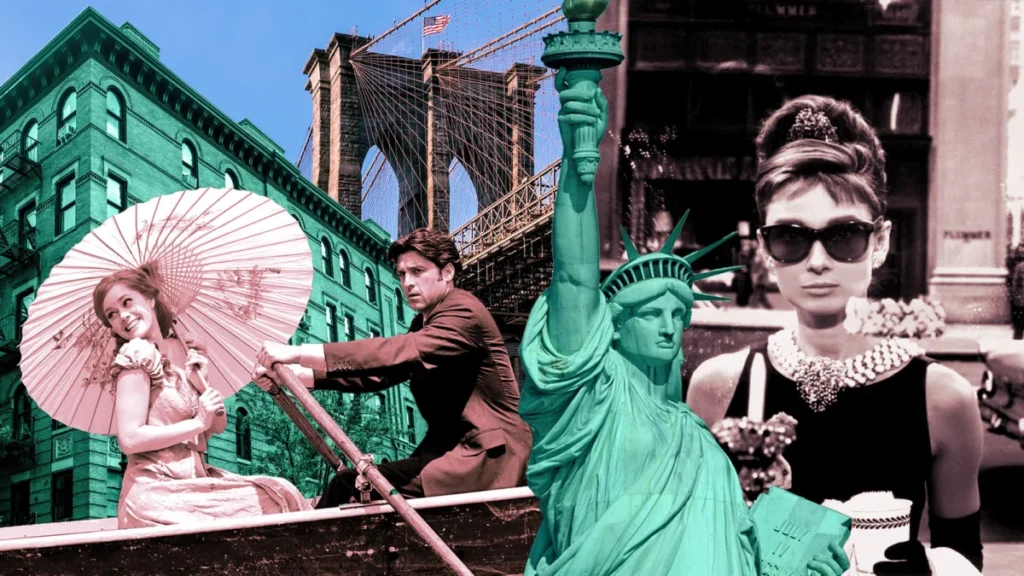

New York City, a sprawling metropolis home to over 8 million people and a crucible of global culture, commerce, and innovation, is unequivocally recognized as one of the world’s most iconic urban centers. Its unique blend of historical gravitas and relentless forward momentum has not only shaped global trends but has also indelibly imprinted itself onto the collective consciousness through its unparalleled presence in film and television. More than just a backdrop, the city itself frequently emerges as a pivotal character, its diverse neighborhoods, architectural marvels, and dynamic street life providing an authentic, living stage for countless narratives, from gritty dramas and romantic comedies to fantastical adventures. This profound relationship between New York City and the entertainment industry represents a symbiotic partnership, fueling both artistic expression and significant economic growth, making the Big Apple a continuous and essential player in the global media landscape.

A Legacy Forged in Celluloid: NYC’s Cinematic History
The cinematic history of New York City is as rich and complex as the city itself, tracing a lineage from the nascent days of filmmaking to the sophisticated productions of the 21st century.

Early Days and the Golden Age
The very origins of cinema are deeply rooted in New York. Thomas Edison’s Black Maria studio in West Orange, New Jersey, just across the Hudson, saw the birth of early motion pictures, and New York City quickly became a hub for production companies like Biograph Studios. While the burgeoning Hollywood eventually drew much of the film industry westward in search of more consistent weather and open space, New York retained its significance, particularly for theatre and, later, the burgeoning television industry.

Films like Merian C. Cooper and Ernest B. Schoedsack’s 1933 masterpiece King Kong famously immortalized the newly constructed Empire State Building, establishing an enduring image of the city as a canvas for grand narratives. The post-war era saw a surge of films that captured the city’s unique character, with classics such as Elia Kazan’s On the Waterfront (1954), filmed on location in Hoboken, New Jersey, and various docks in New York, offering a stark portrayal of union corruption and working-class struggles. Billy Wilder’s The Apartment (1960) masterfully used the city’s towering office buildings and bustling streets to depict corporate ambition and loneliness, while Blake Edwards’ Breakfast at Tiffany’s (1961) romanticized Fifth Avenue and brownstone living, cementing a glamorous, aspirational image of Manhattan. These films, among others, laid the groundwork for New York’s enduring cinematic identity, demonstrating its versatility and magnetic appeal.

The Gritty ’70s and Urban Realism
The 1970s marked a distinct period in New York’s cinematic history, mirroring the city’s own struggles with economic hardship, crime, and social upheaval. This era gave rise to a new wave of urban realism, where the city itself became a character reflecting the anxieties and raw energy of the time. Films like Martin Scorsese’s Taxi Driver (1976) plunged viewers into the city’s dark underbelly, utilizing Times Square and its surrounding streets as a vivid, unsettling backdrop for Travis Bickle’s descent into madness. William Friedkin’s The French Connection (1971) famously featured exhilarating car chases through the city’s gritty streets, while Sidney Lumet’s Serpico (1973) and Dog Day Afternoon (1975) offered unflinching looks at police corruption and desperate acts, grounding their narratives firmly in the city’s authentic, often challenging, environments. These productions captured a specific, unvarnished image of New York, contributing to its reputation as a city of stark contrasts and compelling human drama.

The Renaissance of the Late 20th and 21st Centuries
As New York began its revitalization in the 1980s and 1990s, so too did its cinematic portrayal evolve. The city started to shed some of its gritty image, making way for more romanticized and aspirational narratives. Rob Reiner’s When Harry Met Sally… (1989) famously showcased Central Park, Washington Square Park, and Katz’s Delicatessen, establishing iconic locations for future generations of film tourists. The long-running television series Law & Order, which debuted in 1990, became synonymous with New York City, using its diverse neighborhoods, courthouses, and police precincts as the omnipresent setting for its procedural dramas, effectively turning the entire city into a living set.

The turn of the millennium brought a new wave of productions, further cementing New York’s status. HBO’s Sex and the City (1998-2004) transformed Greenwich Village brownstones, high-end boutiques, and upscale restaurants into symbols of modern female independence and urban sophistication, inspiring countless fans to explore the city through the lens of Carrie Bradshaw and her friends. Even shows like Friends, though primarily shot on a soundstage in Los Angeles, used establishing shots of Greenwich Village, particularly the iconic building at the corner of Grove and Bedford Streets, to anchor its narrative in the heart of the city, demonstrating the powerful allure of the New York brand even when production wasn’t entirely local. More recent titles, such as Love Story, Highest 2 Lowest, and Is This Thing On? continue this tradition, leveraging the city’s unparalleled visual diversity and its inherent dramatic potential. The ongoing appeal stems from New York’s ability to consistently reinvent itself while retaining its fundamental character, offering an inexhaustible wellspring of inspiration for filmmakers.

The Economic Engine: Film and Television’s Impact on the Big Apple
Beyond its cultural significance, the film and television industry is a colossal economic engine for New York City, generating billions in revenue and supporting tens of thousands of jobs annually. This robust sector underscores the city’s strategic investment in maintaining its status as a premier production hub.

Billions in Revenue and Thousands of Jobs
According to data released by the Mayor’s Office of Media and Entertainment (MOME), the film and television industry consistently contributes over $8 billion in direct spending to New York City’s economy each year. This substantial figure encompasses a wide array of expenditures, from production budgets to local services. More critically, the industry supports an estimated 100,000 jobs, encompassing a diverse workforce that includes actors, directors, writers, producers, and highly skilled technical crews—camera operators, lighting technicians, set designers, sound engineers, and post-production specialists. Indirectly, the industry also stimulates growth in ancillary sectors such as catering, transportation, hospitality (hotels for visiting cast and crew), equipment rentals, and construction. For instance, a major feature film or a season of a popular television series can inject millions into local economies, creating temporary and permanent employment opportunities that ripple through various communities across the five boroughs. This economic vitality also translates into significant tax revenues for both the city and state, funding public services and infrastructure.

Production Incentives and City Initiatives
The sustained growth of New York’s film and television industry is not accidental; it is largely a result of proactive governmental policies and dedicated city initiatives designed to attract and retain productions. The cornerstone of this strategy is the New York State Film Tax Credit Program, one of the most generous and effective incentive programs in the nation. Established in 2004 and regularly enhanced, the program offers eligible film and television productions a refundable tax credit of up to 30% on qualified production costs incurred in New York State, with additional credits for filming in certain upstate counties. This financial incentive significantly reduces the cost of production, making New York competitive with other major film centers.

The Mayor’s Office of Media and Entertainment (MOME) plays a crucial role in facilitating productions. MOME serves as a one-stop shop for filmmakers, streamlining the permitting process for filming on city streets, parks, and public spaces. They provide logistical support, mediate between productions and community boards, and actively promote New York City as a filming destination both domestically and internationally. Commissioner Anne del Castillo, or her predecessors, have often emphasized in public statements that "New York City is open for business," highlighting the city’s commitment to fostering a vibrant and supportive environment for media production. These efforts extend to promoting diversity within the industry, supporting emerging filmmakers, and investing in new soundstage infrastructure, ensuring the city remains at the forefront of media innovation.

Iconic Locations: New York as the Ultimate Set Piece
New York City’s unparalleled visual diversity means that almost any scene, from the grandest spectacle to the most intimate drama, can find its authentic backdrop within the five boroughs. The city is not merely a collection of famous landmarks but a living, breathing tapestry of unique environments.

Manhattan’s Urban Tapestry
Manhattan, the most densely populated and iconic borough, offers an inexhaustible array of instantly recognizable locations that have become synonymous with global cinema.

-
Central Park: This 843-acre urban oasis has been featured in thousands of films and television shows, embodying everything from romantic rendezvous to dramatic chases. Memorable appearances include the Bethesda Terrace and Fountain in Home Alone 2: Lost in New York (1992), the Boathouse in When Harry Met Sally…, and the iconic Gapstow Bridge in Enchanted (2007). Its versatility allows it to serve as a tranquil escape, a bustling recreational hub, or a dramatic setting for pivotal plot points.

-
Times Square/Broadway: The dazzling neon lights and perpetual energy of Times Square and the surrounding Broadway theater district are a magnet for filmmakers. The area has been used to convey both the exhilarating chaos of the city (Birdman or (The Unexpected Virtue of Ignorance), 2014) and moments of profound alienation (Vanilla Sky, 2001). Superhero films, notably various Spider-Man iterations, frequently use Times Square for epic battles, leveraging its recognizability for global audiences.

-
Empire State Building/Chrysler Building: These architectural titans are more than just skyscrapers; they are symbols of American ambition and design. The Empire State Building, forever linked to King Kong, also provided the romantic climax for Sleepless in Seattle (1993) and a memorable encounter in Elf (2003). The elegant art deco spire of the Chrysler Building often features in establishing shots, adding a touch of classic New York grandeur to countless productions.

-
Grand Central Terminal: A stunning Beaux-Arts masterpiece, Grand Central Terminal is not just a transportation hub but a cinematic landmark. Its majestic main concourse has hosted everything from dramatic farewells (The Fisher King, 1991) to tense spy encounters (North by Northwest, 1959) and fantastical arrivals (Men in Black, 1997). The sheer scale and architectural beauty make it a powerful visual element.

-
Museums (Metropolitan Museum of Art, MoMA): New York’s world-class museums offer sophisticated and often dramatic settings. The grand halls and iconic steps of the Metropolitan Museum of Art have been featured in films like The Thomas Crown Affair (1999) and Ocean’s Eight (2018), often serving as backdrops for high-stakes art heists or glamorous social events.

-
Greenwich Village/SoHo/Lower East Side: These neighborhoods offer a different side of Manhattan – a blend of historic charm, artistic bohemianism, and trendy sophistication. The brownstones of Greenwich Village provided the exterior for the apartment building in Friends, while the cobblestone streets and unique architecture of SoHo and the Lower East Side are favored for independent films, fashion shoots, and series like Sex and the City, capturing a more intimate, yet equally iconic, New York experience.

Beyond Manhattan: Boroughs in the Spotlight
While Manhattan often takes center stage, the other boroughs offer equally rich and diverse settings, increasingly attracting productions looking for authentic and varied backdrops.

-
Brooklyn Bridge/DUMBO: The majestic Brooklyn Bridge is one of the most photographed and filmed structures in the world, symbolizing connection and aspiration. It featured prominently in Sergio Leone’s Once Upon a Time in America (1984) and countless superhero movies. The adjacent DUMBO (Down Under the Manhattan Bridge Overpass) neighborhood, with its cobbled streets, industrial architecture, and stunning waterfront views, has become a popular location for everything from indie films to high-fashion commercials and TV shows like Gossip Girl.

-
Brooklyn Neighborhoods: Beyond DUMBO, Brooklyn offers an incredible range of distinct neighborhoods, each with its own character. From the historic brownstones of Brooklyn Heights and Park Slope to the rapidly gentrifying industrial spaces of Bushwick and Williamsburg, filmmakers find diverse settings. These areas are frequently used to depict contemporary urban life, reflecting the city’s evolving demographics and cultural shifts in series like Girls or various independent features.

-
Queens/Bronx/Staten Island: These boroughs provide a vast tapestry of residential streets, industrial zones, parks, and waterfronts that offer specific narrative possibilities often unseen in Manhattan. Queens, with its diverse immigrant communities and sprawling residential areas, can stand in for a multitude of global settings or provide an authentic slice of working-class American life. The Bronx, home to Yankee Stadium and Fordham University, also offers unique urban landscapes. Staten Island, with its suburban feel, ferry terminal, and green spaces, provides a distinct contrast, often utilized for stories requiring a sense of separation or a different pace of life. The variety ensures that New York City can truly be a stand-in for almost any location or atmosphere a filmmaker might require.

Cultural Resonance and Global Branding
The constant portrayal of New York City in film and television has profound cultural implications, shaping global perceptions and driving a significant segment of its tourism industry.

Shaping Perceptions and Inspiring Tourism
Films and TV shows act as powerful global advertisements for New York City, projecting its image to billions worldwide. For many, their first "experience" of New York comes through the screen. This constant media exposure has created an almost mythical status for the city, influencing how it is perceived as a center of ambition, romance, danger, and opportunity. The aspirational quality of New York, often depicted as a place where dreams are made or broken, resonates deeply with audiences across different cultures.

This cinematic branding directly translates into tourism, a phenomenon known as "set-jetting." Visitors flock to the city specifically to see iconic locations featured in their favorite movies and TV series. From snapping photos at the Friends apartment building exterior in Greenwich Village to dining at Katz’s Delicatessen (site of that scene in When Harry Met Sally…) or exploring the grandeur of Grand Central Terminal, these film-inspired pilgrimages contribute significantly to the city’s tourism revenue. Tour operators even offer specialized "Sex and the City" or "Sopranos" themed bus tours, catering directly to this demand. The city’s Department of Tourism and Conventions (NYC & Company) actively leverages this cinematic appeal in its marketing campaigns, recognizing its power to draw international and domestic visitors.

The "New York Character": Authenticity and Adaptability
What truly sets New York City apart as a filming location is its inherent character – a blend of authenticity, grit, glamour, and relentless energy. It is a city that can embody virtually any mood or theme, adapting seamlessly to the demands of diverse narratives. It can be the romantic backdrop for a whirlwind love affair, the stark setting for a crime thriller, the bustling stage for a coming-of-age story, or the imposing landscape for a superhero epic.

This adaptability stems from its diverse architecture, which ranges from historic brownstones and pre-war apartment buildings to futuristic skyscrapers and industrial waterfronts. Its rich tapestry of cultures and communities provides an endless supply of authentic faces and stories. Moreover, the sheer volume of artistic talent, technical expertise, and support infrastructure available within the city makes it an attractive proposition for producers. The "New York character" is not merely a visual aesthetic; it is an intangible quality that permeates the stories told within its confines, making the city a compelling, ever-present force in cinematic storytelling.

Challenges and the Future of Production in NYC
Despite its enduring appeal and economic advantages, New York City faces ongoing challenges in maintaining its status as a leading production hub. However, strategic investments and adaptations are positioning the city for continued success.

Logistics and Costs
Filming in New York City, while creatively rewarding, presents significant logistical and financial hurdles. The high cost of living and doing business in the city translates into higher labor costs, location fees, and operational expenses compared to many other film-friendly locales. Navigating the dense urban environment, with its perpetual traffic, strict permitting requirements, and potential for public disruption, demands meticulous planning and coordination. Securing permits for street closures, managing crowds, and minimizing impact on local residents and businesses are complex endeavors that add to production timelines and budgets.

Furthermore, competition from other states and countries offering aggressive tax incentives and state-of-the-art studio facilities remains fierce. Cities like Atlanta, Los Angeles, and London consistently vie for major productions, forcing New York to continually justify its premium. These challenges necessitate a robust support system from city agencies and a commitment to efficiency to ensure that the benefits of filming in New York outweigh the inherent difficulties.

Sustaining the Momentum
To sustain its momentum, New York City is actively investing in critical infrastructure and talent development. The expansion of soundstage facilities across the boroughs, particularly in Brooklyn and Queens, is a key strategy. These purpose-built studios offer controlled environments that complement on-location filming, providing much-needed space for intricate sets, visual effects work, and long-term television series production. New facilities like Steiner Studios in Brooklyn and Silvercup Studios in Queens are integral to attracting large-scale projects that require extensive indoor setups.

Training local talent is another vital component. Educational institutions and vocational programs are working to cultivate the next generation of filmmakers, crew members, and media professionals, ensuring a steady supply of skilled labor for the industry. This commitment to local talent not only provides employment opportunities for New Yorkers but also reinforces the city’s self-sufficiency as a production hub.

Adapting to the evolving media landscape, particularly the rise of streaming services and diverse content platforms, is also crucial. These new avenues for distribution have led to an explosion in demand for original content, and New York is well-positioned to capitalize on this trend. City officials and industry leaders consistently reiterate their commitment to fostering an environment where innovation thrives, welcoming new formats and storytelling approaches. Inferred statements from figures like MOME’s Commissioner often highlight the importance of "future-proofing" the industry through technological advancements and workforce development, ensuring New York remains a vibrant ecosystem for media production for decades to come.

In conclusion, New York City’s unparalleled cinematic legacy is a testament to its enduring power as a muse. Its multifaceted identity, from the bustling streets of Manhattan to the diverse communities of its outer boroughs, provides an inexhaustible source of inspiration for storytellers. The symbiotic relationship between the city and the entertainment industry is not merely a matter of creative expression; it is a significant economic driver, generating billions and supporting tens of thousands of jobs. Despite logistical challenges and fierce competition, strategic investments in infrastructure, robust incentive programs, and a dedicated city administration ensure that New York will continue to be a leading global center for film and television production. As new narratives emerge and technologies evolve, the Big Apple’s role as a captivating character and an indispensable backdrop will undoubtedly continue to shape the stories we tell and the way we see the world.