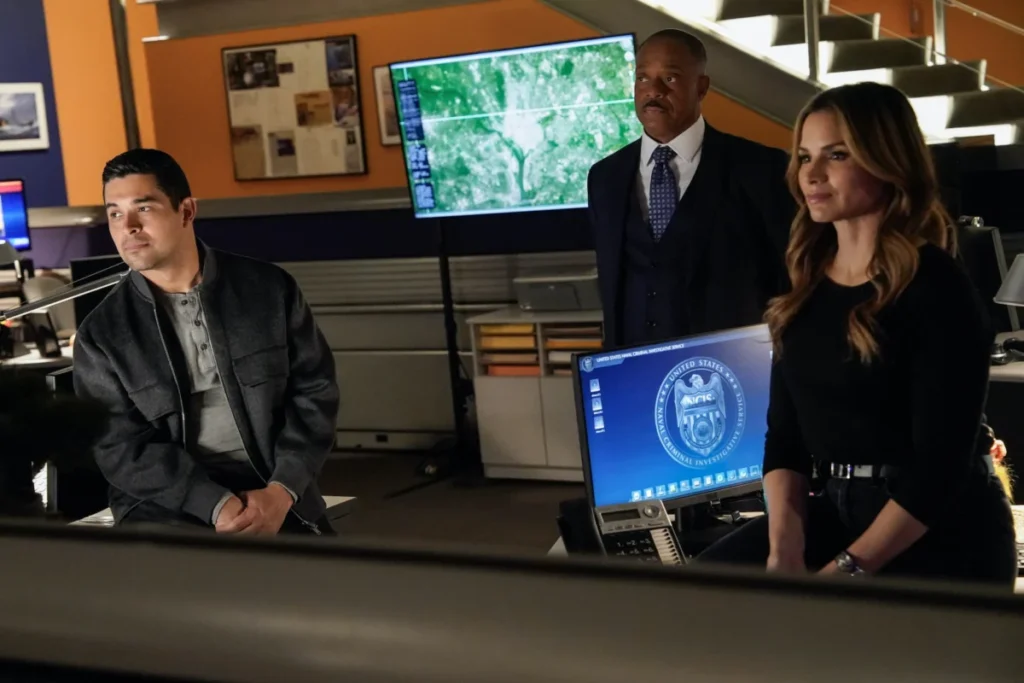

The highly anticipated 500th episode of the long-running CBS procedural NCIS delivered a seismic shock to its dedicated fanbase, concluding with the apparent death of a central character, Director Leon Vance, portrayed by Rocky Carroll. However, in a move that has become a hallmark of the series, the narrative has offered a strong indication that Vance’s story arc may not be definitively over, a sentiment echoed by Carroll himself in an exclusive interview with TV Insider. The episode, titled "All Good Things," marked a pivotal moment for the franchise, leaving viewers grappling with the loss of a character who has been an integral part of the NCIS universe for many years.
The dramatic events unfolded as NCIS faced an unprecedented crisis. The agency, having been temporarily shut down, was folded into another entity, creating a complex and dangerous environment. During this tumultuous period, Director Vance found himself in a desperate race against time to prevent a catastrophic explosion. A bomb, set to detonate and obliterate crucial evidence related to a smuggling ring, posed an existential threat not only to the ongoing investigation but also to the very integrity of the intelligence community. The smuggling operation, it was revealed, involved high-ranking officials, including the director of the CID and an agent working closely with Supervisory Special Agent Alden Parker’s team, specifically Special Agents Timothy McGee (Sean Murray) and Jessica Knight (Katrina Law).
In a heroic act of self-sacrifice, Director Vance attempted to defuse the volatile device. While initially it appeared he might have survived the blast, protected by a vest, the harsh reality soon became evident. The intervention of a mysterious figure, dubbed the "Angel of Death," who bore a striking resemblance to a young Dr. Donald "Ducky" Mallard (Adam Campbell), confirmed Vance’s fatal injuries. This spectral presence, a recurring motif in NCIS narratives, served to underscore the profound nature of Vance’s sacrifice and the deep connections he shared with the team.
A History of Ethereal Returns and Enduring Legacies
The "Angel of Death" element, and the subsequent speculation about Vance’s potential return, taps into a rich tradition within NCIS of characters reappearing beyond their initial departure, often in spectral or memory-based forms. This narrative device has allowed the show to explore the emotional impact of loss on the remaining characters while keeping beloved figures in the narrative orbit.
One of the most poignant examples of this was the departure of Special Agent Caitlin "Kate" Todd (Sasha Alexander) at the end of Season 2. While her character was definitively killed in a confrontation with a terrorist, Alexander made subsequent appearances in Season 3, notably in episodes that dealt with the team’s grief and the processing of her death. These appearances, though not in the physical sense, allowed for emotional closure and reinforced the enduring bonds within the NCIS team.
!['NCIS': Will [Spoiler] Be Back After Shocking Death in 500th Episode?](https://www.tvinsider.com/wp-content/uploads/2025/01/ncis-2211-torres-vance-knight-1420x798.jpg)
Rocky Carroll, speaking to TV Insider, directly addressed the possibility of Vance’s continued presence, stating, "I don’t think you’ve seen the last of Director Vance. I think NCIS has cornered the market in the ghost stars, people returning, being, and playing significant characters. We do more ghost stars than we do flashbacks." This candid statement from Carroll suggests a deliberate strategy by the show’s creators to leverage these ethereal appearances as a powerful storytelling tool, allowing for continued character exploration and emotional resonance without disrupting the established narrative flow of active duty.
Thematic Depth: Sacrifice and Resilience
Executive Producer Steven D. Binder further elaborated on the thematic implications of Vance’s death, emphasizing the duality of grief and duty. "But we felt it important that, at the end of the episode, the team is just as focused on Vance’s sacrifice as they are on their loss," Binder stated. "Vance died to protect them all. And they are going to honor that by putting one foot in front of the other, and just continuing on their mission to protect and safeguard their country."
This perspective highlights a core tenet of the NCIS ethos: the unwavering commitment of its agents to their mission, even in the face of profound personal tragedy. The episode’s conclusion, therefore, is not solely about mourning a fallen leader but also about reaffirming the principles for which Vance gave his life. The team’s ability to channel their grief into renewed dedication serves as a testament to their resilience and the enduring strength of their collective purpose.
A Behind-the-Scenes Perspective: Carroll’s Continued Involvement
Beyond the narrative implications, Rocky Carroll’s connection to NCIS extends to his significant contributions as a director. He confirmed his return to the set in a directorial capacity shortly after filming his character’s demise. "The last day of the episode was filmed December 11. About a month later, I was back behind the camera directing another episode of NCIS," Carroll revealed.
This dual role offers a unique insight into Carroll’s perspective on the show and his character. His assertion that "I knew the last day we shot this episode, and it was very emotional with the crew and the other people there. And I was saying to everybody, ‘Hey guys, this is just goodbye for now. I’ll be back.’ I’m like a visiting relative. I won’t be here for every night for dinner, but I’ll be here for all the holidays," draws a warm and relatable analogy. It suggests a deliberate continuation of his involvement, albeit in a different capacity, allowing him to remain connected to the show and its community. This framing implies that Vance’s presence will likely be felt through future directorial contributions and potentially through the "ghost star" appearances he alluded to.
!['NCIS': Will [Spoiler] Be Back After Shocking Death in 500th Episode?](https://www.tvinsider.com/wp-content/uploads/2026/03/ncis-500-rocky-carroll-adam-campbell-1014x570.jpg)
Broader Implications for the NCIS Universe
The apparent death of Director Vance, while a significant blow, also opens up new narrative avenues for NCIS. The show has consistently demonstrated its ability to adapt and evolve, introducing new characters and storylines while honoring its established legacy. Vance’s sacrifice will undoubtedly leave a void in leadership, prompting discussions about succession and the future direction of the agency.
Furthermore, the resolution of the smuggling ring plotline, which Vance died to expose, will likely have far-reaching consequences within the intelligence community. The involvement of high-ranking officials suggests a complex web of corruption that the NCIS team will need to untangle, potentially leading to further investigations and character development.
The return of the "Angel of Death" figure, specifically in the guise of a young Ducky, also warrants further analysis. Ducky Mallard, portrayed by the late David McCallum, remains one of the most beloved characters in NCIS history. His spectral presence in this critical moment not only honors his legacy but also suggests a deeper thematic connection between sacrifice, wisdom, and the guiding forces that shape the NCIS team. The choice to have Ducky’s apparition appear at Vance’s side could symbolize the passing of the torch, the transference of institutional knowledge, and the enduring spirit of those who have served the agency with distinction.
The fan reaction to Vance’s apparent demise is expected to be intense, given his long tenure and integral role. However, Carroll’s assurance of future appearances, coupled with the show’s history of creative storytelling, suggests that this is not an end but a transformative chapter. The question now shifts from "Will Vance return?" to "In what capacity will Director Vance continue to influence the world of NCIS?" The upcoming episodes will undoubtedly explore the team’s grief, their efforts to bring the perpetrators of the smuggling ring to justice, and the evolving dynamics within the agency as it navigates this period of profound change. Fans are left to ponder the various forms Vance’s continued presence might take, whether through reflective moments, leadership in the afterlife, or his enduring impact on the agents he led.