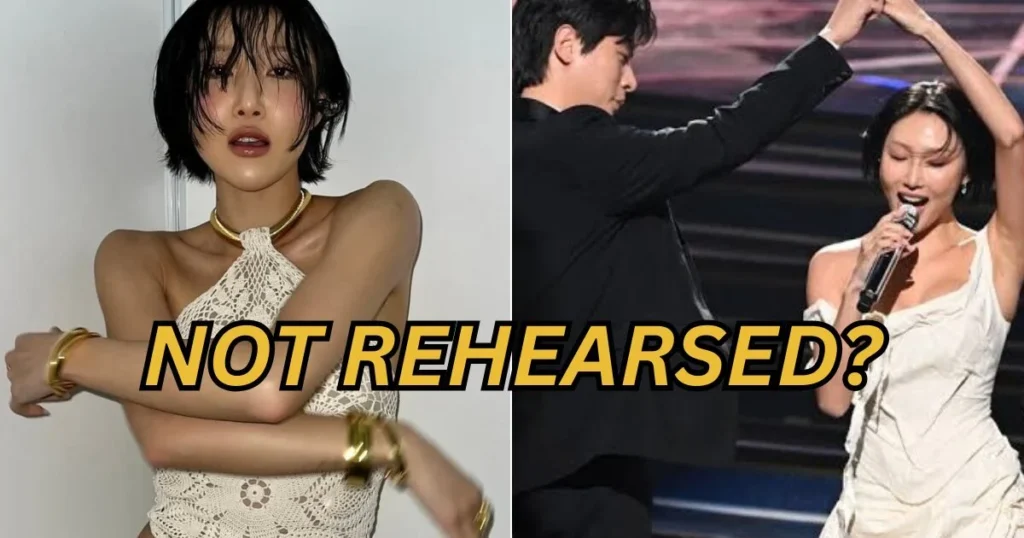

The intersection of the South Korean film industry and the K-pop music scene has long been a source of cultural fascination, but few moments in recent history have resonated as powerfully as the collaboration between MAMAMOO member Hwasa and acclaimed actor Park Jung Min. During a recent appearance on the high-profile web variety program Salon Drip, hosted by the celebrated comedian and presenter Jang Do Youn, Hwasa provided an in-depth look at the preparation—or lack thereof—that went into their viral performance at the 46th Blue Dragon Film Awards. The singer’s revelations have sparked a renewed interest in the mechanics of live award show broadcasts and the organic chemistry that can occasionally propel a musical release to historic heights on the domestic charts.
The Genesis of a Viral Phenomenon
The 46th Blue Dragon Film Awards, often referred to as the "Oscars of Korea," served as the backdrop for what would become one of the most talked-about live performances of the year. Hwasa, known for her commanding stage presence and vocal versatility, was invited to perform her single "Good Goodbye." Unlike a standard solo stage, the performance concluded with a dramatic, semi-improvised sequence involving actor Park Jung Min. The two stars acted out a brief, emotionally charged romantic narrative that appeared so seamless and intimate that audiences immediately speculated about the depth of their rehearsal process.
However, speaking on Salon Drip, Hwasa clarified that the reality of the performance was far more spontaneous than the public perceived. When asked by Jang Do Youn if she had anticipated the massive reaction the stage would garner, Hwasa admitted to being completely surprised. She noted that her primary focus during the event was simply maintaining her vocal condition and staying "in the zone." According to the singer, the atmosphere of the venue felt uniquely conducive to a high-energy performance, but the specific chemistry with Park Jung Min was something that materialized in the moment rather than being manufactured through rigorous joint practice.
An Unconventional Approach to Rehearsal
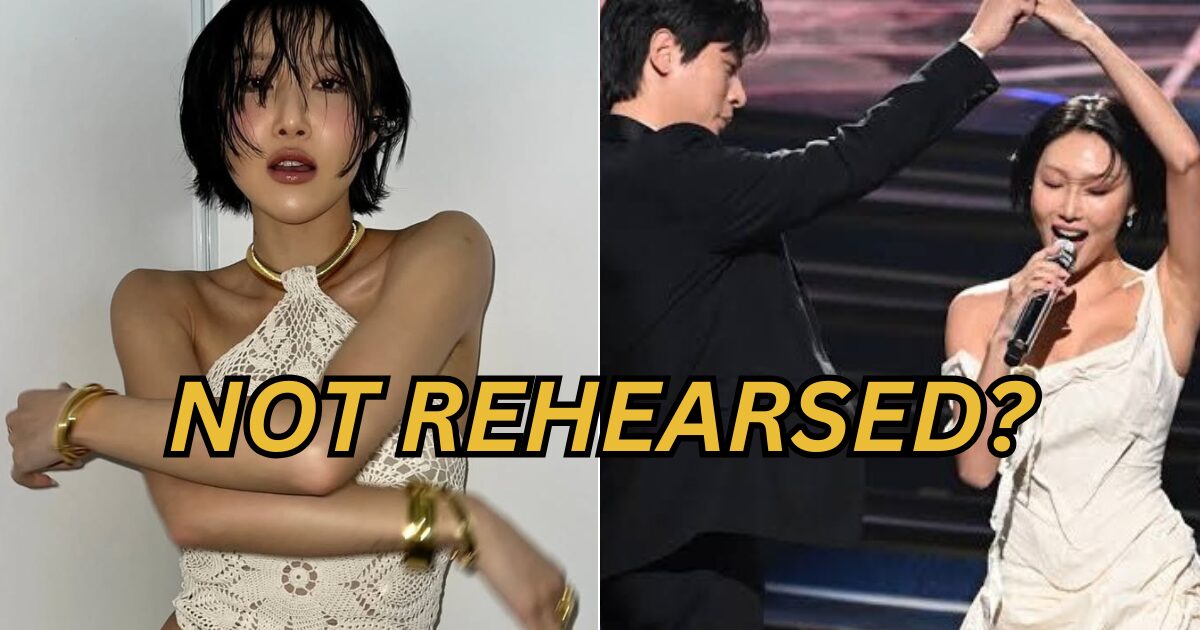
One of the most striking details revealed during the interview was the revelation that Hwasa and Park Jung Min never actually rehearsed the sequence together in person before the live broadcast. In a high-stakes environment like the Blue Dragon Film Awards, where timing and camera angles are meticulously planned, such a decision is nearly unheard of. Hwasa explained that the coordination was handled remotely; she filmed a rehearsal video of herself performing the song and sent it to Park Jung Min so he could familiarize himself with the pacing and the narrative cues.
Park Jung Min, a veteran actor known for his meticulous preparation and immersive acting style in films such as Deliver Us From Evil and Bleak Night, studied the footage independently. He then arrived at the venue and executed his part alongside Hwasa for the first time during the actual event. Hwasa expressed that this lack of formal joint rehearsal actually benefited the performance, lending it an air of "authenticity" and "improvisational energy" that resonated with the live audience and viewers at home. The singer noted that the feeling of "not knowing exactly what would happen" added a layer of genuine emotion to the song’s delivery.
Statistical Impact: The Rise of "Good Goodbye"
The immediate aftermath of the performance saw an unprecedented surge in digital consumption for "Good Goodbye." While Hwasa was already a chart-topping artist, the "Blue Dragon effect" catapulted the track into the upper echelons of South Korean music history. Within days of the awards ceremony, the song began climbing major domestic charts, including Melon, Genie, and Bugs.
The song eventually achieved a "Perfect All-Kill" (PAK), a rare feat in the Korean music industry where a track must simultaneously hold the number one spot on the daily and real-time charts of all major streaming platforms, as well as the weekly iChart. "Good Goodbye" didn’t just achieve a PAK; it sustained it. The track went on to record the second-highest number of cumulative PAK hours in history, placing Hwasa in an elite tier of artists that includes industry titans like BTS and IU. This statistical milestone underscores the power of a single viral live moment to reshape the commercial trajectory of a musical release, transforming a successful comeback into a career-defining hit.

The Professional Distance Behind the On-Stage Chemistry
Despite the palpable romantic tension portrayed on stage, Hwasa’s account of her post-performance interaction with Park Jung Min highlights the strictly professional nature of their relationship. The singer shared that after the event, she sent a brief text message to the actor to express her gratitude for his participation in the stage. Park Jung Min’s response was described as "curt" or "straightforward," typical of his reputation for being a reserved and professional individual.
This contrast between their on-stage persona and off-stage reality has been a point of interest for fans. It demonstrates the high level of professionalism required to execute such a convincing performance with minimal personal interaction. The ability of both artists to inhabit their roles so effectively—Hwasa as the soulful narrator and Park as the silent romantic lead—speaks to their respective talents in their crafts.
Historical Context of the Blue Dragon Film Awards Performances
The Blue Dragon Film Awards has a long history of featuring musical performances that bridge the gap between cinema and pop culture. In 2016, Hwasa’s group, MAMAMOO, went viral at the same ceremony for changing the lyrics of their song "Decalcomanie" to include witty references to the actors in the audience, such as Jung Woo Sung. That moment is still cited as a masterclass in award show engagement.
Hwasa’s solo success with "Good Goodbye" continues this tradition of MAMAMOO members leveraging the prestige of the Blue Dragon stage to create iconic cultural moments. While many K-pop performances at film awards can sometimes feel disconnected from the cinematic audience, Hwasa’s collaboration with an actor like Park Jung Min ensured that the performance felt like an extension of the storytelling celebrated at the event.
Broader Industry Implications and Analysis
The success of "Good Goodbye" following the 46th Blue Dragon Film Awards offers several insights into the modern entertainment landscape:
- The Power of the "Live Moment": In an era of highly polished, pre-recorded content, the unpredictable nature of a live broadcast remains a potent tool for artist promotion. The perceived spontaneity of the Hwasa-Park Jung Min interaction created a "must-watch" moment that social media algorithms favored, leading to massive organic reach.
- Cross-Industry Synergy: The collaboration highlights how the music and film industries can mutually benefit from strategic crossovers. Park Jung Min’s presence lent the performance a "cinematic" weight, while Hwasa’s musicality provided an emotional soundtrack that enhanced the actor’s public image as a versatile performer.
- The Evolution of the "Ballad" in K-Pop: "Good Goodbye" is a departure from the high-energy dance tracks often associated with K-pop idols. Its success indicates a growing appetite among the general public for vocal-centric, emotionally resonant storytelling, particularly when paired with a compelling visual narrative.
- The "Hwasa Brand": Hwasa has consistently challenged the traditional boundaries of what is expected from a female idol in South Korea. Her ability to command a room of the country’s most elite actors—and to do so with a performance that was largely self-directed—solidifies her status as a singular force in the industry.
Chronology of the "Good Goodbye" Viral Cycle
- Release Date: Hwasa releases "Good Goodbye" to positive but standard chart reception.
- The 46th Blue Dragon Film Awards: Hwasa performs the track; the closing sequence with Park Jung Min goes viral on platforms like X (formerly Twitter), TikTok, and YouTube.
- Digital Surge: Within 48 hours, the song enters the Top 10 on the Melon Top 100.
- The PAK Milestone: "Good Goodbye" achieves its first Perfect All-Kill.
- Record-Breaking Run: The song maintains its chart dominance, eventually securing the second-highest all-time PAK hours.
- Salon Drip Appearance: Hwasa reveals the behind-the-scenes details, providing context to the viral moment months after the event.
As the industry looks toward future award seasons, the "Hwasa-Park Jung Min model" of collaborative, narrative-driven performances will likely be a blueprint for other artists seeking to make a lasting impact. The revelation that such a monumental moment was born from a simple rehearsal video and a shared professional intuition only adds to the legacy of the performance, proving that sometimes, the most resonant art comes from the most unexpected of circumstances. Hwasa’s journey with "Good Goodbye" remains a testament to her artistry and her unique ability to capture the public’s imagination, one viral moment at a time.