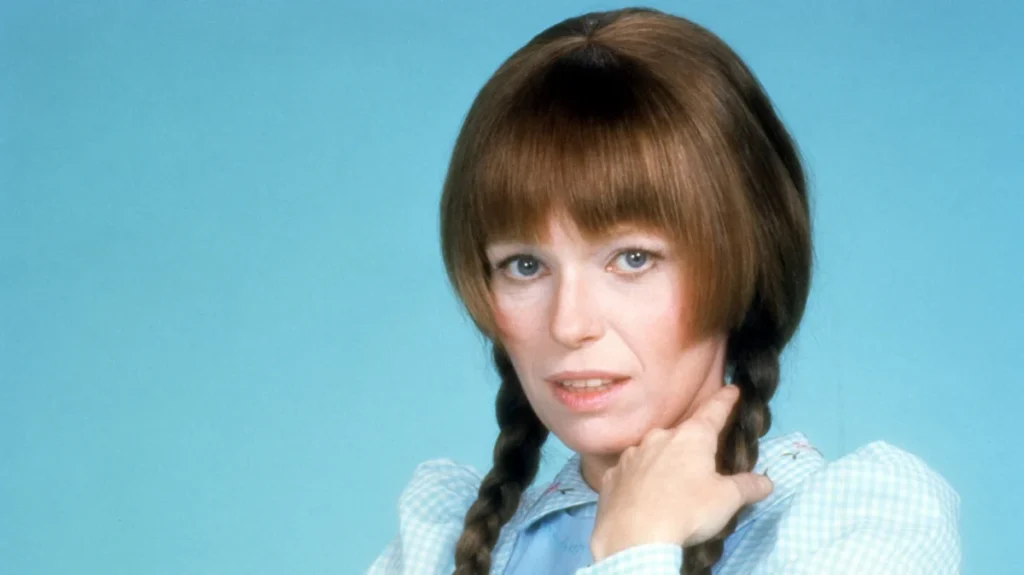

As Louise Lasser approaches her 87th birthday on April 11, 2026, it is an opportune moment to reflect on her indelible impact on the television landscape and her pioneering role in shaping a distinct genre of satirical comedy. For a significant period, Lasser was one of the most recognizable and celebrated faces on the small screen, primarily due to her unforgettable portrayal of Mary Hartman in the groundbreaking syndicated series Mary Hartman, Mary Hartman. Her performance and the show itself redefined comedic storytelling in the mid-1970s, offering a darkly humorous and often surreal commentary on American suburban life that resonated deeply with audiences and critics alike. This retrospective will delve into her multifaceted career, her formative collaborations, the intense demands of her most famous role, and her subsequent artistic endeavors, providing a comprehensive look at a performer who continues to inspire and intrigue.
The Genesis of a Satirical Phenomenon: Mary Hartman, Mary Hartman
The year 1976 marked a pivotal moment in Louise Lasser’s career with her casting as Mary Hartman. However, this was not her entry into the entertainment industry as a novice. Lasser had already cultivated a significant artistic resume, notably through her collaborations with acclaimed filmmaker Woody Allen. Her early work with Allen included memorable roles in his absurdist comedies such as Bananas (1971) and Take the Money and Run (1969). These experiences honed her comedic timing and her ability to inhabit characters with a unique blend of vulnerability and deadpan delivery, skills that would prove invaluable in her later, more demanding role.
The decision to greenlight Mary Hartman, Mary Hartman as a syndicated daily program was itself a bold move in the television landscape of the era. Airing five nights a week, the series presented an unprecedented production schedule. The commitment required Lasser to appear in an extraordinary number of episodes, typically numbering in the hundreds over its two-season run (1976-1977). This relentless pace meant that Lasser was not just performing; she was living and breathing the character of Mary Hartman, a woman navigating the absurdities of small-town America, marital woes, and existential crises with a disarming earnestness that often bordered on the bizarre.
The series’ premise was deceptively simple yet profoundly complex in its execution. Mary Hartman, a seemingly ordinary housewife in the fictional town of Fernwood, Ohio, found her life unraveling in a series of increasingly outlandish and darkly comedic events. From her husband’s embarrassing impotence to her mother’s bizarre relationships and the town’s obsession with a televangelist, Mary Hartman, Mary Hartman offered a biting critique of consumerism, media saturation, and the manufactured realities of television itself. Lasser’s performance was central to the show’s success. She embodied Mary’s often bewildered and melancholic state with a nuanced portrayal that captured the quiet desperation and underlying anxieties of a woman struggling to maintain normalcy in a world that seemed determined to push her to the brink. Her ability to convey profound emotional states through subtle facial expressions and vocal inflections made Mary Hartman a character that viewers could empathize with, even as her circumstances grew more surreal.
The Demands of Daily Television and Lasser’s Rise to Stardom
The demanding schedule of Mary Hartman, Mary Hartman meant that Lasser’s life became inextricably linked to the character. Filming five days a week, often for 12-14 hours a day, required an immense dedication and stamina. This intense production environment, while grueling, catapulted Lasser into the public consciousness. She became a household name virtually overnight, her face synonymous with the unique brand of satire that the show championed.
The success of Mary Hartman, Mary Hartman can be attributed to several factors. Firstly, its syndicated nature allowed it to bypass the traditional network gatekeepers, offering a platform for more experimental and adult-oriented programming. Secondly, the show’s willingness to tackle taboo subjects with a darkly humorous lens appealed to a demographic seeking more sophisticated and thought-provoking content. The show’s critical reception was largely positive, with many praising its originality and Lasser’s performance. The series garnered multiple Emmy nominations, including for Outstanding Lead Actress in a Comedy Series for Lasser in 1977, solidifying its status as a significant cultural force.
The impact of Mary Hartman, Mary Hartman on television comedy cannot be overstated. It paved the way for future shows that explored similar themes of societal absurdity and the mundane anxieties of everyday life through a satirical lens. Its influence can be seen in the DNA of programs ranging from SCTV to The Office and Veep, all of which owe a debt to the groundbreaking work of Lasser and the Mary Hartman team.
Beyond Mary Hartman: A Continuing Artistic Trajectory
Following the conclusion of Mary Hartman, Mary Hartman, Louise Lasser continued to pursue her acting career, often gravitating towards roles that allowed her to explore complex and unconventional characters. While she never again achieved the same level of widespread recognition as she did with Mary Hartman, her subsequent work demonstrated a consistent artistic integrity and a desire to challenge herself.
Her filmography includes appearances in notable projects such as Norman Lear’s All That Jazz (1979), a semi-autobiographical musical drama directed by Bob Fosse, where she played a character named "Faye." This role showcased her ability to adapt to different directorial styles and genres. She also appeared in films like In God We Trust (1980) and The Loveless (1981), an independent drama that explored themes of alienation and rebellion in post-war America.
Lasser’s involvement in independent cinema and her continued work in television demonstrated a commitment to her craft. She often took on roles that were critically acclaimed but perhaps less commercially visible than her earlier work. This choice reflected a dedication to artistic exploration over mass appeal, a characteristic that has defined her career trajectory.
Recent Years and Enduring Influence
In more recent years, Louise Lasser has maintained a relatively private profile, though her impact on the entertainment world continues to be acknowledged. Her distinctive performance in Mary Hartman, Mary Hartman remains a touchstone for discussions about television comedy and satire. The show has experienced a resurgence in popularity through streaming services and critical reappraisals, introducing a new generation of viewers to Lasser’s remarkable talent.
The legacy of Louise Lasser is multifaceted. She is remembered as a pioneering comedic actress who, through Mary Hartman, brought a unique blend of vulnerability, intelligence, and dark humor to the television screen. Her work with Woody Allen provided an early indication of her comedic prowess, while her role in Mary Hartman, Mary Hartman cemented her status as a cultural icon. The show’s innovative format and its unflinching look at societal issues, coupled with Lasser’s masterful performance, created a television experience that was both groundbreaking and enduring.
Supporting Data and Contextual Analysis
The syndicated nature of Mary Hartman, Mary Hartman was a crucial element in its success. In the mid-1970s, syndication allowed independent producers to distribute their shows directly to local television stations, bypassing the rigorous selection process of the major broadcast networks. This model fostered greater creative freedom and enabled shows that might have been deemed too niche or controversial for network television to find an audience. Mary Hartman, Mary Hartman was one of the most successful early examples of this syndicated model, demonstrating the viability of daily, serialized programming outside the traditional network structure.
The show’s critical reception can be quantified by its numerous award nominations. In 1977, the year after its premiere, Mary Hartman, Mary Hartman received five Emmy nominations, including Outstanding Lead Actress in a Comedy Series for Louise Lasser, Outstanding Supporting Actress in a Comedy Series for Mary Kay Place (who played Loretta Haggers), and Outstanding Writing for a Comedy Series. The series also received a Golden Globe nomination for Best Television Series – Musical or Comedy. These accolades underscore the significant impact the show had on the television industry and critical discourse of the time.
The thematic relevance of Mary Hartman, Mary Hartman continues to be analyzed. The show’s exploration of media saturation, the manufactured nature of celebrity, and the anxieties of suburban life resonated with a post-Vietnam War and Watergate America grappling with a sense of disillusionment. The surreal and often absurd events that befell Mary Hartman can be interpreted as a metaphorical representation of the overwhelming and often nonsensical flow of information and societal pressures that characterized the era. Lasser’s portrayal of Mary’s bewildered resilience perfectly captured this zeitgeist, making her a reluctant icon for a generation questioning the narratives presented to them by society and the media.
Timeline of Louise Lasser’s Notable Career Milestones
- 1969: Appears in Woody Allen’s Take the Money and Run, marking an early collaboration with the director.
- 1971: Stars in Woody Allen’s Bananas, further establishing her presence in comedic cinema.
- 1976: Begins her iconic role as Mary Hartman in the syndicated television series Mary Hartman, Mary Hartman. The show airs five nights a week, demanding an intense production schedule.
- 1977: Receives an Emmy nomination for Outstanding Lead Actress in a Comedy Series for her work on Mary Hartman, Mary Hartman. The series also earns multiple other Emmy nominations and a Golden Globe nomination.
- 1977: Mary Hartman, Mary Hartman concludes its two-season run.
- 1979: Appears in Bob Fosse’s acclaimed musical drama All That Jazz.
- 1980s: Continues to act in films such as In God We Trust (1980) and The Loveless (1981), exploring diverse roles in independent cinema.
- 2026 (April 11): Louise Lasser celebrates her 87th birthday, marking a significant milestone and prompting renewed reflection on her enduring legacy.
Broader Impact and Enduring Relevance
Louise Lasser’s contribution to television extends beyond her individual performances. She was instrumental in defining a particular brand of satirical comedy that was both incisive and emotionally resonant. Her ability to imbue Mary Hartman with a profound sense of human frailty, even amidst the most absurd circumstances, set a new standard for character-driven comedy. The show’s success demonstrated that audiences were ready for more complex and nuanced programming, paving the way for a more diverse and adventurous television landscape.
The recent availability of Mary Hartman, Mary Hartman on streaming platforms has introduced the series to a new generation of viewers. This resurgence in interest highlights the timelessness of its themes and Lasser’s captivating performance. Critics and cultural commentators continue to analyze the show’s prescient commentary on media, celebrity, and the human condition, often citing Lasser’s portrayal as a masterclass in comedic acting.
As Louise Lasser marks her 87th birthday, her legacy as a trailblazer in television comedy and a singular artistic talent remains firmly intact. Her work on Mary Hartman, Mary Hartman continues to be studied, celebrated, and admired, a testament to its enduring impact on popular culture and the art of storytelling. Her career serves as a reminder of the power of bold, unconventional programming and the profound influence that a truly unique performer can have on the cultural narrative.