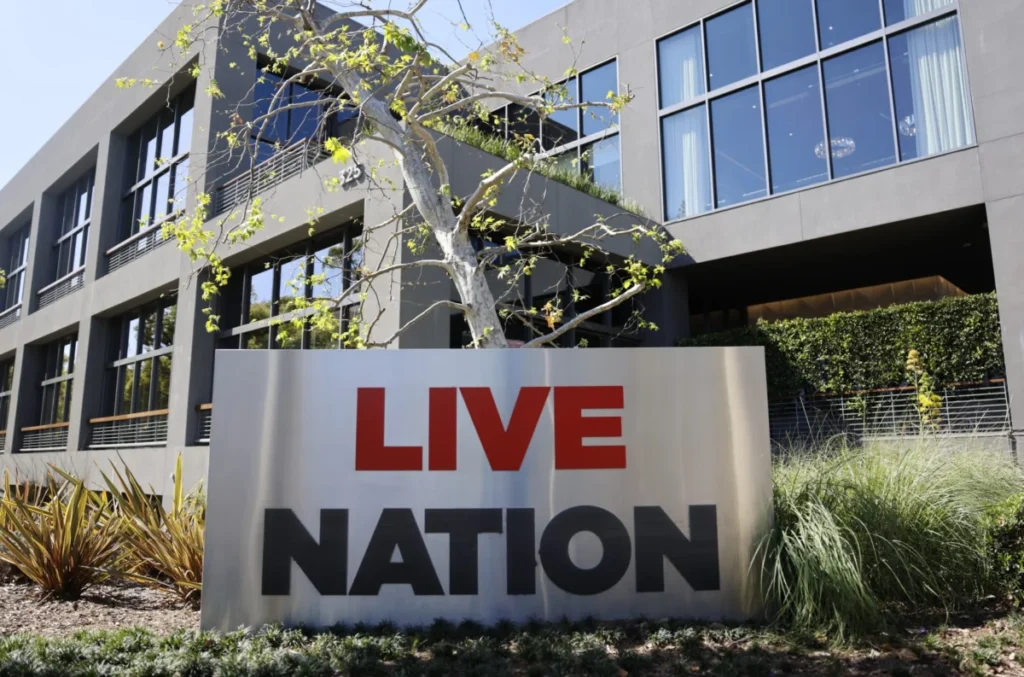

The blockbuster antitrust trial involving Live Nation Entertainment, the behemoth behind Ticketmaster, entered its fourth week with the defense presenting key witnesses aimed at countering the narrative of monopolistic practices. While the concert giant continued its efforts to persuade the jury of its legitimate market dominance, the proceedings were also marked by accusations from Live Nation that its primary competitor engaged in underhanded tactics to prevent a crucial witness from testifying. This ongoing legal battle, initiated by the U.S. Department of Justice and now primarily pursued by a coalition of state attorneys general, seeks to dismantle the integrated entity of Live Nation and Ticketmaster, alleging it stifles competition and harms consumers.
Week Four’s Strategic Defense and Legal Maneuvers
Following the conclusion of the state attorneys general’s case in the preceding week, Live Nation shifted to presenting its own defense. The core of their argument revolves around demonstrating that their substantial market share, particularly in ticketing, is a result of superior service and business acumen rather than illegal monopolistic behavior. The trial, which commenced in early March in Manhattan federal court, saw a brief pause in jury testimony on Wednesday and Thursday, April 1st and 2nd, respectively, due to ongoing legal discussions. The proceedings are slated to resume on Monday, April 6th, with the anticipation of closing statements and the commencement of jury deliberations in the near future.
Key Testimony Contradicts Earlier Claims
A significant development in week four involved testimony that directly challenged earlier claims made by the prosecution. Previously, the former executive of Brooklyn’s Barclays Center had testified that Live Nation had allegedly threatened to withhold major artists from the venue if it switched its ticketing provider from Ticketmaster to SeatGeek. However, the current chief executive of the arena took the stand to offer a different perspective.

Laurie Jacoby, CEO of Brooklyn Sports & Entertainment, testified on Tuesday, detailing issues encountered during SeatGeek’s tenure as the venue’s ticketing partner. According to reports from Inner City Press, Jacoby highlighted difficulties with on-sales for concerts featuring prominent artists like The Strokes and My Chemical Romance. She explained to the jury that these operational challenges made it arduous to attract and retain artists, ultimately prompting the venue’s decision to revert to Ticketmaster.
This line of testimony aligns with Live Nation’s broader defense strategy: that venues choose Ticketmaster not out of coercion, but due to its perceived effectiveness and ability to meet their needs.
Further bolstering this defense, Live Nation presented testimony that countered allegations of leveraging exclusivity deals to deter venues from switching ticketing partners. In the trial’s opening week, an executive from the NHL’s Minnesota Wild had testified that his continued reliance on Ticketmaster was driven by a fear of "catastrophic" repercussions, including the loss of Live Nation-promoted concerts.
However, on Monday, Jim Van Stone, president of business operations at Monumental Sports & Entertainment, which oversees the NHL’s Washington Capitals, the NBA’s Washington Wizards, and the Capital One Arena in D.C., offered a contrasting view. As reported by MLex, Van Stone described Ticketmaster as an "outstanding" business partner, emphasizing their professionalism and the company’s ability to fulfill their needs. He stated unequivocally, "We believe in the fact that an exclusive relationship [with Ticketmaster] is better for us." This testimony directly challenges the prosecution’s assertion that exclusivity clauses are inherently coercive and indicative of monopolistic power.

Expert Testimony and Controversial Admissions
The week also featured testimony from an expert witness, Eric Budish, a professor at the University of Chicago. Per MLex, Budish testified that Ticketmaster possesses a genuine competitive advantage over rival ticketing services. However, during cross-examination, a significant detail emerged: Budish admitted to receiving over $1 million from Live Nation for his services as an economic expert in the case. This revelation is likely to be scrutinized by the jury as they assess the impartiality and weight of his expert opinion.
Allegations of Witness Intimidation and Sanctions Motion
The most dramatic development of the week, however, occurred outside the direct testimony to the jury. On Thursday, Live Nation filed a scathing motion demanding sanctions against the state attorneys general. The motion alleged that rival ticketing company AEG, through its ticketing arm AXS, had secretly provided the states with a "dossier of personal information" about a former Live Nation employee. Live Nation claims this information was then exploited by the states to prevent the individual from testifying in the trial.
Live Nation’s legal team argued in their filing, "This blatant attempt to dissuade a witness from providing truthful testimony through intimidation is intolerable." They urged the judge to inform the jury that AEG and the states had been "closely coordinating" their efforts and had actively sought to suppress testimony that AXS was "never of comparable quality to Ticketmaster." This aggressive legal maneuver suggests Live Nation believes crucial evidence supporting their defense was deliberately suppressed. The implication is that the former employee’s testimony would have directly undermined the plaintiffs’ claims by demonstrating the clear qualitative superiority of Ticketmaster over AEG’s AXS platform, a cornerstone of the prosecution’s argument.
The Stakes of the Defense’s Strategy
The testimony from Jacoby, Van Stone, and Budish directly addresses the central pillar of Live Nation’s defense: that its dominance is a function of superior performance, not anti-competitive conduct. By presenting executives who advocate for Ticketmaster’s services based on their operational merits and by having an expert confirm a genuine competitive edge, Live Nation aims to dismantle the prosecution’s narrative of a company that bullies its way to market control.

The sanctions motion further supports this narrative by framing the alleged actions of AEG and the states as an attempt to prevent the jury from hearing evidence that would prove the inherent inferiority of a key competitor’s product. If the court grants Live Nation’s request for sanctions, it could significantly influence the jury’s perception of the prosecution’s conduct and the validity of their case. The legal implications of such a ruling could signal to the jury that the government feared the success of Live Nation’s argument regarding product quality.
Broader Context and Potential Implications
This trial is a landmark antitrust case with significant implications for the live entertainment industry. For over fifteen years, Live Nation and Ticketmaster have operated as a combined entity, controlling a vast portion of the concert promotion and ticketing markets. The Department of Justice initiated the lawsuit in 2024, alleging that Live Nation engaged in anticompetitive practices, including using its market power to stifle competition, retaliate against venues that worked with rival ticketing platforms, and engage in predatory pricing.
The settlement reached between Live Nation and the DOJ in March 2026, reportedly involving a $200 million payment and certain behavioral concessions, was deemed insufficient by many state attorneys general. Their continued pursuit of the case, aiming for a structural breakup of Live Nation and Ticketmaster, underscores their belief in the severity of the alleged monopolistic practices.
The arguments presented by both sides hinge on the interpretation of market dynamics, the nature of exclusivity agreements, and the impact of Live Nation’s integrated business model on competition. The prosecution argues that Live Nation’s control over both concert promotion and ticketing creates an insurmountable barrier for competitors, leading to higher ticket prices and fewer choices for consumers. The defense, conversely, contends that the market is dynamic, competition exists, and consumers benefit from the efficiencies and extensive reach that Live Nation and Ticketmaster provide.

As the trial progresses towards its conclusion, the jury’s decision will have far-reaching consequences. A ruling in favor of the states could lead to a divestiture of Ticketmaster, potentially reshaping the ticketing landscape and fostering greater competition. Conversely, a victory for Live Nation would affirm their business model and potentially set a precedent for how integrated companies operate within the live entertainment sector. The coming weeks are expected to be pivotal as the court moves towards final arguments and the jury deliberates on the future of one of the music industry’s most powerful entities.