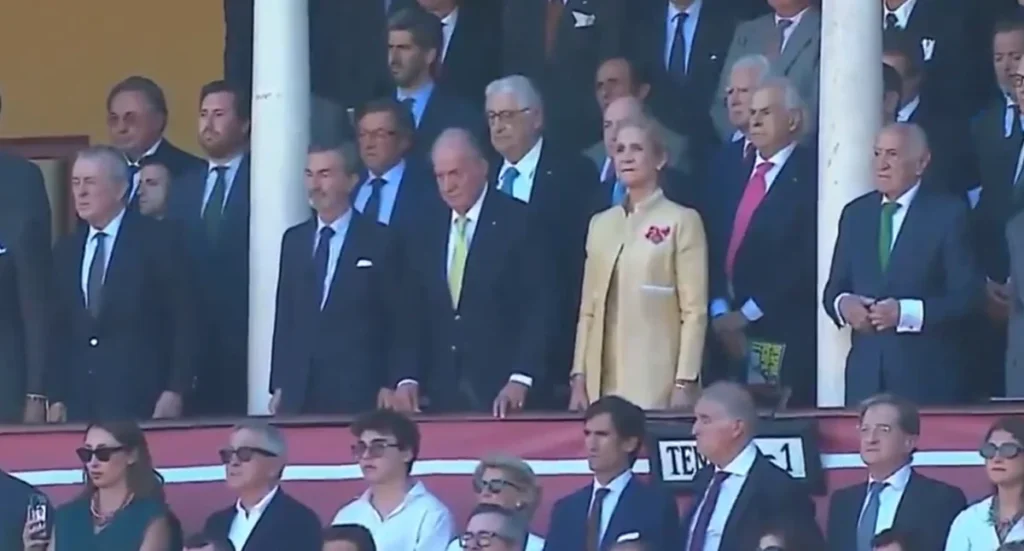

The Spanish Royal Family experienced an Easter weekend marked by a series of significant and, in some cases, unexpected public appearances, none more so than the unannounced return of former King Juan Carlos I to Spain. The former monarch, who abdicated the throne in 2014, took a prominent seat in the VIP box at a bullfight in Seville on Easter Sunday, drawing a considerable ovation from the assembled crowd. His presence at the event, coupled with the playing of the national anthem, underscored a rare public acknowledgement of his historical role, a sight not frequently witnessed since his stepping down. This return has been the focal point of a period of heightened royal visibility, offering a glimpse into the evolving public life of Spain’s prominent royal figures.
A Season of Unforeseen Royal Engagements
The past few days have presented a series of rather surprising moments involving various members of Spain’s royal family, a departure from the typically more subdued Easter observances. While several royals have made notable appearances, it is the sudden return of Juan Carlos to Spanish soil that has generated the most widespread interest and commentary.
Prior to the former king’s arrival, his younger daughter, Infanta Cristina, made her first formal public appearance in Mallorca since her acquittal in a high-profile financial misconduct trial. She joined her mother, Queen Sofia, at the Palace of Marivent, signalling a potential step towards greater public engagement following a period of considerable personal and legal scrutiny. This appearance was followed by Infanta Cristina being seen alongside Queen Sofia and her elder sister, Infanta Elena, participating in traditional parades in Murcia, commemorating Maundy Thursday and Good Friday. These events marked a significant public re-emergence for the Infanta, who had largely withdrawn from public life in recent years.
This period has been particularly poignant for the 88-year-old Queen Sofia, as it is her first Easter since the passing of her younger sister, Princess Irene, in January. The presence of her daughters at these solemn observances likely offered a measure of familial support during this difficult time.
Further demonstrating the shift in royal visibility, King Felipe VI and Queen Letizia were observed attending an Easter event in a Madrid suburb. In a move described as incognito, the reigning monarchs mingled with the public to watch a religious procession. This unannounced participation offered a more accessible and relatable image of the current King and Queen.
Young Royals Embrace Cultural Events
Adding another layer to the weekend’s unexpected royal activities, it was later confirmed that Queen Letizia, accompanied by her two daughters, Princess Leonor and Infanta Sofia, had made a discreet visit to one of Spain’s most anticipated musical events of the year. Photographs circulated on social media depicting the Queen and her daughters attending a concert by the acclaimed artist Rosalía as part of her 2026 "Lux" tour.
This sighting of Princess Leonor, who is currently completing a year of intensive training with Spain’s Air Force, is particularly noteworthy. Her military education, a crucial component of her preparation for future royal duties, is nearing its conclusion after three years of comprehensive formation. This has fueled considerable speculation regarding her next steps and the specific roles she will undertake. Her younger sister, Infanta Sofia, is currently in her first year of university studies, a more conventional path for a young person of her age. The presence of the young princesses at a contemporary cultural event like a Rosalía concert suggests a deliberate effort to connect with a younger demographic and engage with modern Spanish culture.
The Patriarch’s Return to Seville
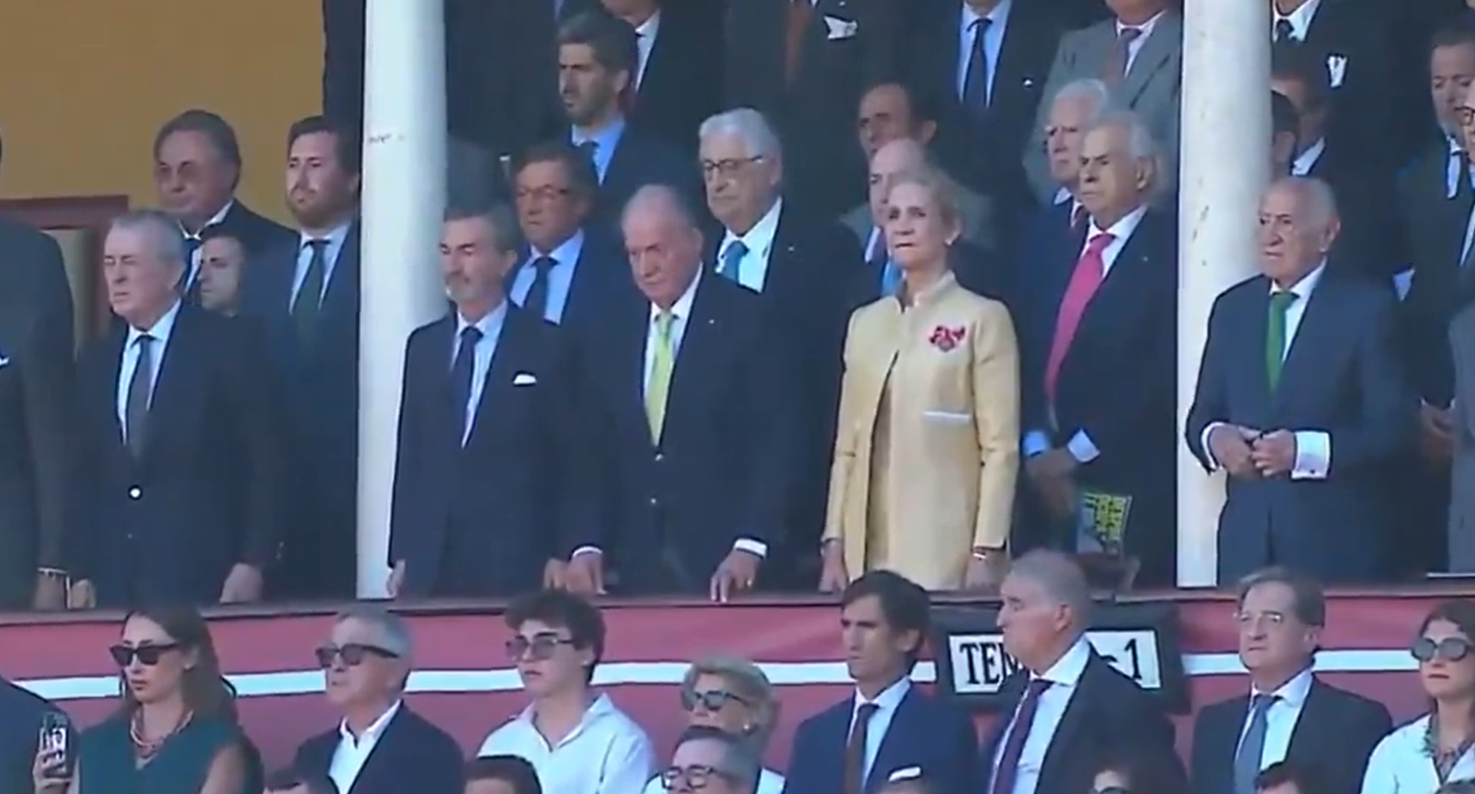
However, the most significant development of the Easter weekend was undoubtedly the return of King Juan Carlos I to Spain. He travelled to Seville, where he was greeted by his elder daughter, Infanta Elena, and her children, Felipe and Victoria Federica de Marichalar. The family shared a lunch on Easter Sunday, with his grandchildren assisting the former monarch as he made his way to his vehicle. During this brief transit, he was met with enthusiastic shouts of "Viva el Rey" – "Long Live the King" – a testament to his enduring, albeit complex, legacy among a segment of the Spanish population.
Following the family lunch, King Juan Carlos and Infanta Elena proceeded to the Real Maestranza de Caballería de Sevilla for a bullfight. His arrival at the bullring was again met with applause, highlighting the continued public interest in his presence, even years after his abdication. This visit marked his first return to Spain in nearly six months, a period during which his public appearances have been predominantly outside the country. In contrast, the reigning King Felipe VI and Queen Letizia reportedly spent Easter Sunday privately.
Historical Context and Royal Transition
King Juan Carlos’s reign, spanning from 1975 to 2014, was a transformative period for Spain. He ascended to the throne shortly after the death of dictator Francisco Franco, playing a pivotal role in Spain’s transition to democracy. His early years were characterized by efforts to consolidate democratic institutions and steer the nation towards modernity. He was instrumental in thwarting a coup d’état in 1981, an act that cemented his image as a defender of democracy and earned him widespread admiration.
However, the latter years of his reign were marred by a series of controversies, including allegations of financial impropriety and a widely publicized hunting accident. These scandals contributed to a decline in his public approval ratings and ultimately led to his abdication in favour of his son, Felipe. Since abdicating, Juan Carlos has lived primarily abroad, though he has maintained a presence in Spanish society through occasional visits and public statements. His return to Spain, particularly for a public event like the bullfight, is therefore a significant moment, prompting reflection on his legacy and the ongoing evolution of the Spanish monarchy.
Analysis of Royal Appearances and Future Implications
The series of high-profile royal appearances during this Easter period can be interpreted in several ways. For Infanta Cristina, her participation in public events alongside her mother and sister suggests a potential effort to re-establish a more visible role within the royal family’s social sphere, following the resolution of her legal issues. This could signify a gradual reintegration into public life, albeit likely in a less prominent capacity than in previous years.
The presence of King Felipe and Queen Letizia at a public procession, albeit incognito, reflects a continuing strategy to project an image of accessibility and connection with ordinary citizens. Their attendance at a major cultural event with their daughters, Princess Leonor and Infanta Sofia, underscores a commitment to showcasing the younger generation of royals engaging with contemporary society. This is particularly important for Princess Leonor, whose future role as queen necessitates a strong understanding of the nation’s cultural landscape and the aspirations of its people.
King Juan Carlos’s return, however, remains the most compelling aspect of the weekend. His prominent appearance at the Seville bullfight, a traditional Spanish spectacle, serves as a reminder of his historical significance and his continued influence, particularly among certain demographics. While his official role has ended, his personal standing and public persona continue to evoke strong reactions. His presence, met with ovations, highlights the enduring affection and respect he commands from some quarters, even as the monarchy navigates a new era under his son’s leadership.
The implications of these varied appearances are multifaceted. They suggest a monarchy that is adapting to changing times, seeking to balance tradition with modernity, and engaging with the public in new ways. The visibility of the younger royals, particularly Princess Leonor, is crucial for ensuring the continuity and relevance of the monarchy for future generations. King Juan Carlos’s return, while unexpected, also serves as a reminder of the historical roots of the current Spanish monarchy and the complex legacies that continue to shape its public perception. The coming months will likely reveal whether these Easter appearances are indicative of a broader trend towards increased royal visibility and a redefinition of public roles within the Spanish Royal Family.