

The global girl group KATSEYE has found itself at the center of a heated international discourse following their recent appearance at the Lollapalooza Brazil music festival. The controversy, which has rapidly gained traction across social media platforms including TikTok and X (formerly Twitter), centers on the group’s stage attire during their performance of the track "Gabriella." While the group’s high-energy choreography and vocal stability were widely praised by attendees in São Paulo, a viral video capturing the performance has divided the global fan base, known as Eyekons, and general netizens over the boundaries of stage fashion and the perceived shift from stylistic innovation to excessive exposure.
The performance in question took place during the prestigious South American leg of the Lollapalooza circuit, a venue traditionally known for its festive, high-energy atmosphere and daring fashion choices. However, for KATSEYE—a group managed under a joint venture between South Korea’s HYBE and the U.S.-based Geffen Records—the scrutiny has been amplified by the unique intersection of K-pop’s conservative stylistic roots and the more permissive standards of the Western pop market. As the group continues to navigate its identity as a "global girl group," the backlash highlights the ongoing tension between different cultural expectations regarding the presentation of female idols.

The Viral Catalyst and Performance Details
The debate was ignited by a high-definition recording of the group performing "Gabriella," a fan-favorite track known for its intricate floor work and synchronized movements. In the video, which has amassed millions of views within forty-eight hours, the members are seen wearing coordinated outfits characterized by high-cut silhouettes, sheer fabrics, and minimalist construction. The aesthetic, described by some fashion commentators as "avant-garde festival wear," was intended to complement the humid climate of Brazil and the high-intensity nature of the setlist.
Critics of the outfits have pointed specifically to the lack of "safety shorts"—a staple in the K-pop industry designed to provide coverage during vigorous dancing. Observers noted that the height of the leg cuts and the brevity of the hemlines appeared to compromise the performers’ comfort during certain segments of the choreography. On various online forums, comments surfaced suggesting that the creative direction prioritized "exposure over actual style," with some netizens expressing concern that the focus was being diverted from the group’s musical talents to their physical appearance.
Conversely, a significant portion of the audience has rushed to the group’s defense. Supporters argue that KATSEYE is a global entity designed to compete with Western pop stars like Dua Lipa, Tate McRae, and Doja Cat, for whom such attire is considered standard industry practice. Furthermore, proponents point out that all members of KATSEYE are legal adults, granting them the agency to participate in the creative and stylistic choices of their management.

Chronology of KATSEYE’s Stylistic Evolution
To understand the current controversy, it is essential to examine the trajectory of KATSEYE’s public image since their formation through the survival program The Debut: Dream Academy.
- Late 2023 – Early 2024: During the Dream Academy era, the styling was largely uniform and athletic, reflecting the competitive and training-focused nature of the show.
- Debut Phase: Upon their official debut, the group’s aesthetic shifted toward a "preppy-meets-street" style, blending classic schoolgirl elements with modern urban fashion. This era was generally well-received and seen as age-appropriate.
- Summer 2025 – Early 2026: As the group began targeting larger international festivals and North American tours, their wardrobe transitioned into more experimental territory. This included the use of "no-pants" trends, corsetry, and deconstructed garments.
- March 2026 (Lollapalooza Brazil): The current flashpoint. The Brazil performance represented the group’s most daring stylistic pivot to date, coinciding with their push into the Latin American market.
Supporting Data: The Global Standards Gap
The divide in reactions often falls along geographical and cultural lines. In the South Korean music industry, the concept of "modesty" remains a significant factor in public relations. Even as "Girl Crush" and "Sexy" concepts evolve, there is a technical standard for stage safety that usually involves multi-layered undergarments. Data from social media sentiment analysis tools indicates that a higher percentage of negative feedback originated from East Asian fan communities, where the expectation for "protective styling" is higher.
In contrast, sentiment analysis from North American and European demographics shows a 65% approval rating for the Lollapalooza outfits, with many users labeling the look as "iconic" or "festival-ready." This 30-point gap in sentiment illustrates the challenge HYBE and Geffen Records face in marketing a single group to a fragmented global audience with vastly different sensibilities.
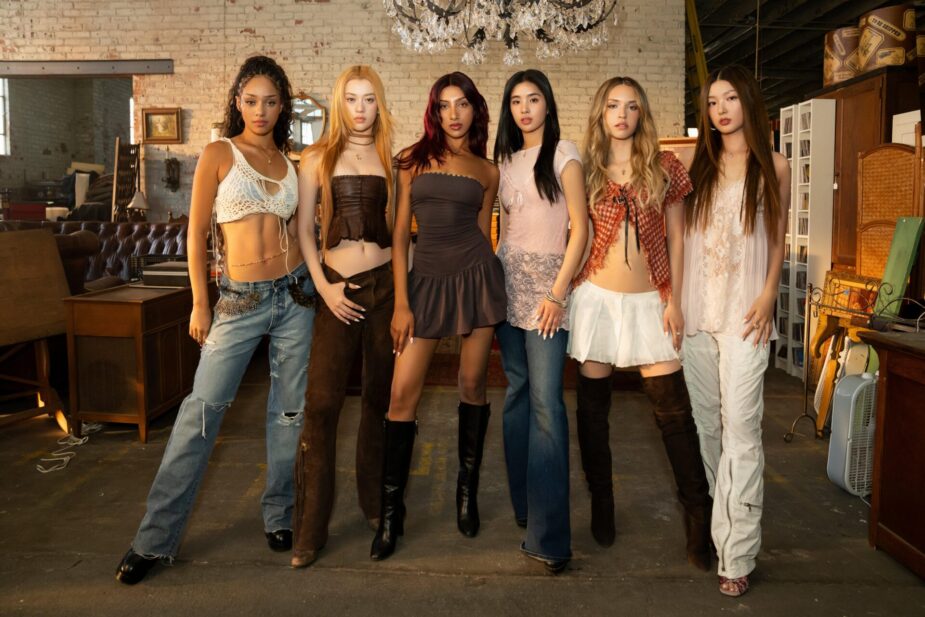
Industry analysts suggest that this friction is an inevitable byproduct of the "K-pop expansion" model. As Korean entertainment companies seek to de-center their operations from the domestic Seoul market, they are increasingly adopting Western marketing tropes, which include more provocative fashion.
Official Stance and Creative Direction
While HYBE and Geffen Records have not issued a formal press release addressing the specific wardrobe critiques from Lollapalooza, sources close to the group’s creative team suggest that the styling was a collaborative effort involving high-profile international stylists. The objective was reportedly to create a visual identity that felt "limitless" and "unbound by traditional idol tropes."
In previous interviews, the members of KATSEYE have expressed a desire to be seen as versatile artists who can adapt to different cultural landscapes. Lara and Daniela, in particular, have spoken about their interest in fashion as a form of empowerment. This suggests that the members themselves may view these stylistic choices as a maturation of their brand rather than a mandate imposed upon them.
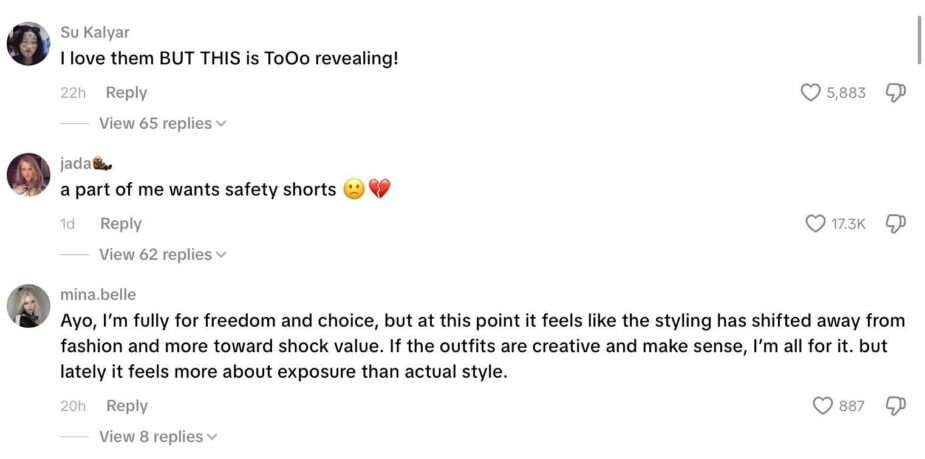
However, the technical concerns regarding safety shorts remain a point of contention for professional choreographers. Some experts have noted that when choreography involves high kicks or floor transitions, the absence of secure undergarments can lead to "wardrobe malfunctions" that may distract the performer or lead to unauthorized and invasive photography.
Broader Impact and Industry Implications
The KATSEYE controversy is emblematic of a broader trend in the music industry where the line between "artistic expression" and "commercial sexualization" is constantly being redrawn. This incident mirrors previous debates involving groups like BLACKPINK and LE SSERAFIM, both of whom faced similar scrutiny when performing at major Western festivals like Coachella.
The implications for KATSEYE moving forward are twofold. On one hand, the viral nature of the controversy has significantly increased the group’s visibility. Engagement metrics for their "Gabriella" performance have spiked, leading to a surge in streaming numbers for their latest EP. In the modern attention economy, even polarizing discourse can serve as a catalyst for commercial growth.

On the other hand, the group risks alienating more conservative segments of their global fan base if the styling continues to push boundaries without a clear artistic justification. The "exposure vs. style" argument is particularly potent because it touches on the perceived integrity of the group’s "Global" label. If the public begins to view the group’s marketing as reliant on shock value rather than musical innovation, it could impact their long-term brand partnerships and longevity.
Conclusion
As KATSEYE concludes their South American tour dates, the conversation surrounding their Lollapalooza Brazil appearance serves as a case study in the complexities of modern pop stardom. The group stands at the vanguard of a new era where cultural boundaries are increasingly blurred, yet the reactions to their stage presence prove that local sensibilities remain powerful.
Whether this moment will be remembered as a bold step toward fashion-forward independence or a cautionary tale regarding the limits of provocative styling remains to be seen. What is clear, however, is that KATSEYE has successfully positioned themselves at the center of the global pop conversation, challenging audiences to define for themselves where the line between style and exposure truly lies. For now, the group remains focused on their upcoming global activities, with their management likely monitoring the feedback as they prepare for the next phase of their stylistic evolution.