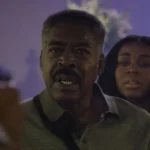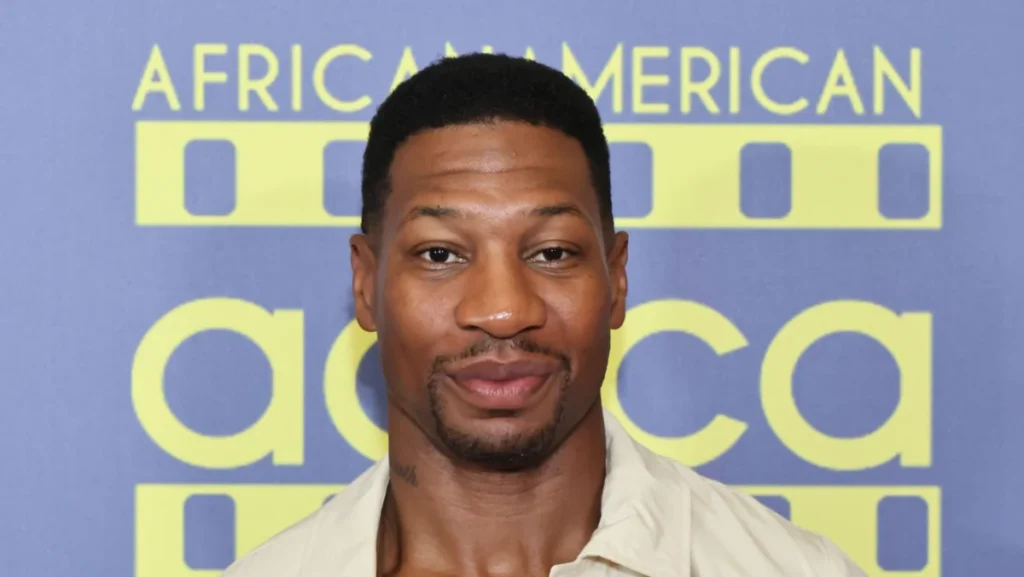

A recent video depicting actor Jonathan Majors and co-star JC Kilcoyne allegedly falling through a window on the set of an untitled action movie, a joint production by The Daily Wire and Bonfire Legend, has thrust the film into the center of a burgeoning controversy over on-set safety. The footage, which rapidly circulated following its publication by Deadline, emerged concurrently with reports of crew members organizing a strike, citing concerns over allegedly unsafe working conditions. The incident, which reportedly left Kilcoyne with significant injuries, has ignited a wider debate within the industry regarding safety protocols, particularly on non-union productions, and the ongoing tensions between traditional labor organizations and new entrants into the film production landscape.
The core of the controversy centers on a video clip that captures a pivotal stunt sequence. In the footage, Jonathan Majors, who is attempting to rebuild his career following a recent conviction, and his co-star, JC Kilcoyne, are seen falling abruptly out of frame and through what appears to be a window. According to sources cited by Deadline, Kilcoyne sustained injuries requiring stitches "all over his hands" following the fall, which was estimated to be approximately six feet to the ground. The nature of the stunt, involving a significant drop through a window, immediately raised questions about the safety measures in place. Standard industry practices for such stunts typically involve the use of breakaway glass designed to shatter safely, as well as carefully positioned safety mats or airbags to cushion the fall, along with rigorous coordination by certified stunt professionals. The alleged injuries to Kilcoyne suggest that these standard precautions may have been insufficient or improperly implemented, triggering alarm among crew members and industry observers.
Background of Crew Concerns and Industry Safety Standards
The surfacing of the video is not an isolated incident but rather a flashpoint in a broader narrative of discontent on the film set. Reports indicate that crew members were already in the process of organizing a strike, expressing deep-seated concerns about the overall safety environment and working conditions. This context is critical, as it suggests a pre-existing climate of apprehension rather than a singular, unforeseen accident. The film industry, particularly in the United States, operates under a dual system of unionized and non-unionized productions. Major studios and larger independent productions typically adhere to strict safety guidelines mandated by unions such as the International Alliance of Theatrical Stage Employees (IATSE) for crew and the Screen Actors Guild – American Federation of Television and Radio Artists (SAG-AFTRA) for actors. These unions negotiate comprehensive contracts that include detailed safety clauses, minimum wage requirements, working hour limits, and health benefits, all designed to protect their members.
Non-union productions, while not bound by these collective bargaining agreements, are still subject to federal and state occupational safety and health regulations. However, the enforcement and adherence to best practices can vary significantly. Critics often argue that non-union sets can be more susceptible to corner-cutting in the interest of budget or schedule, potentially compromising safety. This can manifest in various ways, from inadequate equipment and insufficient training to excessively long workdays that lead to fatigue, a known contributor to on-set accidents. The reported strike organization underscores a potential breakdown in trust and communication between the production leadership and the crew, highlighting a systemic issue beyond the immediate stunt.
Official Reactions and Producer’s Stance
In response to inquiries about the video and the alleged incident, Dallas Sonnier of Bonfire Legend, one of the production companies involved, issued a sharply worded statement to The Hollywood Reporter. Sonnier remarked, "The actors’ fall was shorter than the failed movie careers of the now-union reps." This statement is noteworthy for several reasons. Firstly, it directly addresses the alleged unionization efforts on set, suggesting a clear awareness and perhaps a dismissive attitude towards the crew’s organizing. Secondly, the comment about "failed movie careers" could be interpreted as a derisive jab at individuals advocating for better working conditions, potentially implying that their concerns stem from personal grievances rather than legitimate safety issues. Such a confrontational stance from a producer is unusual in public discourse and could further inflame tensions, particularly if union representatives or labor advocates choose to respond.
The Hollywood Reporter also reached out to The Daily Wire, the other principal production company, for comment but did not receive a response by the time of publication. This silence, in contrast to Sonnier’s direct and provocative statement, leaves a void that allows speculation to fill the gap. From a journalistic perspective, the lack of official comment from a major party can be interpreted in various ways, including a strategic decision to avoid further public engagement or an internal deliberation on how to address the unfolding situation. In a highly unionized industry like Hollywood, such incidents are typically met with swift investigations by relevant unions, who would assess compliance with safety protocols and potentially file grievances or take other protective actions on behalf of their members. The "now-union reps" comment suggests that the crew members involved in organizing might be attempting to establish a union presence on what is currently a non-union set, a move that often meets resistance from producers who prefer the flexibility and potentially lower costs associated with non-union labor.
Jonathan Majors’ Career Trajectory and Legal Background
The incident on set comes at a critical juncture for Jonathan Majors, whose career has been under intense scrutiny following a high-profile legal battle. In March 2023, Majors was arrested in New York City following an altercation with his then-girlfriend, Grace Jabbari. The incident led to charges of assault and harassment. After a protracted legal process, Majors was convicted in December 2023 of misdemeanor assault in the third degree and harassment. The conviction resulted in significant professional repercussions; he was swiftly dropped by his management team, his publicist, and, most notably, by Marvel Studios and Disney. Prior to his legal troubles, Majors was on a meteoric rise, poised to become a central figure in the Marvel Cinematic Universe (MCU) as Kang the Conqueror, the franchise’s next overarching villain. His role was integral to upcoming films like Avengers: The Kang Dynasty and Avengers: Secret Wars. His dismissal sent shockwaves through Hollywood, altering the trajectory of one of its most promising young stars and forcing Marvel to reconsider its long-term narrative plans.
In April 2024, Majors was sentenced to a 52-week in-person domestic violence intervention program, avoiding jail time. This untitled action film, produced by The Daily Wire and Bonfire Legend, represented one of Majors’ first significant projects since his conviction and was widely seen as a potential vehicle for his professional rehabilitation. The film’s writer-director is Kyle Rankin, with Ben Shapiro producing for The Daily Wire and Dallas Sonnier for Bonfire Legend. Travis Mills, Lillian Campbell, and Sydney Aucreman are also credited as producers. The decision by these production companies to cast Majors was itself a point of discussion, indicating a willingness to work with an actor facing severe public and professional backlash. However, the current allegations of unsafe working conditions and the viral video now add another layer of complexity to Majors’ path back into the industry spotlight. The optics of a safety scandal on a set where an actor is attempting a career comeback are particularly damaging, potentially overshadowing any efforts at professional redemption.
The Daily Wire’s Foray into Film Production and Non-Union Debates
The Daily Wire, primarily known as a conservative media company, has in recent years made a concerted push into entertainment production, including feature films and television series. Their stated mission often involves creating content that aligns with conservative values and offering alternatives to what they perceive as Hollywood’s liberal bias. This expansion into film has frequently involved non-union productions, a strategy that allows them greater control over budgets and production processes, free from the stipulations of union contracts. This model, while offering perceived advantages to producers, often puts them at odds with Hollywood’s established labor unions. The "union reps" comment by Dallas Sonnier directly speaks to this ongoing tension. For Bonfire Legend, its collaboration with The Daily Wire on this project aligns with a similar independent production ethos.
The choice to operate outside union agreements is a business decision with significant implications for both production companies and their workforce. While non-union productions can offer more flexibility and potentially lower overhead costs by not having to adhere to union minimums, benefits, or strict work rules, they also face challenges. They can struggle to attract highly experienced crew members who are often unionized and prefer the protections and benefits of union work. Furthermore, they frequently become targets for union organizing efforts, especially when allegations of unsafe conditions or unfair labor practices surface. This incident on the set of the Majors film underscores the inherent risks and controversies that can arise in the non-union production space, particularly concerning worker safety and protections.
Broader Industry Impact and Implications
This incident carries significant implications for various stakeholders within the film industry. For Jonathan Majors, the controversy adds another unwelcome layer to his already complex public image. While attempting to distance himself from past legal issues, new allegations of an unsafe set environment on his current project could further hinder his career resurgence, raising questions about the judgment of those who choose to work with him and the environments they create.
For The Daily Wire and Bonfire Legend, the viral video and accompanying allegations pose a serious reputational risk. In an industry increasingly sensitive to worker safety and ethical production practices, negative publicity surrounding set conditions can deter future talent, both in front of and behind the camera. It could also fuel further scrutiny from labor organizations and safety advocates, potentially leading to calls for increased regulation or more aggressive organizing efforts on non-union sets. The dismissive tone of Dallas Sonnier’s statement could be particularly damaging, as it may be perceived as a disregard for worker well-being and an antagonistic stance towards labor rights.
More broadly, the incident highlights the ongoing and often contentious debate about set safety across the entire industry. High-profile accidents, such as the fatal shooting on the set of Rust in 2021, have intensified calls for stricter safety protocols and greater accountability from producers. This latest event, particularly given the alleged injuries and the context of a potential crew strike, will undoubtedly reignite discussions within Hollywood about the responsibility of production companies, the efficacy of existing safety regulations, and the critical role of unions in protecting workers. It serves as a stark reminder that regardless of a production’s budget or union status, ensuring a safe working environment is paramount, and failures in this regard can have severe consequences, both for individuals and for the industry’s reputation as a whole. The future trajectory of this untitled action film and the careers of those involved will likely be shaped not only by its cinematic quality but also by how effectively these safety concerns are addressed and resolved.