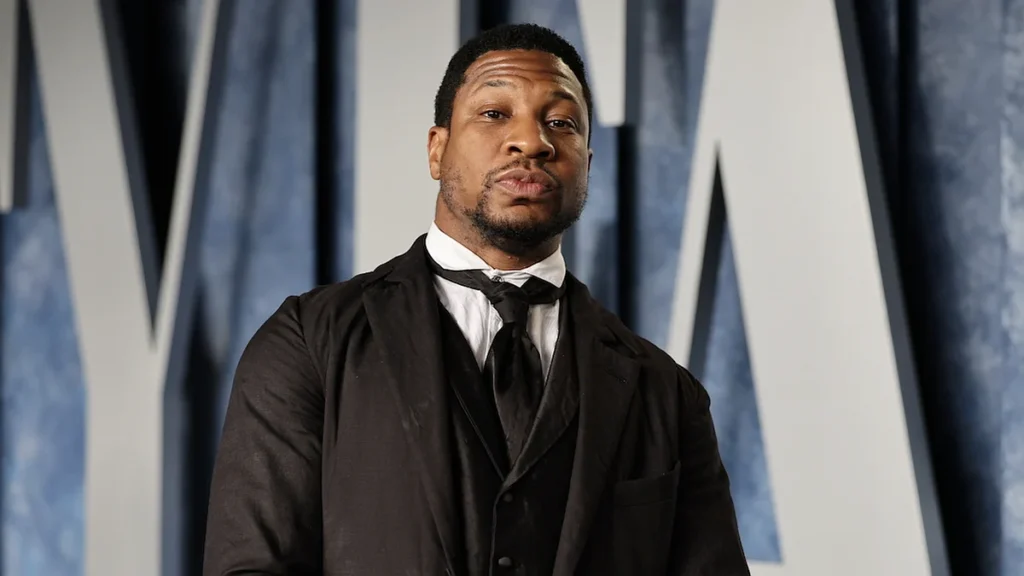

In a dramatic on-set incident that has brought renewed scrutiny to safety protocols in film production and ignited a labor dispute, actor Jonathan Majors and co-star JC Kilcoyne sustained injuries after falling through a window while filming a new action movie tentatively titled Knuckles. The production, backed by Ben Shapiro’s The Daily Wire and Dallas Sonnier’s Bonfire Legend, has since been embroiled in controversy, culminating in a strike by the International Alliance of Theatrical Stage Employees (IATSE) citing unsafe working conditions and an unwillingness by producers to engage in standard union negotiations.
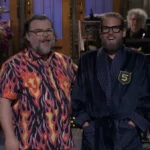
The incident, which occurred sometime prior to March 26th and was widely publicized on April 3rd, 2026, through footage obtained by Deadline, depicted Majors and Kilcoyne stumbling backwards into what appeared to be a windowpane before crashing through it and falling out of frame. Crew members immediately rushed to their aid, with a voice, reportedly Majors’, questioning if the cameras were still rolling—a testament to the intense, often perilous, nature of film production and the actors’ commitment to their craft even in moments of unexpected danger. The fall, estimated to be six feet to the ground, resulted in Kilcoyne requiring stitches in his hands for injuries sustained. His team later confirmed to Variety that the actor was "doing well and was taken care of immediately by production," adding that he "did not feel unsafe on set and continued to have a positive experience working on the project."
A Troubled Production and Escalating Safety Concerns
The circumstances leading to the fall raise significant questions about the on-set environment. According to Deadline‘s investigation, the accident happened "after the window was replaced with an unsecured sheet of tempered glass to be purposefully shattered in a later stunt that did not involve any actors." This detail suggests a critical lapse in communication or preparation, where a temporary safety measure intended for a future sequence was inadvertently present during a scene involving lead actors. Tempered glass, while designed to shatter into less harmful fragments than annealed glass, can still cause significant injury, particularly when falling from a height. The placement of such a pane, unsecured, during active filming with actors performing near it, points to a potentially serious deviation from established industry safety protocols.
This window incident was not, however, an isolated event but rather the culmination of weeks of escalating safety concerns on the Knuckles set. Reports indicate that over the preceding five weeks of production, crew members experienced several alarming incidents. These included props unexpectedly falling onto the crew and a rigged tree branch striking a set medic. Such occurrences are red flags in any production, indicating a systemic problem with safety management, risk assessment, or adherence to established guidelines. Each incident, while perhaps minor in isolation, contributes to an overall atmosphere of risk and a breakdown of trust between the production team and the crew.
IATSE Takes Action: The Strike and its Ramifications
The mounting safety issues ultimately pushed the International Alliance of Theatrical Stage Employees (IATSE) to take decisive action. On March 26th, IATSE officially called a strike against the production. The union’s initial engagement with the film’s producers aimed at securing a standard contract, which would ensure essential benefits such as health and pension funds for its members. This is a fundamental aspect of union representation, designed to provide a safety net and fair compensation for skilled labor in a demanding industry. However, the recurring safety incidents transformed the negotiations from a routine contractual discussion into a more urgent demand for a safer working environment. The fall involving Majors and Kilcoyne reportedly served as the "inciting incident" that solidified the union’s resolve, prompting crew members to walk off the set en masse.
IATSE, representing over 160,000 technicians, artisans, and craftspersons in the entertainment industry across North America, has a long and storied history of advocating for worker rights, fair wages, and, crucially, safe working conditions. The union’s role is particularly vital in an industry where long hours, complex stunts, and heavy machinery are commonplace. A strike, in this context, is not merely a demand for better pay but a powerful assertion of the right to a safe workplace, underscoring the union’s commitment to protecting its members from preventable harm. This particular strike against Knuckles highlights the ongoing tension between unionized labor’s demands for safety and fair treatment and the pressures of production, particularly from new or non-traditional entities entering the film industry.
Producers’ Response: A Controversial Stance
The response from the film’s producers, as reported by Deadline, was swift and highly controversial. When approached for comment regarding the unsafe conditions on set, they stated, "we don’t negotiate with communists." This provocative declaration immediately escalated the situation beyond a simple labor dispute, injecting a highly charged political dimension into the conflict. Such rhetoric is deeply unusual in mainstream entertainment industry labor relations and has drawn widespread criticism.
The statement can be interpreted in several ways: a dismissal of union demands as ideologically motivated, a deliberate attempt to politicize a safety issue, or simply a lack of understanding of standard labor practices in Hollywood. Regardless of intent, it alienates the very workforce essential to film production and stands in stark contrast to the collaborative spirit typically fostered on sets, even amidst disagreements. The "communists" label not only delegitimizes the union’s concerns but also places the producers firmly in an anti-union, anti-labor camp, potentially making future collaborations with unionized talent and crew exceedingly difficult. This stance is particularly notable given The Daily Wire’s conservative media background, often critical of what it perceives as "woke" or left-leaning elements within Hollywood. This incident, therefore, serves as a flashpoint where ideological differences intersect with practical labor and safety issues.
Jonathan Majors: A Career Under Intense Scrutiny
For Jonathan Majors, this incident adds another layer of complexity to an already tumultuous period in his career. Prior to this event, Majors had rapidly ascended to prominence in Hollywood, securing major roles in critically acclaimed films like The Last Black Man in San Francisco and Creed III, as well as a pivotal villainous role as Kang the Conqueror in the Marvel Cinematic Universe. However, his career faced a significant setback following his arrest in March 2023 on charges of assault and harassment. While he maintained his innocence, the legal proceedings and subsequent conviction on misdemeanor assault and harassment charges in December 2023 led to his dismissal from Marvel Studios and other projects, casting a pall over his future prospects in mainstream Hollywood.
His involvement with Knuckles, a project backed by The Daily Wire, can be seen as an attempt to rebuild his career outside the traditional studio system that had distanced itself from him. The Daily Wire has actively sought to create an alternative entertainment ecosystem, often featuring talent who feel marginalized by mainstream Hollywood’s political or social leanings. For Majors, this production offered a platform to continue working. However, the on-set accident and the subsequent union strike now place him, once again, at the center of a public controversy, albeit one not directly related to his personal conduct. While Kilcoyne’s team affirmed their actor felt safe, Majors’ own reaction, reportedly asking if the cameras were rolling, hints at a professional resilience but also perhaps a pressure to deliver, even in potentially hazardous situations. This incident will undoubtedly invite further scrutiny into the choices Majors makes regarding his career path and the environments he chooses to work in.
The Daily Wire’s Foray into Film: A New Model Under Pressure
The Daily Wire’s venture into film production represents a broader trend of alternative media companies attempting to disrupt traditional Hollywood. Founded by conservative commentator Ben Shapiro, The Daily Wire initially built its brand on news, opinion, and podcasting. Their expansion into scripted entertainment, with projects like Terror on the Prairie and Run Hide Fight, is driven by a desire to offer content that aligns with conservative values and bypass what they perceive as the ideological biases of mainstream studios. Their business model often involves direct-to-consumer distribution through their platform, appealing to an audience seeking alternatives to Netflix, Disney+, and other major streamers.
The Knuckles production, with its high-profile casting of Majors, signaled an ambition to produce more commercially viable and action-oriented content. However, this incident and the IATSE strike expose the challenges of operating outside established industry norms, particularly regarding labor relations and safety standards. Hollywood’s union structure, while sometimes perceived as bureaucratic or costly by outsiders, exists to protect workers and standardize practices. By refusing to negotiate with IATSE and using inflammatory rhetoric, The Daily Wire risks alienating a significant portion of the skilled workforce—actors, directors, cinematographers, grips, electricians, and many others—who are predominantly union members. This approach could severely limit their ability to attract top-tier talent and crew for future projects, potentially confining them to a niche within the industry. It also raises questions about their commitment to the welfare of their employees, a crucial aspect of any sustainable production model.
Broader Industry Implications: Safety, Unions, and the Future of Production
The Knuckles incident resonates deeply within the entertainment industry, triggering discussions about fundamental principles of set safety, the power of unions, and the evolving landscape of film production. Set safety is paramount, governed by strict regulations, best practices, and the collective experience of generations of filmmakers. Accidents, while sometimes unavoidable, are often preventable, and systematic failures can have tragic consequences, as evidenced by past incidents on various sets globally. IATSE’s robust response in this case serves as a powerful reminder that unions are vigilant guardians of these standards, ready to halt production when they believe worker safety is compromised.
This incident also highlights the ongoing tension between unionized labor and non-union or "open shop" productions. While some independent filmmakers or alternative production companies might opt to operate without union contracts to save costs or avoid what they see as restrictive rules, they often face challenges in attracting experienced crew and can inadvertently create environments where safety or fair labor practices are overlooked. The Daily Wire’s explicit rejection of union negotiation, coupled with its politically charged language, marks a significant departure from the typical industry dialogue, where even contentious labor disputes are usually handled through established negotiation channels.
The long-term implications for The Daily Wire’s film ambitions are considerable. While their subscriber base might appreciate their anti-establishment stance, operating a successful film studio requires navigating a complex ecosystem of talent, vendors, distributors, and, crucially, labor. Alienating a major union like IATSE could create a perception of an unreliable or unsafe employer, making it difficult to sustain a robust production pipeline. For Jonathan Majors, the incident may unfortunately tether him to the controversy surrounding this particular production, further complicating his efforts to regain his footing in the industry. Ultimately, the Knuckles incident serves as a stark reminder that regardless of political alignment or alternative business models, the fundamental principles of worker safety and fair labor practices remain non-negotiable pillars of a responsible and sustainable film industry. The resolution of this strike and the future of Knuckles will undoubtedly be closely watched as a test case for these evolving dynamics.