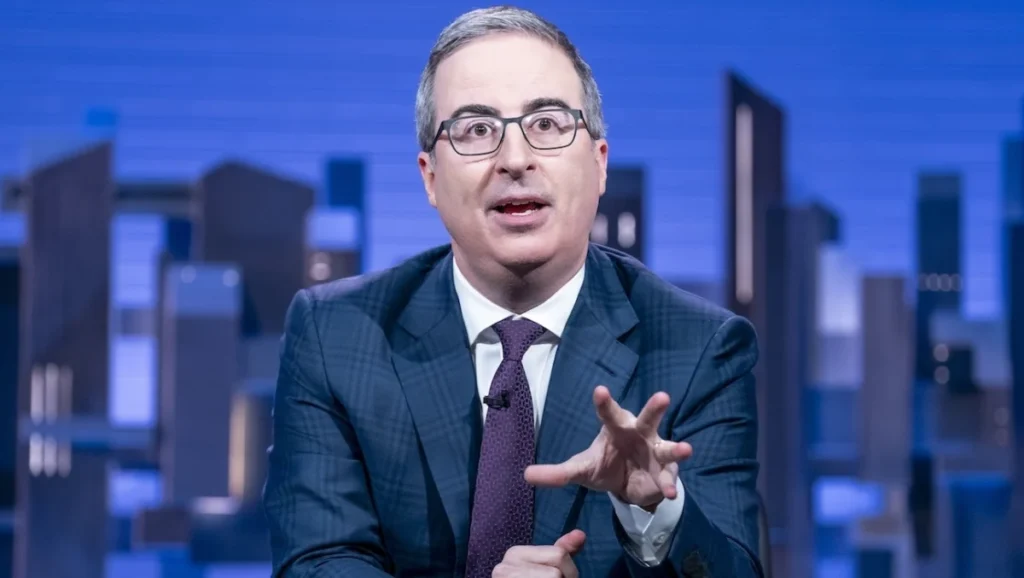

Comedian and host John Oliver opened a recent broadcast of HBO’s Last Week Tonight by drawing sharp attention to President Donald Trump’s deliberate avoidance of the term "war" to describe ongoing United States military actions involving Iran. The segment highlighted the linguistic gymnastics employed by the administration and the potential legal and geopolitical implications of such rhetorical choices, particularly as tensions in the Middle East continued to mount. Oliver’s critique underscored a broader public and political debate regarding the nature of US engagement in the region and the constitutional authority for military action.
The Semantics of Conflict: "War" vs. "Military Operation"
Oliver initiated his segment by observing that what he termed "the Iran war" had entered its second month, immediately pivoting to President Trump’s justification for his preferred terminology. A clip of Trump played, where the president explicitly stated, "I won’t use the word ‘war’ because they say if you use the word war, that’s maybe not a good thing to do. They don’t like the word war because you’re supposed to get approval, so I’ll use the word ‘military operation,’ which is really what it is."
This statement, delivered with characteristic Trumpian informality, was met with Oliver’s incredulity. The host likened the president’s explanation to the rambling, stream-of-consciousness dialogue of a six-year-old, a comedic jab that nonetheless carried a serious undertone. Oliver implied that the president’s candor inadvertently exposed a tactical maneuver: to circumvent the legal and political hurdles associated with formally declaring war, particularly the requirement for congressional approval under the War Powers Resolution. This 1973 federal law mandates that the President notify Congress within 48 hours of committing armed forces to military action and prohibits armed forces from remaining for more than 60 days, with a further 30-day withdrawal period, without congressional authorization of the use of military force (AUMF) or a declaration of war. By framing the actions as "military operations" rather than "war," the administration could potentially navigate around these statutory constraints, at least in the public discourse.
A Chronology of Escalation: The Road to Heightened Tensions
The backdrop to Oliver’s commentary was a period of significantly escalating tensions between the United States and Iran, a trajectory largely defined since the US withdrawal from the Joint Comprehensive Plan of Action (JCPOA), commonly known as the Iran nuclear deal, in May 2018. Following this withdrawal, the Trump administration re-imposed and expanded sanctions on Iran, initiating a "maximum pressure" campaign aimed at crippling the Iranian economy and forcing Tehran to renegotiate a more stringent nuclear agreement.
- May 2019: Tensions began to visibly escalate. The US deployed an aircraft carrier strike group and B-52 bombers to the Middle East, citing unspecified threats from Iran. Shortly after, four commercial ships, including two Saudi oil tankers, were damaged in alleged sabotage attacks off the coast of the UAE. The US blamed Iran, which denied involvement.
- June 2019: Two more oil tankers were attacked in the Gulf of Oman, with the US again attributing the attacks to Iran. Later that month, Iran shot down a US RQ-4 Global Hawk surveillance drone over the Strait of Hormuz, claiming it had violated Iranian airspace. The US maintained the drone was in international airspace. President Trump reportedly ordered retaliatory airstrikes but called them off minutes before impact, citing potential high casualties.
- July 2019: Iran began to incrementally reduce its commitments under the JCPOA, exceeding limits on enriched uranium stockpiles and enrichment levels, in response to US sanctions and the inability of European signatories to provide economic relief.
- September 2019: Major drone and missile attacks targeted Saudi Arabia’s Abqaiq and Khurais oil facilities, temporarily halving the kingdom’s oil production. While Yemen’s Houthi rebels claimed responsibility, the US, Saudi Arabia, and European powers pointed fingers at Iran, dismissing the Houthi claim as implausible for the scale and sophistication of the attack.
- Late 2019 / Early 2020: This period saw a series of rocket attacks on bases housing US forces in Iraq, many attributed to Iranian-backed militias. The "second month" of military operations Oliver referred to likely encompasses this surge in indirect and direct confrontations, including specific incidents leading to casualties.
The "Chaos" of Military Operations: Specific Incidents and Threats
Oliver’s segment did not merely focus on semantics but also delved into the tangible chaos that characterized the US-Iran interactions. He recounted recent developments, highlighting the unpredictable nature of the administration’s policy and its communication strategy.
One significant point of contention was President Trump’s threat to attack Iran’s power grid if the Strait of Hormuz, a vital chokepoint for global oil shipments, remained closed. Trump’s social media posts, particularly his assertion that he would be "starting with the biggest" power plant first, drew immediate international condemnation and raised serious questions about the legality and ethics of such actions. Oliver wryly noted, "That would be a war crime if this was a war, but luckily we now know it isn’t," emphasizing the absurdity of the distinction while highlighting the severe implications of the threat. Intentional attacks on civilian infrastructure not directly contributing to military objectives are generally considered war crimes under international humanitarian law.
Oliver further detailed the administration’s shifting stance, noting Trump’s subsequent announcement that these strikes would be delayed following "fruitful conversations" with Iran. However, this claim was swiftly denied by Iranian officials, who stated no such discussions had taken place. This discrepancy further muddied the waters, creating an environment of confusion and distrust. Trump then reportedly extended the deadline for potential strikes to April 6, a move that did little to quell the ongoing hostilities, as Iranian-backed forces continued to target US bases and allies in the region.
The human cost of these "military operations" was also brought to the forefront. Oliver cited reports of 2,000 Iranians and 13 US service members killed up to that point, underscoring the grim reality beneath the diplomatic rhetoric. The potential for further escalation was highlighted by reports that the Trump administration was considering sending another 10,000 troops to the region, a move that would significantly increase the US military footprint and the likelihood of direct confrontation.
Official Responses and Broader Implications
The situation garnered significant reactions from various stakeholders:
- US Administration: Beyond President Trump’s statements, other administration officials, including Secretary of State Mike Pompeo and Secretary of Defense Mark Esper, often echoed the rhetoric of deterrence and defense, framing US actions as responses to Iranian aggression. They consistently emphasized the "maximum pressure" campaign as a means to force Iran back to the negotiating table, rather than seeking direct conflict. However, the lack of a clear, consistent message from the highest levels of government frequently led to confusion both domestically and internationally.
- Iranian Government: Iranian leaders, including Supreme Leader Ayatollah Ali Khamenei and President Hassan Rouhani, vehemently condemned US sanctions and military posturing, vowing retaliation for any attacks. They consistently denied responsibility for attacks attributed to them by the US, while simultaneously asserting their right to defend their sovereignty and interests in the region. Iran also repeatedly called for the withdrawal of US forces from the Middle East.
- International Community: European allies, particularly France, Germany, and the UK (the E3 signatories to the JCPOA), expressed deep concern over the escalating tensions. They urged both Washington and Tehran to de-escalate, adhere to the nuclear deal, and engage in diplomatic dialogue. The United Nations Secretary-General also repeatedly called for restraint and peaceful resolution, highlighting the fragility of regional stability. Countries in the immediate vicinity, such as Iraq, found themselves caught in the crossfire, with their sovereignty often violated by actions from both sides.
- US Congress: The president’s rhetoric and actions also fueled a debate within the US Congress regarding executive war powers. Many lawmakers, particularly Democrats but also some Republicans, expressed alarm over the administration’s apparent disregard for congressional authorization for military action. Resolutions were introduced in both the House and Senate to limit the president’s ability to wage war against Iran without explicit congressional approval, reflecting a constitutional concern about unchecked executive power.
Analysis of Implications: Geopolitical, Legal, and Domestic
The distinction between "war" and "military operation," as highlighted by Oliver, carries profound implications:
- Legal Implications: The most direct implication relates to the War Powers Resolution. By avoiding the term "war," an administration can attempt to bypass the constitutional requirement for congressional declaration or authorization. This creates a dangerous precedent where sustained military engagements can occur without the full consent and oversight of the legislative branch, eroding the checks and balances designed to prevent unilateral executive action in matters of war and peace. Oliver’s observation about potential war crimes further underscores the legal tightrope walked by the administration.
- Geopolitical Impact: The ambiguous nature of the conflict contributes to regional instability. Without a clear definition of engagement, it becomes harder for international actors to mediate or for regional states to navigate alliances and security arrangements. The constant threat of escalation, coupled with inconsistent messaging, creates an environment ripe for miscalculation and unintended conflict, potentially drawing in other regional and global powers. The Strait of Hormuz, through which approximately one-fifth of the world’s oil supply passes, remained a critical flashpoint, with any closure having severe global economic repercussions.
- Domestic Political Impact: The rhetoric around "war" versus "military operation" also plays into domestic politics. Framing actions as "operations" can make them seem less significant, potentially reducing public pressure and scrutiny. However, as Oliver pointed out, the reality of casualties and threats quickly cuts through such linguistic distinctions. The debate also exposes divisions within the US political landscape, with supporters often defending the president’s actions as necessary deterrence, while critics emphasize the dangers of an unconstitutional and potentially open-ended conflict. Senator John Kennedy’s argument, presented by Oliver, that "The president didn’t start a war. He… was trying to stop a war," exemplifies the narrative employed by some administration allies to rationalize the escalatory measures, suggesting a pre-emptive or defensive posture despite the offensive implications of some threats. Oliver’s retort — likening this justification to other phrases used when "in way over their heads" — perfectly encapsulated the skepticism many felt towards such arguments.
In conclusion, John Oliver’s segment on Last Week Tonight served as a comedic yet incisive commentary on a serious issue: the deliberate manipulation of language by political leaders to define, and perhaps redefine, military engagement. His critique resonated with a period of intense US-Iran hostility, where the practical realities of escalating violence and casualties stood in stark contrast to the administration’s carefully chosen terminology. The debate over "war" versus "military operation" was not merely semantic; it touched upon fundamental questions of constitutional authority, international law, and the profound human and geopolitical costs of armed conflict.