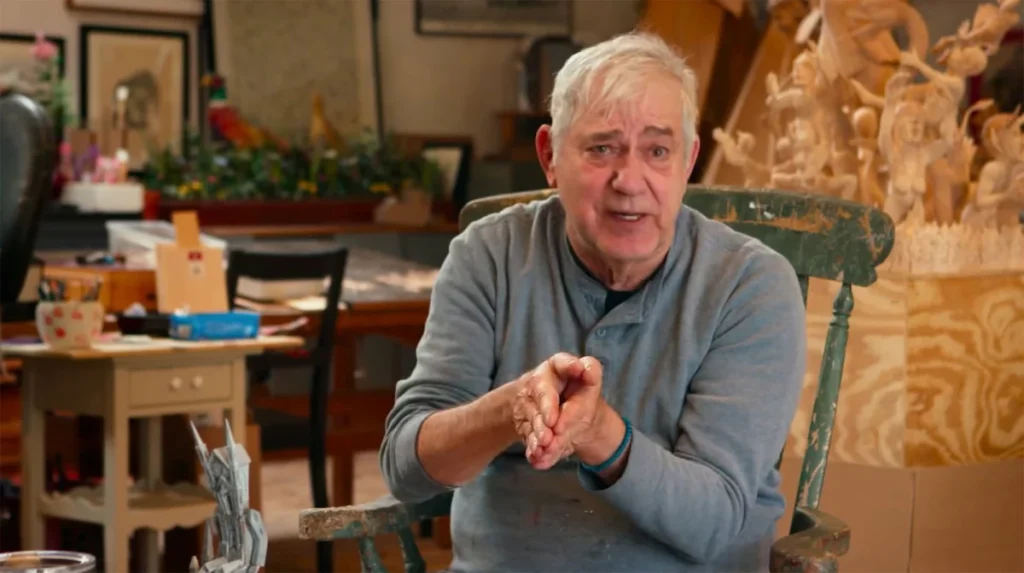

Cedar Creek Productions has unveiled the official trailer for the independent documentary film, Jimmy & The Demons, slated for a theatrical release beginning April 3, 2026. The film, which premiered at the 2025 Tribeca Film Festival, offers an intimate look into the life and artistic process of celebrated artist James Grashow. Directed by award-winning filmmaker Cindy Meehl, known for her previous works Buck and The Dog Doc, Jimmy & The Demons chronicles Grashow’s journey as he undertakes the most significant commission of his career at the age of 79. The documentary explores his dedication to creating a monumental masterpiece, a process that proves to be as emotionally and psychologically challenging as it is artistically rewarding.
A Magnum Opus at 79: The Genesis of Jimmy & The Demons
The documentary centers on James Grashow, an artist whose prolific career spans six decades. His distinctive woodcuts and fantastical cardboard sculptures have been exhibited in galleries and museums worldwide, and his work has been featured on album covers and in prominent publications such as Rolling Stone, Esquire, and The New York Times. Despite his widespread recognition, Grashow has grappled with an inner darkness and a profound fear of mortality since childhood.
The catalyst for Jimmy & The Demons was a commission from an art collector whose deeply held faith contrasted with Grashow’s own worldview. This unique collaboration led Grashow to embark on the creation of an intricately carved sculpture depicting Jesus Christ bearing a cathedral on his back, tormented by demons at his feet. This ambitious project became Grashow’s magnum opus, a testament to his enduring creative spirit and a deeply personal exploration of his own internal struggles.

The Creative Process: A Four-Year Devotion
The film meticulously documents Grashow’s four-year dedication to this singular vision. The trailer highlights the immense labor, passion, and creative energy he poured into the sculpture, often at the expense of his own well-being. This period of intense artistic focus is depicted as a transformative experience, where the creation of the artwork becomes a profound act of self-discovery. As the narrative unfolds, viewers are invited to witness Grashow’s extraordinary devotion to his craft, his relentless pursuit of artistic perfection, and the emotional toll this monumental undertaking exacted. The sculpture itself, in its complexity and thematic depth, is presented as a potent self-portrait, reflecting the artist’s inner landscape and his lifelong confrontation with his demons.
A Journey into the Artist’s Mind and Community
Cindy Meehl’s direction promises a "magical journey" into the artistic life and inner mind of James Grashow. Beyond the creation of his masterpiece, the documentary delves into Grashow’s personal life, exploring his family relationships and the supportive community that surrounds him. The film aims to provide a comprehensive portrait of the artist, moving beyond his public persona to reveal the man behind the art. This includes a retrospective of his diverse body of work, offering context and insight into the evolution of his artistic style and thematic preoccupations. Crucially, the documentary does not shy away from Grashow’s "dark side," exploring the vulnerabilities and fears that have shaped his life and art. The trailer suggests an endearing blend of humor and angst, capturing the complex emotional tapestry of an artist at the twilight of his career, grappling with legacy, mortality, and the search for meaning.
Supporting Data and Context
James Grashow’s artistic contributions have been recognized for decades. His unique approach to sculpture, often utilizing unconventional materials like cardboard, has challenged traditional notions of fine art. The scale and ambition of the commission depicted in Jimmy & The Demons represent a significant undertaking, particularly for an artist in his late seventies. The film’s premiere at the Tribeca Film Festival, a prestigious event known for showcasing independent and documentary cinema, signals its critical acclaim and artistic merit. The festival’s selection committee likely recognized the film’s compelling narrative, its insightful portrayal of an artist’s life, and its exploration of universal themes such as creativity, mortality, and the search for meaning.
The decision to release the film in theaters in April 2026 suggests a strategic distribution plan aimed at reaching a discerning audience that appreciates art house cinema and character-driven documentaries. The theatrical release will allow audiences to experience the film’s visual artistry and emotional depth on the big screen, an ideal setting for a documentary that celebrates the visual and tactile nature of Grashow’s work.

Director’s Vision and Previous Works
Cindy Meehl’s directorial approach is characterized by a deep empathy for her subjects and a talent for uncovering the compelling narratives within their lives. Her previous documentary, Buck, which followed the life of a renowned horse trainer, garnered critical praise for its sensitive portrayal and intimate access. The Dog Doc further solidified her reputation as a filmmaker capable of crafting engaging and insightful stories about individuals with unique passions and challenges. In Jimmy & The Demons, Meehl appears to have found another compelling subject whose life and work offer rich ground for exploration. Her ability to blend personal narrative with broader thematic concerns is likely to resonate with audiences, making the film more than just a biographical sketch but a profound meditation on the human condition.
Chronology of Events
- Premise of the Documentary: Celebrated artist James Grashow, at age 79, receives a significant commission for a large-scale sculpture.
- Artistic Endeavor: Grashow dedicates four years to creating a complex sculpture titled "Jesus carrying a cathedral on his back, tormented by demons at his feet."
- 2025 Tribeca Film Festival: Jimmy & The Demons premieres at the festival, receiving initial critical attention.
- March 30, 2026: Cedar Creek Productions releases the official trailer for the documentary.
- April 3, 2026: Jimmy & The Demons is scheduled for its theatrical release in select U.S. theaters.
Statements and Reactions (Inferred)
While direct statements from all parties involved are not provided in the initial content, it is logical to infer the following:
- Cindy Meehl (Director): Would likely express her admiration for Grashow’s resilience and artistic vision, emphasizing the film’s aim to capture the profound connection between an artist’s life and their creative output. She might speak to the challenges of documenting such an intensely personal and long-term project.
- James Grashow (Subject): Given the description of the film as a "magical journey" and its exploration of his "inner mind," Grashow might express a sense of vulnerability and perhaps satisfaction that his life’s work and personal struggles are being presented in such a comprehensive manner. He might also acknowledge the cathartic nature of the creative process depicted.
- Cedar Creek Productions: As the distributor, their statement would likely focus on the film’s artistic merit, its potential to connect with audiences on an emotional level, and the significance of Grashow’s story within the broader landscape of contemporary art. They would highlight the film’s festival premiere as a testament to its quality.
- The Art Collector (Commissioning Party): Though not explicitly quoted, the collector’s "strong faith" is mentioned as a contrast to Grashow’s perspective. Their involvement suggests a belief in Grashow’s ability to translate complex themes into tangible art. Their reaction to the finished film and sculpture would likely be one of profound engagement with the themes of faith, struggle, and artistic interpretation.
Broader Impact and Implications
The release of Jimmy & The Demons arrives at a time when documentaries exploring the lives of artists continue to captivate audiences. The film’s focus on an artist in his later years tackling a monumental work offers a poignant perspective on aging, legacy, and the enduring power of creative expression. The narrative of confronting personal demons through art has universal appeal, resonating with anyone who has faced internal struggles or sought meaning through creative pursuits.
The film’s success at the Tribeca Film Festival suggests it has the potential to spark conversations about the intersection of art, faith, and personal psychology. It also highlights the ongoing importance of supporting independent cinema and bringing the stories of artists, particularly those who have dedicated their lives to their craft, to a wider public. The documentary serves as a reminder that creativity can be a powerful tool for self-discovery and a means of processing complex emotions, even in the face of mortality. The portrayal of Grashow’s dedication, even at an advanced age, can serve as an inspiration, demonstrating that artistic passion knows no bounds and that the pursuit of a magnum opus can be a lifelong endeavor. The film’s exploration of the artist’s "dark side" also contributes to a more nuanced and authentic representation of artistic genius, moving beyond idealized portrayals to acknowledge the full spectrum of human experience that often fuels creative output.