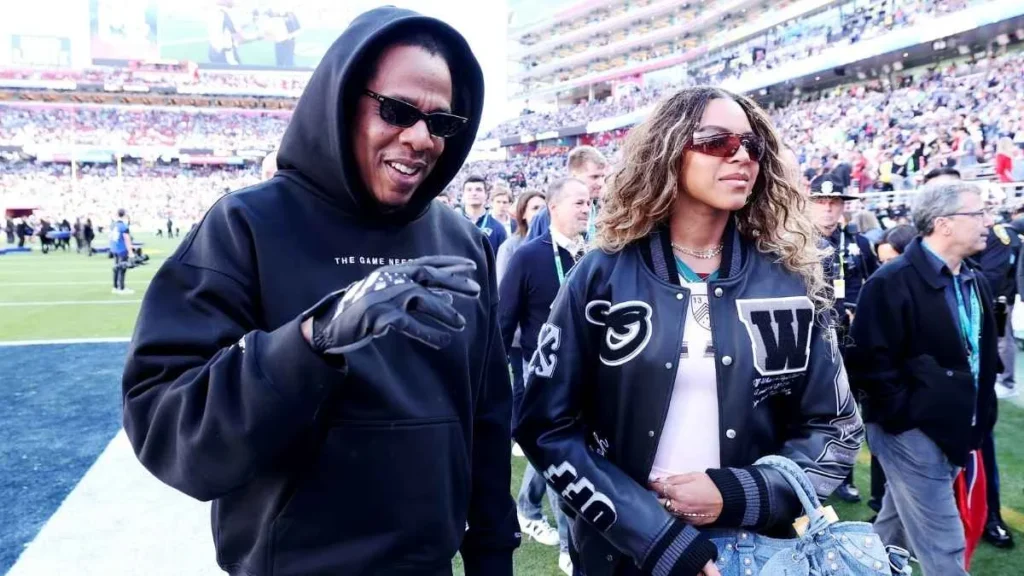

In a comprehensive reflection on the intersection of parenting and the music industry, Shawn “Jay-Z” Carter has provided new insights into the professional development of his eldest daughter, Blue Ivy Carter. Speaking in a wide-ranging interview with GQ, the multi-platinum artist and entrepreneur detailed the rigorous process Blue Ivy underwent to secure and maintain her role during her mother Beyoncé’s recent global touring cycle. Jay-Z’s observations highlight a transition from a child participating in a family venture to a young professional "fighting" for her place on the world’s largest stages, underscoring a narrative of meritocracy within one of the most influential families in entertainment.
The dialogue surrounding Blue Ivy Carter’s stage presence has evolved significantly since her debut. According to Jay-Z, her inclusion in the high-stakes environment of a stadium tour was not a foregone conclusion based on her lineage. Instead, it was the result of a visible internal shift in her approach to performance and discipline. This revelation comes at a time when the "nepo baby" discourse—a cultural debate regarding the advantages of children of celebrities—remains a prominent fixture in media analysis. Jay-Z’s comments serve as a counter-narrative, emphasizing that while opportunities may be accessible, the retention of those opportunities requires a level of grit and labor that cannot be inherited.
The Transformation from Observation to Participation
Jay-Z noted that the early stages of Blue Ivy’s involvement in the tour were characterized by a learning curve that was played out in the public eye. He admitted that during her initial performances, there was a sense that she was "going through the motions." At 11 and 12 years old, the pressure of performing in front of tens of thousands of people nightly is a feat few adults could manage, yet Jay-Z observed that her first attempts lacked the competitive fire necessary for the elite level of a Beyoncé production.
“On the first tour there was a lot of conversation around her first performance, and she worked really hard to get to that point, but she still wasn’t going for it,” Jay-Z told GQ. This candid assessment suggests that while the technical preparation was present, the emotional and professional "buy-in" was still developing. However, as the tour progressed, the patriarch of the Carter family witnessed a change that he described as a "fight."
The shift was not merely in her dance steps but in her resilience against public scrutiny. After her first appearance in Paris in May 2023, social media was flooded with both praise and critique. Rather than retreating from the spotlight, Blue Ivy reportedly used the feedback as fuel. Jay-Z expressed a particular pride in this resilience, noting, “I saw her fight maybe for the first time in her life—like, not everything is just given to her and everything is easy. She fought for it.”
Chronology of a Stage Debut: From Paris to Global Stardom
To understand the weight of Jay-Z’s comments, it is necessary to look at the timeline of Blue Ivy’s participation in the Renaissance World Tour, which served as the precursor and foundation for the current Cowboy Carter era.
On May 26, 2023, at the Stade de France in Paris, Blue Ivy made her surprise debut during the performance of "My Power" and "Black Parade." The moment was met with a roar of approval from the 80,000-person crowd. Despite the warm reception, the technical aspects of her dancing were scrutinized by online commentators. In the weeks that followed, as the tour moved through London, Barcelona, and eventually North America, the improvement in her confidence and precision became a viral sensation.
By the time the tour reached its mid-point, Blue Ivy had become a staple of the show. Jay-Z revealed to GQ that her role expanded to the point where she was "almost on every number." This expansion required an immense amount of stamina and rehearsal time, often conducted while balancing the standard requirements of her education and personal life. The "fight" Jay-Z referenced was evidenced by her increased presence on stage, moving from a brief cameo to a sustained performance that required her to keep pace with professional dancers who have spent decades honing their craft.
Parental Boundaries and Professional Standards
Despite her drive to participate in the entirety of the show, Jay-Z highlighted the importance of parental boundaries in the face of such a high-profile career. He shared an anecdote regarding the setlist, specifically Beyoncé’s performance of "6 Inch," a song with mature themes and a darker aesthetic. Jay-Z recounted having to intervene, jokingly telling his daughter, “Man, you can’t be on that stage when she’s singing ‘6 Inch’… are you crazy?”
This detail illustrates the dual role Jay-Z and Beyoncé play as both world-class entertainment moguls and protective parents. While they encourage her professional growth, they remain cognizant of her age and the appropriateness of certain content. This balance is a central theme in how the Carters manage their children’s public personas—allowing for creative expression while maintaining a strict gatekeeping process for their exposure.
Musical Aptitude and the Refusal of Formal Instruction
Beyond the dance floor, Jay-Z revealed that Blue Ivy possesses significant musical talents that have yet to be fully showcased to the public. He described her as a "crazy pianist" with the rare gift of perfect pitch—the ability to identify or recreate a musical note without a reference tone.
Interestingly, Jay-Z noted that Blue Ivy has resisted formal training. “She won’t let us get her a teacher,” he said, explaining that she views music as a personal passion rather than a professional obligation. “She doesn’t want it to be a job,” he added. This distinction is crucial; it suggests that while she is willing to "fight" for her spot on a dance stage, she is equally protective of her private relationship with music, ensuring that her innate talents are not commodified before she is ready.
Supporting Data: The Impact of the Carter Legacy
The scale of the environment in which Blue Ivy is "earning her spot" is unprecedented. The Renaissance World Tour, which provided the platform for her growth, was a record-breaking juggernaut.
- Revenue: The tour grossed approximately $579 million, making it one of the highest-grossing tours in history.
- Attendance: Over 2.7 million fans attended the 56-date run.
- Cultural Footprint: Blue Ivy’s performances generated billions of views across TikTok and Instagram, significantly contributing to the tour’s "viral" status.
Furthermore, Blue Ivy is already an accomplished artist in her own right. In 2021, at the age of nine, she won a Grammy Award for Best Music Video for "Brown Skin Girl," making her the second-youngest person to ever win a Grammy. This historical context reinforces the idea that her recent "fight" for a spot on the Cowboy Carter-related performances is part of a longer trajectory of professional achievement.
Analysis of Implications: The Future of the Carter-Knowles Brand
Jay-Z’s comments provide a window into the succession planning of the Carter-Knowles empire. By emphasizing her hard work over her name, Jay-Z is effectively "branding" Blue Ivy as a disciplined artist rather than just a celebrity child. This distinction is vital for her long-term viability in the industry should she choose to pursue a solo career.
The broader implication for the music industry is the shift toward multi-generational entertainment brands. Just as the Jackson family or the Marley family became synonymous with specific eras and genres, the Carters are positioning themselves as a multi-decade dynasty. The fact that Blue Ivy is "almost on every number" suggests that she is being trained in the "Beyoncé school of performance"—a rigorous, perfectionist approach to showmanship that has defined her mother’s career.
Jay-Z’s closing thought in the interview—"I don’t think we’re going to be able to get her off that stage now"—suggests that the transition from student to performer is complete. The "fight" he witnessed has resulted in a young artist who has not only earned her place but has developed a hunger for the craft that mirrors her parents’ legendary work ethics.
Conclusion
The narrative of Blue Ivy Carter’s growth, as told by Jay-Z, is a study in professional development under the most intense spotlight imaginable. By moving from "going through the motions" to "fighting" for her position, she has demonstrated a level of agency that transcends her age. As the Carter family continues to influence the global cultural landscape through projects like Cowboy Carter and beyond, the focus on merit and discipline remains a central pillar of their public and private philosophy. For Blue Ivy, the stage is no longer just a place to stand with her mother; it is a space she has claimed through documented labor and a refusal to be defined solely by her lineage.