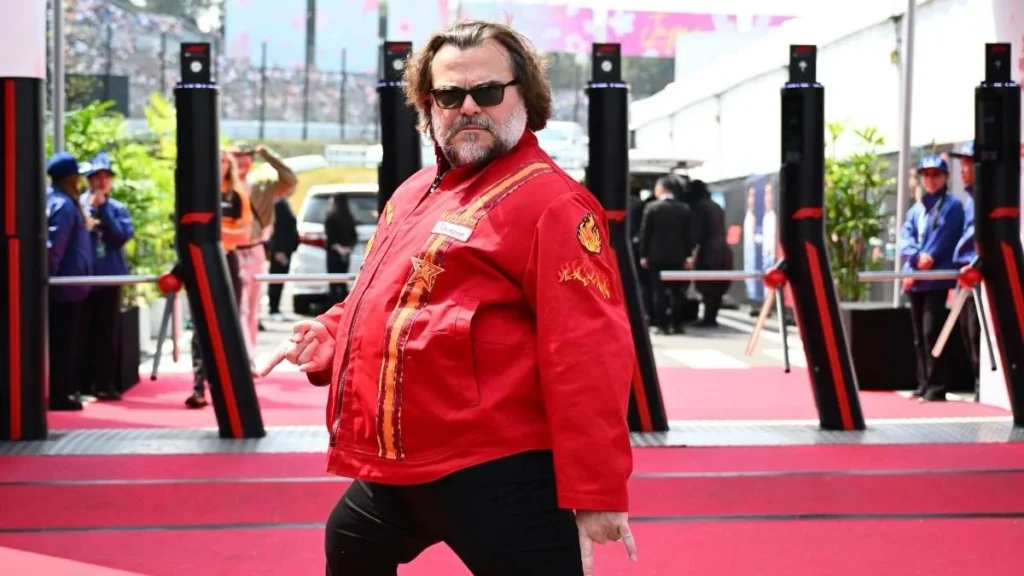

The landscape of video game adaptations has shifted dramatically over the last decade, moving from a niche genre of often-maligned projects to a powerhouse of box-office revenue and critical acclaim. Amidst this cultural renaissance, veteran actor and musician Jack Black has emerged as a central figure, lending his voice and physical presence to some of the most successful gaming-inspired projects in history. Recently, the "Jumanji" and "School of Rock" star turned his attention toward one of the most storied and tonally complex franchises in the industry: Sega’s "Yakuza" series, now globally known as "Like a Dragon."
During a press engagement with ScreenRant’s Ash Crossan intended to promote "The Super Mario Bros. Movie," Black expressed a profound interest in participating in a live-action version of the 20-year-old franchise. Known for his high-energy performances and genuine affinity for gaming culture, Black’s public overture to Sega suggests a potential new chapter for a series that has historically struggled to find its footing in the Western cinematic market. Black specifically noted his willingness to fill a role that suits his persona, humorously suggesting that Sega "give him a jingle" if they have a need for a "portly American" character within the gritty, neon-lit streets of Tokyo’s underworld.
The Evolution of the Yakuza Franchise and Ryu Ga Gotoku Studio
To understand the significance of Jack Black’s interest, one must examine the history of the "Yakuza" series. Launched in 2005 by Sega’s Ryu Ga Gotoku (RGG) Studio, the franchise debuted on the PlayStation 2. It was initially conceived as a niche title focused specifically on the Japanese adult male demographic, exploring the intricate honor codes, brutal violence, and complex hierarchies of the Japanese crime syndicates.
The series follows the primary protagonist, Kazuma Kiryu—often referred to as the "Dragon of Dojima"—as he navigates decades of turmoil in Kamurocho, a fictionalized version of Tokyo’s real-life Kabukicho district. Over the course of nearly twenty years, the franchise has expanded into a sprawling epic encompassing eight main-line entries, several spin-offs like "Judgment," and a successful soft reboot in "Yakuza: Like a Dragon" (2020), which introduced a new protagonist, Ichiban Kasuga, and transitioned the series from real-time brawling to turn-based RPG mechanics.
What makes the "Yakuza" series unique—and potentially a perfect fit for an actor like Black—is its "tonal whiplash." The games are famous for juxtaposing somber, Shakespearean dramas about family and betrayal with absurd, slapstick humor found in side-quests. A player might spend one hour witnessing a tragic death and the next hour managing a cabaret club, singing karaoke, or helping a man find his lost diapers. This duality is the series’ hallmark, yet it is also the primary obstacle for filmmakers trying to translate the experience to a two-hour movie or a serialized television show.
Jack Black as the New Face of Video Game Media
Jack Black’s interest in "Yakuza" comes at a time when his stock in the gaming world has never been higher. His portrayal of Bowser in "The Super Mario Bros. Movie" was widely considered a highlight of the film, which grossed approximately $1.36 billion worldwide. His performance of the song "Peaches" became a viral sensation, further cementing his ability to bridge the gap between traditional Hollywood stardom and digital-age fandom.
Beyond Mario, Black has been a consistent presence in gaming-adjacent media. He voiced the character of Claptrap in the "Borderlands" film and took on the lead role of Steve in the upcoming "Minecraft" movie, which has already generated significant buzz despite mixed early reactions to its visual style. Black’s involvement in these projects is not merely a career pivot; he is a lifelong gamer who famously launched a YouTube channel, "Jablinski Games," which garnered millions of subscribers. His genuine enthusiasm for the medium provides him with a level of "street-cred" among fans that few other A-list actors possess.
Previous Attempts to Bring Kamurocho to the Screen
The path to a successful "Yakuza" adaptation has been fraught with challenges. In 2007, legendary Japanese director Takashi Miike helmed "Like a Dragon" (Ryu Ga Gotoku: Gekijô-ban). While Miike is known for his stylistic violence and surrealism—traits that should have aligned well with the games—the film received a lukewarm response. It struggled to condense the massive narrative of the first game into a coherent feature-length film, and it failed to find a significant audience outside of Japan.
More recently, Amazon Prime Video released "Like a Dragon: Yakuza" (2024), a big-budget series intended to capitalize on the success of other game-to-screen hits like "The Last of Us" and "Fallout." However, the series was met with mixed-to-negative reviews from both critics and long-time fans. Many argued that the show stripped away the "heart" of the games—the humor and the specific character beats—in favor of a more generic, somber crime drama. The failure of the Amazon series to capture the gaming community’s imagination has left a void that a more stylized, perhaps more "meta" production could fill.
Since 2020, reports have circulated regarding a Western-produced "Yakuza" film in development by 1212 Entertainment and Wild Sheep Content. This project has reportedly been searching for a creative direction that balances the Japanese cultural roots of the IP with the sensibilities of a global audience. Jack Black’s public interest could serve as a catalyst for this stalled production, providing the "star power" necessary to secure major studio backing.
Analyzing Potential Roles for Jack Black
While the "Yakuza" series is deeply rooted in Japanese culture, the games frequently feature Western characters who interact with the Tojo Clan and the Omi Alliance. Fans have already begun speculating on which roles Black could inhabit. One popular suggestion is Gary Buster Holmes, a fan-favorite recurring character who is a formidable American underground fighter. Another possibility is a new character specifically written to provide the "outsider’s perspective," a common trope in crime cinema that allows the audience to learn the rules of the world alongside the character.
Alternatively, Black’s comedic timing would make him an ideal fit for the series’ "Substories"—the weird and wonderful side missions that define the "Yakuza" experience. A film that embraces the absurdity of the franchise might cast Black as a quirky informant or a rival businessman, roles that would allow him to utilize his physical comedy and improvisational skills.
The Economic Context: The Boom of Gaming IP
The interest from an actor of Black’s caliber is supported by hard data regarding the profitability of video game adaptations. For decades, these projects were seen as risky investments. However, the recent success of "The Super Mario Bros. Movie" ($1.36 billion) and "Sonic the Hedgehog 2" ($405 million) has proven that family-friendly gaming IPs are goldmines.
On the more mature end of the spectrum, "The Last of Us" on HBO and "Fallout" on Amazon Prime have demonstrated that adult-oriented gaming narratives can achieve critical prestige and massive viewership. Sega, in particular, has seen a surge in brand value. The "Like a Dragon" series recently hit a milestone, with "Like a Dragon: Infinite Wealth" (2024) selling over one million units in its first week alone, making it the fastest-selling title in the history of the franchise. With a global fan base that is rapidly expanding, the "Yakuza" IP is more valuable now than at any point in its 20-year history.
Statements and Industry Reactions
While Sega has not yet issued an official "jingle" to Jack Black in a public capacity, internal sentiment at the company has historically been open to such collaborations. In previous marketing polls and celebrity wishlists conducted by Sega’s Western marketing arms, Jack Black’s name has frequently appeared as a top choice for potential collaborations.
Industry analysts suggest that a partnership between Black and Sega would be a strategic masterstroke. "The challenge with Yakuza is the tone," says media consultant Hiroshi Takahashi. "If you make it too serious, you lose the fans. If you make it too silly, you lose the crime drama prestige. Jack Black is one of the few actors who can exist in both worlds simultaneously. He can be a threat, and he can be a punchline."
Broader Implications for Transmedia Storytelling
The potential casting of Jack Black in a "Yakuza" project signifies a broader trend in Hollywood where actors are no longer just seeking "roles," but are seeking to become part of established "universes." For Sega, bringing in a Western star of Black’s magnitude could be the final step in transitioning "Like a Dragon" from a Japanese cultural export to a permanent fixture of global pop culture.
If a project were to move forward with Black, it would likely serve as a bridge between the gritty realism of Japanese cinema and the high-octane energy of Hollywood blockbusters. It would also signal to other developers that their "niche" stories are ripe for adaptation, provided they find the right creative partners who understand the source material.
As of now, Jack Black’s pitch remains a tantalizing "what if" for the gaming community. However, in an era where fan interest can be tracked in real-time and viral interviews often lead to boardroom meetings, the prospect of the "Dragon of Dojima" crossing paths with the "portly American" energy of Jack Black seems more like a matter of "when" rather than "if." For a franchise built on the unexpected, a Jack Black-led "Yakuza" film might be the most fitting development in its long and storied history.