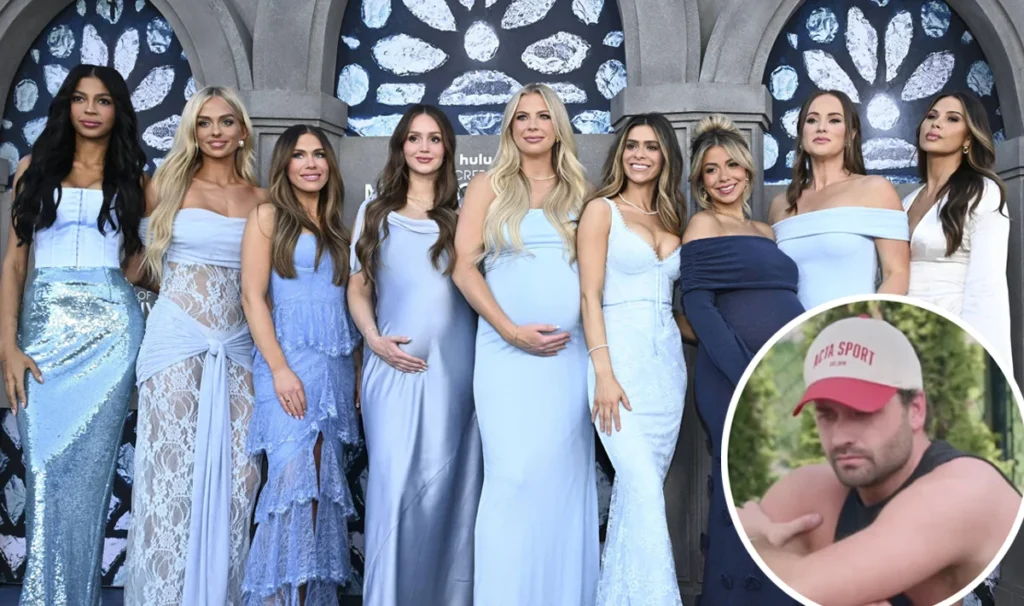

The cast of the popular Hulu reality show, The Secret Lives of Mormon Wives, recently engaged in a critical Zoom meeting with Disney executives on March 7. This urgent meeting was convened in response to an ongoing domestic assault investigation centered on cast member Taylor Frankie Paul and her former partner, Dakota Mortensen, following an alleged incident in February. The unfolding legal and personal drama has significantly impacted the production of the show’s fifth season, leading to a temporary halt in filming as cast members expressed profound concerns about their careers, the show’s brand, and the gravity of the abuse allegations.
Background to the Controversy: The "MomTok" Phenomenon and Escalating Tensions
The Secret Lives of Mormon Wives is part of a growing subgenre of reality television that gained prominence through the "MomTok" community – a collective of social media influencers, primarily mothers, who share aspects of their lives on platforms like TikTok. Taylor Frankie Paul, a prominent figure within this sphere, cultivated a significant online following by offering glimpses into her life as a Latter-day Saint mother. Her public persona, however, has been increasingly overshadowed by a series of high-profile personal and legal challenges, culminating in the recent domestic dispute allegations.
The relationship between Taylor Frankie Paul and Dakota Mortensen has been a subject of public scrutiny, particularly after an alleged incident in February triggered a domestic assault investigation. This was not the first time Paul had faced public allegations of domestic disturbance. Reports indicate a previous incident in 2023 where Paul was allegedly involved in a physical altercation with Mortensen, during which her daughter was reportedly struck with a stool. These earlier allegations, according to NBC News, were reportedly known to producers and executives but were excised from the reunion edit of a prior season, raising questions about the show’s handling of sensitive content and participant welfare.
The public nature of these allegations, amplified by Paul’s significant social media presence, has placed both her and the reality series under intense scrutiny. The intersection of reality television, social media fame, and serious legal issues creates a complex scenario for all parties involved, particularly for a brand like Disney, which emphasizes family-friendly content and responsible corporate conduct.
The Critical Zoom Meeting: Cast Concerns and Executive Responses
The March 7 Zoom meeting, which lasted approximately 30 minutes, served as a forum for the cast members to directly address their anxieties with high-ranking executives. An audio recording of the call, obtained by NBC News, revealed the depth of the cast’s apprehension. Their concerns spanned several critical areas: the potential damage to their individual careers, the integrity and reputation of The Secret Lives of Mormon Wives brand, and the serious nature of the abuse allegations themselves.
One cast member articulated the collective discomfort with continuing production amidst a live investigation: “It’s a dangerous situation, it’s a sad situation, and we don’t know how to navigate it because Taylor is our friend.” This statement underscores the dual challenge faced by the cast: navigating a serious legal situation involving a colleague while simultaneously being expected to film a reality show that thrives on personal drama. The ethical implications of filming such sensitive events, particularly when they involve alleged domestic violence, were clearly at the forefront of the cast’s minds.
Three Disney executives reportedly attended the meeting, including Rob Mills, the executive vice president of unscripted and alternative entertainment. When cast members attempted to elaborate on Taylor’s alleged behavior and the distressing nature of certain video recordings, Mills reportedly responded with a statement indicating a desire for distance from the specifics of the investigation: “I don’t know a lot, nor do I want to know too much.” He further elaborated, “This is not me putting my head in the sand, but it’s not me — you know, I don’t want to inquire, because I don’t know what that does.”
This response, while potentially framed as a legal precaution given an ongoing investigation, was met with skepticism by some. The production company had engaged a seasoned law firm to investigate the "competing and conflicting allegations," and executives’ reticence to discuss specifics was explained as an effort to avoid interference with that process. However, for cast members grappling with the immediate human impact of the situation, the perceived lack of direct engagement from leadership proved unsettling.
Unanswered Questions and Allegations of Prior Knowledge
During the meeting, several cast members repeatedly alluded to "distressing" and "upsetting" video recordings pertaining to Taylor’s alleged actions. However, these videos were not played, nor were their contents detailed during the call. This raised questions about whether the cast was referring to the previously reported 2023 footage depicting Paul allegedly physically attacking Mortensen and hitting her daughter with a stool, or if new, even more disturbing evidence had surfaced.
A critical point of concern emerged when a "MomTok" member present on the call reportedly labeled the executives’ disinterest in the video content as "concerning." This concern escalated when someone directly asked Mills if he was "aware she’s hurt a child?" This question likely pertained to a separate, grave allegation that Dakota Mortensen had contacted Utah’s Division of Child and Family Services (DCFS), accusing Taylor Frankie Paul of physically abusing their 2-year-old son, Ever. Mills’ alleged reply to this direct query was, "I don’t think for us getting into it is right."
The repeated allusions to alleged child harm and the executives’ perceived reluctance to delve into the specifics underscore a significant ethical tightrope walk for the production company and its parent corporations. While legal counsel would undoubtedly advise against discussing ongoing investigations to prevent prejudicing outcomes or creating liabilities, the human element and the moral responsibilities toward participants and their families cannot be entirely compartmentalized. The situation highlights the inherent tension between the legal obligations of a corporation and the ethical expectations placed upon media organizations when their content involves real people and sensitive issues.
Despite his cautious stance on the investigation, Mills reportedly assured the cast that the company would "never going to hide anything that is wrong for the sake of business." He encouraged them to discuss their concerns on the show, but notably, he refused to promise that such discussions would not be subject to editorial cuts. This qualification further fueled the cast’s anxieties, leaving them uncertain about the extent to which their genuine concerns would be authentically portrayed to the audience. Additionally, a dispute arose over compensation, with cast members expressing concern that Taylor Frankie Paul was reportedly receiving more pay, an assertion Mills denied.
Outcomes, Immediate Fallout, and Broader Implications
Ultimately, following the extensive discussion and the executives’ responses, the cast members collectively agreed to pause filming of The Secret Lives of Mormon Wives until the legal proceedings involving Taylor Frankie Paul and Dakota Mortensen are resolved. This decision reflects the severity of the allegations and the cast’s unwillingness to proceed with production under such morally and professionally challenging circumstances.
An insider familiar with the situation clarified the purpose of the March 7 Zoom meeting, stating that it was intended "to tell ‘The Secret Lives of Mormon Wives’ cast that we care about their safety, and they should not feel pressured to do press or film the show." The insider further explained the executives’ limited commentary on the ongoing investigation, emphasizing that it "would have been inappropriate to engage in a dialogue regarding an ongoing investigation." This explanation aligns with standard corporate and legal practices when sensitive legal matters are pending.
However, the incident carries broader implications for the reality television industry, particularly for shows that blur the lines between authentic life and entertainment. The case of Taylor Frankie Paul and The Secret Lives of Mormon Wives brings to light several critical challenges:
- Ethical Responsibilities of Production Companies: How far do the responsibilities of production companies extend when cast members face serious legal allegations, especially those involving domestic violence or child abuse? The balance between capturing compelling content and ensuring the welfare of participants and their families is a constant, often precarious, act.
- Brand Reputation and Corporate Responsibility: For major corporations like Disney and Hulu, associations with controversial figures or alleged misconduct can significantly impact brand image and public trust. The incident forces a re-evaluation of vetting processes for reality show participants and the protocols for managing crises.
- The "MomTok" Effect: The public nature of "MomTok" and similar influencer communities means that personal dramas unfold in real-time before millions. When these dramas escalate into legal issues, the line between public persona and private life becomes virtually nonexistent, creating unprecedented challenges for both individuals and the platforms they inhabit.
- Editorial Control vs. Authenticity: The cast’s concern about editorial cuts underscores the tension between the raw reality experienced by participants and the curated narrative presented to viewers. This incident highlights the power dynamics inherent in reality television production and the potential for selective storytelling to obscure critical truths.
As the domestic assault investigation into Taylor Frankie Paul and Dakota Mortensen continues, the future of The Secret Lives of Mormon Wives remains uncertain. The pause in filming signals a significant disruption, and the eventual outcome of the legal proceedings will undoubtedly shape the show’s direction, its cast’s involvement, and the broader conversation around ethical practices in reality television. The incident serves as a stark reminder of the complexities inherent in producing reality content, particularly when the "real lives" involve serious allegations that intersect with legal systems and public scrutiny.