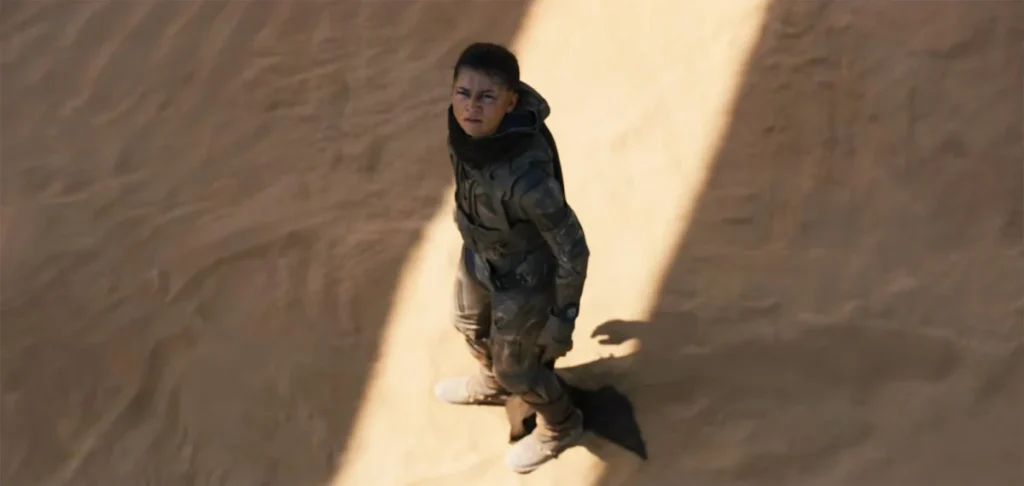

Warner Bros. has unveiled a new 30-second promotional trailer for Denis Villeneuve’s highly anticipated science fiction epic, Dune: Part Three, signaling an aggressive early sales strategy for premium IMAX 70mm screenings. The trailer, released on April 6, 2026, offers a tantalizing glimpse into the continuation of Paul Atreides’ saga, setting the stage for a December 2026 theatrical debut. This preemptive marketing push for specialized formats mirrors previous high-profile releases, aiming to capture the attention of dedicated cinephiles well in advance of the film’s wide release.
The strategic timing of the trailer’s release and the early availability of IMAX 70mm tickets underscore Warner Bros.’ commitment to leveraging the immersive viewing experience that director Denis Villeneuve has championed for his Dune adaptations. The practice of selling tickets for premium formats a year or more in advance, as seen previously with Christopher Nolan’s The Odyssey, suggests a calculated effort to build sustained anticipation and secure box office revenue for these select showings. This approach aims to capitalize on the visual grandeur and sonic power that IMAX 70mm provides, a format intrinsically linked to the awe-inspiring scale of the Dune universe.
The Narrative Arc: From Messiah to Emperor
Dune: Part Three is poised to deliver the epic conclusion to Denis Villeneuve’s ambitious trilogy, adapting Frank Herbert’s seminal 1969 novel, Dune Messiah. This installment delves into the complex and often morally ambiguous consequences of Paul Atreides’ ascension to power. The narrative picks up with Paul, now Muad’dib, grappling with his role as the Kwisatz Haderach, a prophesied superbeing destined to rule. He faces the immense burden of his prescient visions, the fanatical devotion of the Fremen, and the simmering resentments of the galactic powers he has overthrown.
The film’s synopsis highlights the internal and external conflicts Paul must navigate. As Emperor of the known universe, his power is virtually absolute, yet he finds himself ensnared in a web of political machinations and conspiracies. The narrative is expected to explore the devastating human cost of his jihad, a holy war waged in his name across the galaxy. The weight of his legacy, the corrupting influence of absolute power, and the personal sacrifices he endures are central themes. This chapter promises to be even darker, more twisted, and more brutal than its predecessors, delving into the psychological toll of godhood and the perilous path of a leader burdened by prophecy and its repercussions.
A Stellar Ensemble Cast Returns and Expands
The returning cast for Dune: Part Three features a formidable lineup of talent, reprising their established roles and introducing new characters that will shape the unfolding drama. Timothée Chalamet reprises his critically acclaimed portrayal of Paul Atreides, the central figure whose destiny is inextricably linked to the fate of Arrakis and the galaxy. Zendaya returns as Chani, Paul’s Fremen concubine and a crucial moral compass, whose relationship with Paul is tested by his ascendance and the demands of his empire.

Rebecca Ferguson continues her complex portrayal of Lady Jessica, Paul’s Bene Gesserit mother, whose own machinations and manipulations have played a significant role in his rise. Jason Momoa is back as the loyal Duncan Idaho, whose fate in previous installments has been precarious, adding an element of thrilling uncertainty to his presence. Florence Pugh embodies Princess Irulan, a key player in the political landscape and a historian whose writings will shape the perception of Paul’s reign.
New additions to the cast promise to further enrich the narrative. Anya Taylor-Joy is set to embody Alia Atreides, Paul’s preternaturally aware sister, whose unique abilities and disturbing nature will undoubtedly be a significant plot point. The ensemble also includes veteran actors such as Charlotte Rampling, whose presence adds gravitas, and Robert Pattinson as Scytale, a ghola of the Mentat Thufir Hawat, hinting at further Harkonnen machinations. Javier Bardem reprises his role as Stilgar, the Fremen leader, whose unwavering faith in Muad’dib will be tested. Notably, the film will also feature newcomers Nakoa-Wolf Momoa and Ida Brooke, suggesting the introduction of new characters integral to the evolving story.
Villeneuve’s Vision: A Consistent Creative Force
Denis Villeneuve, the acclaimed Quebecois filmmaker behind the critically lauded Arrival, Blade Runner 2049, and the preceding Dune films, returns to direct Dune: Part Three. His directorial vision has been instrumental in translating Frank Herbert’s intricate world to the screen, balancing grand spectacle with intimate character studies. Villeneuve co-wrote the screenplay with Brian K. Vaughan, a celebrated comic book writer known for his work on Saga and Y: The Last Man, suggesting a continued focus on character depth and narrative complexity.
Villeneuve’s filmography demonstrates a consistent ability to tackle ambitious science fiction projects with both artistic integrity and commercial success. His previous films, including Maelstrom, Polytechnique, Incendies, Prisoners, Enemy, and Sicario, showcase a mastery of tone, atmosphere, and visual storytelling. The Dune adaptations have been a particular triumph, earning widespread critical acclaim for their immersive world-building, stunning cinematography, and faithful yet accessible interpretation of Herbert’s dense lore. The success of Dune (2021) and Dune: Part Two (2024) has solidified Villeneuve’s position as a leading auteur in contemporary cinema, capable of delivering blockbusters with substantial artistic merit.
The Foundation: Herbert’s Literary Legacy
The Dune saga is based on the groundbreaking science fiction novels of Frank Herbert, beginning with the eponymous Dune in 1965, followed by its sequel, Dune Messiah, in 1969. These novels are cornerstones of the genre, renowned for their intricate world-building, exploration of complex themes such as ecology, religion, politics, and human evolution, and their nuanced portrayal of power and prophecy.
Dune Messiah specifically moves beyond the initial triumph of Paul Atreides and delves into the darker ramifications of his messianic status. It examines how a beloved leader can become a tyrannical figure through the very forces that propelled him to power. The novel is a critical examination of the dangers of charismatic leadership, religious fanaticism, and the unintended consequences of a "chosen one" narrative. Herbert’s work is celebrated for its intellectual depth and its prescient commentary on societal structures and human nature, making it a rich source material for cinematic adaptation.

The IMAX 70mm Imperative: An Unparalleled Cinematic Experience
The emphasis on IMAX 70mm screenings for Dune: Part Three highlights Warner Bros.’ strategy to offer a truly premium theatrical experience. The IMAX 70mm format utilizes large-format film prints projected on specialized IMAX projectors, offering a wider aspect ratio, higher resolution, and superior image clarity compared to standard digital presentations. This format is lauded for its ability to immerse audiences in the on-screen world, making it particularly well-suited for the vast desert landscapes of Arrakis and the epic scale of the Dune universe.
The inclusion of the quote, "I’m not afraid to die… But I must not die – yet," from the trailer, particularly when paired with the IMAX 70mm push, suggests a deliberate effort to evoke the gravitas and high stakes of the film. This quote encapsulates Paul’s precarious position, hinting at the immense pressure and the profound responsibilities he faces, making the immersive viewing experience even more critical for conveying the emotional weight of his journey. The early ticket sales are a clear indication of the studio’s confidence in the film’s appeal and its ability to draw audiences to premium theatrical engagements.
Promotional Timeline and Strategic Rollout
The release of the new trailer on April 6, 2026, approximately eight months before the film’s December 18, 2026, premiere, signifies an extended promotional campaign. This timeline is significantly longer than typical blockbuster marketing cycles, particularly for the advance sale of specialized format tickets. This strategy can be traced back to successful campaigns for other auteur-driven spectacles, where early access to IMAX screenings has historically driven significant pre-release interest and revenue.
The initial teaser trailer for Dune: Part Three was released earlier, offering a first look at the continuation of the story. The new trailer is described as containing "a few more glimpses of extra footage not seen in the first teaser," suggesting an incremental rollout of promotional material designed to maintain audience engagement over the extended pre-release period. This phased approach allows for sustained buzz and provides opportunities for deeper dives into specific plot elements or character arcs as the release date approaches.
Box Office Projections and Industry Implications
The early booking of IMAX 70mm tickets for Dune: Part Three is a strong indicator of Warner Bros.’ confidence in the film’s commercial viability. The Dune franchise has already proven to be a box office success, with Dune (2021) grossing over $402 million worldwide and Dune: Part Two (2024) exceeding $711 million globally, despite the former’s hybrid release strategy. The full theatrical release of Dune: Part Three and the emphasis on premium formats are expected to further boost its box office performance.
The decision to make these tickets available so far in advance also reflects a broader trend in the film industry: the increasing importance of event cinema. In an era of streaming dominance, theatrical releases, especially for large-scale spectacles, are positioned as unique cultural moments. The IMAX 70mm format, with its inherent exclusivity and superior viewing experience, is a key component of this strategy. The success of this early sales approach could influence how other studios market and distribute their most anticipated films, particularly those with a strong visual component and a dedicated fanbase.

Broader Context: The Enduring Appeal of Science Fiction Epics
Dune: Part Three‘s anticipated release comes at a time when audiences continue to demonstrate a strong appetite for expansive, well-crafted science fiction narratives. The success of Villeneuve’s Dune films, alongside other genre hits, highlights a sustained interest in complex, thematic storytelling that can be effectively conveyed on the big screen. Frank Herbert’s universe, with its rich lore, intricate political dynamics, and exploration of profound philosophical questions, resonates deeply with contemporary audiences seeking more than just escapism.
The film’s commitment to adapting Dune Messiah specifically addresses the often-overlooked complexities and darker themes that follow a hero’s triumph. This narrative choice suggests a mature approach to storytelling, one that is willing to explore the uncomfortable truths about power and leadership, distinguishing it from more conventional blockbuster fare. The anticipation surrounding Dune: Part Three is not merely for the continuation of an action-packed saga, but for a thoughtful, visually stunning exploration of the human condition within a richly imagined universe.
The early release of IMAX 70mm tickets for Dune: Part Three, coupled with a new promotional trailer, signals a robust and strategically planned marketing campaign by Warner Bros. As the December 18, 2026, release date approaches, the industry and audiences alike will be watching closely to see how this epic conclusion to Denis Villeneuve’s acclaimed trilogy unfolds, and whether the early push for premium format tickets sets a new precedent for blockbuster releases.