

Kim Jun Han, a versatile performer known for his nuanced roles in acclaimed television series such as Hospital Playlist and Anna, recently shed light on the enduring financial and cultural legacy of his former career as a musician. During a guest appearance on a popular digital talk show, the actor discussed the sustained success of "Emergency Room," the 2005 breakout hit by his former band, izi. The revelation highlights the extraordinary longevity of South Korean soundtrack hits and the significant impact of karaoke culture on the long-term earnings of performers within the domestic music industry.
The discussion took place during a promotional episode for the upcoming project Mad Concrete Dreams, hosted on the YouTube channel of fellow actor Yoo Yeon Seok. Kim Jun Han was joined by co-stars Jang Da Ah and Lee Jong Won. The conversation shifted toward the actor’s musical roots when Yoo Yeon Seok brought up "Emergency Room," a song that has become a staple of South Korean popular culture since its release over two decades ago as part of the soundtrack for the KBS2 drama Sassy Girl Chun Hyang.
The Enduring Popularity of Emergency Room
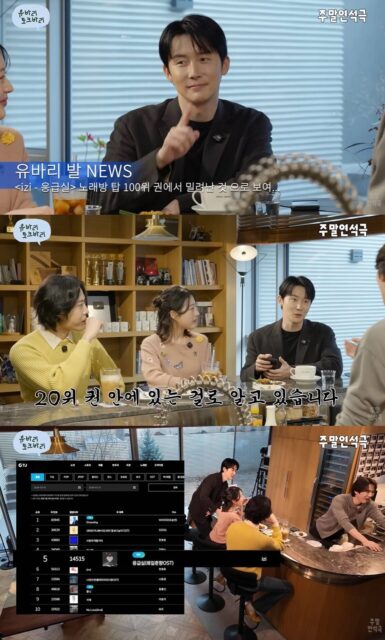
During the exchange, Yoo Yeon Seok expressed a common misconception, suggesting that while "Emergency Room" was once a permanent fixture in the "Top 100" karaoke rankings, its popularity might have finally begun to wane. Kim Jun Han immediately corrected this assumption, asserting that the song remains a powerhouse in the noraebang (karaoke) circuit. To settle the debate, the cast engaged in a "Guess the Ranking" game, predicting where the 2005 track currently stands among the thousands of songs available in Korean karaoke rooms.

The predictions varied significantly among the younger cast members. Jang Da Ah estimated the song might be ranked between 80th and 90th, while Lee Jong Won placed it slightly higher, in the 60th to 70th range. Kim Jun Han, however, maintained a confident stance, predicting the song was still comfortably within the Top 20. The official data, pulled as of March 15, 2026, revealed that "Emergency Room" held the #5 position nationwide. This revelation prompted an immediate apology from Yoo Yeon Seok, who admitted he had underestimated the track’s legendary status.
Kim Jun Han further noted that, to his knowledge, the song has never dropped out of the Top 100 rankings in the twenty years since its debut. This level of consistency is rare in a fast-moving music market like South Korea’s, where new K-pop releases frequently dominate digital charts. The actor confirmed that the song’s frequent play in karaoke rooms translates into a steady stream of royalties, which he described as a modest but significant "helping hand" in his daily life.
From Drummer to Leading Man: The Career of Kim Jun Han
Kim Jun Han’s transition from the music industry to the upper echelons of the acting world is a testament to his range and dedication. He first entered the entertainment industry as the drummer for the rock band izi. The group achieved massive success in 2005 with "Emergency Room," a melancholic ballad that resonated deeply with the public’s sentiment at the time. Despite the song’s success, Kim eventually decided to pivot toward acting, a move that required him to start from the ground up in the film and television industry.
His acting career began to gain significant momentum in the late 2010s. He earned critical acclaim for his role as the antagonist in the 2017 film Anarchist from Colony and later became a household name through his portrayal of Dr. Ahn Chi-hong in the medical drama Hospital Playlist (2020). His performance as a steadfast, empathetic neurosurgeon earned him a dedicated fanbase and solidified his reputation as a "scene-stealer." He further expanded his repertoire with a chilling performance as the husband of Bae Suzy’s character in the 2022 psychological thriller Anna.

The actor’s musical background has often intersected with his acting roles. His deep understanding of rhythm and performance has been cited by critics as a factor in his precise delivery and screen presence. The recent YouTube appearance serves as a reminder of his multifaceted career, bridging the gap between his past as a chart-topping musician and his current status as a respected actor.
Historical Context: The Impact of Sassy Girl Chun Hyang
To understand why "Emergency Room" remains so profitable, one must look back at the cultural phenomenon of Sassy Girl Chun Hyang. Released in 2005, the drama was a modern-day reimagining of the classic Korean folktale "Chunhyangjeon." Starring Han Chae-young and Jae Hee, the series was a massive commercial success, reaching viewership ratings of over 30%.
The soundtrack played a pivotal role in the drama’s emotional resonance. "Emergency Room," with its lyrics about longing and regret, became the "national anthem" for heartbreak in the mid-2000s. Unlike many contemporary K-pop tracks that rely on complex choreography and high-budget music videos, "Emergency Room" relied on its melody and relatable lyrics, making it an ideal choice for karaoke. In South Korea, karaoke is not merely a hobby but a social institution; songs that are easy to sing and emotionally evocative tend to stay in the charts for decades, regardless of current musical trends.
The Economics of Music Royalties in South Korea
The "steady income stream" mentioned by Kim Jun Han highlights the intricacies of the South Korean copyright system. Royalties in Korea are managed primarily by organizations such as the Korea Music Copyright Association (KOMCA) and the Federation of Korean Music Performers (FKMP).

For a band member like Kim Jun Han, income is derived from "neighboring rights." While the songwriters and composers receive the largest portion of royalties from broadcast and streaming, performers—including session musicians and band members—receive a share of the revenue generated when a song is played in public venues, including karaoke rooms.
The "Noraebang Effect" is a well-documented economic phenomenon in the Korean music industry. When a person selects a song at a karaoke machine, a small fee is paid to the copyright holders and performers. Given that "Emergency Room" has remained in the Top 100 for twenty years, the cumulative number of plays reaches into the millions. For artists who may no longer be active in the music industry, these "zombie hits"—songs that refuse to die on the charts—provide a form of financial security often referred to as a "pension-like" income.
Broader Implications for the Entertainment Industry
Kim Jun Han’s story is indicative of a broader trend in the South Korean entertainment industry where the lines between different artistic disciplines are increasingly blurred. Many of Korea’s top actors began their careers in the music industry, including stars like Seo In-guk, Park Hyung-sik, and IU. However, Kim Jun Han’s path is unique because he transitioned from a band setting rather than a traditional "idol" background.
His revelation also underscores the enduring value of the Original Soundtrack (OST) market. In the global streaming era, Korean dramas have reached unprecedented audiences via platforms like Netflix and Disney+. This global reach has given a second life to older OSTs, as international fans discover classic dramas and their accompanying music. While "Emergency Room" is primarily a domestic powerhouse, the trend suggests that successful OSTs can provide long-term financial stability for the artists involved, far outlasting the initial broadcast of the television series.
Furthermore, the public reaction to Kim Jun Han’s disclosure has been overwhelmingly positive. Fans have expressed admiration for his humility regarding his musical past and his success in reinventing himself as an actor. The fact that a song from 2005 can still outrank modern hits in 2026 serves as a testament to the timeless quality of the ballad genre in Korean culture.
Conclusion
As Kim Jun Han continues to advance his acting career with projects like Mad Concrete Dreams, his connection to "Emergency Room" remains a significant part of his professional identity. The song’s continued dominance in karaoke rankings not only provides him with a supplemental income but also ensures his legacy as a musician remains intact for new generations of listeners.
The case of izi’s "Emergency Room" serves as a definitive example of how a single piece of media can transcend its era, becoming a permanent fixture in the cultural landscape. For the South Korean music industry, it highlights the vital importance of the karaoke market and the lasting power of a well-crafted ballad. For Kim Jun Han, it is a reminder of a successful first chapter that continues to support him as he writes his future in the world of cinema and television.