
The international film festival circuit is abuzz with anticipation following the announcement of Yeon Sang-ho’s latest directorial effort, Colony, as a featured selection in the prestigious Midnight section of the 2026 Cannes Film Festival. Scheduled for its world premiere in May 2026, the Korean zombie thriller promises to once again cement the director’s reputation as a master of the genre, a status he solidified with the globally acclaimed Train to Busan and its successors. Colony marks a return to the visceral, high-stakes horror that captivated audiences worldwide, offering a fresh yet familiar take on the apocalyptic narrative.
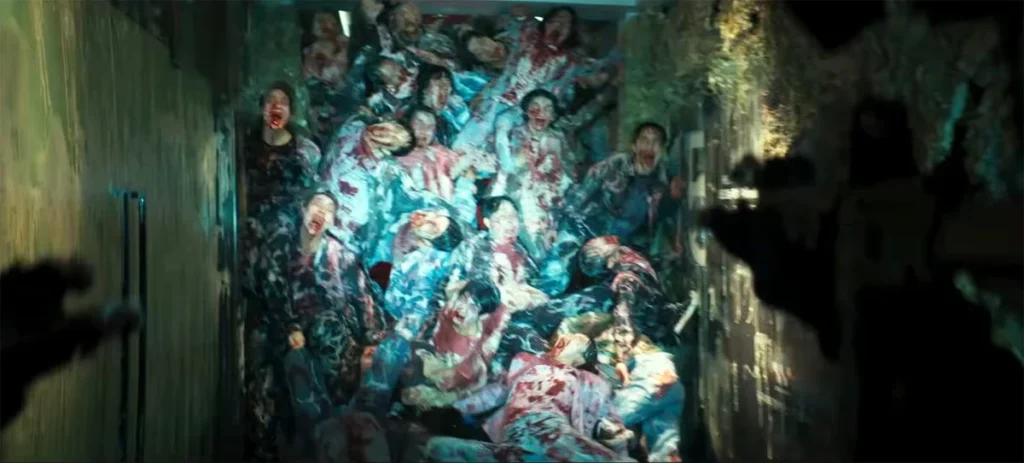
The film’s premise centers on a catastrophic event at a biotechnology conference where a rapidly mutating virus is unleashed. Professor Se Jeong, portrayed by the acclaimed Gianna Jun, finds herself at the epicenter of this unfolding disaster. As the infected rapidly transform into grotesque creatures, the facility is abruptly sealed off, trapping Se Jeong and a group of survivors within its confines. The narrative unfolds as a desperate struggle for survival against an escalating threat, both from the infected and the claustrophobic confines of their quarantine. Early glimpses suggest a film that blends intense action with a palpable sense of dread, reminiscent of survival horror franchises like Resident Evil, but infused with Yeon Sang-ho’s signature Korean sensibility.
A Master of the Genre Returns
Yeon Sang-ho’s prolific career has been instrumental in the global rise of Korean cinema, particularly within the horror and thriller genres. His early works, including the animated features The King of Pigs and The Fake, demonstrated a keen ability to craft dark, thought-provoking narratives. However, it was the 2016 zombie apocalypse film Train to Busan that catapulted him to international stardom. The film’s critical and commercial success, grossing over $92 million worldwide, not only redefined the zombie genre but also paved the way for a new wave of Korean cinematic exports.

Following this breakthrough, Yeon Sang-ho continued to explore the post-apocalyptic landscape with Peninsula, a sequel to Train to Busan, which expanded the cinematic universe and its lore. His directorial prowess extends beyond the zombie genre, with acclaimed works such as the sci-fi action film Psychokinesis and the critically lauded Netflix series Hellbound, which delves into supernatural themes and societal anxieties. Colony represents a strategic return to the genre that launched his international career, leveraging his established expertise to deliver what is anticipated to be another gripping cinematic experience. The film also features a notable ensemble cast, including Koo Kyo-hwan, Ji Chang-wook, Shin Hyun-been, Kim Shin-rock, and Go Soo, further amplifying the film’s appeal.
The Genesis of the Outbreak: A Chronological Perspective
The narrative of Colony appears to unfold rapidly, beginning with a seemingly routine academic event that quickly devolves into chaos.
- The Biotechnology Conference: Professor Se Jeong attends a significant biotech conference, likely a gathering of leading minds in the field. This setting provides fertile ground for the introduction of cutting-edge, potentially dangerous scientific research.
- The Virus Unleashed: The core of the disaster is the sudden and uncontrolled release of a rapidly mutating virus. The film’s emphasis on a "mutating" virus suggests a dynamic and evolving threat, making containment and survival all the more challenging.
- Rapid Transformation: The infected exhibit swift and horrific transformations, indicative of a highly aggressive pathogen. This element is crucial for escalating the tension and visual horror of the film.
- Facility Lockdown: In response to the escalating outbreak, authorities implement a strict quarantine, sealing off the entire facility. This act of containment, while intended to prevent further spread, traps the protagonists within the infected zone, creating a claustrophobic and high-stakes environment.
- Survival in Isolation: The remaining narrative focuses on the survivors’ fight for their lives within the sealed-off colony, battling the infected and the psychological toll of their confinement.
The screenplay, co-written by Yeon Sang-ho and Choi Gyu-seok, who previously collaborated on Hellbound, suggests a narrative that is not only action-packed but also rich in thematic depth, potentially exploring societal responses to crisis, the ethics of scientific advancement, and the resilience of the human spirit.
Supporting Data and Industry Context
The global market for K-content, particularly horror and thriller genres, has seen exponential growth in recent years. This trend is driven by a combination of high production values, compelling storytelling, and a willingness by Korean filmmakers to push creative boundaries. The success of films like Parasite, which won the Academy Award for Best Picture in 2020, has opened doors for a wider range of Korean films to find international distribution and critical acclaim.

The zombie genre, while having seen numerous iterations, continues to resonate with audiences. Yeon Sang-ho’s previous contributions have demonstrated his ability to inject fresh perspectives and emotional depth into the subgenre, moving beyond simple gore to explore human relationships and societal commentary under extreme duress. The selection of Colony for the Cannes Film Festival’s Midnight section is a significant indicator of its perceived artistic merit and potential to captivate a discerning international audience. This section typically showcases bold, genre-bending, and often provocative films, making it an ideal platform for Yeon Sang-ho’s distinctive style.
The film’s reported release in theaters in June 2026, shortly after its Cannes debut, indicates a strategic distribution plan aimed at capitalizing on the festival buzz. This staggered release strategy is common for films generating significant international attention, allowing for a global rollout that builds momentum from festival premieres.
Inferred Statements and Reactions
While direct quotes from the filmmakers or cast are not yet available, the context surrounding Colony‘s release allows for inferred sentiments. The choice to premiere at Cannes, especially in the prestigious Midnight section, signals confidence from the production team and distributors regarding the film’s quality and impact. The statement "I’m taking humanity to the next level," attributed to the film’s thematic undercurrent, suggests an ambition to explore not just the physical survival of humanity but also its evolution or transformation in the face of extreme adversity.
The production company, Yoomin Hailey Yang, likely anticipates Colony to further solidify its position as a producer of high-quality genre films that can achieve both critical acclaim and commercial success on a global scale. The collaboration between Yeon Sang-ho and Choi Gyu-seok, stemming from their successful partnership on Hellbound, points to a shared creative vision and a proven track record of delivering compelling narratives within the supernatural and horror domains.

Broader Impact and Implications
The success of Colony at Cannes and its subsequent theatrical release could have several significant implications for Korean cinema and the global film industry.
- Reinforcing K-Horror Dominance: A strong showing for Colony would further solidify Korea’s position as a powerhouse in the horror and thriller genres, potentially encouraging more international investment in Korean productions and fostering greater interest in other emerging Korean filmmakers.
- Expansion of the K-Zombie Universe: While Colony is a standalone film, its success could inspire further exploration of the established K-zombie cinematic universe, potentially leading to new narratives or collaborations that build upon the existing fan base.
- Influence on Genre Filmmaking: Yeon Sang-ho’s innovative approach to the zombie genre has consistently influenced filmmakers worldwide. Colony‘s unique take on mutating creatures and confined survival could introduce new tropes and storytelling techniques that are adopted by other genre productions.
- Cultural Soft Power: The continued success of Korean films on the international stage contributes significantly to South Korea’s cultural soft power, promoting Korean culture and creativity globally. Each successful film acts as a cultural ambassador, enhancing the country’s international image.
- Thematic Relevance: In an era marked by global health concerns and societal anxieties, films that explore themes of contagion, isolation, and human resilience often resonate deeply with audiences. Colony‘s premise, set against the backdrop of a biotech conference gone awry, taps into contemporary anxieties, making it potentially highly relevant to current global sentiments.
As the 2026 Cannes Film Festival approaches, the spotlight will undoubtedly be on Colony, poised to deliver another masterclass in suspense, horror, and gripping storytelling from one of South Korea’s most celebrated cinematic voices. The film’s journey from the director’s vision to the international stage represents a significant milestone in the ongoing global appreciation for Korean cinema.