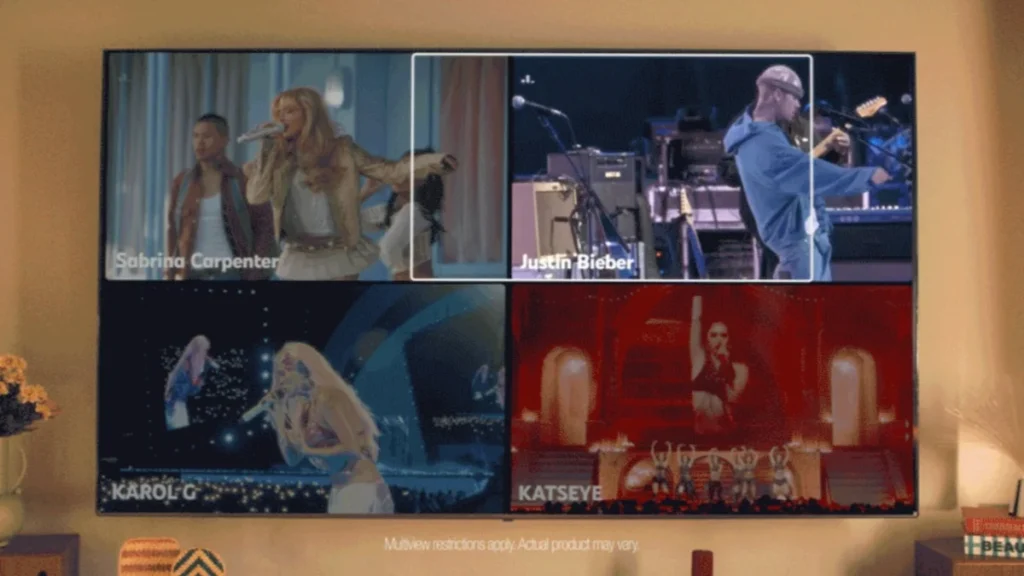

The Coachella Valley Music and Arts Festival is set to once again redefine the global festival experience, not just for its attendees in Indio, California, but for millions worldwide, as its acclaimed YouTube livestream returns this weekend with unprecedented technological advancements. For the first time in its history, the 2026 iteration will broadcast all seven of its main stages simultaneously, ensuring that no fan misses a beat of the diverse musical and artistic programming. This ambitious undertaking elevates the festival’s digital presence to new heights, offering an immersive virtual experience that mirrors, as closely as possible, the physical journey through the Empire Polo Club.
Central to this year’s enhanced digital offering is a significant upgrade in visual fidelity. The flagship Coachella Stage, the expansive Outdoor Theatre, and the electrifying Sahara tent—known for its high-energy electronic acts and dazzling light shows—will all be available for streaming in crystal-clear 4K resolution. This commitment to ultra-high definition broadcasting promises viewers unparalleled detail, from the intricate stage designs and dynamic lighting effects to the nuanced expressions of performers and the vibrant energy of the crowd. Furthermore, the Quasar stage, a newer addition celebrated for its intimate, club-like atmosphere and cutting-edge sound design, will offer viewers the flexibility of both traditional horizontal and innovative vertical viewing formats, catering to the diverse consumption habits of today’s digital audience, particularly those viewing on mobile devices and short-form content platforms.
Beyond individual stage feeds, the 2026 livestream introduces a groundbreaking 4×4 grid multi-view format. This feature empowers viewers to curate their own festival experience by streaming up to four different performances concurrently. Imagine simultaneously watching a legendary rock band on the Coachella Stage, a burgeoning pop sensation at the Outdoor Theatre, a pulsating DJ set in the Sahara, and an experimental electronic artist at Quasar—all on a single screen. This level of customization and simultaneous access is a game-changer, directly addressing the perennial festival dilemma of conflicting set times and allowing fans to truly maximize their engagement with the expansive lineup. It represents a significant leap forward from previous multi-view options, which typically offered fewer simultaneous streams or lacked the full array of stages.
The livestream, accessible globally through Coachella’s official YouTube channel and dedicated livestream app, is scheduled to commence daily at 7:00 p.m. ET / 4:00 p.m. PT. While the precise performance schedule for each day is traditionally announced on the morning of, festival organizers have indicated that the vast majority of sets are expected to be streamed. In the interludes between live performances, "Coachella TV" will offer a rich tapestry of archival moments from past festivals. This curated content, featuring iconic performances, interviews, and behind-the-scenes glimpses, serves to bridge the gaps, entertain viewers, and provide historical context, reinforcing Coachella’s legacy as a cultural touchstone and an innovator in festival production.
A Legacy of Innovation: Coachella’s Digital Evolution
Coachella’s journey from a nascent music festival in 1999 to a global cultural phenomenon has been marked by continuous innovation, and its embrace of digital broadcasting stands as a testament to this spirit. The festival, founded by Paul Tollett and Rick Van Santen, initially aimed to showcase alternative rock and indie artists, offering a counter-narrative to the increasingly commercialized festival landscape of the late 90s. Over two decades, it has grown exponentially, attracting hundreds of thousands of attendees annually and becoming a bellwether for music, fashion, and art trends. Its economic impact on the Coachella Valley region is substantial, generating hundreds of millions of dollars in revenue and supporting numerous local businesses.
The introduction of livestreaming was a pivotal moment in Coachella’s history, democratizing access to an event once exclusive to ticket holders. While early livestreams were rudimentary, often limited to a single stage or select performances in standard definition, the festival quickly recognized the immense potential of digital outreach. Its partnership with YouTube, which solidified in the early 2010s, marked a significant turning point. This collaboration provided the technical infrastructure and global platform necessary to scale its broadcast efforts, transforming the festival from a regional gathering into an international spectacle.
In the years that followed, Coachella’s livestream became an event in itself, drawing millions of concurrent viewers from over 200 countries. It evolved from offering basic high-definition feeds to incorporating multiple camera angles, curated channels for different genres, and interactive elements such as fan polls and live chats. The festival’s consistent push for technological superiority in its broadcast parallels its commitment to staging an unparalleled in-person experience. Each year has seen incremental improvements, from enhanced audio quality to more sophisticated graphics and behind-the-scenes content, all aimed at bringing the essence of the desert festival directly into viewers’ homes. The 2026 announcement of all seven stages in 4K with multi-view capabilities is not merely an incremental upgrade; it is the culmination of years of strategic digital development, positioning Coachella at the absolute forefront of live event broadcasting. This sustained investment underscores the organizers’ understanding that the digital audience is as crucial to the festival’s global brand as its physical attendees.
The Technological Backbone: Powering a Global Spectacle
Broadcasting seven stages simultaneously, with multiple feeds in 4K resolution and a sophisticated multi-view option, represents an enormous logistical and technological undertaking. This endeavor requires a massive investment in cutting-edge equipment and infrastructure. Hundreds of 4K-capable cameras, some fixed, some operated by skilled cinematographers, others deployed via drones for sweeping aerial shots, and even robotic cameras for dynamic stage angles, will be strategically positioned across the sprawling festival grounds. Each camera feed must be seamlessly transmitted, processed, and encoded in real-time. This includes not only video but also multi-channel audio, capturing the intricate soundscapes of live music.
The sheer volume of data involved in streaming multiple 4K feeds is staggering, demanding robust fiber optic networks laid across the Empire Polo Club, capable of handling terabytes of information per hour. Powerful server farms, strategically located, are essential for handling immense bandwidth requirements and ensuring efficient content delivery. Production control rooms, staffed by dozens of directors, vision mixers, audio engineers, graphic operators, and technical supervisors, will work tirelessly in shifts to switch between cameras, manage audio levels for broadcast, overlay informational graphics, and ensure a flawless, synchronized broadcast across all channels. The integration of the Quasar stage’s dual horizontal and vertical formats further complicates the technical workflow, requiring specialized encoding and delivery mechanisms to optimize viewing across different device orientations, a nod to the prevalence of vertical video on platforms like TikTok and Instagram.
YouTube’s role as the primary platform is critical. The streaming giant provides not only the global distribution network but also the advanced technological backbone to support such a complex, high-demand broadcast. Its content delivery networks (CDNs) are globally distributed and designed to handle peak traffic loads, ensuring minimal latency and buffering for millions of viewers regardless of their geographical location. The long-standing partnership between Coachella and YouTube has been mutually beneficial, allowing Coachella to reach an unprecedented audience and providing YouTube with premium live content that attracts and retains users, reinforcing its position as a leading destination for music content. This symbiotic relationship underscores the significant financial and strategic commitment required to execute a livestream of this magnitude.
Curating the Coachella Experience: The 2026 Lineup and Its Global Appeal
The success of any festival, virtual or physical, ultimately rests on its lineup. Coachella 2026 continues its tradition of presenting a diverse and star-studded roster designed to appeal to a broad global audience, further enhancing the appeal of its comprehensive livestream. This year’s headliners, Sabrina Carpenter, Justin Bieber, Karol G, and Anyma, exemplify the festival’s genre-spanning philosophy and its ability to capture the zeitgeist of contemporary music.
Sabrina Carpenter’s ascent in pop music, characterized by catchy melodies and sharp lyricism, positions her as a formidable main stage act, drawing a significant younger demographic and pop enthusiasts. Justin Bieber, a global pop icon with a career spanning over a decade, guarantees immense viewership, crossing over multiple generations and fan bases with his catalogue of hits. Karol G, a powerhouse in the Latin music scene, underscores Coachella’s commitment to global sounds and diverse cultural representation, a trend that has seen Latin artists increasingly dominate international charts and resonate with vast audiences. Anyma, representing the cutting edge of electronic music and renowned for his immersive audiovisual experiences, caters to the festival’s deep roots in dance culture and its penchant for showcasing innovative artistic expressions.
Beyond the headliners, the lineup boasts an impressive array of talent that solidifies the livestream’s must-watch status. Iconic rock acts like The Strokes and Iggy Pop provide a nod to alternative music’s enduring legacy, appealing to long-time festivalgoers and indie aficionados. Nine Inch Noize (an inferred alternative name for Nine Inch Nails, or a new fusion project that blends industrial and noise rock) and Turnstile deliver heavy, energetic performances that will resonate with rock, punk, and hardcore fans. Clipse’s reunion or performance (if inferred) would excite hip-hop enthusiasts, showcasing lyrical prowess and influential beats, while The xx’s ethereal soundscapes would captivate indie and electronic listeners seeking atmospheric experiences. The inclusion of figures like Addison Rae, who bridges the gap between social media stardom and music, reflects Coachella’s awareness of contemporary cultural shifts and its ability to attract diverse celebrity presence. Interpol’s post-punk revivalism, Disclosure’s innovative electronic beats, and the K-pop giants BIGBANG further illustrate the festival’s commitment to presenting a truly global and eclectic musical tapestry. This carefully curated mix ensures that across all seven stages, viewers will find compelling reasons to tune in, regardless of their specific musical preferences, making the multi-view feature particularly valuable.
Broader Implications: Setting a New Standard for Live Event Broadcasting
The 2026 Coachella livestream represents more than just an annual broadcast; it sets a new benchmark for how large-scale live events can be delivered digitally. Its implications are far-reaching, impacting everything from fan engagement and artist exposure to the future of event production and monetization.
Democratizing Access and Enhancing Fan Experience: By making all seven stages available in high definition, and key stages in 4K, Coachella significantly democratizes access to what is often an exclusive and expensive in-person experience. Millions who cannot afford tickets, travel to Indio, or face physical limitations can now participate actively, experiencing the vibrancy of the festival from their homes. The multi-view option transforms passive viewing into an interactive, personalized journey, allowing fans to feel more in control of their experience, akin to navigating the festival grounds themselves. This accessibility fosters a deeper connection with the festival brand and the artists, cultivating a global community of enthusiasts.
Global Reach and Artist Exposure: The livestream vastly expands the global reach of Coachella and, by extension, the artists performing. Emerging artists gain exposure to millions of potential new fans worldwide, while established acts can reinforce their global presence and connect with existing fan bases across continents. For many international viewers, the livestream is their primary window into the Western festival scene, making it a crucial platform for cultural exchange and discovery. The archival content, "Coachella TV," further deepens this engagement, offering a historical perspective and enriching the overall cultural narrative of the festival.
Technological Innovation as a Driver: Coachella’s continuous investment in broadcast technology pushes the entire industry forward. Other festivals, sports leagues, and live event organizers will undoubtedly look to Coachella’s model for inspiration, potentially leading to a widespread adoption of 4K streaming, sophisticated multi-view options, and flexible viewing formats. This competitive drive for technological superiority benefits consumers by raising the overall quality of digital live entertainment and accelerating innovation in broadcast infrastructure.
Economic Impact and Monetization: While the YouTube livestream is free, it serves as a powerful marketing tool for the Coachella brand. It drives ticket sales for future events, generates significant advertising revenue for YouTube and Coachella through pre-roll and mid-roll ads, and provides a platform for virtual merchandise sales and brand partnerships. The increased global visibility also attracts high-profile sponsors, further solidifying the festival’s financial viability and allowing for continued investment in production quality. The integration of direct links to ticket marketplaces like StubHub (as observed in previous festival communications) highlights the synergy between the virtual and physical event, driving traffic and sales for both current and future iterations.
The Future of Hybrid Events: The 2026 livestream reinforces the viability and desirability of hybrid event models, where the in-person experience is complemented and extended by a sophisticated digital counterpart. This model proved its resilience during global lockdowns and continues to evolve, demonstrating that digital presence is not a substitute for live events but rather an amplification and expansion of them. Coachella’s success in this arena will likely influence event planning for years to come, solidifying the importance of a robust digital strategy alongside traditional physical production. It underscores a shift towards integrated experiences where geographical and financial barriers are increasingly mitigated by technological prowess.
Inferred Industry Reactions and Outlook
A spokesperson for Goldenvoice, the promoters behind Coachella, could be imagined stating, "Our unwavering commitment has always been to deliver an unparalleled experience, whether you’re with us in the radiant desert or watching from halfway across the world. This year’s livestream, with all seven stages meticulously captured in 4K and our innovative multi-view system, is a direct reflection of our dedication to pushing technological boundaries and connecting with our expansive global community in new and exciting ways. We firmly believe this represents the definitive future of live event broadcasting, setting a new paradigm for fan engagement."
Similarly, a representative from YouTube might comment, "Our long-standing and evolving partnership with Coachella continues to showcase the incredible capabilities of our platform for live music events of this magnitude. We are thrilled to offer fans around the globe an even richer, more immersive, and highly personalized viewing experience, leveraging cutting-edge 4K technology and advanced multi-view features. Coachella consistently challenges us to innovate and scale, and we’re immensely proud to support their visionary approach to a truly global festival, further cementing YouTube’s position as the home for live music."
Artists performing at the festival often express profound enthusiasm for the expanded reach. A hypothetical artist might articulate, "It’s an absolutely incredible feeling to know that our performance isn’t just for the tens of thousands dancing in front of us, but for millions worldwide. The livestream allows us to share our music, our artistry, and our message with an audience far beyond the festival gates, breaking down geographical barriers, and the production quality keeps getting better and more sophisticated every single year."
Fan reactions across social media platforms typically echo this sentiment, with comments frequently praising the accessibility, fidelity, and comprehensive nature of the broadcast. "Being able to switch between seven stages and see so many incredible acts in true 4K is absolutely insane. It’s almost like being there in the desert without the heat, the dust, and the crowds!" one hypothetical tweet might read, encapsulating the widespread public’s appreciation for the continuously enhanced digital offering.
Challenges and Future Considerations
While the technological advancements are undeniably impressive, challenges persist. Ensuring consistent, high-quality 4K streams across all seven stages simultaneously, given the variable internet conditions viewers might experience globally, is a monumental and ongoing task. Potential technical glitches, server overloads during peak viewership, or localized bandwidth limitations could still impact viewer experience, though YouTube’s robust infrastructure is designed to mitigate these issues. Additionally, the sheer volume of content available might lead to "choice paralysis" for some viewers, despite the multi-view feature designed to mitigate this by offering curated options. Balancing the in-person experience with the broadcast narrative also requires careful consideration, ensuring that the digital presentation enhances rather than detracts from the unique, ephemeral magic of being physically present at Coachella.
Nevertheless, the 2026 Coachella livestream stands as a powerful statement about the festival’s enduring influence, its unwavering commitment to innovation, and its relentless pursuit of pushing the boundaries of live entertainment. By embracing cutting-edge technology to deliver an expansive, high-fidelity, and interactive viewing experience, Coachella not only cements its position as a global leader in live entertainment but also charts a definitive course for the future of digital event broadcasting, proving that the magic of the desert is now truly boundless.