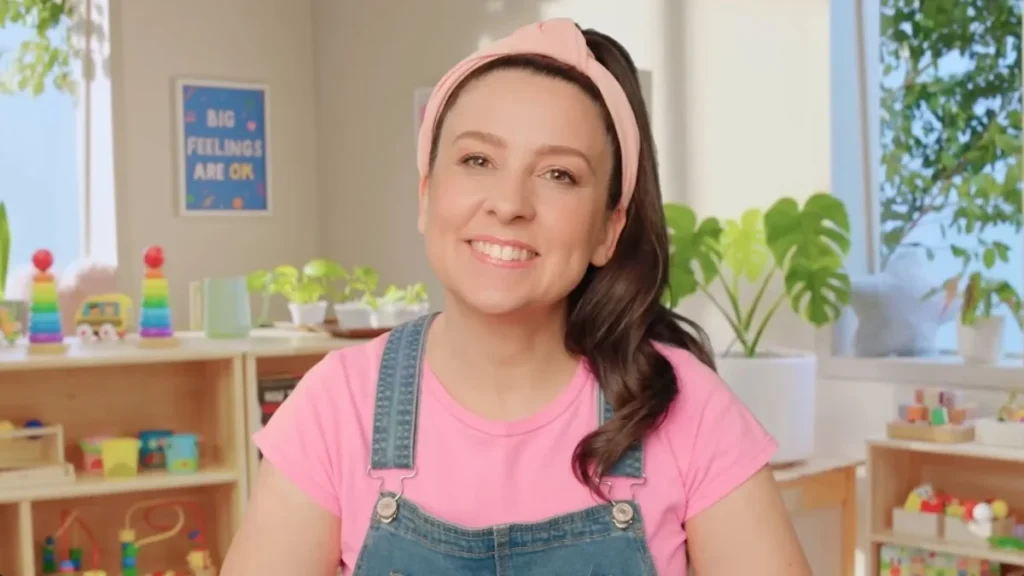

Rachel Accurso, widely recognized by millions as Ms. Rachel, the beloved children’s educational content creator, has taken a firm and public stance against the detention of young children and their families at the Dilley Immigration Processing Center in South Texas. Her advocacy marks a significant moment, drawing a prominent figure from children’s entertainment into the complex and often contentious arena of immigration policy and human rights. This move, which Accurso herself acknowledges as "political," underscores a growing sentiment among advocates that the welfare of children transcends traditional political divides, asserting that fundamental care and love should be universal, irrespective of nationality or circumstance.
The Genesis of Advocacy: A Child’s Plight in Detention
Accurso’s involvement began with a deeply personal connection to the issue. She first learned of the Dilley facility after federal agents detained the father of five-year-old Liam Conejo Ramos in Minneapolis, subsequently transferring both father and son to the sprawling South Texas detention center. This specific case served as a poignant catalyst, transforming a distant policy issue into a tangible human crisis for the YouTube star. In an interview with NBC News, Accurso recounted the profound impact of her first video call with a child inside Dilley. "It was unbelievably surreal to see this sweet little face and feel like I was on a call with somebody who’s in jail. It broke me, and it was something I never thought I’d encounter in life," she stated, her voice reflecting a mix of disbelief and resolve. She further emphasized the surreal nature of her efforts, noting, "We’re trying to get a child out of a jail to do a spelling bee. I just never thought those words would go together." This personal encounter galvanized her commitment, prompting her to collaborate with immigration lawyers and activists, dedicating her platform and efforts "to close Dilley and make sure that kids and their parents are back in their communities where they belong.”
Understanding the Dilley Immigration Processing Center
The Dilley Immigration Processing Center, officially known as the South Texas Family Residential Center, is one of the largest immigration detention facilities in the United States, designed specifically for the detention of asylum-seeking families. Operated by CoreCivic under contract with Immigration and Customs Enforcement (ICE), the facility can house thousands of individuals. Its establishment and expansion are rooted in a series of governmental responses to surges in migration, particularly from Central America, with policies aiming to deter undocumented immigration through family detention.
The center’s history is intertwined with shifts in U.S. immigration policy. Initially, family detention centers saw a significant increase in use during the Obama administration, followed by a dramatic expansion and heightened scrutiny under the Trump administration’s "zero tolerance" policy. This policy, implemented in 2018, led to widespread family separations at the U.S.-Mexico border, drawing international condemnation and numerous legal challenges. While the most extreme aspects of family separation have largely been rolled back, the infrastructure for family detention, including facilities like Dilley, has largely remained in place, continuing to house parents and children together, often for extended periods. The official stance often frames these centers as "residential facilities" rather than detention centers, emphasizing the provision of services, but critics consistently argue they function as jails, especially for vulnerable populations.
Reported Conditions and Humanitarian Concerns
Conditions within facilities like Dilley have been a consistent source of controversy and concern for human rights organizations, legal advocates, and medical professionals. According to reports cited by NBC News, children detained at Dilley have complained of "limited education, lights that never turn off, and moldy food." These reports are not isolated incidents but echo a broader pattern of concerns raised by various oversight bodies and advocacy groups over the years.
Legal challenges, notably under the 1997 Flores Settlement Agreement, dictate certain standards for the detention of children, including requirements for facilities to be "safe and sanitary" and for children to be released "without unnecessary delay." However, critics argue that family detention centers, by their very nature, struggle to meet these standards. Children in these environments often experience profound psychological distress, exhibiting symptoms such as anxiety, depression, post-traumatic stress disorder (PTSD), and developmental regression. Medical experts frequently highlight the long-term adverse effects of detention on children’s mental and physical health, emphasizing that even "humane" detention is inherently detrimental to a child’s well-being. The constant artificial lighting, lack of adequate outdoor play, and limited access to culturally appropriate education and recreation can severely impact a child’s development and sense of normalcy. Reports from Physicians for Human Rights and other medical organizations have documented cases of severe emotional and physical deterioration among children held in such environments, underscoring the urgent need for alternatives to detention.
"I Am Political": The Significance of Ms. Rachel’s Stance
Accurso’s explicit declaration, "I am political," carries significant weight, particularly for a public figure whose brand is built on nurturing and educating young children. She anticipates backlash, acknowledging the contentious nature of immigration debates in the U.S. However, she firmly frames her position not as partisan politics but as a fundamental moral imperative: "It’s political to believe that children are worthy of love and care, and that every child is equal, and that our care shouldn’t stop at what we look like, our family, at our religion, at a border." This statement positions her advocacy squarely within the realm of universal human rights, arguing that child welfare should transcend national borders and political ideologies.
This isn’t Ms. Rachel’s first foray into politically charged issues. She has previously faced scrutiny for advocating for children in Gaza, demonstrating a consistent commitment to child welfare globally, even when it involves sensitive geopolitical conflicts. Her willingness to engage with such topics, despite the potential for alienating segments of her audience, underscores a belief that her platform carries a responsibility to speak out on behalf of vulnerable populations. For many, her involvement legitimizes the concerns of activists and helps to bring these issues to a broader, often apolitical, audience of parents and caregivers who might otherwise not engage with the complexities of immigration policy. Her YouTube channel, boasting over 19 million subscribers, and her content deal with Netflix starting in 2025, provide an unparalleled reach, making her voice particularly impactful in public discourse.
Fluctuating Numbers and Mounting Pressure
The article notes a significant decrease in the number of children at the Dilley center. According to The New York Times, approximately 50 children remained at the facility as of this week, a sharp decline from about 500 in January. While the direct cause for this reduction is not definitively stated, it "follows months of mounting pressure from rights activists like Accurso, as well as members of Congress and immigration lawyers." This suggests that sustained advocacy, legal challenges, and political scrutiny can indeed effect change, even within entrenched systems.
Historically, fluctuations in detention numbers are common, influenced by factors such as changes in border enforcement policies, judicial rulings, and seasonal migration patterns. The Biden administration, which took office promising a more humane approach to immigration and vowing to end family detention, has faced persistent criticism for continuing to utilize such facilities. While the administration has shifted away from the "zero tolerance" family separations, the use of family detention centers has continued, albeit with periods of reduced occupancy. The decline at Dilley could be attributed to a combination of factors: the persistent advocacy raising public awareness, legal injunctions compelling release, and potentially a re-evaluation of detention practices by the Department of Homeland Security (DHS) in response to the sustained pressure. The pressure from advocacy groups and public figures like Ms. Rachel serves as a constant reminder to administrations of their stated commitments and humanitarian obligations.
Official Responses and Advocacy Counterpoints
Official responses from government entities like ICE and the Department of Homeland Security (DHS) regarding family detention often emphasize the necessity of maintaining "secure and orderly" borders and ensuring the "safety and well-being" of individuals in their custody. They typically state that facilities like Dilley provide appropriate care, including medical services, educational opportunities, and recreational activities, in compliance with federal standards and legal agreements. ICE maintains that detention is a necessary tool for managing immigration flows, ensuring court appearances, and deterring unlawful entry. They often characterize these facilities as "residential centers" rather than jails, highlighting services provided. In official statements, ICE frequently underscores its commitment to upholding humanitarian standards while fulfilling its mission of immigration enforcement.
However, these claims are frequently challenged by immigration lawyers and human rights organizations. Groups like the American Civil Liberties Union (ACLU), RAICES (Refugee and Immigrant Center for Education and Legal Services), and Human Rights Watch consistently argue that detention, particularly for children, should be a last resort and for the shortest possible duration. They point to the availability of community-based alternatives to detention, which have been shown to be more cost-effective, more humane, and equally successful in ensuring appearance at immigration hearings. These alternatives often involve case management, support services, and electronic monitoring, allowing families to reside in their communities while awaiting their legal proceedings. Advocates contend that the economic cost of detaining families far exceeds that of these community-based alternatives, without offering superior outcomes in terms of legal compliance.
The Broader Impact and Implications of Child Detention
The issue of child immigration detention carries profound humanitarian, legal, and political implications. From a humanitarian perspective, the detention of children, especially those who have experienced trauma in their home countries or during their journey, is widely condemned by child development experts and medical associations. The American Academy of Pediatrics, among other organizations, has consistently called for an end to child detention, citing overwhelming evidence of its detrimental effects on mental and physical health. Treating a child in detention, as Accurso states, as "neglect and child abuse," resonates with these expert opinions, framing the issue as a failure to protect vulnerable children. The long-term societal cost of creating a generation of children traumatized by detention is a significant concern for public health experts.
Legally, the U.S. government faces ongoing challenges to its detention practices. The Flores Settlement Agreement, while establishing minimum standards, has been the subject of continuous litigation regarding its interpretation and enforcement, particularly concerning the duration of child detention. Advocates routinely file lawsuits seeking the release of children and families, challenging conditions, and pushing for policy reforms. The legal battles often center on the definition of "detention" versus "residential care" and whether facilities meet the specific requirements for children’s welfare.
Politically, child detention remains a deeply divisive issue, central to the broader debate on immigration reform. While some advocate for strict enforcement and deterrence, others champion more compassionate, rights-based approaches. Public figures like Ms. Rachel, by leveraging their platforms, can shift public opinion and apply pressure on policymakers. Their involvement forces a re-evaluation of the moral costs associated with current immigration enforcement strategies, making it harder for the issue to remain solely within the purview of political strategists and bureaucratic agencies. The question of how a nation treats children, particularly those seeking refuge, becomes a litmus test for its values and commitment to human rights.
The Future of Family Detention in the United States
The future of facilities like Dilley remains uncertain. While the numbers of children detained may fluctuate, the underlying infrastructure and policy framework for family detention persist. The ongoing advocacy by individuals like Ms. Rachel, combined with persistent legal challenges and congressional scrutiny, contributes to a sustained pressure campaign for systemic change. The call to close Dilley is not just about one facility; it is emblematic of a broader movement to end child detention in all its forms and to implement policies that prioritize the well-being of asylum-seeking families.
Alternatives to detention, such as community-based programs, offer a potential path forward that aligns with humanitarian principles while still addressing governmental concerns about compliance and appearance rates. Successful models exist in various countries, demonstrating that detention is not the only, or necessarily the most effective, solution. These programs often provide critical support services, including legal assistance, medical care, and social integration, fostering stability for families awaiting their immigration proceedings. The debate continues, but with influential voices like Ms. Rachel joining the chorus of advocates, the visibility and urgency of the issue are undoubtedly amplified, pushing for a re-imagining of how the U.S. processes and cares for migrant children and their families. Her "political" stance serves as a powerful reminder that the care for children should indeed stop at no border, no family, and no religion.