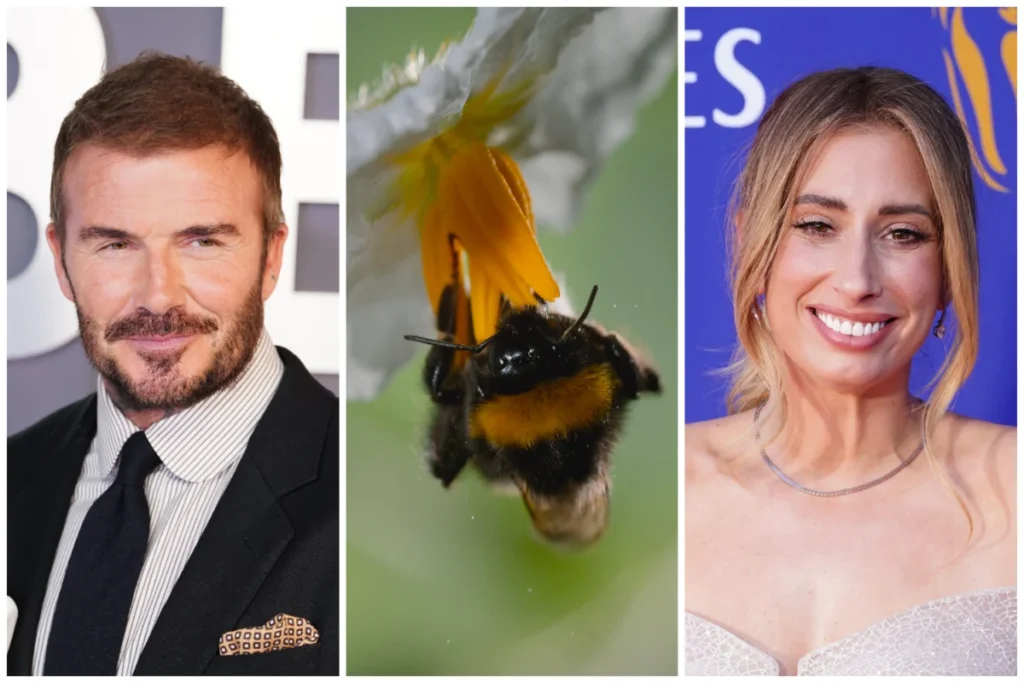

Wildlife filmmaker Bertie Gregory has issued a cautionary statement regarding the burgeoning celebrity-led beekeeping trend, suggesting that what is widely perceived as a beneficial environmental endeavour may, in fact, be doing more harm than good to vital bee populations. Gregory, a seasoned documentarian renowned for his work with National Geographic, contends that the well-intentioned enthusiasm for "saving the bees" has been significantly misunderstood, particularly concerning the distinction between domesticated honeybees and the vast array of wild pollinator species.
The Unintended Consequences of Celebrity Apiculture
In recent years, a growing number of high-profile personalities have embraced beekeeping, transforming it from a niche agricultural practice into a glamorous hobby. Among the most prominent figures are former England football captain David Beckham, who took up apiculture during the Covid-19 lockdowns and now produces his own honey at his idyllic Cotswolds estate. Television presenter Stacey Solomon has also publicly shared her passion for keeping hives, alongside musicians Rod Stewart and Ed Sheeran, further cementing beekeeping’s status as a fashionable pursuit among the elite. The visible engagement of such influential figures has undoubtedly amplified public awareness of bees and their ecological importance, but Gregory, 33, argues that this spotlight might be inadvertently misdirecting conservation efforts.
"If you want to help bees, the best thing you can do is not get bees yourself, it’s instead plant more wildflowers," Gregory asserted in an interview with the Standard, while promoting his new two-part National Geographic docu-series, Secrets of the Bees. He elaborated on the crucial distinction, drawing an analogy: "You’ve got to remember that honeybees in a hive, when you sort of get them, they’re domesticated. So it’s like saying, I want to save wild birds, so to do that, I’m going to buy a load of chickens. I mean, that makes no sense at all." This statement underscores a central tenet of modern bee conservation: the focus should be on supporting native, wild pollinators rather than merely increasing the numbers of non-native, domesticated honeybees, especially in environments already under ecological stress.
"Secrets of the Bees": Unveiling a Hidden World
Gregory’s warning comes as he prepares to immerse audiences in the complex and often overlooked world of these vital insects through Secrets of the Bees. The visually striking series, the latest instalment in National Geographic’s acclaimed Secrets of franchise (following Secrets of the Penguins), is hosted and narrated by Gregory himself and executive produced by the visionary filmmaker James Cameron. It leverages pioneering macro filming technology to reveal the hidden lives of bees in extraordinary detail, promising a perspective rarely, if ever, seen before.
Filmed over an intensive period of three years, the production employed specialist probe lenses and sophisticated motion-control rigs to achieve a rare "bee’s-eye view." This technological prowess has allowed Gregory and his team to capture remarkable behaviours previously unseen by human observers. Among the groundbreaking revelations featured in the series are "broomstick" bees meticulously constructing elaborate stick fortresses, the astonishing dietary habits of "vulture bees" that feed on meat, and the surprising cognitive abilities of bumblebees, which are shown solving multi-step puzzles. Furthermore, the documentary delves into new research suggesting that bees possess individual personalities and exhibit complex decision-making capabilities, challenging long-held assumptions about insect intelligence. These insights aim to broaden public understanding beyond the archetypal image of the honeybee, showcasing the immense diversity and sophistication of the entire bee kingdom.

The Nuance of "Saving the Bees": Honeybees vs. Wild Pollinators
The popular mantra to "save the bees" has gained significant traction globally, often fueled by well-meaning campaigns and a general understanding that bees are critical to ecosystems and food production. Indeed, Gregory highlights their paramount importance, describing them as "one of the most important creatures on the planet" and noting their responsibility for around a third of the food we consume. However, the public discourse frequently conflates all bees with the European honeybee (Apis mellifera), overlooking the staggering diversity of bee species and their distinct ecological roles.
-
The Diversity of Bees: Globally, there are over 20,000 known species of bees, ranging from the familiar social honeybees to a vast array of solitary bees, bumblebees, orchid bees, sweat bees, and many more. In the UK alone, there are approximately 270 species of bees, with only one being the European honeybee. The majority are wild, native species, many of which are solitary and do not produce honey or live in large, communal hives. These wild bees are crucial pollinators for native flora and a wide array of crops.
-
The Role of Honeybees: European honeybees were introduced to many parts of the world, including the Americas, by European settlers. They are highly efficient generalist pollinators, meaning they can forage on a wide variety of plants. Their ability to be managed in hives, produce honey, and be transported for crop pollination has made them economically invaluable in agriculture. However, their domesticated status means they are effectively livestock, managed by humans for specific outputs, much like chickens are managed for eggs.
-
The Plight of Wild Pollinators: While honeybee populations, especially managed ones, are generally stable or even increasing in some areas due to human intervention, many wild bee species are facing severe declines. This decline is largely attributed to habitat loss (e.g., conversion of meadows to urban areas or monoculture farming), pesticide use (particularly neonicotinoids), climate change, and disease. Unlike honeybees, wild bees often have more specialized needs for nesting sites (e.g., bare ground, hollow stems) and specific floral resources.
-
Competition for Resources and Disease Transmission: Gregory’s primary concern centres on the ecological impact of introducing large numbers of domesticated honeybees into areas, especially urban environments, where resources are already scarce. "Particularly if you live in a city, our cities are actually full of too many beehives," he explained. A single honeybee hive can house tens of thousands of individuals, each foraging for nectar and pollen. When numerous hives are concentrated in an area, they compete directly with native wild bees, bumblebees, and other pollinators for limited food sources. This competition can put immense pressure on wild species, which may already be struggling due to habitat fragmentation and pesticide exposure. Furthermore, domesticated honeybees can act as vectors for diseases and parasites, which can then spread to vulnerable wild bee populations that lack natural immunity.
The Rise of Backyard Beekeeping: A Well-Intentioned Trend
The surge in backyard beekeeping, particularly among celebrities, is rooted in several factors. The desire to reconnect with nature, promote sustainability, and contribute positively to the environment are strong motivators. For many, producing their own honey is a tangible symbol of self-sufficiency and a deeper connection to food sources. The aesthetics of beekeeping, often portrayed in idyllic rural settings, also appeal to a broader lifestyle movement embracing natural living. During the Covid-19 lockdowns, with increased time spent at home, hobbies like beekeeping offered a fulfilling and educational pursuit, further cementing its popularity.

While the intentions are noble, the scientific community has increasingly voiced concerns aligning with Gregory’s. Conservation organizations worldwide have shifted their focus to promoting native pollinator habitats rather than solely championing honeybees. They acknowledge the vital role of honeybees in agriculture but emphasize that true biodiversity conservation requires a broader approach.
Expert Consensus and Alternative Solutions
Leading entomologists and conservationists largely agree with Gregory’s assertion that planting wildflowers and creating diverse habitats are far more effective ways to support overall bee populations than simply acquiring a beehive. Their recommendations include:
- Planting Native Wildflowers: Providing a continuous supply of nectar and pollen from native plants throughout the seasons is crucial for all pollinators. Native plants are best adapted to local conditions and provide the specific resources wild bees need.
- Creating Bee Hotels and Nesting Sites: Solitary bees, which make up the vast majority of bee species, do not live in hives. They need undisturbed bare ground, dead wood, hollow stems, or specialized "bee hotels" for nesting.
- Reducing Pesticide Use: Minimizing or eliminating the use of harmful pesticides, especially insecticides, is paramount. Encouraging organic gardening practices protects bees and other beneficial insects.
- Leaving Areas Undisturbed: Allowing patches of gardens or land to grow wild, with uncut grass and fallen leaves, provides critical shelter and nesting materials for many species.
- Educating the Public: Shifting the narrative from "saving honeybees" to "supporting all pollinators" is a key educational goal for many environmental groups. This involves highlighting the incredible diversity of bees and their unique needs.
While responsible beekeeping practices, such as ensuring hives are healthy and well-managed, are important for existing beekeepers, the general public keen to help should prioritize habitat creation. Beekeeping associations, while supporting their members, also increasingly acknowledge the need to consider the impact of hives on local ecosystems and encourage responsible placement and density of hives.
Behind the Lens: Gregory’s Personal Encounters and Filming Challenges
The production of Secrets of the Bees was not without its personal challenges for Gregory. He recounted a particularly memorable incident during filming where he discovered, to his discomfort, a strong allergic reaction to bee stings. "My face sort of ballooned and I couldn’t see out of my right eye for a few days," he revealed, highlighting the very real risks involved in getting up close and personal with the natural world, even for a seasoned wildlife expert. This personal anecdote underscores the dedication and proximity required to capture the intimate footage seen in the series.
Beyond personal risks, the technological demands of the documentary were immense. The innovative use of specialist probe lenses and motion-control rigs represents a significant leap in natural history filmmaking. These tools allowed the crew to enter the bees’ miniature world, capturing behaviours and interactions that would be impossible with traditional cameras. This commitment to pushing the boundaries of filming technology ensures that audiences receive an unprecedented view, fostering a deeper appreciation and understanding of these often-underestimated creatures.
The Future of Wildlife Documentaries in an AI Era

Gregory also weighed in on the burgeoning role of artificial intelligence in content creation, a topic that recently touched his own work. Clips from his Disney+ documentary Cheetahs Up Close were mistakenly identified as AI-generated online, a testament to the hyper-realistic quality of his footage. Rather than being offended, Gregory expressed pride in the misidentification. "The reason people like nature documentaries is because they are real and a documentary," he stated. "A lot of the videos… people have been saying are AI. So yeah, I take great pride when I put a video out and someone says it’s AI, I’m like, thanks, that’s really kind."
He firmly believes in the enduring power of authentic natural history content. "Real life nature, when it’s at its best, is so much better than anything AI can generate," Gregory affirmed. This stance reflects a broader sentiment within the documentary community about the irreplaceable value of genuine, on-location filming and the ethical imperative to present factual, unmanipulated representations of the natural world. Gregory hinted that further instalments in the Secrets of series are already in development, suggesting a continued commitment to exploring the planet’s hidden wonders with unparalleled authenticity.
A Broader Conservation Message
Despite spending his career filming some of the world’s most formidable and dangerous animals, Gregory concluded with a wry observation about the species he remains most wary of. "The most dangerous animal on the planet, humans," he said. This profound statement encapsulates a core theme of much contemporary wildlife filmmaking: the undeniable and often detrimental impact of human activity on the planet’s delicate ecosystems. His warning about celebrity beekeeping is not an indictment of individual intentions but a call for a more informed and ecologically sound approach to conservation, urging a shift from symbolic gestures to truly impactful actions that support the intricate web of life.
Secrets of the Bees premieres on National Geographic WILD at 7 pm on April 1st and will be available to stream on Disney+ the same day. The series promises not only breathtaking visuals and scientific discoveries but also a timely message that encourages a re-evaluation of how best to protect our planet’s most vital, yet often misunderstood, pollinators. Engaging with the documentary offers an opportunity for viewers to deepen their understanding of bee ecology and consider how their individual actions can contribute most effectively to genuine conservation.