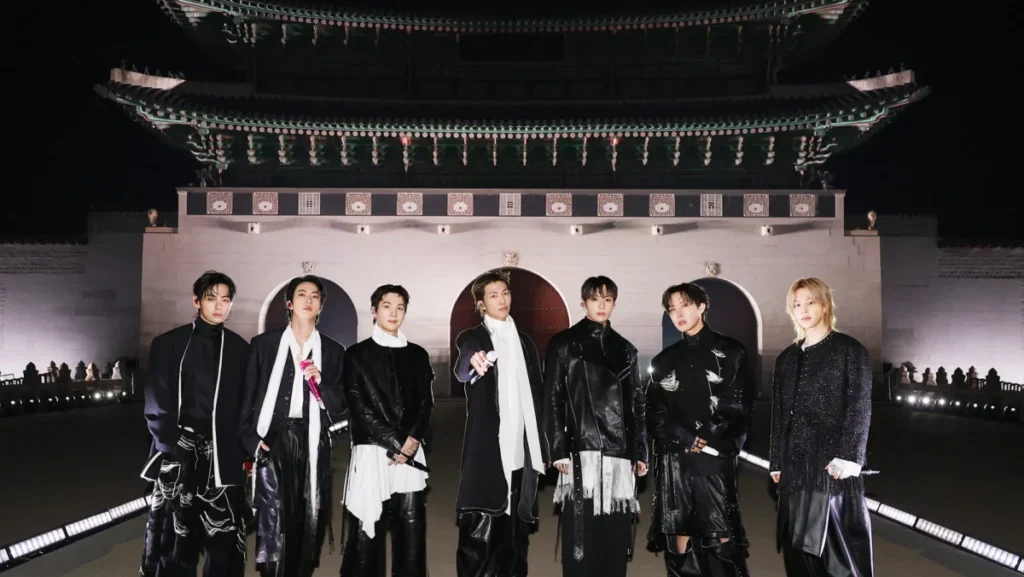

In a breathtaking spectacle that resonated across the globe, K-pop titans BTS made their highly anticipated return to the stage on Saturday, October 28, 2023, transforming Seoul’s revered Gwanghwamun Square into an electrifying arena for their "BTS The Comeback Live | Arirang" concert. The event, broadcast live worldwide on Netflix, marked the septet’s first full group live performance in over three years, celebrating the release of their fifth studio album, Arirang, and heralding a new era for the groundbreaking group. As leader RM passionately declared, "I need the whole stadium to jump. Put your phone down, let’s get all the fun," encapsulating the fervent energy that permeated the historic landmark, a site that had never before hosted a pop concert of this magnitude.
The Grand Return: A Cultural Spectacle in Seoul
The evening commenced with a sweeping, cinematic shot of Seoul’s majestic Joseon-era Gyeongbokgung Palace, a poignant backdrop that immediately underscored the profound cultural significance of the event. As the camera panned, the seven members of BTS – RM, Jin, Suga, J-hope, Jimin, V, and Jungkook – emerged, standing poised before the ancient edifice. A collective roar erupted from the gathered crowd as RM, the group’s charismatic leader, greeted them with a simple yet powerful declaration: "Hello, Seoul. We’re back." This moment not only signified a musical comeback but a cultural homecoming, with BTS firmly re-establishing their connection to their heritage after a period of individual pursuits and mandatory military service.
The choice of Gwanghwamun Square, the main gate and historic entryway to Gyeongbokgung Palace, was a deliberate and deeply symbolic one. Known for its profound historical and political significance, the square had previously been deemed unsuitable for pop concerts. However, the sheer cultural weight and national pride associated with BTS prompted an unprecedented collaboration between the group’s label, BigHit Music, Netflix, and the city of Seoul. While 22,000 coveted tickets were raffled off for a cordoned seating area, an astounding 260,000 people were expected to converge on the square and its surrounding streets, transforming the heart of the capital into a vibrant sea of ARMY, BTS’s dedicated global fanbase. The global live stream, a first for Netflix in the realm of standalone concerts, ensured that millions more witnessed the historic event from their homes, further amplifying the group’s unparalleled reach.
"Arirang": An Album Rooted in Korean Identity
The "Comeback Live" concert served as the official launchpad for BTS’s highly anticipated fifth studio album, Arirang, their first collective release in nearly four years. The album title itself is a profound homage to the eponymous Korean folk song, often considered the unofficial anthem of Korea and a symbol of national identity. This ancient melody holds historical weight as the first Korean song recorded by Korean men with American ethnologist Alice Fletcher in the U.S. in 1896, representing an early cultural exchange.
The album’s thematic core, a reflection on the group’s identity and deep roots, was evident from the concert’s opening number. The show kicked off with "Body to Body," a new track that seamlessly wove motifs from the traditional "Arirang" folk song into its contemporary sound. The performance culminated with a group of performers in traditional Korean hanbok, playing the timeless "Arirang," creating a powerful fusion of ancient heritage and modern artistry. Another striking track on the album, "No. 29," is a minute-and-38-second recording of the resonant tolling of the Divine Bell of King Seongdeok, designated as South Korea’s National Treasure No. 29. This inclusion is a clear, resounding statement: despite their global superstardom, BTS remains profoundly proud of their Korean heritage, continually striving to share and celebrate it with their vast international audience. Arirang sends an unequivocal message – BTS is, and always will be, a Korean band, even as their influence spans continents.
A Setlist Spanning Eras: From New Tracks to Global Hits
Following the powerful opening, BTS wasted no time in diving into their new material, performing "Hooligan" and "2.0" to a rapturous reception. The members then took a moment to formally reintroduce themselves, with Jimin, 30, expressing heartfelt emotion: "We are finally here, and we are seeing you again. The fact that I’m speaking here, I am so moved." The setlist strategically blended these fresh tracks with some of their most iconic non-Arirang hits, ensuring a dynamic and engaging experience for both long-time fans and new listeners. The crowd erupted as familiar anthems like the infectious "Butter" and the hard-hitting "MIC Drop" filled the square, demonstrating the group’s incredible versatility and enduring appeal.
The concert then transitioned back to the new album’s offerings, showcasing "Aliens," "FYA," their latest single "Swim," "Like Animals," and "Normal." Each performance was met with fervent cheers, highlighting the successful evolution of their sound while retaining the signature energy that has defined their career. After delivering a powerful rendition of "Normal," J-hope, 32, energized the crowd with the declaration, "BTS 2.0 is just getting started," hinting at a revitalized future for the group. Jin, the eldest member at 33, added a touching sentiment, expressing gratitude to their loyal fanbase: "Thank you for waiting, ARMY." These statements resonated deeply with fans, signaling not just a comeback, but a rebirth.
RM’s Resilient Performance Amidst Injury
A significant detail of the comeback concert was the courageous participation of leader RM, who performed despite sustaining an ankle injury during rehearsals. BigHit Music had announced on Friday, the day before the concert, that RM had suffered a "serious-sounding" ankle injury while practicing with his bandmates on Thursday. The label’s statement clarified, "Although there will be limitations to his performance, RM will participate on stage to the extent possible and hopes to connect with ARMY and the audience. As many have waited a long time for this performance, he will do his utmost to deliver his best."
True to his word, RM was a strong presence throughout the show, though often seen using a stool at the front of the stage as his base. His determination to be on stage with his members and connect with ARMY, despite the physical discomfort, exemplified the group’s unwavering dedication. His resilience was met with an outpouring of support and admiration from fans worldwide, further cementing the deep bond between BTS and their audience. The other members were visibly supportive, often positioning themselves around him, a testament to their strong camaraderie and unity.
The End of an Era, The Dawn of "BTS 2.0"
The "BTS The Comeback Live | Arirang" concert marked the culmination of a period of significant change and individual growth for the members. For nearly four years, the group had been on a semi-hiatus, during which members focused on releasing critically acclaimed solo music and fulfilling South Korea’s mandatory military service. Under South Korean law, all able-bodied men are required to serve approximately 18-21 months in the military by the age of 28, though exemptions and deferments can be granted for exceptional cases. For globally recognized K-pop idols, this requirement presents unique challenges, often leading to temporary group disbandments or pauses.
The phased enlistment and discharge of BTS members over the past year had kept ARMY in a state of eager anticipation. Each member’s return was met with excitement, but the full group comeback had been the ultimate dream. This period of individual exploration and national service has undoubtedly shaped their perspectives and artistic direction, leading to the "BTS 2.0" era proclaimed by J-hope. It represents a mature, refined version of the group, enriched by their personal journeys and ready to conquer new heights together. Their return is not merely a resumption of activity but a powerful reassertion of their collective strength and artistic vision, now infused with deeper personal experiences.
Netflix’s Strategic Leap into Live Global Events
The decision to broadcast "BTS The Comeback Live | Arirang" as Netflix’s first-ever live stream of a standalone concert underscores a significant strategic pivot for the streaming giant. Brandon Riegg, Netflix’s vice president of nonfiction sports and series, emphasized the importance of such events at a press briefing ahead of the show. "It was very clear from the start that this opportunity was one we could not pass up," Riegg stated. "We view these live events as an opportunity to reach fans and members around the world in a way that is becoming increasingly tough to find: singular events that really pull people together. It just doesn’t get any bigger than BTS when speaking about the live stream. I would venture to guess this might be the biggest thing this year that we see on Netflix in terms of our live ambition."
The production scale for this unprecedented event was monumental. Helmed by live television performance pro Hamish Hamilton, renowned for directing multiple Super Bowl halftime shows, including Bad Bunny’s this year, the concert utilized a jaw-dropping 23-camera setup to capture every angle of the live experience for a global audience. Hamilton’s vision was clear: "Every decision we have made in terms of camera approach, stage design and production has been built around one question: how do we make the person watching at home feel like they are standing in that square? There are big sweeping moments that convey the full scale of what is happening in Seoul, and then there are moments of real intimacy where you are right there with the band. The millions watching around the world are every bit as much a part of this night as the people on the ground in Seoul." This commitment to immersive viewing highlights Netflix’s ambition to redefine the live concert experience for its subscribers globally.
Seoul’s Unprecedented Support: A City Transformed
Staging a concert of this magnitude in a busy public square, rather than a controlled stadium environment, presented immense logistical challenges. Jonathan Mussman, Netflix’s vice president of production for nonfiction and live programming, likened the undertaking to a "military takeover." "When you do this in a stadium, you can completely control the environment and you can take your time setting up," Mussman explained during a press walkthrough. "We’re really pushing the boundaries of what’s possible in the live concert broadcast world."
To pull off Saturday night’s show, Netflix and BigHit Music employed over 1,000 local and international production professionals, excluding security personnel – a stark contrast to the few hundred crew typically required for an arena show, like Harry Styles’ recent Netflix concert. Mussman aptly summarized the effort: "It really takes an army of production veterans – plus BTS Army, of course – to make this happen."
Crucially, the city of Seoul extended its full, unequivocal support to its national pop heroes. Gwanghwamun Square is famously encircled by enormous, skyscraper-sized video billboards. In almost any other global city, gaining control of these privately held screens for a single event would be an impossibility. However, Mussman revealed that Hybe (BigHit Music’s parent company) and city officials successfully arranged for these colossal LED panels to be integrated into the concert experience. An astonishing 50.6 million pixels worth of LED screens were lit up with original content throughout the show, creating an unparalleled visual spectacle that merged the urban landscape with the stage performance. "If we were in Times Square, that’s totally impossible," Mussman remarked. "We’ve been secretly testing the billboards late at night with tears coming into our eyes, because of how unique and impressive it is." This unprecedented collaboration underscored not only BTS’s immense cultural capital but also the significant economic and soft power they wield for South Korea.
Global Trajectory: U.S. Performances and Beyond
The Gwanghwamun concert is merely the first salvo in BTS’s global re-emergence. Following their monumental Seoul comeback, the group is slated to make their first U.S. performance in nearly four years. This coming week, they are scheduled to appear at a high-profile Spotify event on Monday, followed by a highly anticipated return to U.S. television. Fans can look forward to BTS gracing The Tonight Show with Jimmy Fallon for two consecutive nights, promising intimate interviews and captivating performances.
These engagements signify BTS’s unwavering commitment to their global audience and their continued role as cultural ambassadors for South Korea. Their return to the international stage, marked by an album deeply rooted in Korean identity and a performance set against one of Seoul’s most historic backdrops, sends a powerful message: BTS is back, stronger, more mature, and more dedicated than ever to connecting cultures through their unique brand of music and artistry. The "BTS 2.0" era promises not only continued musical innovation but also an amplified cultural impact, solidifying their legacy as one of the most influential groups in contemporary music history.