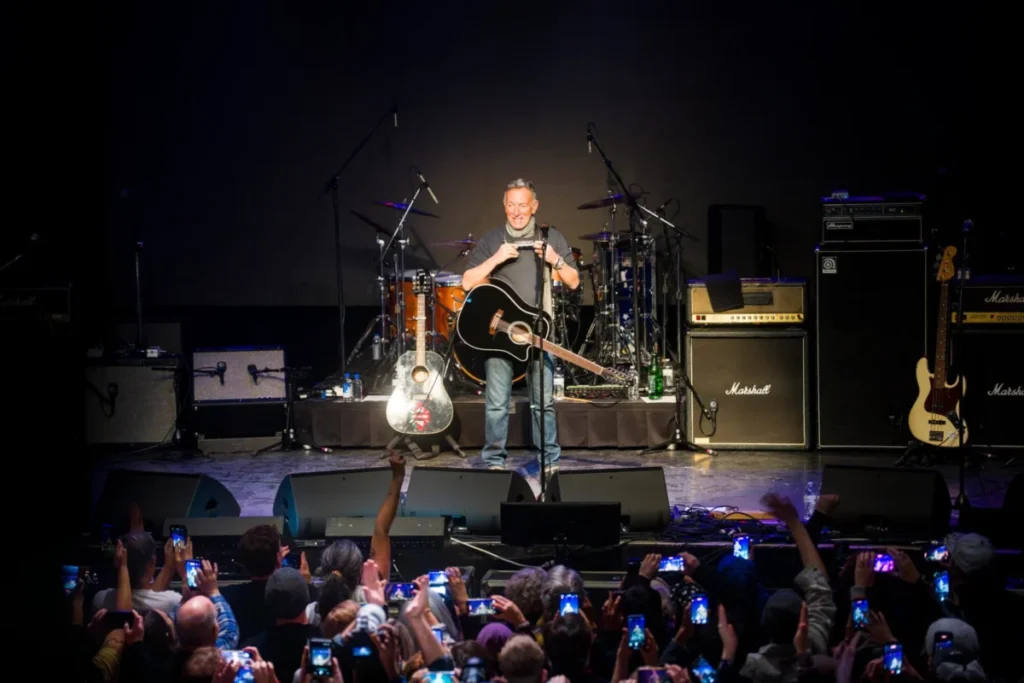

Bruce Springsteen kicked off his highly anticipated "Land of Hopes and Dreams" American Tour at the Target Center in Minneapolis, a city currently grappling with significant social and political tensions. The legendary artist, known for his potent storytelling and unwavering commitment to social justice, has become an increasingly vocal critic of the Trump administration’s immigration policies, particularly in the wake of recent events in Minnesota. The tour’s opening night in Minneapolis was not just a concert; it was a powerful statement of solidarity and a continuation of Springsteen’s vocal advocacy.
A City Under Scrutiny
The backdrop for Springsteen’s tour launch is marked by a series of tragic events that have deeply affected Minneapolis. In January 2026, Immigration and Customs Enforcement (ICE) agents were involved in two separate incidents resulting in the deaths of U.S. citizens, Renée Good and Alex Pretti, within the city limits. These killings, which occurred just days apart, ignited widespread outrage and intense scrutiny of ICE operations and the broader immigration policies enforced by the Trump administration.
The federal government’s swift response was to label both Good and Pretti as domestic terrorists, a designation that lacked substantiation according to eyewitness accounts and available video footage. This narrative clashed sharply with the evidence on the ground, fueling public distrust and amplifying concerns about civil liberties and due process. The administration’s stance, heavily promoted by figures like Stephen Miller, was met with fierce resistance from local communities and civil rights advocates.
Springsteen’s Musical Response: "Streets of Minneapolis"
In direct response to these events, Bruce Springsteen penned and released a searing folk-rock protest anthem titled "Streets of Minneapolis." The song, which emerged just days after Alex Pretti’s killing, directly addresses the controversial circumstances surrounding the deaths. Springsteen’s lyrics offer a poignant counter-narrative to the official government account, highlighting the stark contrast between the administration’s claims and the lived experiences of the community.
"Their claim was self-defense, sir, just don’t believe your eyes," Springsteen sings, a powerful indictment of the official narrative and a direct appeal to the public’s own perception of reality. The song further denounces the alleged disinformation campaign, explicitly referencing figures like Stephen Miller and Kristi Noem, and accusing them of propagating "dirty lies." This direct engagement with contemporary political issues through his music solidifies Springsteen’s reputation as an artist deeply connected to the pulse of the nation and its struggles.
A History of Activism and Advocacy
The live debut of "Streets of Minneapolis" took place on January 30, 2026, at the iconic First Avenue venue in Minneapolis. This performance was part of a benefit concert organized by Tom Morello, a prominent musician and activist, to support the families of Alex Pretti and Renée Good. Good, a mother of three, and Pretti, both U.S. citizens, became symbols of the broader concerns surrounding the ICE surge. Springsteen’s decision to debut his protest song at such a meaningful event underscored his commitment to the cause and his support for the affected families.
He further amplified his message on March 28, 2026, at the "No Kings Rally" held in St. Paul, Minnesota, directly in front of the Minnesota State Capitol. This rally served as a focal point for resistance against the policies that led to the January incidents, and Springsteen’s presence and performance provided a national platform for local grievances.
The "Land of Hopes and Dreams" Tour: A Political Overture
The "Land of Hopes and Dreams" American Tour’s opening night at the Target Center on March 31, 2026, was imbued with a palpable sense of political urgency. For an artist of Springsteen’s caliber, with a vast catalog of Billboard chart-toppers, radio staples, and beloved deep cuts, the selection of a setlist is always a significant undertaking. However, given the prevailing atmosphere in Minnesota and the nation, it was widely anticipated that the tour’s opening night would lean heavily into politically charged material.
This expectation proved accurate. While the setlist was indeed infused with a heightened political consciousness, it also delivered the crowd-pleasing anthems and unexpected moments that have defined Springsteen’s legendary live performances for decades. The concert served as a powerful platform, blending his iconic hits with new material that directly addressed the contemporary challenges faced by the nation.
Setlist Highlights and Analysis
The opening night’s setlist, as reported, featured a deliberate selection of songs that resonated with the political climate. Beyond the inclusion of "Streets of Minneapolis," which has become an anthem for the Minnesota resistance, Springsteen and the E Street Band likely wove a tapestry of songs that speak to themes of hope, resilience, justice, and the enduring American spirit in the face of adversity.
While specific song titles beyond "Streets of Minneapolis" are not detailed in the initial report, it is reasonable to infer that the setlist would have included staples such as "Born to Run," "The Rising," "Thunder Road," and "Dancing in the Dark" – songs that, while not explicitly political, often carry subtextual messages of hope and perseverance. The inclusion of lesser-known but thematically relevant tracks from albums like The Ghost of Tom Joad or Wrecking Ball would also be a logical extension of his advocacy.
The analysis of such a setlist typically considers the flow and narrative arc of the performance. A politically charged opening night would likely build momentum, perhaps starting with more upbeat, unifying songs before delving into the more pointed social commentary of tracks like "Streets of Minneapolis," and then culminating in anthems of hope and collective action. The E Street Band’s powerful musicality, combined with Springsteen’s charismatic stage presence, would have amplified the emotional impact of each song.
Broader Implications and Future Outlook
Bruce Springsteen’s decision to launch his American tour in Minneapolis, and to prominently feature his protest song, sends a significant message. It signals a continued willingness from major artists to engage with pressing social and political issues, using their platforms to raise awareness and foster dialogue. The "Land of Hopes and Dreams" tour, therefore, is not merely a musical event but a cultural and political statement.
The tour’s success will likely be measured not only by ticket sales but also by its impact on public discourse. By consistently addressing themes of justice and human rights, Springsteen contributes to a broader conversation about the direction of the nation. The tour’s trajectory across America will undoubtedly see further performances of "Streets of Minneapolis" and other songs that speak to the hopes and struggles of diverse communities.
Furthermore, the events in Minneapolis serve as a stark reminder of the ongoing debates surrounding immigration, law enforcement, and civil liberties in the United States. Springsteen’s engagement offers a counterpoint to official narratives and provides a voice for those who feel marginalized or unheard. The "Land of Hopes and Dreams" tour, by beginning in a city at the heart of these contentious issues, sets a tone of engaged artistry and unwavering commitment to social justice for the journey ahead. The tour’s name itself suggests a hopeful, yet perhaps aspirational, vision for America, one that Springsteen continues to champion through his music and his actions.