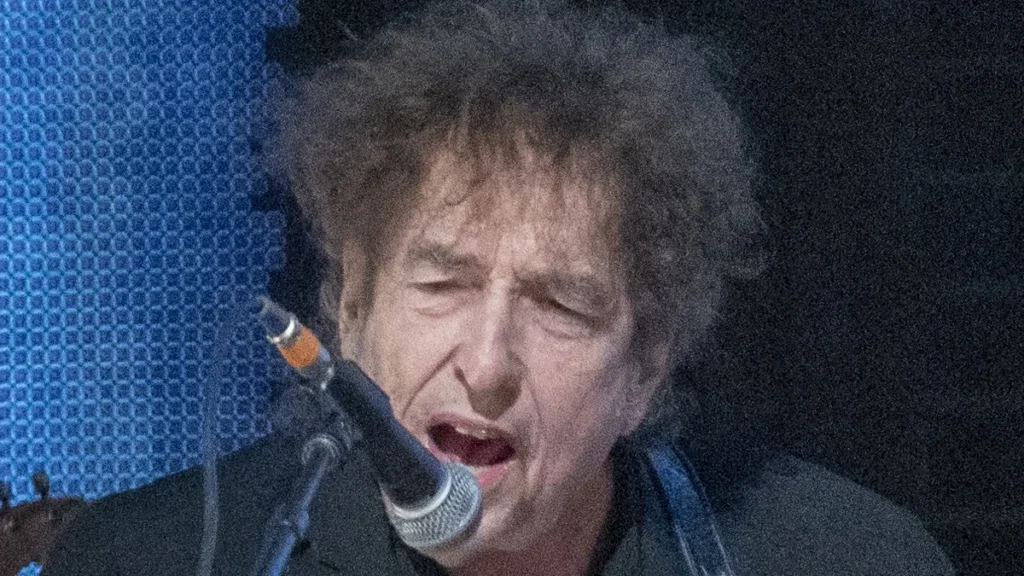

The recent launch of Bob Dylan’s Patreon account, featuring a new project titled “Lectures from the Grave,” has ignited considerable discussion within both the music and technology sectors, largely due to its unconventional embrace of artificial intelligence (AI) in creative content generation. Introduced via an Instagram Story on a recent Sunday, the initiative offers subscribers, for a monthly fee of $5, access to what is described as “a living archive of lectures from the grave, letters never sent, and original short stories curated by Bob Dylan.” However, a critical examination of the initial offerings reveals a venture fraught with technical inconsistencies and a perceived lack of artistic depth, inadvertently serving as a cautionary tale for the burgeoning field of AI-assisted creativity.
The Genesis of "Lectures from the Grave"
The project’s announcement was met with a blend of curiosity and apprehension. Bob Dylan, an artist whose career spans over six decades and whose lyrical prowess earned him the Nobel Prize in Literature in 2016, has consistently pushed boundaries and reinvented his artistic expression. His exploration of historical figures and themes is not new, but his apparent delegation of creative heavy lifting to AI systems marks a significant departure. The term "curated" in the project’s description is pivotal, as Dylan himself is not claiming authorship of the content. Instead, the works are presented under fictitious pen names such as Herbert Foster and Marty Lombard, with audio monologues performed by AI-generated voices. This setup immediately raised questions regarding authenticity, artistic intent, and the very definition of "curation" in the digital age.
The initial release on the Patreon platform comprises six distinct pieces: three audio monologues embodying historical figures—Aaron Burr, Wild Bill Hickok, and the Confederate outlaw Frank James; a fictional letter purportedly from Mark Twain to Rudolph Valentino; a short story titled "Bull Rider"; and, somewhat anachronistically, an embedded YouTube video of Mahalia Jackson performing on The Ed Sullivan Show. The eclectic mix of content, coupled with the explicit use of AI, positions "Lectures from the Grave" as a bold, if ultimately flawed, experiment at the intersection of legendary artistry and emerging technology.
A Deep Dive into the Content and Its Flaws
The critical reception to "Lectures from the Grave" has largely been one of disappointment, particularly concerning the execution of its AI-generated elements. The project, advertised with the provocative tagline "the dead speak!", ironically appears to underscore the limitations rather than the possibilities of AI in profound artistic endeavors.
AI Voice Performances: A Cacophony of Inconsistency
Three of the five reviewed pieces are audio monologues, and their primary failing lies in the jarring inconsistency of their AI-generated voices. The voice assigned to Aaron Burr, for instance, exhibits an unpredictable accent shift, veering from what sounds like Alabama to Texas, rarely settling on the New York or New Jersey inflections historically associated with the real Burr. This erratic vocal delivery often defaults to a generic Southern drawl, particularly when encountering place names like "Richmond, Virginia," disrupting any sense of historical verisimilitude. A particularly notable instance describes Burr sighing "Ahhh, Hamilton," delivered with a tone so out of context it suggests a technical glitch rather than emotional nuance.
Similarly, the portrayal of Wild Bill Hickok suffers from a vocal identity crisis. Despite the narrative establishing his British, Irish, and Scots heritage, the AI voice unexpectedly drifts towards a mid-Atlantic accent. Frank James, born and raised in Clay County, Missouri, is given a vaguely British voice, conjuring images less of a Confederate guerrilla and more of an Errol Flynn rendition of Robin Hood. These pervasive accent inconsistencies not only undermine the historical credibility of the portrayals but also highlight a fundamental challenge for current AI voice synthesis: achieving and maintaining nuanced, historically accurate, and geographically consistent vocal characterizations. The implication is that these audio tracks may not have undergone rigorous human review or quality control.
Scriptwriting: A Superficial Echo of Depth
Beyond the vocal shortcomings, the underlying scripts for these monologues also fall short of the nuanced storytelling expected from a project associated with Bob Dylan. Wild Bill Hickok’s narrative, for example, is criticized for meandering over its initial 20 minutes, frequently circling back to childhood anecdotes as if the AI had lost its narrative thread or failed to progress coherently. Frank James’s monologue, while touching on themes of war, the Northfield raid, love, honor, and regret, reads more like a thematic checklist. It hits every expected beat without truly earning the emotional weight or narrative development required to make these profound subjects resonate. The scripts tackle themes worthy of Dylan’s own lyrical depth—fame and pride for Burr, risk calculation for Wild Bill, regret for Frank James—but these potential profundities are consistently undercut by the structural disarray and superficiality of the AI’s delivery.
The Mark Twain Letter: A Glimmer of Potential, Yet Unfulfilled
The fictional letter from Mark Twain to Rudolph Valentino stands out as the strongest entry in the collection. The pastiche of Twain’s style is largely successful, capturing his characteristic self-deprecating wit, his penchant for long, winding sentences that culminate in a punchline, and his gentle intellectual snobbery. The prose genuinely evokes a plausible Twain. However, even this comparatively successful piece reveals the project’s overarching flaw. The letter concludes with a facsimile of Twain’s signature, a gesture toward authenticity that is immediately contradicted by the lack of any further commitment to historical verisimilitude. Why include a fake signature but not present the document as an actual letter from the period, perhaps in a period-appropriate PDF format? This "half-committed" approach, as the original review notes, symbolizes the entire project: a promising gesture toward ambition that ultimately falls short due to a lack of thoroughness and dedication to craft.
"Bull Rider": A Quest for Profundity That Rings Hollow
The short story "Bull Rider," depicting a drifter and a bull named Lazarus at a Texas rodeo, attempts to imbue its narrative with profound meaning but struggles to achieve it convincingly. While the name "Lazarus" for a bull offers a compelling symbolic layer, the prose itself is criticized for "gasping for profundity on every line." Similes feel forced and overwrought: trucks "scream past like prophets who had somewhere better to be," and women move "like music." The narrative evokes a pastiche of classic American literature, specifically drawing comparisons to an Old Man and the Sea cosplay set in the American Southwest. Philosophical asides, such as "losing isn’t an event, it’s a lifestyle," are delivered with the weight of "underbaked fortune cookies in cowboy hats," failing to land with genuine insight or impact. This reflects a common challenge for AI in creative writing: mimicking the form of profound language without grasping the substance or context that gives it true meaning.
Broader Implications: An Unintended AI Ethics Lesson
"Lectures from the Grave" emerges as a potent, albeit accidental, lesson on the current state and ethical considerations of AI in creative endeavors. The project’s critical reception underscores several key points for the creative industries:
Authenticity vs. Automation: Dylan’s legacy is built on authenticity, raw emotion, and deeply personal storytelling. The AI-generated content, by contrast, highlights the chasm between mechanical text generation and genuine artistic expression. It raises questions about how far an artist can delegate creative work to AI before the essence of their unique voice is diluted or lost. For many, the value of art lies in its human origin, its reflection of human experience, and the meticulous craft applied by an individual.
The Role of the "Curator": The project forces a re-evaluation of what "curated by Bob Dylan" truly means. If curation involves selection, arrangement, and presentation with a discerning eye and a deep understanding of the material, then the inconsistencies and superficiality of "Lectures from the Grave" suggest a curation process that lacked the rigor typically associated with Dylan’s artistic output. It begs the question of whether Dylan’s involvement was merely titular, or if he genuinely engaged with the AI output to a degree that one would expect from a Nobel laureate.
Economic Models and Perceived Value: The decision to monetize this AI-generated content through a $5 monthly Patreon subscription also invites scrutiny. In an era where AI tools are becoming increasingly accessible, the perceived value of AI-generated content—even when associated with a legendary name—is called into question if the quality does not meet audience expectations. This could influence how other artists and content creators approach monetizing AI-assisted projects, emphasizing the need for higher quality and greater human intervention to justify subscription fees.
A Warning for the Creative Industry: "Lectures from the Grave" serves as a stark reminder that while AI can generate vast quantities of text and audio, the critical component of compelling creation remains human oversight, meticulous refinement, and a profound commitment to quality. The original review succinctly summarizes this: "the hardest part of making something isn’t generating the words. It’s caring enough to fix them." This sentiment resonates across the creative landscape, from music production to film screenwriting and visual arts. It suggests that AI is currently best utilized as a tool for assistance rather than a substitute for genuine artistic effort and human discernment.
Fan and Critical Reception (Inferred): While specific fan statements are not provided, the critical tone of the review suggests a significant disconnect between the expectations set by Bob Dylan’s reputation and the reality of the "Lectures from the Grave" content. For long-time admirers of Dylan’s profound lyricism and storytelling, the perceived superficiality and technical flaws of the AI-generated narratives would likely be a source of disappointment, potentially sparking debates within fan communities about artistic integrity and the appropriate use of technology. Critics, too, would likely view this as a missed opportunity or a misstep, particularly given Dylan’s literary accolades.
Conclusion: The Indispensable Human Element
Bob Dylan’s "Lectures from the Grave" stands as a peculiar and, by many accounts, underwhelming entry in the growing discourse surrounding artificial intelligence and its role in creative production. While it may have aimed to explore new frontiers in digital storytelling, its execution inadvertently highlights the current limitations of AI in generating truly compelling, nuanced, and historically accurate artistic content without substantial human intervention. The project’s flaws—from inconsistent AI voices to meandering narratives and superficial prose—underscore the indispensable value of human intent, meticulous craftsmanship, and an unwavering commitment to quality in the artistic process. In an age where AI promises to democratize content creation, Dylan’s experiment serves as a potent, if accidental, warning: the power to generate words is not synonymous with the ability to create art that truly resonates and endures. The ultimate lesson from "Lectures from the Grave" is that, for now, the soul of creativity still firmly resides in the hands—and the heart—of the human artist.