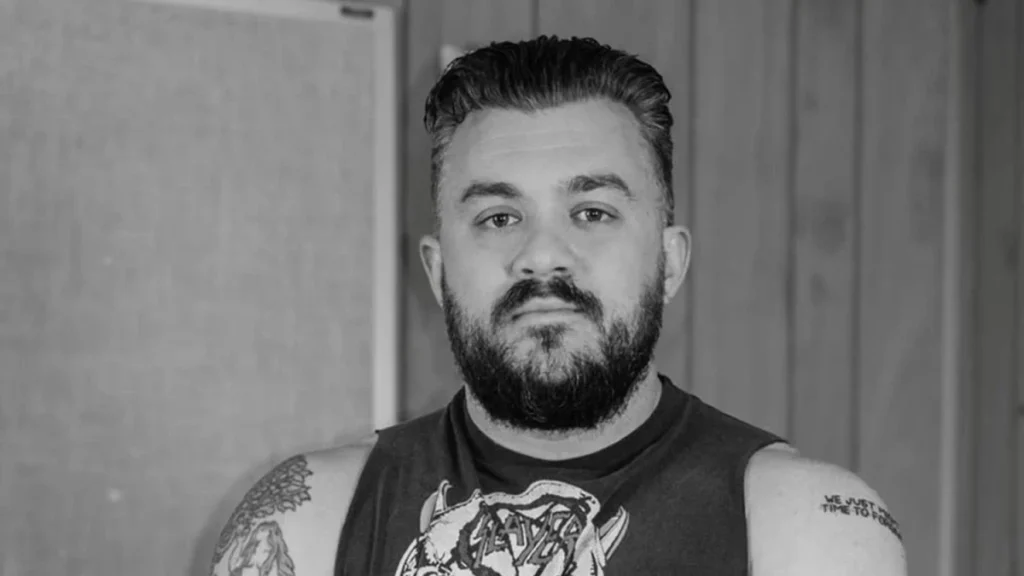

The music world is mourning the untimely passing of Bo Lueders, a seminal figure in the contemporary hardcore scene, who died by suicide at the age of 38. Lueders was widely recognized as the co-founding guitarist of the influential Chicago-based band Harm’s Way and as the insightful co-host of the highly respected hardcore music interview podcast, HardLore. His death marks a profound loss for a community he helped shape through his uncompromising musical vision and his dedication to documenting its history.
Official Confirmation and Community Response
The news of Lueders’ passing was confirmed through a joint statement released by both Harm’s Way and the HardLore podcast. The statement, shared across their respective official channels, conveyed the immense grief felt by those closest to him: "It is with heavy, broken hearts that we share that our beloved Bo Lueders has passed away." The announcement went on to eulogize Lueders’ character and impact, highlighting his "unwavering empathy and compassion for his friends & family and his magnetic, inimitable presence on & off the stage." The statement also included a plea for privacy during this exceptionally difficult time, underscoring the gravity of the loss for his loved ones and colleagues. In a crucial addition, the statement directly addressed the sensitive nature of his passing by providing vital mental health resources, specifically mentioning the Suicide and Crisis Lifeline, 988, and emphasizing that "We’re not in this alone." This immediate call to action within the announcement reflects a growing awareness within the music industry regarding mental health struggles and the critical importance of accessible support systems.
The immediate aftermath of the announcement saw an outpouring of grief and tribute from across the global hardcore and heavy music communities. Fellow musicians, industry professionals, fans, and friends took to social media to share memories, express condolences, and acknowledge Lueders’ significant contributions. These reactions collectively painted a picture of a respected artist, a thoughtful interviewer, and a genuinely compassionate individual whose influence extended far beyond his musical output. The sheer volume and sincerity of these tributes underscored the deep personal and professional connections Lueders forged throughout his career.
Bo Lueders’ Enduring Legacy with Harm’s Way
Bo Lueders co-founded Harm’s Way in Chicago in 2006, a period when the hardcore landscape was evolving, embracing heavier and more aggressive sounds. From its inception, Harm’s Way distinguished itself by forging a potent and often brutal fusion of hardcore punk’s intensity with the crushing weight of death metal and the cold, mechanistic textures of industrial music. This distinctive sonic identity set them apart, establishing them as pioneers in a subgenre often referred to as "metallic hardcore" or "beatdown hardcore," though their sound consistently pushed beyond simple categorization.
Over nearly two decades, Lueders, alongside his bandmates, steered Harm’s Way through a prolific career, releasing five full-length studio albums and five EPs. Their discography represents a steady evolution, from the raw aggression of early releases like Isolation (2011) to the more refined yet equally devastating Rust (2015). The band garnered significant critical acclaim with Posthuman (2018), an album that showcased their mastery of intricate song structures and punishing dynamics, earning them a wider audience and solidifying their status as a formidable force. Their most recent effort, Common Suffering (2023), continued this trajectory, demonstrating an unflinching commitment to their heavy sound while exploring themes of societal decay and personal struggle.
Lueders’ guitar work was integral to Harm’s Way’s signature sound. His riffs were characterized by their immense power, often employing downtuned, chugging rhythms that provided the backbone for the band’s relentless aggression. He was a master of crafting impactful breakdowns—moments of rhythmic deceleration and intensified heaviness that are a hallmark of hardcore—but always with a nuanced approach that prevented them from becoming monotonous. Beyond the sheer force, his contributions also included weaving in dissonant harmonies and industrial-tinged soundscapes that added layers of atmosphere and bleakness, elevating Harm’s Way beyond mere brute force into a realm of sophisticated sonic brutality. His creative vision was a cornerstone of the band’s identity, making them a standard-bearer for a new generation of heavy music.
The Impact of the HardLore Podcast
In addition to his musical endeavors, Bo Lueders extended his influence into the realm of media as the co-founder and co-host of the HardLore podcast. Launched in 2022 alongside Colin Young, the vocalist of the band Twitching Tongues, HardLore quickly became an essential listen for enthusiasts of hardcore, punk, and adjacent heavy music genres. The podcast’s premise was deceptively simple: long-form, in-depth interviews with figures who have shaped the hardcore scene over decades.
Lueders and Young brought a unique blend of informed perspective, genuine fandom, and conversational ease to their interviews. Their rapport allowed guests to open up, sharing anecdotes, historical context, and personal insights that often went beyond typical music journalism. Lueders, with his deep understanding of the genre’s history and his own experiences as a touring musician, was particularly adept at drawing out compelling narratives and connecting disparate threads within the vast tapestry of hardcore.
The guest list for HardLore reads like a who’s who of alternative music history, reflecting the podcast’s broad appeal and the hosts’ ability to secure interviews with notoriously private or rarely interviewed figures. Notable guests included Brett Gurewitz of Bad Religion, a pivotal figure in punk rock and founder of Epitaph Records; Davey Havok of AFI, who discussed his band’s evolution from hardcore roots to mainstream success; Craig Ahead of Sick of It All, offering insights into New York hardcore’s enduring legacy; and Claudio Sanchez of Coheed and Cambria, bridging the gap between progressive rock and its heavier influences. These interviews not only entertained but also served as an invaluable oral history project, preserving the stories and philosophies of a subculture often overlooked by mainstream media. HardLore became a vital platform for celebrating and dissecting the nuances of hardcore, fostering a deeper appreciation among its listeners for the genre’s cultural and historical significance.
A Timeline of Influence: Bo Lueders’ Career Milestones
- 2006: Bo Lueders co-founds Harm’s Way in Chicago, Illinois, laying the groundwork for their unique blend of hardcore, death metal, and industrial sounds.
- 2007: Harm’s Way releases their debut EP, Reality Cheque, introducing their aggressive sound to the burgeoning hardcore scene.
- 2009: The band follows up with The Big House EP, further refining their brutal aesthetic and gaining traction within underground circles.
- 2011: Harm’s Way releases their first full-length album, Isolation, which is widely acclaimed for its relentless intensity and solidifies their reputation.
- 2013: The Blindfield EP demonstrates continued artistic growth and sonic exploration.
- 2015: Rust, their second LP, is released, showcasing a more polished yet equally devastating sound, expanding their touring reach and fan base.
- 2018: Posthuman drops to widespread critical acclaim, marking a significant milestone in the band’s career with its powerful production and songwriting, leading to extensive international touring and festival appearances.
- 2022: Lueders co-founds the HardLore podcast with Colin Young, quickly establishing it as a leading voice in hardcore music journalism and oral history.
- 2023: Harm’s Way releases Common Suffering, their latest studio album, which continues to push their sonic boundaries while retaining their signature ferocity. The album garners positive reviews and further cements their status as innovators in heavy music.
- April 2026: Bo Lueders passes away at the age of 38, leaving behind a profound legacy in both his musical contributions and his work as a cultural documentarian.
Mental Health in the Music Industry: A Broader Conversation
Bo Lueders’ passing, attributed to suicide, tragically highlights the ongoing and critical issue of mental health within the music industry. Musicians, particularly those operating within demanding subcultures like hardcore, often face unique pressures that can exacerbate mental health challenges. The lifestyle associated with touring—constant travel, irregular sleep patterns, financial instability, performance anxiety, and prolonged periods away from support networks—can take a significant toll. For artists whose work is deeply personal and emotionally charged, the lines between creative expression and personal vulnerability can blur, making them susceptible to heightened emotional distress.
Statistics consistently indicate that individuals in creative professions, including musicians, experience higher rates of depression, anxiety, and substance abuse compared to the general population. A study by the charity Help Musicians UK, for instance, found that 71% of musicians experience anxiety and 68% experience depression. These figures underscore a systemic problem that requires sustained attention and resources.
In recent years, there has been a growing movement within the music industry to destigmatize mental health conversations and provide accessible support. Organizations like MusiCares, Backline, and the American Foundation for Suicide Prevention (AFSP) offer vital resources, including therapy, crisis intervention, and financial assistance for mental health treatment. The inclusion of the 988 Suicide and Crisis Lifeline in the official statement regarding Lueders’ death is a testament to this evolving awareness and the imperative to direct those in distress towards immediate help. His passing serves as a stark reminder that beneath the outward persona of a performer or public figure, individuals grapple with complex internal struggles, and that the collective responsibility to foster a supportive and understanding environment is paramount.
The Enduring Impact and Implications
The death of Bo Lueders leaves an undeniable void in the hardcore community. For Harm’s Way, the loss of a co-founding member and creative cornerstone raises questions about the band’s future, though it is clear their immediate focus will be on processing their grief. For HardLore, the absence of Lueders’ voice, perspective, and rapport with guests will be acutely felt, potentially altering the dynamic of a beloved podcast.
Beyond these immediate implications, Lueders’ passing resonates as a sobering moment for the broader heavy music landscape. It compels a renewed focus on the well-being of artists and the need for stronger mental health infrastructures within the industry. His legacy, however, is not one of tragedy but of immense contribution. Through his aggressive yet artful guitar work in Harm’s Way, he helped define a sound that influenced countless bands and captivated a global audience. Through HardLore, he became an invaluable archivist, ensuring the stories and voices of hardcore’s past and present would be heard and understood by future generations.
Bo Lueders’ life was a testament to passion, creativity, and community. His unwavering empathy and magnetic presence, as highlighted by his band and podcast, will be deeply missed. His contributions to music and cultural preservation will continue to resonate, reminding us of the powerful impact one individual can have and reinforcing the critical importance of supporting mental health in all walks of life.
If you or someone you know is struggling with depression or urges to self-harm, help is always available. You are not alone. Please contact the Suicide and Crisis Lifeline by calling or texting 988 in the U.S. and Canada, or by calling 111 in the U.K.