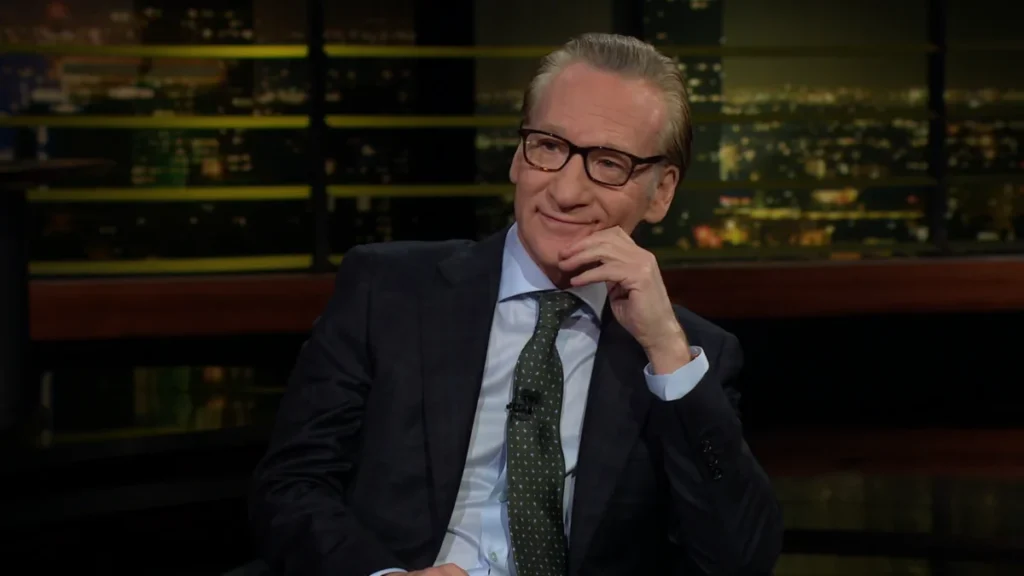

The Kennedy Center has officially confirmed that veteran comedian and political commentator Bill Maher will be honored with the 27th Mark Twain Prize for American Humor, a decision that follows a week of intense speculation and emphatic denials from the White House communications team labeling initial reports as "fake news." The announcement brings a contentious chapter to a close, marking a significant moment for one of late-night television’s most enduring and often provocative voices. Maher, known for his incisive political commentary and unapologetically blunt humor, addressed the swirling confusion with characteristic wit during his Friday night episode of Real Time With Bill Maher on HBO Max, playfully acknowledging the "back and forth" and even joking about a "compromise" that would see him accept the award and then "give it to [President Donald Trump]." This lighthearted take belies a deeper, more complicated narrative involving presidential oversight, institutional autonomy, and a long-standing personal and political rivalry.
The Official Confirmation and Prize Significance
The John F. Kennedy Center for the Performing Arts, a living memorial to President John F. Kennedy and the nation’s cultural center, formally declared on Thursday that Maher would be the recipient of the coveted Mark Twain Prize. The award ceremony is slated for June 28, with a broadcast planned for later streaming on Netflix, ensuring a broad audience for the recognition. The Mark Twain Prize for American Humor, established in 1998, is one of the highest honors in American comedy, designed to "recognize individuals who have had an impact on American society in the same vein as Mark Twain." Past recipients include an illustrious roster of comedic legends such as Richard Pryor, Whoopi Goldberg, Bob Newhart, George Carlin, Tina Fey, Eddie Murphy, Julia Louis-Dreyfus, Dave Chappelle, Jon Stewart, and Adam Sandler, among others. The selection of Maher places him in truly esteemed company, acknowledging his profound and often polarizing influence on contemporary American discourse.
Roma Daravi, the Kennedy Center’s Vice President of Public Relations, lauded Maher for his consistent ability to "influenc[e] American discourse – one politically incorrect joke at a time." This statement encapsulates Maher’s controversial yet undeniably impactful career, highlighting his willingness to tackle sensitive political and social issues head-on, often challenging conventional wisdom from both the left and the right. His distinct brand of humor, which frequently blends satire with earnest political analysis, has made Real Time a fixture in the late-night landscape for over two decades, following a successful run with Politically Incorrect.
A Timeline of Confusion: From Leak to "Fake News" to Confirmation
The path to Maher’s official recognition was far from smooth, marked by a week of dramatic twists that underscored the often-fraught relationship between politics, media, and cultural institutions in the modern era.
Early March 2024: Reports begin to circulate within media circles that Maher has been selected for the Mark Twain Prize.
March 13, 2024: The Atlantic publishes a report citing multiple anonymous sources confirming that Maher had been selected and offered the prize. The article also hinted at potential complications due to his well-documented adversarial relationship with President Trump, whose administration has oversight of the Kennedy Center. The report ignited immediate speculation about whether Trump’s known animosity towards Maher could impede the award’s final approval.
February 2024: Preceding The Atlantic‘s report, President Donald Trump had publicly excoriated Maher on his Truth Social platform. In a post, Trump labeled Maher a "highly overrated LIGHTWEIGHT" and recounted a past White House dinner with the comedian, dismissing it as "a complete waste of time." This public denunciation highlighted the deep-seated animosity between the two figures, setting a tense backdrop for any potential honor involving Maher that might require administrative approval.
Following The Atlantic’s Publication: The White House communications team swiftly and emphatically refuted the claims. White House press secretary Karoline Leavitt stated, "This is fake news. Bill Maher will NOT be getting this award." Her sentiment was echoed by White House communications director Steven Cheung, who added, "Literally FAKE NEWS." The aggressive denial raised questions about the White House’s involvement in the selection process for the Mark Twain Prize and the extent of its influence over the Kennedy Center.
March 21, 2024: The Kennedy Center officially confirms Maher as the recipient of the 27th Mark Twain Prize, directly contradicting the White House’s earlier denials. This confirmation left many observers puzzled about the dramatic reversal and the internal dynamics that led to it.
The journey from "fake news" to verified reality in just a week remains shrouded in some ambiguity. It is unclear whether the initial White House denials were a genuine reflection of an attempt to block the award, a miscommunication, or a strategic maneuver that ultimately failed to deter the Kennedy Center. The Kennedy Center, while a federal institution, operates with a degree of artistic independence. Its board of trustees includes presidential appointees, but the selection of artistic honorees typically rests with its internal committees and leadership, aiming to remain apolitical in its artistic choices. The public contradiction suggests either a miscalculation by the White House regarding its actual authority in this specific decision, or a principled stand by the Kennedy Center to uphold its autonomy despite political pressure.
Maher’s Calculated Response: Humor as Defiance
During his March 22 Real Time monologue, Bill Maher masterfully addressed the week’s controversy, transforming potential tension into comedic fodder. Acknowledging "a lot of back and forth" regarding his selection, Maher delivered his mock "compromise" joke: "I am going to get it and then I’m going to give it to [President Donald Trump]. Everybody’s happy. I just want things to work out." This quip, delivered with his signature deadpan, served as both a jab at his long-time antagonist and a clever defusal of the underlying political drama.
Maher emphasized that he was "not looking for a fight" and expressed no anger toward Trump for the preceding confusion. Instead, he framed the entire episode as another chapter in their "complicated relationship," a dynamic that has played out publicly for over a decade. This framing allowed Maher to embrace the controversy as part of his public persona, rather than an impediment, aligning perfectly with his reputation as a comedian who thrives on political friction.
A Storied Rivalry: The Trump-Maher Saga
The relationship between Bill Maher and Donald Trump is a complex tapestry woven from public insults, legal battles, and a shared, albeit often antagonistic, presence in the media spotlight. Their feud dates back well before Trump’s presidency, showcasing a deep-seated antagonism that has periodically erupted into headline-grabbing confrontations.
One of the most notable incidents occurred in 2013, when Trump famously sued Maher for $5 million. The lawsuit stemmed from comments Maher made during an appearance on The Tonight Show With Jay Leno. Maher, referencing Trump’s then-ongoing public demands for President Barack Obama’s birth certificate, jokingly offered to donate $5 million to a charity of Trump’s choice if Trump could prove he wasn’t the "spawn of his mother having sex with an orangutan." Maher specifically challenged Trump to provide a copy of his birth certificate, just as Trump had demanded of Obama. Trump, who had presented a copy of his own birth certificate (though not in the same vein as Maher’s challenge), responded by suing the comedian for breach of contract and defamation. Maher dismissed the lawsuit as frivolous, and Trump eventually withdrew it, but the incident cemented their mutual disdain.
In the years that followed, particularly during and after Trump’s presidency, their exchanges continued. Trump’s February 2024 Truth Social post, labeling Maher a "jerk" and "lightweight ratings loser," was merely the latest salvo in this protracted media war. Maher, however, views these exchanges not as personal attacks to be avoided, but as a form of engagement he openly welcomes. "This has been going on a long time, so him trying to block me from getting it — I respect the move. I respect the move. Keep the game going, baby, OK, I’m all about engagement. Disengagement gets you nothing. You got to engage," Maher stated, embracing the adversarial dynamic as essential to the political and comedic landscape. He even expressed pride in Trump’s latest insults, incorporating them into his comedic routine.
The Acceptance Speech: A Masterclass in Satire
Maher’s Real Time monologue culminated in a particularly biting and self-deprecating "acceptance speech" that expertly turned Trump’s insults back on him. Displaying a prop sheet of paper with a White House logo, purportedly a "long list" of insults Trump had hurled at him, Maher began to read them aloud. The list included epithets such as "low ratings lightweight," "rather dumb guy," "pathetic, bloated sleaze bag," "a dummy," "a terrible student," "a nervous, failing comedian," and "someone who was sick, insane, very sad, totally shot in, a crazy maniac."
With a mock solemnity, Maher declared, "So I would just like to say as a low ratings lightweight and a rather dumb guy and a pathetic, bloated sleaze bag, a dummy, a terrible student, a nervous, failing comedian and someone who was sick, insane, very sad, totally shot in, a crazy maniac, I am honored to accept the Mark Twain Prize. Thank you very much." This satirical flourish served as a potent commentary on the nature of political discourse and personal attacks in the public sphere, demonstrating Maher’s ability to absorb and redirect criticism with comedic force.
He concluded his "speech" with a direct challenge to Trump: "I will be there, Don, and I hope you will be too. I mean, the place is named after you now, you really should show up. You could show up. You could thank me in person for being one of the few people on the lunatic left who’s glad you hit Iran and is hoping we win that one." This final remark, hinting at a shared hawkish stance on foreign policy despite their political differences, added another layer of complexity to their relationship, suggesting that even in fierce opposition, unexpected common ground can sometimes be found.
The Mark Twain Prize: A Legacy of American Humor
The Mark Twain Prize for American Humor is named after Samuel Clemens, better known as Mark Twain, who is widely regarded as the father of American literature and a towering figure in American humor and social commentary. Twain’s genius lay in his ability to use wit, satire, and keen observation to critique society, politics, and human nature. The prize seeks to honor individuals whose work embodies this spirit: comedians, writers, and performers who have used humor to illuminate, provoke, and influence American society.
The selection process for the Mark Twain Prize is handled by the Kennedy Center’s Board of Trustees, often with input from an advisory committee composed of figures from the entertainment industry, arts, and media. The criteria extend beyond mere comedic talent, emphasizing an individual’s broader impact on American culture and their ability to spark conversation, much as Twain himself did through his novels and essays. Maher’s consistent engagement with political and social issues, his willingness to challenge both sides of the aisle, and his long-standing role as a commentator on the national stage make him a fitting recipient in this context. His career trajectory from stand-up to cable news punditry and then to the host of a critically acclaimed political talk show exemplifies a modern interpretation of Twain’s legacy.
The Kennedy Center and Executive Oversight: A Delicate Balance
The Kennedy Center, while a national cultural institution, receives federal funding and has a Board of Trustees that includes presidential appointees. This structural relationship means that the executive branch, through the President, technically has "oversight." However, this oversight is typically focused on administrative and budgetary matters, not directly on artistic programming or the selection of honorees for awards like the Mark Twain Prize. The Center prides itself on its artistic independence, a crucial aspect of its mission to celebrate American arts and culture free from overt political influence.
The initial "fake news" denials from the White House communications team created a public perception of direct political interference, or at least an attempt to influence the decision. The subsequent confirmation by the Kennedy Center suggests that either the White House’s understanding of its direct authority in this specific decision was mistaken, or that the Center ultimately asserted its independence in the face of pressure. Such situations highlight the delicate balance cultural institutions must maintain when operating under a degree of government patronage while striving to uphold artistic freedom and integrity. For the Kennedy Center, proceeding with Maher’s award despite the White House’s public opposition reinforces its commitment to recognizing artistic merit and societal impact, even when the honoree is a vocal critic of the sitting administration.
Broader Implications: Political Humor in a Polarized Era
The Bill Maher Mark Twain Prize saga offers significant insights into the current landscape of political humor and the state of public discourse in a deeply polarized nation. Firstly, it underscores the enduring power of satire and political comedy to provoke, inform, and even irritate those in power. Maher’s career has been defined by his willingness to challenge figures across the political spectrum, and this award, given the controversy surrounding it, validates his role as a necessary, if sometimes uncomfortable, voice.
Secondly, the "fake news" episode highlights the weaponization of language and the erosion of trust in institutional communications. The White House’s use of such a strong term to describe a factual report, only for that report to be confirmed days later, further blurs the lines between truth and falsehood, making it challenging for the public to discern reliable information. This incident serves as a microcosm of broader trends in media and politics, where narratives are fiercely contested and official denials can quickly unravel.
Finally, Maher’s acceptance, characterized by his embrace of the insults and his direct challenge to Trump, speaks to a particular style of political engagement in contemporary America. It suggests that for some, direct confrontation and even mutual antagonism have become part of the political game, a form of "engagement" that keeps the dialogue alive, however acrimoniously. In an era where political divides seem insurmountable, Maher’s ability to leverage his long-standing feud for comedic and even unifying effect—inviting Trump to celebrate shared views on foreign policy—underscores the complex, often contradictory, nature of modern American political identity.
Bill Maher’s Real Time Legacy
Beyond the immediate controversy, the Mark Twain Prize recognizes Bill Maher’s profound and sustained impact on American television and political commentary. Real Time With Bill Maher, which debuted in 2003, has carved out a unique niche as a weekly forum for in-depth discussions, interviews, and Maher’s signature monologues. The show consistently features a diverse array of guests, from political figures like U.S. Senator Elissa Slotkin (D-MI), a former CIA analyst and Pentagon official, to prominent journalists like CNN’s Laura Coates, and cultural figures such as ESPN star Stephen A. Smith. This eclectic mix of guests, including those from his most recent episode, reflects Maher’s commitment to fostering a wide-ranging dialogue, often challenging his guests and audience alike with unconventional perspectives. His show serves as a vital platform where complex issues are debated with a blend of intellectual rigor and irreverent humor, solidifying his legacy as a significant figure in American media.
In conclusion, Bill Maher’s receipt of the 27th Mark Twain Prize for American Humor is more than just an award; it is a testament to the enduring power of satire, the intricate dance between cultural institutions and political power, and the complex, often confrontational, nature of public discourse in America. His acceptance, delivered with a mix of self-deprecation and defiant wit, ensures that the honor itself becomes another chapter in his long and complicated relationship with the very political landscape he so keenly observes and critiques. The ceremony on June 28 promises to be a memorable event, not just for Maher, but for what it represents about humor’s place in challenging, and ultimately enriching, the American conversation.