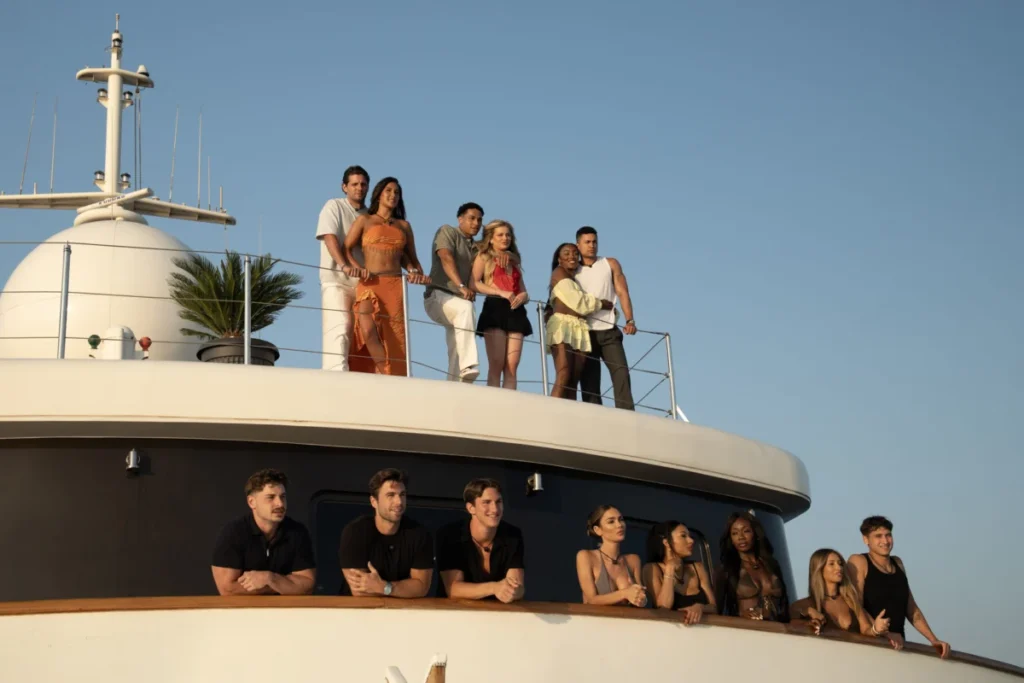

The landscape of modern reality television has evolved from simple social experiments into high-stakes psychological competitions where the quest for romantic connection is often inextricably linked to social status and physical comfort. Hulu’s latest foray into the genre, Love Overboard, exemplifies this trend by placing its contestants on a luxury yacht where the penalty for remaining single is not just emotional isolation but a literal descent into domestic servitude. Within this pressurized environment, contestant Bella Palk emerged as a focal point of the inaugural season, eventually making the decision to exit the series prematurely to preserve her mental well-being. This departure highlights a growing discourse regarding the psychological toll of reality television and the shifting priorities of a new generation of participants who value personal health over the potential for fleeting media exposure.
The Structural Mechanics of Love Overboard
Love Overboard operates on a bifurcated social hierarchy that mirrors the historical "upstairs-downstairs" dynamics of maritime culture. The premise centers on a group of singles navigating the Mediterranean Sea. However, the vessel is divided into two distinct zones: the Topside and the Lower Deck. Contestants who successfully forge romantic connections are granted access to the Topside, a realm of luxury characterized by high-end gastronomy, premium cocktails, and panoramic views of the sea.
Conversely, those who fail to secure a partner are relegated to the Lower Deck. In a significant departure from standard dating show formats like Love Island or The Bachelor, these "unmatched" individuals do not merely wait for the next recoupling; they are required to serve as the functional crew for the paired couples on the Topside. This involves performing manual labor, preparing meals, and maintaining the cleanliness of the yacht while watching their peers enjoy the fruits of romantic success. This structural element introduces a ruthless element of class warfare into the dating process, as the motivation for finding a partner transitions from emotional fulfillment to the basic desire for improved living conditions.
The Chronology of Bella Palk’s Journey
Bella Palk entered the competition with the objective of finding a long-term partner, yet her experience quickly diverged from the typical reality TV arc. While other contestants engaged in strategic maneuvering or "sabotage" to secure a spot on the Topside, Palk found herself struggling to find a genuine connection among the available pool of men. As the season progressed, the psychological weight of the Lower Deck began to manifest.
The chronology of Palk’s time on the yacht can be divided into three distinct phases:
- The Initial Search: Upon boarding, Palk attempted to engage with the initial group of singles. However, the rapid pace of pairing left her on the periphery of the social circle.
- The Internal Struggle: Unlike many of her peers, whose primary conflicts were external—involving rivalries or "love triangles"—Palk’s narrative was defined by internal reflection. She spent a significant portion of her time in what she described as a "fantasy world," attempting to manifest a partner who was not present on the vessel.
- The Decision to Exit: The final phase of her journey occurred when Palk realized that the remaining male contestants did not align with her personal standards or emotional needs. Faced with the prospect of continuing as a servant on the Lower Deck without any hope of a romantic payoff, she chose to terminate her participation in the show.
In a recent interview, Palk reflected on this trajectory, noting the rarity of seeing a contestant "crash out" without the catalyst of a failing relationship. She emphasized that her struggle was not with a specific partner, but with the environment and the lack of viable options, leading to an intentional exit centered on self-preservation.
The Psychological Impact of Competitive Dating Environments
The "crew" mechanic of Love Overboard introduces unique stressors that are not typically present in dating shows. Psychological experts have long noted that social exclusion is processed by the brain in a manner similar to physical pain. In the context of this show, that exclusion is compounded by the requirement of service. Being forced to wait on those who have succeeded where you have failed creates a feedback loop of perceived inadequacy and resentment.
For Palk, the decision to leave was framed as a necessity for her mental health. "I ultimately was like, there’s no men left here for me," she stated, explaining that once the romantic potential was exhausted, the justification for enduring the hardships of the Lower Deck vanished. Her exit serves as a case study in the "wellness" shift currently permeating the reality TV industry, where contestants are increasingly unwilling to sacrifice their mental stability for the sake of a production’s narrative.
Supporting Data: Reality TV and Mental Health Trends
The discourse surrounding Palk’s exit aligns with broader industry data regarding the mental health of reality television participants. A 2023 study on the psychological outcomes of reality TV contestants found that the combination of isolation, constant surveillance, and the "gamification" of social relationships can lead to long-term anxiety and depressive symptoms.
In response to high-profile incidents across various international franchises, networks have begun implementing more robust "duty of care" protocols. For instance:
- Pre-filming: Comprehensive psychological evaluations are now standard for major networks like Hulu and ITV.
- During filming: Many productions now provide on-site access to therapists who are not part of the production staff.
- Post-filming: Extended aftercare, including financial advice and social media management training, is becoming more common to help contestants navigate their sudden transition to public life.
Palk’s decision to leave mid-production suggests that these internal boundaries are becoming more prominent. Rather than waiting for a producer-led intervention or a scheduled elimination, contestants are taking agency over their own "arc."
The Economic and Strategic Context of Hulu’s Reality Programming
Hulu’s investment in Love Overboard is part of a larger strategic push into the unscripted content market. As streaming services compete for subscriber retention, reality television offers a high-return, lower-cost alternative to scripted dramas. The genre is particularly effective for "binge-watching" behavior, which drives platform engagement metrics.
The yacht-based subgenre has proven particularly lucrative, following the massive success of Bravo’s Below Deck franchise. By combining the "luxury service" trope of Below Deck with the "competitive dating" trope of Love Island, Hulu has attempted to capture two distinct demographics. However, the addition of the "downside" service requirement adds a layer of social commentary that distinguishes Love Overboard from its predecessors. This format intentionally leans into the "eat the rich" sentiment prevalent in modern pop culture, even as it invites viewers to envy the "topside" lifestyle.
Statements and Reactions from the Cast and Production
While Hulu has not issued an official statement specifically regarding Palk’s exit, the production’s decision to air her reasons—centered on mental health—indicates a shift in how networks handle "quitters." Historically, contestants who left a show voluntarily were often edited as "weak" or "uncommitted." In Palk’s case, the narrative was framed around her self-awareness and the lack of compatible partners.
Other cast members have expressed a mix of sympathy and pragmatism regarding the show’s structure. Lo Henderson and David Fuhrmann, who experienced their own share of relationship volatility on the show, have hinted at the intense pressure of the Mediterranean environment. The consensus among the participants appears to be that the luxury of the yacht is a thin veil over an incredibly taxing social experiment.
Broader Implications for the Future of the Genre
Bella Palk’s experience on Love Overboard may serve as a harbinger for future reality television developments. As viewers become more savvy about the "producer-driven" nature of these shows, there is an increasing demand for authenticity. Palk’s "internal drama"—the struggle to maintain a sense of self in a world that demands a romantic performance—provided a level of relatability that may be more sustainable than manufactured conflicts between contestants.
Furthermore, Palk’s exit underscores the importance of the "exit ramp" in reality TV contracts. As mental health continues to be a central theme in public discourse, production companies will likely face more pressure to ensure that contestants have the autonomy to leave without facing punitive financial or reputational consequences.
In conclusion, Love Overboard is more than just a dating show; it is a reflection of the modern intersection between entertainment, social hierarchy, and mental health advocacy. Bella Palk’s journey from a hopeful single to a self-advocating individual who chose her well-being over a televised competition marks a significant moment in the evolution of the genre. As the series continues to stream on Hulu, it remains a poignant example of how the quest for love can often lead to a much more important discovery: the necessity of protecting one’s own peace of mind.