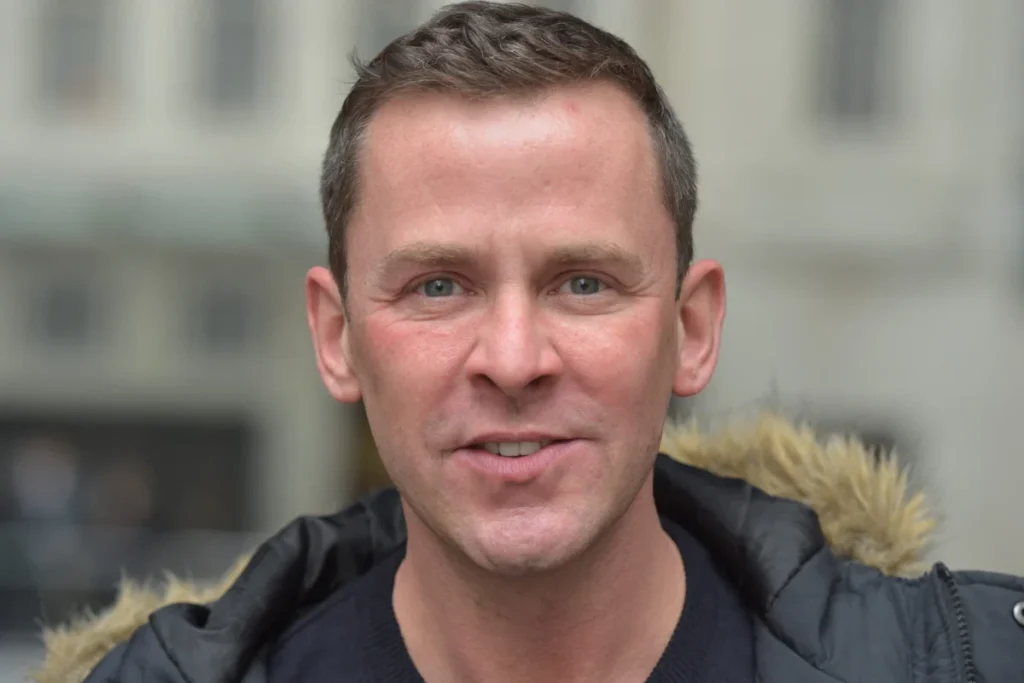

The British Broadcasting Corporation (BBC) has issued a profound apology for its egregious failure to investigate allegations concerning veteran presenter Scott Mills, which were brought to the broadcaster’s attention nearly a year ago. This admission comes as Mills, a fixture on BBC radio for decades, abruptly departed the corporation, sending shockwaves through the media landscape and reigniting intense scrutiny over the BBC’s safeguarding protocols and internal accountability mechanisms. The scandal is particularly ill-timed, coinciding with a critical leadership transition at the public broadcaster, further complicating an already challenging period for its reputation and public trust.
The allegations, concerning "inappropriate communications" during Mills’s tenure at BBC Radio 1, were first raised by a freelance journalist in May 2025. The journalist specifically inquired whether the BBC had any prior awareness or involvement in related matters, or if it had ever received "formal or informal complaints" against Mills pertaining to safeguarding, inappropriate conduct, or harassment, and whether any internal investigations had been conducted. Critically, the BBC now admits it failed to act on these vital inquiries, a lapse that has prompted an internal review into why such a significant query was not properly pursued. This failure to respond stands in stark contrast to the BBC’s publicly stated commitments to transparency and robust safeguarding, especially in the wake of past high-profile scandals that exposed severe institutional shortcomings.
The revelation of the BBC’s oversight adds a new layer of complexity to an already unfolding narrative surrounding Mills, whose sudden departure from his popular BBC Radio 2 breakfast show was announced internally on Monday. While the BBC has maintained a policy of not commenting on individual employment matters, a statement from Lorna Clarke, the BBC’s Director of Music, confirmed Mills’s exit in an email to staff, describing the news as "sudden and unexpected." This email, circulated across the organisation, acknowledged the profound impact of the news on colleagues who had worked with Mills across various platforms including Radio 1, 5Live, Radio 2, and television. Clarke’s message, while offering no specifics regarding the reasons for the departure, underscored the sensitivity and gravity of the situation, promising further updates on plans for the breakfast show.
Further complicating the situation is a distinct, historical police investigation into "serious sexual offences" against a teenage boy, which the Metropolitan Police confirmed was launched in December 2016. These alleged offences were reported to have occurred between 1997 and 2000. As part of this extensive inquiry, a man, identified as being in his 40s at the time, was questioned under caution in July 2018. Following a comprehensive submission of evidence to the Crown Prosecution Service (CPS), a decision was made in May 2019 that the "evidential threshold had not been met to bring charges," leading to the closure of the investigation. The Met Police confirmed that the alleged victim was under 16 years old at the time of the reported incidents. It is imperative to distinguish between this closed police investigation, which did not result in charges, and the more recent allegations that the BBC failed to investigate internally. The current public outcry primarily centres on the BBC’s admitted failure to appropriately handle the journalist’s query regarding the latter.
A Chronology of Compounding Concerns
The timeline of events highlights a series of critical junctures, painting a picture of prolonged scrutiny and a significant lapse in institutional response:
- 1997-2000: This four-year period is cited as the time frame during which the alleged "serious sexual offences against a teenage boy" are reported to have taken place. The passage of time between the alleged events and the police investigation is notable, often presenting challenges for evidence gathering.
- December 2016: The Metropolitan Police initiates an investigation following a referral from another police force. This indicates a formal process was triggered, suggesting credible initial information necessitated a police probe. The involvement of another police force suggests the initial report may have been made outside of London or transferred for specific expertise.
- July 2018: A man, widely understood to be Scott Mills, is questioned by police under caution. This is a significant step in any criminal investigation, indicating that police had sufficient grounds to suspect involvement and required a formal interview under legal safeguards.
- May 2019: The police investigation concludes after the Crown Prosecution Service (CPS) advises that the evidential threshold for charges has not been met. The CPS’s role is to decide whether there is enough evidence to provide a realistic prospect of conviction and if a prosecution is in the public interest. This legal determination signifies that, while allegations may exist, the available evidence was not deemed sufficient to secure a realistic prospect of conviction in a court of law. It is a critical point that the investigation concluded without charges.
- May 2025: A freelance journalist contacts the BBC with specific inquiries regarding "inappropriate communications" involving Scott Mills and any potential previous complaints or internal investigations. This marks the precise point of the BBC’s admitted failure, as the query, despite its serious nature and specific questions about safeguarding, went unanswered and uninvestigated.
- March 2026 (Monday): Scott Mills’s departure from the BBC is announced internally, and subsequently reported widely across media outlets, sparking immediate public discussion and intense media speculation about the underlying reasons.
- March 2026 (Tuesday): The BBC publicly apologises for its failure to investigate the journalist’s May 2025 query, acknowledging a serious institutional oversight. This apology came only after the news of Mills’s departure had already broken, leading to questions about the timing and motivation of the BBC’s admission, and whether it was reactive rather than proactive.
The BBC’s Public Apology and Internal Accountability
In its official statement, the BBC unequivocally acknowledged its failure: "We received a press query in 2025 which included limited information. This should have been followed up and we should have asked further questions. We apologise for this and will look into why this did not happen." The statement further urged "anyone who has concerns or information to raise it with us," a standard appeal that now carries added weight given the context of its own admitted inaction. The BBC’s commitment to "look into why this did not happen" suggests an internal audit or inquiry will be launched to identify systemic weaknesses that led to the oversight.

This admission of error is particularly damaging for an organisation that has, over the past decade, repeatedly vowed to overhaul its safeguarding procedures and foster a culture of openness following a series of high-profile scandals. The most notable of these was the Jimmy Savile affair, which revealed systemic failures to address credible allegations of sexual abuse against a prominent presenter, dating back decades. The subsequent Dame Janet Smith Review into the BBC’s culture and practices regarding Savile made extensive recommendations, emphasizing the critical importance of listening to complainants and thoroughly investigating all concerns, regardless of how they are received or their initial perceived ‘limited information’. The current incident, coming years after these reforms were supposedly implemented, suggests that lessons may not have been fully learned, or that new vulnerabilities have emerged in the BBC’s internal communication and investigative processes.
Media watchdogs and public interest groups are likely to view this lapse as a serious setback for the BBC’s efforts to rebuild public trust. The failure to even respond to a formal journalistic inquiry, particularly one concerning such sensitive matters as safeguarding and harassment, raises fundamental questions about the BBC’s commitment to accountability and its internal lines of communication regarding safeguarding protocols for its talent.
Scott Mills: A Broadcast Career in Context
Scott Mills, born in 1973, has been one of the BBC’s most recognisable voices for over two decades. His illustrious career at the BBC began in 1998, when he joined Radio 1, quickly rising to prominence with his energetic style and engaging personality. He became a staple of the daytime schedule, hosting various shows, most notably the "Scott Mills Show," which garnered a significant and loyal listenership, becoming a cultural touchstone for a generation of young listeners. His move to BBC Radio 2 in 2022 to take over the weekday afternoon slot from broadcasting legend Steve Wright was a significant career progression, marking his transition to a more mature audience and cementing his status as a senior broadcaster within the corporation. Before his departure, he was hosting the station’s popular breakfast show, a prime-time slot that underscores his importance to the BBC’s radio output.
His long tenure and widespread popularity meant that his sudden departure was met with considerable surprise and disappointment by his listeners and colleagues alike. Social media platforms were abuzz with reactions, many expressing sadness and confusion, while others demanded greater transparency from the BBC. The ambiguity surrounding his exit, coupled with the BBC’s reticence to elaborate beyond its official statement, has only fuelled speculation and public discussion. The BBC’s statement: "While we do not comment on matters relating to individuals, we can confirm Scott Mills is no longer contracted to work with the BBC," offers little clarity, leaving many questions unanswered for his audience and the wider public, and leaving a significant void in the BBC’s presenting lineup.
Political and Leadership Ramifications
The timing of this unfolding scandal could scarcely be worse for the BBC, as it navigates a significant period of leadership change. Outgoing Director-General Tim Davie is scheduled to depart the BBC this week, with interim Director-General Rhodri Talfan Davies set to take over on April 2. Former Google boss Matt Brittin is then expected to assume the permanent role of Director-General on May 18. This leadership vacuum, even if temporary, creates an added layer of complexity in managing a crisis of this magnitude, potentially delaying decisive action or a comprehensive public response.
The political ramifications have already begun to surface. Kemi Badenoch, the Tory leader, commented on the situation during a visit to Hertfordshire, stating, "This is yet another scandal that the BBC has to contend with." She added, "It is a large and complex organisation, and I think that this is one of the things that the new director-general is going to need to get to grips with." This sentiment reflects a broader pattern of political scrutiny directed at the BBC, particularly from the Conservative government, concerning its governance, impartiality, and financial models. Each new controversy provides further ammunition for those advocating for reform or even significant restructuring of the public broadcaster, potentially impacting future licence fee negotiations and its operational independence.
The incoming Director-General, Matt Brittin, will face immediate pressure to address these issues head-on. His mandate will likely extend beyond financial and strategic planning to include a comprehensive review of the BBC’s safeguarding procedures, internal communication, and crisis management protocols. Rebuilding public and political trust will be a formidable challenge, requiring transparent action and a demonstrable commitment to institutional learning to restore faith in the institution’s ability to protect vulnerable individuals and uphold its ethical responsibilities.

Broader Implications for Media Accountability and Safeguarding
This incident highlights several critical issues for the broader media industry and for institutions with significant public reach. Firstly, it underscores the persistent challenges in maintaining robust safeguarding mechanisms, even after significant reforms. The sheer volume of communications and inquiries received by large organisations like the BBC can, at times, lead to oversights, but the nature of the allegations here demands a higher standard of vigilance and an immediate, structured response.
Secondly, the role of investigative journalism, even from freelance sources, is paramount. The journalist’s persistence in raising these questions, even without an initial response, ultimately brought the BBC’s internal failings to light. This reinforces the importance of a free and scrutinising press in holding powerful institutions accountable and serving as a crucial check on their internal processes.
Thirdly, the distinction between a police investigation that concludes without charges and allegations that warrant internal inquiry is crucial. While the CPS’s decision means there was insufficient evidence for a criminal prosecution in the historical case, it does not necessarily negate the underlying concerns or the potential for other forms of inappropriate conduct that may fall short of criminal thresholds but still violate an organisation’s codes of conduct or safeguarding policies. The BBC’s failure to investigate the journalist’s query about "inappropriate communications" and "harassment" points to a potential gap in its non-criminal internal disciplinary processes, which are designed to maintain professional standards and a safe working environment.
Safeguarding experts consistently advocate for a "speak up" culture where individuals feel safe to report concerns, and where those concerns are met with swift, impartial, and thorough investigation. The BBC’s apology acknowledges that this principle was demonstrably breached in May 2025. The challenge now for the BBC will be to demonstrate, through concrete actions, that it is truly committed to learning from this latest lapse and ensuring such failures do not recur. This will involve not just an internal review of the specific incident but potentially a broader audit of its systems for handling external inquiries and internal complaints, especially those related to sensitive issues like safeguarding. The public will be watching closely to see how the BBC, under its new leadership, responds to this latest test of its integrity and its commitment to the highest standards of public service.
The unfolding situation demands not only an explanation for the past failure but also a clear roadmap for future preventative measures. The credibility of one of the world’s most respected public broadcasters hangs in the balance, as it grapples with renewed questions about its ability to protect its staff, its audience, and its reputation in an increasingly scrutinised media environment.