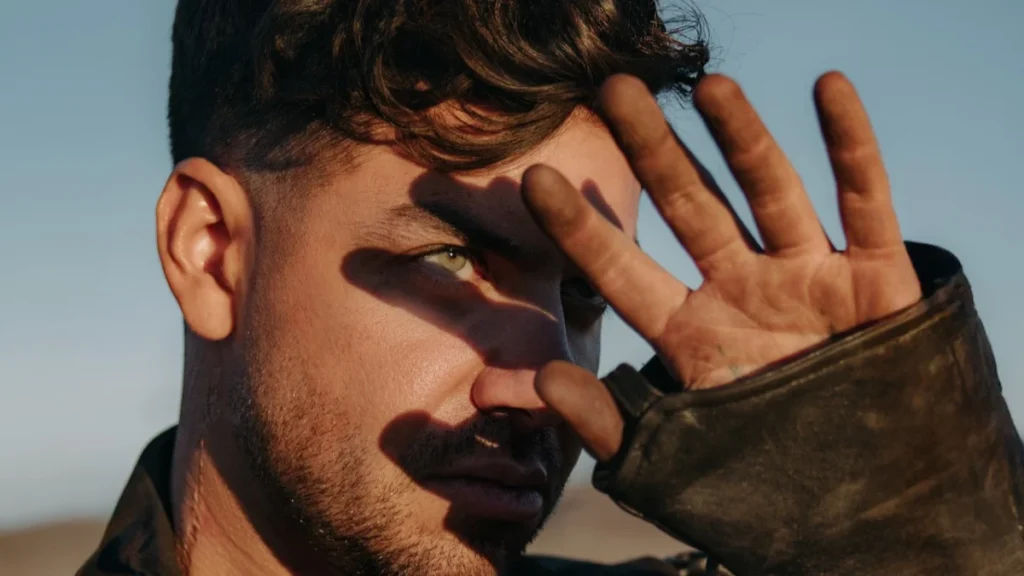

The highly anticipated Friday night performance by electronic music sensation Anyma at the Coachella Valley Music and Arts Festival was abruptly canceled due to severe wind conditions, a decision made collaboratively by festival organizers and the artist, prioritizing the safety of attendees and crew. The cancellation, announced just 15 minutes before the scheduled midnight local time start, left thousands of fans gathered at the iconic Coachella Stage disappointed but largely understanding, as safety concerns superseded artistic delivery.
The DJ, known for his groundbreaking visual-audio performances and intricate stage designs, was slated to close out the main Coachella Stage following a high-energy set by pop star Sabrina Carpenter. The announcement, disseminated through official festival channels, explicitly stated, "Due to strong wind conditions affecting Anyma’s stage build, he would be unable to perform tonight. Coachella and Anyma have made this decision together with your safety as a priority." This clear communication underscored the gravity of the situation, highlighting the structural integrity and technological sensitivity of Anyma’s elaborate production setup.
A Night of High Anticipation Turns to Disappointment
The atmosphere at the Empire Polo Club in Indio, California, had been electric throughout Friday, the opening day of Coachella’s first weekend. As night fell, the desert air typically cools, but on this particular evening, it brought with it an unwelcome companion: strong, sustained winds. Fans had eagerly awaited Anyma’s set, a highlight for many electronic dance music enthusiasts who follow the innovative work of Matteo Milleri, one half of the acclaimed duo Tale of Us and the mastermind behind the Anyma project. His performances are not merely DJ sets; they are immersive experiences characterized by colossal LED screens, sophisticated projection mapping, and often, dynamic kinetic elements that form a narrative visual landscape.
The cancellation came at a critical juncture, right as the festival was transitioning into its late-night peak. The swift decision reflected an immediate assessment of risk, indicating that the wind speeds had reached a threshold where the structural components of Anyma’s bespoke stage setup could no longer be guaranteed as safe. This was not a mere inconvenience but a direct threat to the safety protocols that govern large-scale outdoor events.
Coachella’s Desert Climate: A Constant Variable
The Coachella Valley, while renowned for its idyllic spring weather, is also susceptible to unpredictable desert winds, particularly in April. The vast, open landscape of the Empire Polo Club offers little natural protection against strong gusts that can sweep across the valley. Historically, wind has been a recurring factor at Coachella, occasionally leading to dusty conditions, but rarely resulting in the complete cancellation of a headlining performance on the main stage due due to structural integrity concerns.
Festival organizers, Goldenvoice, are well-versed in managing the logistical complexities of staging such a massive event in a desert environment. This includes extensive planning for potential weather impacts. However, certain meteorological conditions, such as the high wind speeds reported on Friday night, can surpass even the most robust contingency measures, especially when an artist’s performance relies heavily on towering, visually complex, and potentially wind-sensitive structures. The decision to cancel Anyma’s set highlights the rigorous safety standards applied, where even a slight compromise in structural stability is deemed unacceptable.
Anyma’s Signature Visual Spectacle at Risk
Anyma’s artistic identity is inextricably linked to his breathtaking visual productions. His "Genesys" show, for instance, features larger-than-life digital avatars and intricate architectural designs that interact seamlessly with the music. These elements are not just backdrops; they are integral to the performance, creating a multi-sensory journey for the audience. The "stage build" referenced in the cancellation notice likely pertains to these highly specialized and often towering structures that support the massive LED screens, projection surfaces, and potentially even kinetic art installations that define an Anyma show.
Such elaborate setups are engineered to withstand certain environmental stresses, but there are always limits. High winds can exert immense pressure on large surface areas like LED walls, causing them to sway, potentially compromising their stability or even risking structural failure. Furthermore, intricate projection systems and lighting rigs, often suspended at significant heights, can be affected by strong gusts, leading to alignment issues, equipment damage, or, most critically, the risk of components detaching. For an artist whose performance relies so heavily on the flawless execution of these visual elements, proceeding under unsafe conditions would not only endanger the audience but also severely diminish the artistic integrity of the show.
Prioritizing Safety: Festival Protocols in Action
The decision to cancel Anyma’s set underscores the paramount importance of safety at large-scale public events. Festival organizers operate under strict regulations and industry best practices that mandate thorough risk assessments for all stage constructions and outdoor installations. This involves a collaborative effort between structural engineers, production managers, meteorologists, and local authorities. Before any performance, all elements of a stage are inspected to ensure they meet safety standards, particularly concerning wind load capacity.
When adverse weather conditions emerge, these protocols are immediately activated. Wind monitoring stations are typically deployed across the festival grounds, providing real-time data to production teams. Once wind speeds or gusts exceed predefined safety thresholds for specific structures, the decision to halt or cancel performances becomes a critical, non-negotiable step. The joint announcement by "Coachella and Anyma" indicates that both parties were in agreement, understanding that the risks associated with the high winds outweighed the desire to perform. This demonstrates a responsible approach to festival management, placing attendee and crew welfare above all other considerations, including contractual obligations and audience expectations.
The Ripple Effect: Fan Disappointment and Rescheduling Hurdles
The immediate aftermath of the cancellation saw a mixture of disappointment and understanding among the festival-goers. Social media platforms quickly buzzed with reactions, as attendees shared their frustration but also acknowledged the necessity of the decision. Many had specifically planned their Friday night schedule around Anyma’s set, eager to witness his unique blend of electronic music and digital art. For some, it was a once-in-a-lifetime opportunity to see the artist perform live, particularly for those who had traveled significant distances to attend Coachella.
The question of rescheduling Anyma’s performance for later in Weekend One or during Weekend Two immediately arose. Rescheduling a major artist at a festival of Coachella’s scale presents significant logistical challenges. The festival’s schedule is meticulously planned months in advance, with artists often having tight travel schedules and commitments immediately before or after their Coachella appearance. Finding an open slot on another stage, or the main Coachella Stage, that can accommodate Anyma’s specific technical requirements and the necessary setup time, is a complex endeavor. Furthermore, any rescheduled performance would need to be approved by all relevant parties, ensuring that the same safety concerns would not re-emerge. Festival organizers have indicated they are exploring options, but as of now, no concrete plans for rescheduling have been announced, leaving fans in suspense.
Broader Implications for Festival Planning and Future Events
Anyma’s cancellation serves as a stark reminder of the inherent vulnerabilities of outdoor music festivals to environmental factors. While organizers strive for perfection, nature often has the final say. This incident will likely prompt further review of contingency plans for extreme weather events, particularly concerning elaborate stage productions that are becoming increasingly common in the electronic music scene. The balance between pushing the boundaries of stage design and ensuring absolute safety in unpredictable environments is a constant challenge for festival producers worldwide.
The increasing sophistication of stage technology means that these structures are becoming more complex and, in some cases, potentially more sensitive to adverse weather. Future festival planning may need to incorporate even more advanced meteorological forecasting, flexible stage designs, or perhaps even alternative, more weather-resistant setups for artists known for highly elaborate productions. For attendees, it reinforces the understanding that while a festival ticket promises a curated experience, unforeseen circumstances can always alter the lineup, and safety will always be the ultimate priority.
As Coachella Weekend One progresses, the memory of Anyma’s canceled set will linger, a testament to the unpredictable nature of live events and the unwavering commitment to safety that governs them. Fans will hold out hope for a potential rescheduling, either later in the festival or during the upcoming Weekend Two, eagerly awaiting the opportunity to experience the visual and auditory spectacle that Anyma is renowned for, under conditions that are safe for everyone involved. The incident underscores the meticulous planning and swift decision-making required to ensure the well-being of hundreds of thousands of festival-goers, even when it means sacrificing a highly anticipated performance.