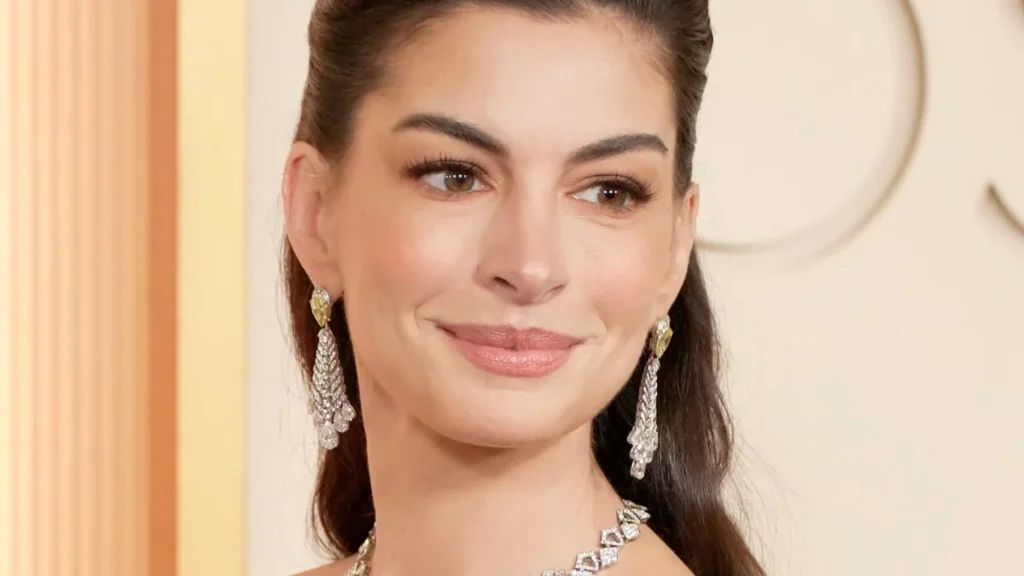

The global fashion landscape and cinematic community have converged as Anne Hathaway commenced the highly anticipated promotional cycle for the sequel to the 2006 cult classic, "The Devil Wears Prada." Stepping out in a meticulously curated ensemble that bridged the gap between avant-garde artistry and modern red-carpet glamour, Hathaway signaled a sophisticated return to the world of high fashion that her character, Andy Sachs, famously navigated. Her appearance, centered around a striking Schiaparelli Fall/Winter 2025 ready-to-wear gown, serves as a calculated nod to the surrealist roots of the legendary French fashion house while underscoring the evolution of her own status as a premier style icon and Bulgari global ambassador.
The Architectural Precision of the Schiaparelli Ensemble
At the heart of Hathaway’s latest appearance was a black gown from Schiaparelli’s Fall/Winter 2025 collection, a line designed by Creative Director Daniel Roseberry. The garment serves as a testament to the brand’s enduring commitment to "Shocking" surrealism, a philosophy established by founder Elsa Schiaparelli in the early 20th century. The dress featured a complex, textured finish that provided a tactile depth, contrasting sharply with the smooth, sculptural elements of its adornments.
The focal point of the design was an oversized, three-dimensional gold hand positioned at the solar plexus. This anatomical motif is a hallmark of Schiaparelli’s design language, often used to blur the lines between human anatomy and wearable art. By placing such a bold, metallic element at the center of the silhouette, the gown transcended traditional evening wear, entering the realm of wearable sculpture.
Further enhancing the visual complexity of the piece was the integration of long, floor-length fringe that cascaded from the waist. This design choice introduced a kinetic element to the look; with every movement, the fringe shifted, creating a play of shadow and light that emphasized the gown’s multidimensionality. Beneath the layers of fringe, a daringly high slit extended to the hip, providing a sharp, contemporary edge. The strategic concealment and revelation of the leg through the fringe added a sense of dynamic mystery to the presentation, ensuring the look remained captivating from every angle.
Footwear and Accessory Integration
To complement the dramatic architecture of the gown, Hathaway and her styling team selected Schiaparelli’s signature patent keyhole pumps. These shoes are notable for their pointed toes and distinct gold hardware, which features the iconic keyhole cut-out—a recurring motif in the Schiaparelli archives. The use of gold hardware on the footwear mirrored the central hand ornament of the dress, creating a cohesive visual narrative that tied the entire ensemble together through metallic accents.
The choice of jewelry further solidified the luxury credentials of the appearance. As a long-standing face of Bulgari, Hathaway wore pieces from the brand’s renowned Tubogas collection. The selection included substantial Tubogas earrings and a matching ring, characterized by the flexible, wrap-around gold piping that has been a Bulgari staple since the 1940s. The industrial yet elegant aesthetic of the Tubogas pieces provided a sophisticated counterpoint to the surrealist nature of the Schiaparelli gown.
Finishing touches included oversized black sunglasses, which lent an air of "Old Hollywood" mystery to the modern look, and a deep red lip. The choice of a bold crimson hue served to sharpen the overall aesthetic, providing a pop of classic color against the monochrome black and gold palette. Her hair was styled in voluminous, polished waves, framing her face and maintaining a balance between high-concept fashion and effortless beauty.
Contextualizing the Return of The Devil Wears Prada
The timing of this fashion statement is intrinsically linked to the industrial movement surrounding "The Devil Wears Prada 2." Nearly two decades after the original film redefined the fashion-film genre, Disney and 20th Century Studios have moved forward with a sequel that explores the changing landscape of traditional media.
The original film, based on Lauren Weisberger’s novel, grossed over $326 million globally and earned Meryl Streep an Academy Award nomination. Its impact on the fashion industry was profound, popularizing the concept of the "cerulean monologue" and providing a satirical yet deeply researched look at the inner workings of a high-fashion magazine, modeled after Vogue.
In the upcoming sequel, the narrative is reported to shift focus toward the decline of traditional magazine publishing. The plot reportedly follows Miranda Priestly (Meryl Streep) as she navigates the end of her career in an era where print media is struggling, forcing her into a confrontation with her former assistant, Emily Charlton (Emily Blunt), who is now a high-powered executive at a luxury fashion conglomerate. Anne Hathaway’s return to the fold as Andy Sachs is one of the most anticipated elements of the production, and her real-world fashion choices are being viewed by analysts as a form of "method dressing"—a promotional strategy where actors dress in character or in the spirit of the film’s themes during press tours.
The Evolution of Anne Hathaway’s Style Portfolio
Hathaway’s collaboration with Schiaparelli for this press event is indicative of her broader fashion evolution. Over the last three years, the actress has undergone a significant style transformation, frequently cited by fashion critics as a "renaissance." By moving away from safe, traditional silhouettes and embracing avant-garde designers like Donatella Versace, Daniel Roseberry, and the creative directors at Valentino, Hathaway has positioned herself at the vanguard of the celebrity fashion circuit.
Data from fashion technology platforms suggests that Hathaway’s red-carpet appearances consistently generate high Earned Media Value (EMV). For instance, her presence at major fashion weeks and film festivals has previously resulted in multi-million dollar spikes in social media engagement and search volume for the brands she represents. By choosing Schiaparelli for "The Devil Wears Prada 2" press, she not only supports the artistic direction of Daniel Roseberry but also reinforces the film’s central theme: the enduring power and drama of high fashion.
The Role of Surrealism in Modern Red Carpets
The choice of Schiaparelli is particularly relevant in the current cultural climate. Under Daniel Roseberry’s leadership, the house has reclaimed its position as a favorite for celebrities looking to make a "viral" impact. The use of gold leaf, anatomical parts, and exaggerated proportions has become a staple of modern awards seasons.
Surrealism in fashion, as seen in Hathaway’s gown, serves a dual purpose. First, it provides a high level of "photogenics," ensuring that the outfit performs well across digital platforms like Instagram and TikTok. Second, it honors the history of the house. Elsa Schiaparelli was a contemporary of Salvador Dalí and Jean Cocteau, and her work was always intended to provoke a reaction. By wearing a 3D hand on her torso, Hathaway isn’t just wearing a dress; she is participating in a century-old dialogue about the body and its representation in art.
Anticipated Industry Impact and Chronology
As the press tour for "The Devil Wears Prada 2" continues, industry insiders expect a series of high-profile fashion "moments" that will likely dominate the style discourse for the remainder of the year. The chronology of the film’s development suggests a strategic rollout:
- Late 2023 – Early 2024: Initial rumors of a sequel began to circulate following a viral reunion of Hathaway, Streep, and Blunt at the SAG Awards.
- Mid 2024: Official confirmation from Disney and the announcement that Aline Brosh McKenna, the original screenwriter, would return to pen the script.
- Late 2024: The commencement of early press and "look-building" by lead actors, including Hathaway’s recent Schiaparelli appearance.
- 2025 Projection: Principal photography and the peak of the promotional cycle, which is expected to include major partnerships with heritage fashion houses.
Conclusion: A Masterclass in Promotional Styling
Anne Hathaway’s Schiaparelli ensemble is more than a successful red-carpet look; it is a sophisticated piece of marketing that bridges her personal brand with the legacy of her most famous film. By choosing a designer that prioritizes artistic risk and surrealist themes, she aligns herself with the high-stakes world of the fictional Runway magazine.
The combination of the high-slit textured gown, the iconic keyhole pumps, and the timeless elegance of Bulgari jewelry creates a narrative of power, maturity, and unapologetic style. As the public awaits further details on the "The Devil Wears Prada" sequel, Hathaway has successfully set a high bar for the fashion expectations of the project, proving that while the industry may change, the impact of a perfectly executed "look" remains eternal. This appearance confirms that Hathaway is not just an actress promoting a movie, but a pivotal figure in the modern fashion ecosystem, capable of turning a press stop into a global cultural event.