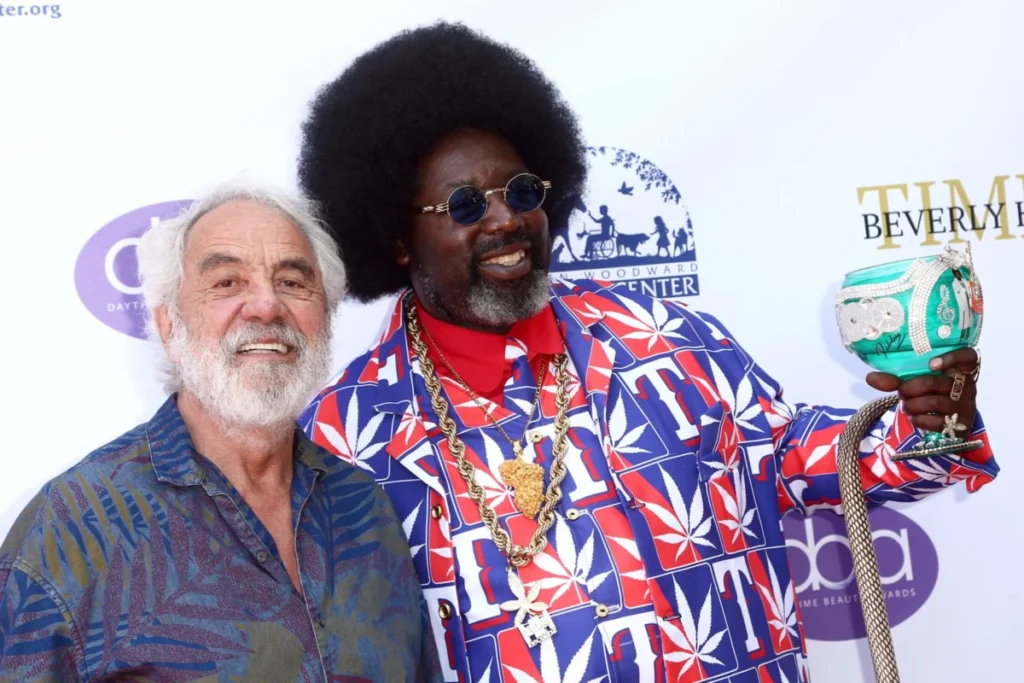

The musician Afroman, whose real name is Joseph Foreman, has declared a significant legal triumph a victory not just for artists, but for all Americans, following a jury’s decision to dismiss a defamation lawsuit brought against him by seven Ohio sheriff’s deputies. The deputies had accused the rapper of defaming them through music videos and social media posts that mocked their actions during a 2022 raid on his home. The verdict, delivered after a three-day trial, is being hailed by Afroman and his supporters as a crucial affirmation of free speech rights.
Background of the Raid and Subsequent Videos
The legal battle originated from an incident on April 28, 2022, when the Adams County Sheriff’s Department, along with other law enforcement agencies, executed a search warrant at Afroman’s property. According to court documents and Afroman’s testimony, the officers, reportedly armed and wearing tactical gear, forcibly entered his home, smashing down the door. The search resulted in the seizure of $5,031 in cash. However, no contraband was found, no arrests were made, and no charges were ever filed. Subsequently, the cash was returned to the rapper.
In the wake of the raid, Afroman, known for his hit song "Because I Got High," channeled his experience into creative expression. He produced several music videos and social media content that satirized the deputies involved. One prominent video, for a song titled "Lemon Pound Cake," humorously depicted a deputy allegedly fixated on a cake visible in the rapper’s kitchen. These creative works, intended as commentary and artistic expression, became the focal point of the legal dispute.
The Lawsuit and Claims of Defamation
In 2023, seven deputies – identified as Shawn D. Cooley, Justin Cooley, Lisa Phillips, Michael D. Estep, Shawn S. Grooms, Brian Newland, and Randolph L. Walters, Jr. – filed a civil lawsuit against Afroman. They alleged that his posts and videos subjected them to public ridicule, causing "emotional distress" and exposing them to "threats, including death threats." The deputies sought substantial damages, reportedly totaling $3.9 million, arguing that Afroman’s creative works constituted defamation and invasion of privacy, thereby harming their reputations and professional standing.
The lawsuit presented an unusual legal challenge, as it essentially asked the court to weigh the artistic expression of a musician against the professional and personal impact on law enforcement officers, particularly in the context of an incident where no criminal activity was ultimately proven.
Afroman’s Defense and the First Amendment
At the heart of Afroman’s defense was the assertion of his First Amendment rights. He argued that his creative output was protected speech, especially given the circumstances of the raid. During his testimony, Afroman contended that the deputies’ actions – forcibly entering his home without finding any evidence of wrongdoing – were unjustified. He expressed his belief that he had every right to comment on and satirize the event and the individuals involved, stating, "All of this is their fault, and they have the audacity to sue me."
His legal team emphasized that the videos were parodies and satirical commentary, which are traditionally afforded a high degree of protection under free speech principles. They argued that the deputies, as public figures involved in a public action, should be subject to public scrutiny and commentary, particularly when that action proved to be without probable cause.

The Trial and Jury Verdict
The trial, which lasted three days, drew significant attention, partly due to Afroman’s flamboyant courtroom demeanor. He appeared in an American flag-themed suit, further highlighting his defense of American freedoms. The proceedings culminated on Wednesday, March 19, with the jury deliberating for several hours before reaching a unanimous verdict.
Judge Jonathan Hein announced the jury’s findings, stating, "In all circumstances, the jury finds in favor of the defendant." This verdict completely exonerated Afroman, clearing him of all charges of defamation and invasion of privacy. The jury’s decision effectively validated Afroman’s defense that his actions were protected by the First Amendment and that the deputies had failed to prove their claims of defamation or resulting harm.
Afroman’s Reaction and Broader Implications
Speaking to CBS Mornings the day after the verdict, Afroman expressed his profound relief and satisfaction. "It’s not only for artists, it’s for Americans," he stated. "We have freedom of speech. They did me wrong and sued me because I was talking about it. It’s ‘For the people, by the people,’ so when the people can’t use their freedom of speech — bring up the problem, address the problem — then the problem never gets solved."
His statement underscores the broader implications of the ruling. Advocates for free speech argue that this verdict sets a crucial precedent, reinforcing the idea that individuals can use artistic and satirical means to critique the actions of public officials without facing crippling legal repercussions, especially when those actions are themselves questionable or unfounded. The case highlights the delicate balance between protecting individuals from genuine harm caused by defamation and safeguarding the right to express critical opinions, even when those opinions are delivered through humor or satire.
Analysis of the Ruling
The jury’s decision in favor of Afroman can be interpreted as a strong endorsement of the principle that satire and parody, particularly when commenting on matters of public concern or official conduct, are protected forms of speech. The fact that the raid yielded no charges against Afroman likely played a significant role in the jury’s perception of the deputies’ claims. By awarding no damages and finding Afroman not liable, the jury signaled that the deputies’ expectation of an unimpeded reputation, despite an ultimately fruitless law enforcement action, did not supersede Afroman’s right to comment on the event.
This case also serves as a reminder to law enforcement agencies about the potential consequences of actions that are perceived as overreach or lacking justification. While law enforcement officers are entitled to protection from genuine defamation, their actions are subject to public and artistic commentary, especially when those actions are carried out in a manner that draws public attention and concern. The substantial damages sought by the deputies, and their subsequent dismissal, suggest a jury’s assessment that the harm alleged was not proven to be defamation or was outweighed by protected speech.
The ruling is likely to be seen as a victory for creative expression and a check on the potential for legal action to stifle artistic commentary on public events and figures. It reaffirms that in a democratic society, the ability to critique and satirize those in positions of power is a vital component of free speech.