
The year 2026 marks a significant milestone in British history: the centenary of the birth of Queen Elizabeth II, the nation’s longest-reigning monarch. As commemorations draw near, the focus shifts to the extraordinary, yet surprisingly humble, beginnings of a sovereign destined for a life of unparalleled service and global recognition. While many might envision a royal birth occurring within the hallowed walls of a stately castle, the story of Elizabeth Alexandra Mary Windsor, the future Queen, commenced in a decidedly more conventional setting: a London townhouse at Number 17, Bruton Street, Mayfair. This unassuming address, once the London residence of the Earl and Countess of Strathmore, played an pivotal, albeit temporary, role in the prelude to one of the 20th century’s most defining royal narratives.
The choice of a townhouse for such a monumental birth was not a matter of necessity, but rather a reflection of prevailing family practices and a testament to the personal circumstances of the young royal couple. In the early 20th century, it was not uncommon for expectant mothers, particularly those from aristocratic backgrounds, to seek the comfort and familiar surroundings of their maternal homes for childbirth. For Elizabeth’s mother, then Lady Elizabeth Bowes-Lyon, returning to her parents’ London abode provided precisely this sanctuary. The Earl and Countess of Strathmore, prominent figures in society, maintained a sophisticated urban residence at Number 17, a property that had already witnessed a significant royal occasion earlier in the decade.
A Double Royal Significance for Bruton Street
Number 17 Bruton Street was already etched into a significant royal narrative prior to the birth of the future Queen. In April 1923, just three years before Elizabeth II’s arrival, Lady Elizabeth Bowes-Lyon, the youngest daughter of the Earl and Countess, departed from this very address as a radiant bride. Her destination was Westminster Abbey, where she married Prince Albert, Duke of York, the second son of King George V. This union, a union of personal affection and dynastic importance, placed Lady Elizabeth firmly within the royal family, though the prospect of her becoming Queen was then a distant consideration. The address, therefore, held a dual significance: it was the departure point for a royal bride and, subsequently, the birthplace of a future monarch.
The decision for the Duchess of York, as she was by then known, to return to her mother’s home for the birth of her first child was a personal one, driven by the desire for familial support during a momentous event. The Duke and Duchess of York were residing at 17 Bruton Street when their eldest daughter was born. The delivery, a Caesarean section, took place in the early hours of April 21st, 1926, at 2:40 AM. This marked the arrival of a princess who, at that juncture, was third in line to the throne, a position that offered little immediate indication of her future ascent to the highest office in the land. The prevailing expectation was that her uncle, Edward, Prince of Wales, and her father, the Duke of York, would precede her in the line of succession. History, however, had other plans, and the seemingly minor event of a royal birth in a Mayfair townhouse would eventually ripple through the decades, shaping the destiny of a nation.
The Dawn of a Royal Icon: Early Days and Public Fascination
While the circumstances of her birth were unpretentious, the arrival of Princess Elizabeth did not go unnoticed. The public and the press, ever keen to catch a glimpse of the royal family, maintained a keen interest in the young princess. Weeks after her birth, photographs captured the infant princess being carried from 17 Bruton Street, held in the arms of her nanny, with her proud mother walking alongside, her face alight with happiness. This early image serves as a potent reminder that the intense public fascination with royal babies and the ensuing media frenzy are not a recent phenomenon, but a recurring theme throughout royal history. Photographers would often stake out Bruton Street, hoping to secure an exclusive photograph of the infant princess, a testament to the enduring public appetite for royal news and imagery.
The early years of Queen Elizabeth II’s life were spent within the embrace of her immediate family, a period of relative privacy before the weight of her destiny became apparent. The experiences of her childhood, though lived within the gilded cage of royalty, were shaped by the familial bonds forged in homes like 17 Bruton Street, offering a glimpse into the human side of a figure who would become an enduring symbol of stability and tradition. The intimate details of her upbringing, the quiet moments shared within the family, are often overshadowed by the grand pronouncements and public duties of her reign, yet they form the bedrock of her character and her understanding of duty.
From Townhouse to Throne: A Chronology of a Remarkable Life
The journey from a Mayfair townhouse to the throne is a narrative woven through significant historical events and personal resilience. A brief chronology highlights the key turning points in Queen Elizabeth II’s life:

- April 21, 1926: Elizabeth Alexandra Mary is born at 17 Bruton Street, Mayfair, London. She is the eldest child of Prince Albert, Duke of York (later King George VI), and Lady Elizabeth Bowes-Lyon (later Queen Elizabeth The Queen Mother).
- 1936: Following the abdication of his brother, Edward VIII, Prince Albert becomes King George VI, making his eldest daughter, Elizabeth, heir presumptive to the throne. This pivotal moment irrevocably alters the trajectory of her life.
- 1947: Princess Elizabeth marries Lieutenant Philip Mountbatten (formerly Prince Philip of Greece and Denmark) at Westminster Abbey. This union would span over seven decades and provide a steadfast partnership through her reign.
- February 6, 1952: King George VI dies. Princess Elizabeth, who was on a royal tour in Kenya at the time, accedes to the throne and becomes Queen Elizabeth II. Her coronation takes place on June 2, 1953, at Westminster Abbey, a ceremony watched by millions worldwide.
- 1953-2022: Queen Elizabeth II reigns for over 70 years, undertaking thousands of official engagements, representing the United Kingdom and the Commonwealth on the global stage, and providing a constant presence through periods of immense social, political, and technological change.
- September 8, 2022: Queen Elizabeth II passes away peacefully at Balmoral Castle, Scotland, at the age of 96, concluding the longest reign in British history.
This timeline underscores the dramatic shift from a private birth to a public life of immense responsibility and global influence. The early years, rooted in the ordinary routines of family life, provided a foundation for the extraordinary demands of her future role.
The Enduring Legacy of a Humble Beginning
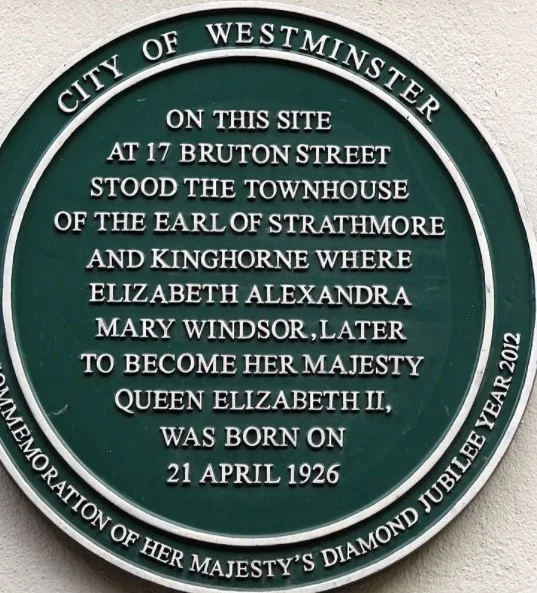
Today, Number 17 Bruton Street stands not as a palatial monument, but as a testament to the fact that significant historical figures can emerge from unexpected origins. The building has been transformed into a restaurant, Haakasan, a far cry from its royal past. However, a discreet plaque now adorns its facade, a poignant reminder of its place in royal history. This commemorative marker, installed during the Diamond Jubilee celebrations in 2012, acknowledges the profound significance of the location, ensuring that future generations are aware of the humble beginnings of a monarch whose reign left an indelible mark on the 20th and 21st centuries.
The existence of such a plaque is more than just a historical marker; it is an invitation to reflect on the nature of destiny and the unpredictable currents of history. The story of Queen Elizabeth II’s birth in a London townhouse is a compelling counterpoint to the romanticized notion of royal births exclusively occurring in fortresses and palaces. It highlights the human element within the monarchy, the personal choices and circumstances that shape even the most public of lives. It reminds us that greatness can indeed spring from the most ordinary of settings, and that the foundations of enduring legacies are often laid in the quiet, familial spaces that precede the grand stages of history.
Analysis of Implications: The Power of Place and Persona
The significance of 17 Bruton Street extends beyond its physical location; it represents a powerful narrative about the accessibility and evolving nature of the monarchy. In the early 20th century, while the concept of royalty was still steeped in tradition and inherent privilege, the birth of a future Queen in a private residence rather than a royal palace subtly underscored a shift. It suggested a growing emphasis on personal circumstances and familial comfort, even within the highest echelons of society. This was a period where the "personal" aspect of royal lives was beginning to gain more public traction, paving the way for a more relatable and, perhaps, more widely accepted form of monarchy in the modern era.
The contrast between the intimate setting of a townhouse birth and the global stage upon which Queen Elizabeth II would eventually perform her duties is stark. This juxtaposition serves as a powerful reminder of the transformative power of both personal evolution and historical circumstance. The young princess, born into a line of succession that seemed unlikely to place her on the throne, was ultimately prepared for her destiny through a combination of familial upbringing and unforeseen historical events, notably her father’s unexpected ascension to the throne. Her early life, shaped by the relative normalcy of a family home, likely provided her with a grounded perspective that would prove invaluable throughout her extraordinarily long and demanding reign.
Furthermore, the story of 17 Bruton Street offers a valuable insight into the public’s perception and fascination with royalty. The enduring interest in the birthplace of Queen Elizabeth II, even decades later, demonstrates the potent allure of royal narratives. It taps into a collective imagination that seeks to understand the origins of those who occupy positions of immense symbolic power. The plaque, therefore, is not merely an acknowledgment of a past event but a focal point for continued public engagement with royal history. It allows for a tangible connection to a historical moment, fostering a sense of shared heritage and national pride.
The evolution of 17 Bruton Street from a prestigious family residence to a bustling restaurant also mirrors the broader societal changes that Queen Elizabeth II witnessed and navigated throughout her reign. The dynamism of Mayfair, the transformation of urban landscapes, and the shifts in societal norms all occurred concurrently with her enduring presence on the throne. The fact that this significant royal birthplace now houses a thriving commercial establishment speaks to the continuous flow of life and progress, a stark contrast to the often static perception of royal institutions.
In conclusion, the story of Queen Elizabeth II’s birth at 17 Bruton Street is far more than a curious footnote in royal history. It is a narrative rich with symbolism, highlighting the interplay of personal choice, familial context, and the unpredictable hand of destiny. It underscores the human dimension of royalty, demonstrating that even the most iconic figures begin their lives in settings that, while significant to their families, are often far from the grand stages we associate with their public lives. As the world prepares to commemorate the centenary of her birth, the unassuming townhouse in Mayfair stands as a quiet but powerful testament to the extraordinary journey of a monarch who, from the most unlikely of origins, came to define an era.