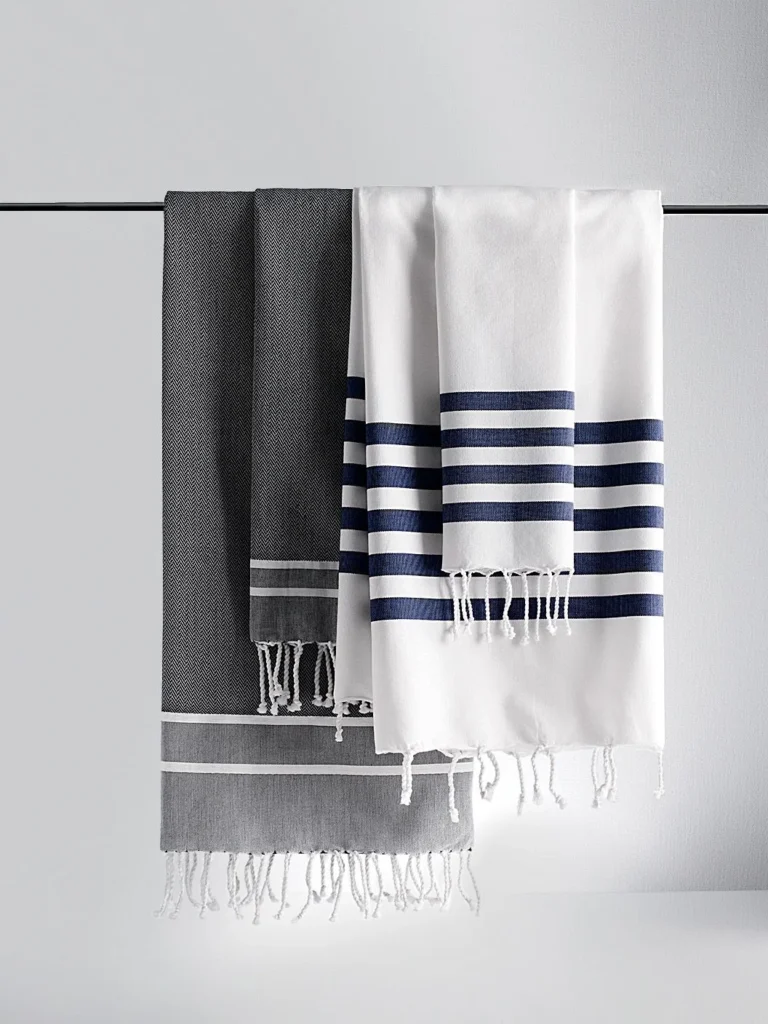

The modern textile market is currently witnessing a significant shift in consumer preference as the traditional Turkish peshtemal, once a staple of the ancient hammam, transitions into a multi-functional essential for the contemporary home and travel kit. While many consumers equate Turkish bath linens with the heavy, plush cotton found in luxury hotels, the peshtemal represents a different side of the Aegean textile tradition. Unlike their bulky terry-cloth counterparts, these towels are flat-woven, exceptionally lightweight, and designed for rapid evaporation. This unique combination of properties has allowed the Turkish beach towel to transcend its original purpose, finding new life as a bath linen, a stylish sarong, a sand-resistant picnic blanket, and even a decorative interior throw.
The Technical Evolution of Turkish Cotton
The efficacy of the Turkish towel is rooted in the specific quality of the cotton grown in the Aegean region. Turkish cotton is characterized by its long-staple fibers, which are spun into threads that are both stronger and smoother than standard cotton varieties. Because these fibers are long, there are fewer joins in the yarn, which results in a softer feel and higher durability.

In the textile industry, the weight and density of these products are measured in grams per square meter (GSM). Standard plush bath towels typically fall within the 500 to 800 GSM range, providing a thick, sponge-like experience that retains significant amounts of water. In contrast, a traditional Turkish peshtemal generally ranges between 300 and 450 GSM. This lower density is intentional; the flat-weave construction allows the fibers to absorb moisture quickly while remaining thin enough to dry in a fraction of the time required by terry cloth. Furthermore, Turkish cotton possesses a unique characteristic where it becomes softer and more absorbent with each subsequent wash, a trait that has contributed to its reputation as a long-term investment for the home.
A Chronology of the Peshtemal: From Hammam to High Fashion
The history of the peshtemal is inextricably linked to the Ottoman Empire’s bathing culture. For centuries, these towels were hand-loomed in regions like Buldan and Denizli, specifically designed to be worn in the steam-filled environment of a hammam. The flat weave allowed the garment to be lightweight enough to wear while wet, yet absorbent enough for drying off after the ritual. The signature fringe, or "püskül," was not merely decorative; it was a functional result of the loom artistry, where the warp threads were hand-tied to prevent the fabric from unraveling.
In the late 20th and early 21st centuries, the global wellness and travel industries began to take note of the peshtemal’s versatility. As airline baggage restrictions tightened and the "minimalist" lifestyle trend gained traction, the ability of a single piece of fabric to serve as a towel, a blanket, and an accessory became a significant selling point. Today, the market has expanded from traditional striped designs to include artisanal collaborations that merge ancient weaving techniques with modern aesthetics and rigorous sustainability standards.
.jpeg)
Top Market Selections and Their Impact on Sustainable Luxury
As the demand for high-quality Turkish textiles grows, several brands have emerged as leaders by focusing on specific consumer needs, ranging from artisanal heritage to eco-conscious manufacturing.
Mizar & Alcor: The Intersection of Culture and Carbon Neutrality
For consumers seeking a "color-forward" aesthetic, Mizar & Alcor offers handwoven towels that blend Mediterranean and African design influences. Priced at approximately $124 for a set of two, these organic linen-cotton blends are produced on centuries-old looms. Beyond the visual appeal of bold blue stripes and crimson accents, the brand represents a growing movement toward radical corporate responsibility. Mizar & Alcor is currently carbon-negative, reportedly offsetting 200% of its annual carbon impact. This move reflects a broader trend in the luxury textile sector where the "story" of the product—including its environmental footprint—is as important as its physical quality.
West Elm: Accessibility and Ethical Certification
On the more accessible end of the spectrum, West Elm’s Turkish Tassel Bath Towels, retailing for approximately $30, demonstrate how mass-market retailers are adopting ethical standards. At 300 GSM, these towels are exceptionally lightweight. Their significance in the market is bolstered by Oeko-Tex and Fair Trade certifications. Oeko-Tex ensures that the textiles are free from harmful chemicals, a factor increasingly prioritized by health-conscious consumers. The option for personalization through monogramming also taps into the consumer desire for "quiet luxury" and individualized home goods.

Serena & Lily: The Coastal Aesthetic and Structural Density
The "coastal chic" movement has found a perfect partner in the Fouta Turkish bath collection. Serena & Lily’s offerings, typically priced around $48, utilize a double weave of white Aegean cotton. At 420 GSM, these towels are denser than the average peshtemal, catering to users who want the benefits of a flat weave but prefer a bit more substance and weight. The use of yarn-dyed stripes in sky blue and navy reinforces the "coastal grandmother" aesthetic that has dominated interior design trends over the last several years.
Coyuchi: Premium Organic Standards
Coyuchi’s Mediterranean Organic Beach Towels, priced near $98, represent the premium organic segment. These products are GOTS (Global Organic Textile Standard) and Made Safe-certified. GOTS certification is the gold standard for organic fibers, encompassing both environmental and social criteria throughout the entire supply chain. Reviewers frequently highlight the high absorbency of these towels despite their thin profile, validating the industry claim that organic, long-staple cotton outperforms conventional blends in functional longevity.
Economic and Environmental Implications of the Global Towel Trade
The proliferation of Turkish towels has significant implications for the Turkish textile industry, which is one of the country’s most vital economic sectors. Turkey is currently one of the world’s top exporters of home textiles, and the shift toward value-added, branded peshtemals allows local weavers to compete on quality rather than just volume.
.jpeg)
From an environmental perspective, the adoption of Turkish towels over traditional terry cloth offers a hidden benefit: reduced energy consumption. Because peshtemals are thinner and dry more quickly, they require significantly less time in electric dryers—or can be easily air-dried. Furthermore, their compact nature allows for more units to be washed in a single load, reducing water and detergent usage. In an era where household energy efficiency is a primary concern, the transition to lighter linens represents a practical step toward a lower-carbon lifestyle.
Expert Analysis: Why Versatility is the New Luxury
Industry analysts suggest that the success of the Turkish beach towel is a symptom of a larger shift in consumer psychology. Modern living spaces are shrinking, particularly in urban centers, leading to a "less but better" approach to home furnishings. A product that functions as a bath towel in the morning, a decorative throw on a sofa in the afternoon, and a travel accessory for a weekend trip provides a level of utility that a standard terry towel cannot match.
Furthermore, the rise of "slow fashion" and artisanal appreciation has brought the hand-tied fringe and loom-woven textures of the peshtemal to the forefront. Consumers are increasingly willing to pay a premium for items that show the hand of the maker. This is evident in the popularity of budget-friendly yet artisanal options found on platforms like Etsy, where creators design and tie fringes by hand, offering custom embroidery and tribal patterns that appeal to a younger, design-savvy demographic.
.jpeg)
Future Outlook
Looking ahead, the Turkish towel market is expected to continue its trajectory toward high-tech sustainability and lifestyle integration. We are likely to see more blends involving hemp or Tencel to further enhance quick-drying properties, as well as an increase in "traceable" cotton, where consumers can scan a QR code to see the exact farm in the Aegean region where their towel’s fiber was harvested.
As the boundaries between indoor and outdoor living continue to blur, the peshtemal stands as a quintessential example of a heritage product that has successfully adapted to the demands of the 21st century. Whether utilized for its sand-free properties on a Mediterranean coast or its sophisticated drape in a modern minimalist bathroom, the Turkish beach towel has secured its place as a permanent fixture in the global design landscape.