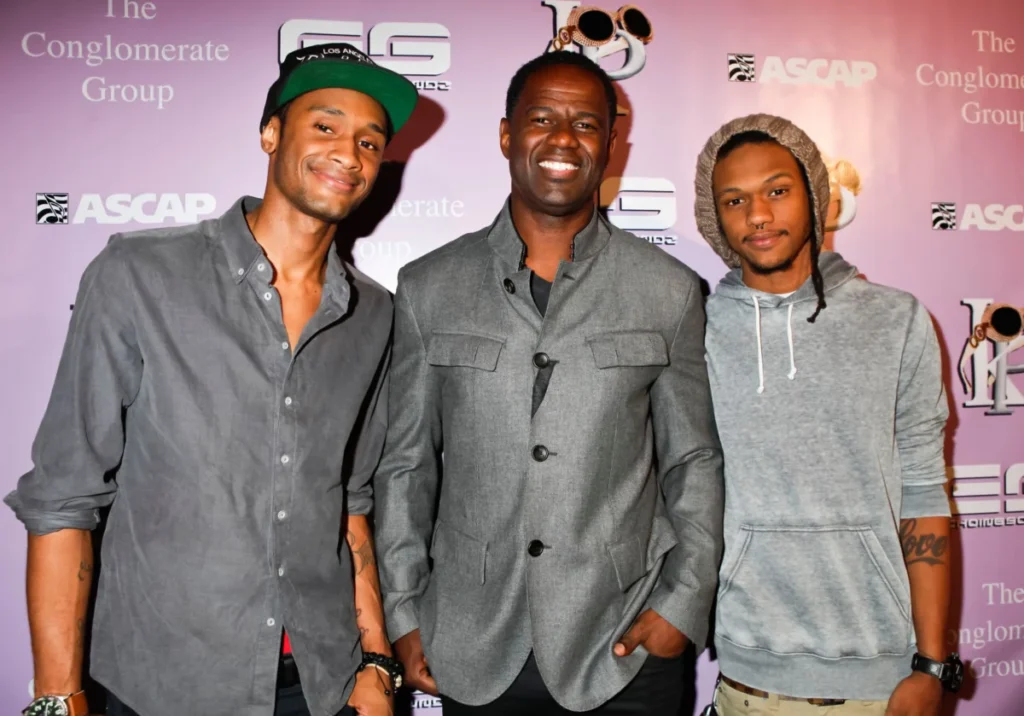

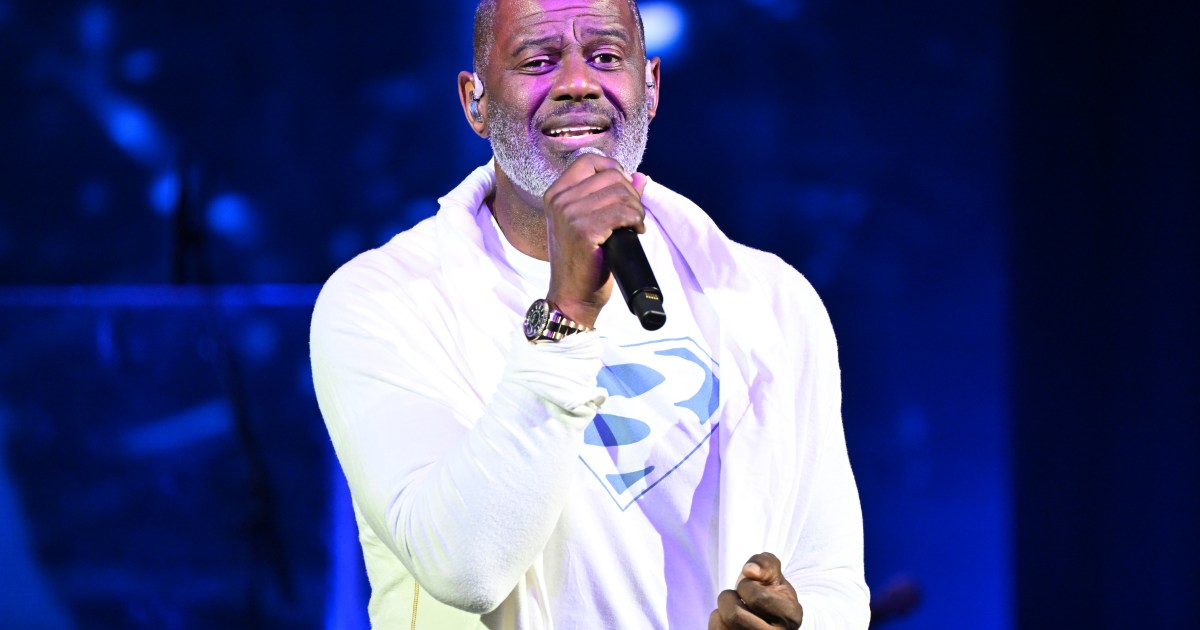
Brian McKnight, the acclaimed R&B vocalist and sixteen-time Grammy Award nominee, has filed a comprehensive defamation lawsuit against several individuals and media entities, alleging a coordinated effort to destroy his personal and professional reputation. The legal action, filed in April 2026, names his eldest son, Brian McKnight Jr., his former wife, Julie McKnight, social media commentators Marc Lamont Hill and Latasha Kebe (known professionally as Tasha K), and the New York Post as defendants. At the heart of the litigation is what McKnight describes as a "sensational but false narrative" regarding his relationship with his late son, Niko McKnight, who passed away in May 2025 following a protracted battle with cancer.
The plaintiff asserts that the defendants conspired to propagate a malicious story claiming he abandoned Niko during his final days, refusing to offer emotional support or acknowledge his paternal bond. McKnight characterizes these reports as a "malicious character assassination" intended to generate profit through digital engagement and tabloid circulation. Beyond the allegations regarding his son, the lawsuit also addresses a series of highly inflammatory claims made by Latasha Kebe, including an accusation of sexual misconduct involving a minor, which McKnight categorically denies as "shockingly dishonest" and legally actionable.
The Core Allegations and Legal Basis of the Complaint
The lawsuit centers on the fallout following the death of Niko McKnight in May 2025. In the wake of that tragedy, various social media platforms and news outlets published reports suggesting that Brian McKnight had remained estranged from Niko despite the severity of his illness. These reports often cited family members and "sources close to the situation," painting a picture of a cold and distant father who turned his back on a dying child.
McKnight’s legal team argues that these assertions meet the legal threshold for defamation: the communication of a false statement to a third party that causes injury to the subject’s reputation. Because McKnight is a public figure, the "actual malice" standard—established by the Supreme Court in New York Times Co. v. Sullivan—will likely be a central point of contention. The plaintiff must prove that the defendants published the information with the knowledge that it was false or with reckless disregard for whether it was false or not.
In his statements to TMZ and in court filings, McKnight maintains that the narrative of abandonment was fabricated to exploit a family tragedy for financial gain. He alleges that the defendants leveraged the emotional weight of a child’s death to incite public outrage, which in turn drove traffic to blogs and increased newspaper sales. The inclusion of the New York Post and high-profile commentators like Marc Lamont Hill suggests that McKnight is targeting not just the originators of the claims, but also the institutional amplifiers who gave the narrative mainstream legitimacy.
A History of Family Estrangement and Public Conflict
To understand the gravity of the current legal battle, one must look at the long-standing and highly public rift within the McKnight family. Brian McKnight was married to Julie McKnight from 1990 to 2003, a union that produced two sons, Brian Jr. and Niko. For many years, the family appeared to be a cohesive unit, with the sons often appearing alongside their father in musical capacities. However, the relationship began to deteriorate publicly over the last decade.
The estrangement reached a critical tipping point in early 2024 when McKnight made a series of controversial statements on social media. During a period of online friction with his older children, McKnight referred to them as "products of sin" and suggested that his "true" family consisted only of his current wife, Leilani Mendoza, and their children, including their young son, Brian Kainoa Makoa McKnight Jr. These comments sparked a massive backlash from fans and critics alike, who accused the singer of "erasing" his biological children from his first marriage.
This existing public tension provided the backdrop for the allegations that surfaced after Niko’s death. Critics of the singer argued that his previous comments were proof of a pattern of abandonment, while McKnight argues that the defendants weaponized his past statements to lend unearned credibility to their "false narrative" regarding Niko’s final months.
Chronology of Events Leading to Litigation
The timeline of the dispute spans several years, escalating from private disagreements to a multi-party legal battle:
- 1990–2003: Brian McKnight and Julie McKnight are married; the couple has two sons, Brian Jr. and Niko.
- 2017: Brian McKnight marries Leilani Mendoza, marking a definitive shift in his public focus toward a new family unit.
- 2019–2023: Public social media exchanges between Brian Jr. and his father indicate a deepening rift, involving allegations of financial neglect and emotional distance.
- Early 2024: Brian McKnight posts a video response to critics, using the term "products of sin" to describe his older children, which leads to widespread condemnation on social media.
- May 2025: Niko McKnight passes away from cancer. Shortly thereafter, reports surface on blogs and in the New York Post alleging that Brian McKnight refused to visit or contact his son before his death.
- Late 2025: Latasha Kebe (Tasha K) publishes content alleging further misconduct, including the claim of an inappropriate relationship with a minor.
- April 2026: Brian McKnight officially files suit for defamation and emotional distress against his son, his ex-wife, two bloggers, and the New York Post.
Supporting Data and the Impact of "Cancel Culture" on Legacy Artists
The impact of these allegations on McKnight’s career has been measurable. According to industry analysts, the "abandonment" narrative led to a significant decline in the singer’s streaming numbers and a series of cancellations for scheduled performances in late 2025. In the modern music industry, a legacy artist’s brand is heavily dependent on their perceived character, particularly for R&B singers whose music is built on themes of love, family, and emotional vulnerability.
The lawsuit claims that the "malicious character assassination" resulted in the loss of lucrative touring contracts and endorsement deals. By naming Tasha K as a defendant, McKnight is tapping into a growing legal trend where celebrities seek significant damages from independent digital creators. Tasha K previously lost a multi-million dollar defamation suit to rapper Cardi B, a case that established a precedent for holding digital "tea" bloggers accountable for the veracity of their reporting.
The inclusion of Marc Lamont Hill, a respected academic and commentator, highlights the reach of the narrative. McKnight’s legal team suggests that when figures with intellectual authority repeat unverified claims, the damage to a reputation is compounded, as the public perceives the information as vetted and factual.
Official Responses and Industry Implications
While the defendants have yet to file their formal responses in court, the New York Post typically defends its reporting under the protections of the First Amendment and the "fair report" privilege if the information was gathered from official or reliable sources. Julie McKnight and Brian Jr. have previously utilized social media to share their perspectives on the family dynamic, often portraying the singer as a man who chose to walk away from his original family to start anew.
The implications of this case extend beyond the McKnight family. It raises critical questions about the boundaries of celebrity reporting and the responsibilities of family members when airing grievances in the public square. If McKnight is successful, the case could serve as a deterrent against "viral reporting," where outlets prioritize speed and sensationalism over traditional fact-checking.
Conversely, if the defendants can prove the substantial truth of their claims—or if McKnight fails to meet the high burden of proof required for public figures—it may reinforce the right of individuals to speak publicly about their personal experiences with celebrities, even when those experiences are negative.
Broader Impact on Reputation Management
For Brian McKnight, this lawsuit is an attempt to reclaim a legacy that spans over three decades. With hits like "Back at One" and "Anytime," he has long been a staple of the American music landscape. However, the headlines of the past two years have threatened to overshadow his musical contributions with a narrative of familial discord and cruelty.
The legal proceedings are expected to be lengthy and invasive, likely requiring the disclosure of private communications, medical records, and financial documents. As the case moves toward discovery, the public will likely see a more detailed accounting of the final months of Niko McKnight’s life. Brian McKnight remains steadfast in his assertion that the truth will vindicate him, stating that he had "no alternative" but to seek the court’s intervention to clear his name for the sake of his current family and his professional future.
As the entertainment industry watches closely, the outcome of McKnight v. McKnight et al. will likely become a landmark reference point for defamation in the era of social media, where the line between private family tragedy and public news continues to blur.