
The concept of the home as a sanctuary has undergone a significant transformation in the 2020s, moving beyond mere functionality to embody a specific cultural currency known as "dec-aura." Derived from the "aura" trend that proliferated across social media platforms like TikTok in 2024, dec-aura points serve as a subjective yet increasingly influential metric for evaluating the sophistication, authenticity, and "cool factor" of an interior space. While traditional interior design has long focused on color theory, spatial planning, and ergonomics, the emergence of dec-aura suggests a shift toward "vibes-based" assessment—a system where the success of a home is measured by its magnetic presence and the perceived intentionality of its curation.
The Cultural Context: From TikTok Slang to Architectural Standard
To understand the rise of dec-aura, one must first examine the linguistic origins of "aura" within digital subcultures. In early 2024, the term became shorthand for an individual’s innate charisma or "coolness." This social credit system, popularized by Gen Z users, assigns numerical values to mundane or extraordinary actions. According to cultural reports from outlets such as Teen Vogue, positive "aura points" are awarded for displays of competence or effortless style—such as parallel parking with precision—while points are deducted for "cringe-worthy" moments or social faux pas.
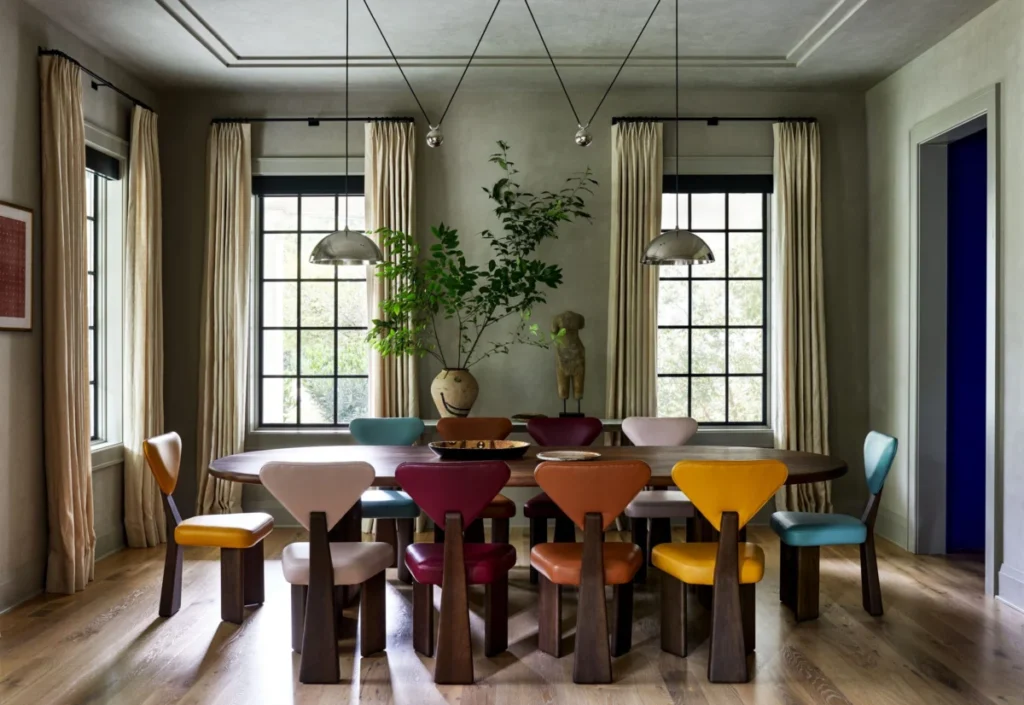
The translation of this concept into the realm of interior design—rebranded as dec-aura—reflects a broader movement toward personal expression over mass-market homogeneity. Designers now observe that a high-scoring home is not necessarily defined by the presence of expensive furniture or A-list labels, but by a cohesive, lived-in quality that suggests a narrative. This shift coincides with a decline in the popularity of "Millennial Gray" and the minimalist, catalog-ready aesthetics that dominated the 2010s.
The Chronology of Modern Design Trends
The evolution toward dec-aura can be traced through a specific timeline of domestic aesthetics:
- 2015–2019: The Era of Fast Furniture and Minimalism. Driven by the accessibility of mid-century modern replicas and the "IKEA-to-landfill" cycle, homes often felt like showrooms. The focus was on cleanliness and uniformity.
- 2020–2022: The Pandemic Pivot. As global populations were confined to their homes, the demand for comfort and functionality spiked. This period saw the rise of "Cottagecore" and "Cluttercore," signaling an early return to maximalism and personality.
- 2023: The Birth of "Quiet Luxury." A focus on high-quality materials and understated wealth began to take hold, emphasizing craftsmanship over logos.
- 2024–Present: The Dec-Aura Era. The current landscape prioritizes "collected" interiors, where the history of an object is as important as its visual appeal. This era is defined by a rejection of "set-like" rooms in favor of layered, storied spaces.
Elements That Accumulate Dec-Aura Points
Professional designers have identified several key pillars that contribute to a home’s aura. These elements focus on depth, texture, and the rejection of the "new for the sake of new" philosophy.
Collected and Layered Interiors
Zoë Feldman, a prominent designer known for her work on high-profile projects such as Rachel Brosnahan’s Manhattan apartment, emphasizes that "aura" is built over time. A room that feels assembled across years—mixing vintage finds with contemporary art and personal heirlooms—reads as more compelling. This "authorship" of a space creates a sense of sophistication that cannot be purchased in a single transaction.

The Value of Patina and Customization
Vintage pieces with visible wear, or "patina," provide an inherent richness. These items ground a room, offering a contrast to the sleek lines of modern architecture. Furthermore, custom-made furniture acts as a significant multiplier for dec-aura points. Drew Michael Scott, founder of Lone Fox, notes that the ability to identify a piece as "one of a kind" or "custom" elevates a home’s status from a consumer space to a curated gallery.
Functional Intentionality
Dec-aura is also found in the small, thoughtful details that improve daily life. Chloe Legras of Boxwood Avenue points to smart vanity storage—such as a shallow marble shelf above a sink—as a high-scoring motif. It combines classical aesthetics with practical utility, housing skincare or jewelry in a way that feels intentional rather than cluttered.
Technical Failures: What Deducts Dec-Aura Points
Just as certain elements can elevate a home, specific design choices and maintenance failures can result in a significant loss of aura. These "crimes" often stem from a lack of attention to detail or an over-reliance on fleeting trends.
Over-Uniformity and Trend Chasing
When a home looks like it was sourced entirely from a single catalog or follows a specific trend too literally, it loses its sense of authenticity. Francesca Grace, a designer and home stager, warns that "set-like" interiors feel impersonal and flat. The lack of tension between different styles and time periods results in a space that may feel dated as soon as the next trend cycle begins.
The "Showroom" Fallacy
A major deduction in dec-aura points occurs when a home feels unlived in. Drew Michael Scott cites unburned taper candles as a primary offender. "Your house is not a showroom," Scott argues, suggesting that every day a "fancy" candle remains unlit, the home loses points. Similarly, "sloppy styling"—such as visible wires, flat sofa cushions, and unconsidered architectural details like misaligned millwork—indicates a lack of care that diminishes the overall "vibe."
The Importance of Technical Consistency
In the technical realm, lighting and hardware play a crucial role. Mismatched light temperatures (mixing cool blue bulbs with warm yellow ones) are considered a major design flaw. Designers generally recommend a consistent color temperature, often 2700K, to maintain a cohesive atmosphere. Additionally, the use of "brushed" metal finishes on plumbing or hardware is increasingly viewed as a low-aura choice. Professionals advocate for natural finishes that age over time, such as unlacquered brass or polished nickel, which contribute to the home’s evolving story.
Supporting Data: The Economics of the "Collected" Home
The shift toward dec-aura is reflected in broader market data within the interior design and real estate industries. According to a 2023 report by 1stDibs, a leading marketplace for luxury design, demand for vintage and antique furniture has seen a steady 15% year-over-year increase. Consumers are increasingly prioritizing "sustainability and uniqueness," two core tenets of the dec-aura philosophy.

Furthermore, a survey by the National Association of Realtors (NAR) indicated that homes with "high-quality, unique architectural details" and "well-curated interiors" tend to stay on the market for 20% less time than those with standard, builder-grade finishes. This suggests that "aura" has tangible economic value in the real estate market.
Broader Implications and Industry Analysis
The rise of dec-aura signifies a democratization of design expertise. In previous decades, the "rules" of design were held by a small group of professionals and published in glossy magazines. Today, the "aura" system allows homeowners to use social cues and personal intuition to guide their choices.
However, this movement also places a higher demand on the quality of manufacturing. As consumers move away from "fast furniture" to avoid losing dec-aura points, brands are forced to emphasize craftsmanship and longevity. The "fast fashion" equivalent in the furniture world is facing a crisis of relevance as "heirloom quality" becomes the new standard for the social-media-savvy homeowner.
Moreover, the focus on dec-aura highlights the psychological impact of our surroundings. A home with high dec-aura is, by definition, "inviting" and "magnetic." This suggests that the trend is not merely about vanity or social points, but about creating environments that foster well-being and a sense of belonging. By prioritizing personal history and intentionality over generic beauty, the dec-aura movement encourages a more mindful approach to consumption and domestic life.
Conclusion: The Future of the "It Factor"
As we move further into the decade, the concept of dec-aura is likely to become more refined. While the scoring system remains a playful nod to internet culture, the underlying principles—authenticity, layering, and technical precision—are timeless hallmarks of good design. The successful home of the future will not be the one that most closely resembles a showroom, but the one that most effectively tells the story of those who dwell within it. In the world of dec-aura, the ultimate luxury is a space that feels unequivocally alive.