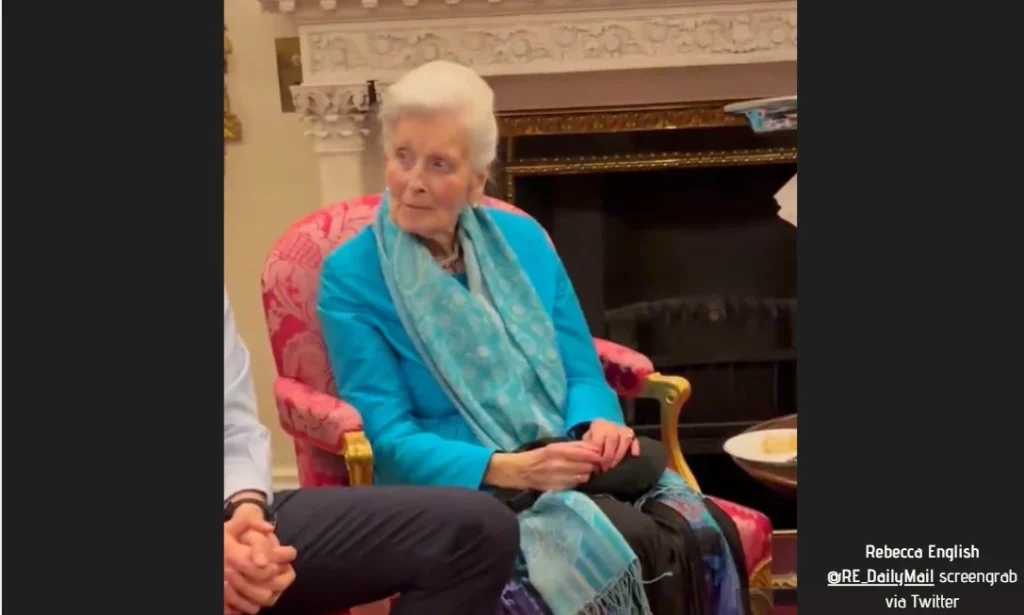

Princess Alexandra, a distinguished member of the Royal Family, made a rare and significant public appearance alongside senior relatives as King Charles III spearheaded heartfelt tributes to the late Queen Elizabeth II on what would have marked her 100th birthday. The 89-year-old royal, whose public engagements have become increasingly infrequent in recent years, stood with a full family contingent at Buckingham Palace for a special reception commemorating the late sovereign’s remarkable life and enduring legacy.
The gathering, held in the opulent Marble Hall of Buckingham Palace, served as a dual celebration, bringing together individuals who are themselves celebrating their centenary birthdays, alongside representatives from a multitude of organisations that flourished under Queen Elizabeth II’s 70-year reign. This unique assembly underscored the Queen’s profound and far-reaching impact across various sectors of British society and beyond.
Among the distinguished attendees were Queen Camilla, the Prince and Princess of Wales, the Princess Royal, the Duke and Duchess of Edinburgh, the Duke and Duchess of Gloucester, and the Duke of Kent, alongside Princess Alexandra. Their collective presence highlighted the deep familial bonds and the shared commitment to honouring their late matriarch.
The reception provided a platform for King Charles III to personally present commemorative centenary cards to those guests reaching the significant milestone of 100 years of age. A beautifully adorned birthday cake, a symbolic centrepiece, was also served, a touching nod to the monarch whose own 100th birthday was being so profoundly remembered. This personal touch from the King added an intimate layer to the formal proceedings, reinforcing the human element of royal commemorations.
Princess Alexandra’s attendance, in particular, garnered considerable attention from royal commentators and the public alike. As the Queen’s cousin, she has maintained a lifelong association with the Crown. While she has never formally announced a retirement from royal duties, her public appearances have become notably less frequent, leading to quiet speculation about her future role. Her presence at this significant family occasion was therefore viewed as both a powerful symbolic gesture and a warmly welcomed affirmation of her enduring connection to the Royal Family and her loyalty to the monarchy. Her decades of service, often in a more understated capacity, and her historical role as a confidant to Queen Elizabeth II, lent a particular poignancy to her participation.
Earlier in the day, King Charles III and Queen Camilla commenced the commemorations with a visit to the British Museum. There, they viewed designs and plans for the forthcoming national memorial dedicated to Queen Elizabeth II. This ambitious project, anticipated to be completed in 2028, aims to create a lasting tribute to the longest-reigning monarch in British history, a testament to her profound influence and the enduring affection she commanded.
Adding to the day’s solemn and heartfelt observances, Buckingham Palace released a deeply moving recorded message from King Charles III. Filmed at the King’s Scottish residence, Balmoral Castle, the location imbued with personal memories of his mother, the monarch reflected on “the life and loss of a Sovereign who meant so much to us all.” His words, delivered with palpable emotion, resonated with a nation still coming to terms with the passing of their beloved Queen. He concluded his poignant address with the deeply personal sentiment: “God bless you, darling Mama; you remain forever in our hearts and prayers.” This broadcast allowed millions to share in the King’s personal grief and collective remembrance.
A Legacy of Service: Queen Elizabeth II’s 70-Year Reign
Queen Elizabeth II ascended to the throne in 1952, inheriting a nation undergoing profound societal and political shifts in the aftermath of World War II. Her reign, spanning seven decades, witnessed unprecedented change, from the decolonisation of the British Empire to the digital revolution. Throughout these transformations, she remained a steadfast symbol of continuity and stability, embodying a dedication to duty that became her hallmark. Her personal commitment to service, often expressed through her patronage of numerous charities and organisations, left an indelible mark on British society.
Her involvement with organisations such as Cancer Research UK, the British Red Cross, The Jockey Club, The Kennel Club, and the Army Benevolent Fund demonstrates the breadth of her interests and her commitment to supporting causes that improved the lives of citizens. These patrons were not merely symbolic; the Queen often engaged with the work of these bodies, providing crucial support and visibility that enabled them to achieve their objectives. The presence of representatives from these esteemed organisations at the Buckingham Palace reception served as a powerful reminder of the Queen’s lasting impact on their work and the communities they serve.
The Royal Family’s United Front
The gathering at Buckingham Palace showcased a united front from the Royal Family, a display of solidarity and shared mourning as they collectively honoured Queen Elizabeth II. King Charles III, as the new monarch, shoulders the significant responsibility of leading these national commemorations, a role he has embraced with gravitas and evident sincerity. His recent accession to the throne, following his mother’s passing, has placed him at the forefront of national remembrance, and his public addresses and engagements have been closely watched.
The presence of the Prince and Princess of Wales, William and Catherine, alongside other senior royals, underscores the continuity of the monarchy and the enduring importance of these traditions. Their engagement with various charitable causes and public duties reflects their own evolving roles within the Royal Family and their commitment to upholding the values espoused by Queen Elizabeth II.
Princess Alexandra: A Glimpse into a Bygone Era of Royal Duty
Princess Alexandra, the Honourable Lady Ogilvy, has been a prominent figure in public life for over six decades. As the daughter of Prince George, Duke of Kent, and Princess Marina of Greece and Denmark, she is a first cousin to Queen Elizabeth II. Her early life was marked by the tragedy of her father’s death during World War II, an event that undoubtedly shaped her perspective and her sense of duty. She officially began undertaking royal engagements in 1959, swiftly becoming a popular and hardworking member of the extended Royal Family.
Her philanthropic work has often focused on healthcare, education, and the arts. She has served as President of numerous organisations, including the Royal Star & Garter Homes, a charity providing nursing care for ex-service men and women, and the Royal Academy of Music. These roles highlight a consistent dedication to supporting vulnerable individuals and fostering cultural development.
In recent years, like many elder royals, Princess Alexandra’s public schedule has been considerably scaled back. This reduction in public duties is a natural progression for individuals of advanced age, and the Royal Family’s operational structure allows for such transitions. However, her decision to attend the Buckingham Palace reception, a high-profile event with significant symbolic weight, speaks volumes about her personal connection to her cousin and her enduring sense of royal obligation. Her attendance was not merely a formal appearance but a deeply personal affirmation of her long-standing relationship with Queen Elizabeth II and a powerful statement of continued commitment to the Crown.
The National Memorial: A Lasting Tribute
The planned national memorial to Queen Elizabeth II represents a significant undertaking, designed to encapsulate the essence of her reign and her impact on the nation and the Commonwealth. The British Museum visit by King Charles and Queen Camilla signifies the early stages of this important project, underscoring the King’s personal involvement in ensuring a fitting tribute to his mother. The chosen location and design of the memorial will undoubtedly be subject to considerable public and expert interest, aiming to reflect the Queen’s own values of dignity, service, and steadfastness. The projected completion date of 2028 suggests a considered and comprehensive approach to its development, ensuring that it will stand as a lasting testament for generations to come.
Broader Implications and Societal Reflection
The commemorations surrounding Queen Elizabeth II’s 100th birthday offer a moment for national reflection on her extraordinary reign and the profound societal changes that occurred under her watch. Her ability to adapt and remain relevant across such a long period of historical flux is a testament to her astute understanding of her role and her unwavering dedication to her people. The Royal Family’s public engagements during this period serve not only to honour the late monarch but also to reinforce the continuity of the monarchy as an institution.
The enduring affection and respect for Queen Elizabeth II, even in her absence, highlight her unique position in the hearts of many. The various events and tributes organised provide opportunities for citizens to engage with this history, fostering a sense of shared national identity and remembrance. The Royal Family’s continued commitment to public service, as exemplified by their participation in these events, remains a cornerstone of their enduring relevance and their ability to connect with the populace. The careful balance between public duty and personal remembrance, demonstrated by King Charles III and the wider family, is crucial in navigating the post-Elizabethan era and forging a new chapter for the monarchy. The presence of Princess Alexandra, a living link to a significant portion of the Queen’s life and reign, adds a layer of historical depth and personal continuity to these important national commemorations.